


What Happens When the Strait of Hormuz Closes?

Last updated: 2026-11-07
The Strait of Hormuz, the 33-kilometer-wide channel between Iran and Oman, has been the site of the most severe energy-security crisis in decades since Israeli and U.S. strikes on Iran in late February 2026 triggered a wider regional war. In early March 2026, Iran moved to close the strait; the IEA called the resulting disruption “the largest supply disruption in the history of the global oil market.” An April 8 ceasefire between the U.S. and Iran did not restore normal shipping: as of September 2026, transit through the strait remains far below pre-war levels, and renewed attacks on tankers and pipeline infrastructure continue to disrupt flows. In the first half of 2025, before the war, roughly 20.9 million barrels per day (mb/d) of oil — about 27% of global maritime oil trade — and around a fifth of global LNG exports moved through this single waterway, most of it bound for Asia.
Where It Is and Why It Matters
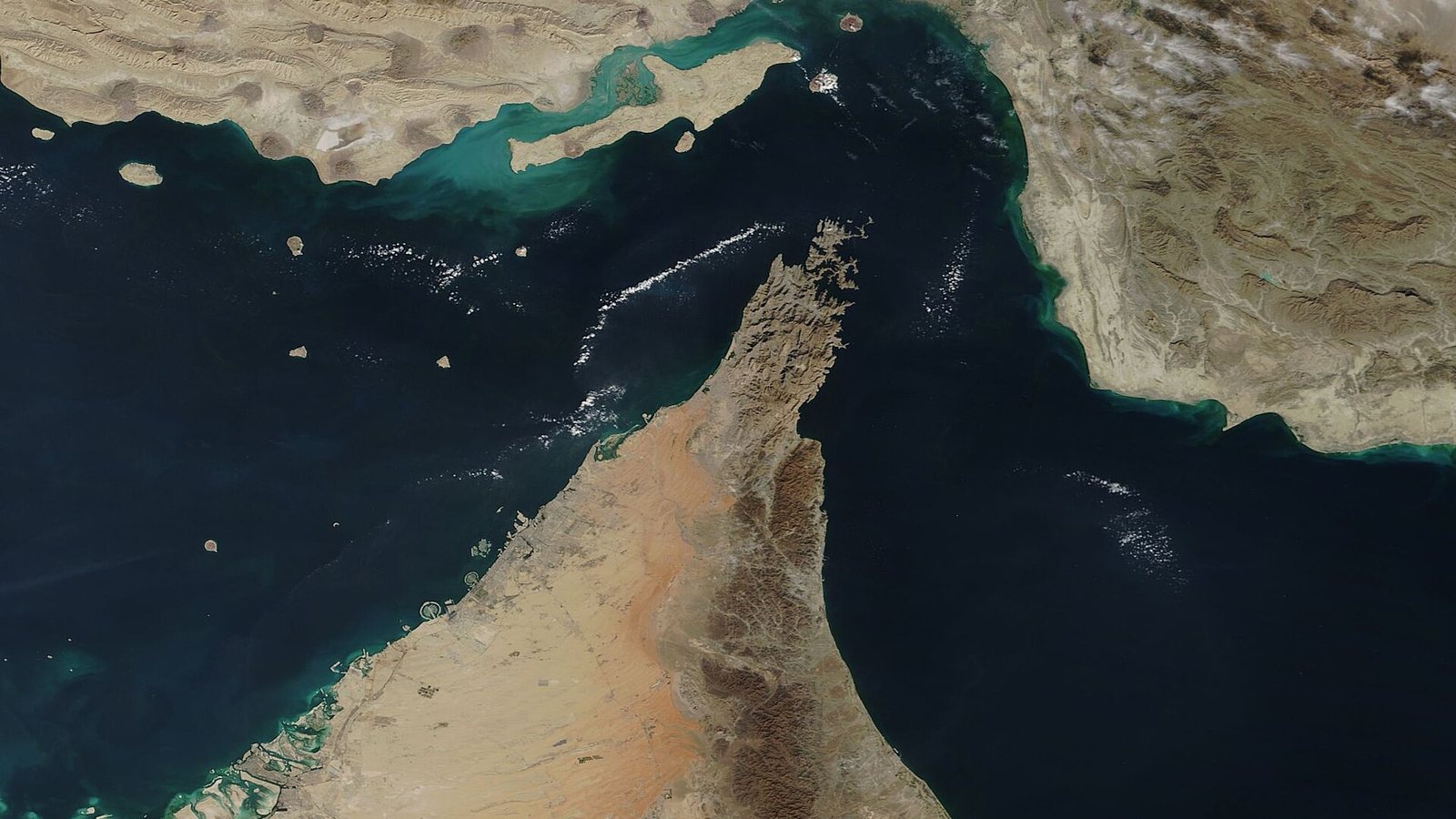
The Strait of Hormuz connects the Persian Gulf to the Gulf of Oman and the Arabian Sea. At its narrowest point the shipping lanes are only about 3 kilometers wide in each direction, hemmed in by Iranian territorial waters to the north and Omani waters (the Musandam exclave) to the south. It is the sole maritime export route for crude and LNG loaded in Saudi Arabia, the UAE, Kuwait, Qatar, Iraq and Iran itself; Bahrain’s refined products also transit here. There is no way around it by sea — the only substitutes are overland pipelines that bypass the strait entirely, described below.
| Metric | Value | Period / Source |
|---|---|---|
| Total oil flow (crude + products) | ~20.9 mb/d | H1 2025, EIA World Oil Transit Chokepoints |
| Share of global maritime oil trade | ~27% | Q1 2025, EIA |
| Share of global LNG exports transiting Hormuz | ~19–20% | 2024–2025, IEA / IEEFA |
| Share of Qatar’s LNG exports transiting Hormuz | ~93% | IEEFA, 2025 data |
| Main destination of Hormuz-transited oil | ~90% to Asia (China + India ~44%) | 2025, EIA |
| Narrowest shipping lane width | ~3 km each direction | EIA chokepoints profile |
Major Exporters and Importers
Saudi Arabia, the UAE, Kuwait, Iraq and Qatar rely on Hormuz for the large majority of their crude, condensate and LNG exports; Iran also ships most of its own oil through the strait it has threatened to close. On the receiving end, Asia is overwhelmingly the largest customer: China and India alone accounted for 44% of Hormuz crude exports in 2025, with Japan, South Korea and other Asian buyers making up most of the rest. Europe’s direct exposure is smaller — around 10% of Hormuz-origin LNG volumes and a modest share of crude — but Europe still competes with Asia for the same global LNG cargoes that transit the strait, so a Hormuz disruption raises prices in Rotterdam even when few tankers were headed there in the first place.
Alternative Routes: What Can Actually Bypass Hormuz
Three pipeline systems can move Gulf crude to the sea without passing through the strait, but their combined capacity covers only a fraction of normal Hormuz flow — and in 2026 the largest of them has itself come under attack.
| Route | Nameplate capacity | 2026 status |
|---|---|---|
| Saudi East-West Pipeline (Petroline), Abqaiq → Yanbu, Red Sea | Up to 7 mb/d nameplate; ~5.5 mb/d pre-attack throughput per Kpler | Shut Sept 11, 2026 after drone strikes; restarted Sept 22 at a low rate. As of Sept 29, Yanbu loadings running at roughly 2 mb/d (about half nameplate), with ~40 tankers and close to 10 million barrels backlogged at Yanbu and Al Muajjiz; Aramco has notified customers of October loading schedules, signaling confidence the restart will hold (source: Reuters, Sept 29, 2026) |
| UAE Habshan–Fujairah pipeline (ADCOP) | ~1.5–1.8 mb/d | Operating; UAE has announced plans to roughly double capacity by 2027 |
| Iraq–Turkey pipeline (via Ceyhan) / other overland options | Limited, contested capacity | Not a large-scale Hormuz substitute; northern Iraqi exports face separate political and security constraints |
Saudi Arabia’s ability to load from terminals on both its Red Sea and Persian Gulf coasts gives it flexibility that shows up in official data: JODI figures reviewed by Reuters put Saudi crude exports at 4.451 million barrels per day (mb/d) in August 2026 — a five-month high, up roughly 7.9% from July — even as the kingdom’s own production fell to 6.24 mb/d, the lowest in JODI’s series dating back to 2002. UBS commodity analyst Giovanni Staunovo attributed the export rebound to that dual-coast loading flexibility; Kpler tanker-tracking data separately showed Gulf exporters’ loadings surpassing pre-war levels on 14 days in September, with Saudi crude-and-condensate loadings averaging 9.1 mb/d in the week of September 21, the highest weekly average Kpler has recorded since before the COVID-19 pandemic. Read more.
Even with both major pipelines running at full nameplate capacity, analysts estimate the combined spare capacity available to substitute for Hormuz is on the order of 3.5–5.5 mb/d — a fraction of the roughly 20 mb/d that normally transits the strait. There is no equivalent pipeline substitute for LNG: Qatar’s liquefaction trains sit on the Gulf coast, and gas that cannot be shipped out through Hormuz has no alternative export path at all.
Beyond pipelines, Gulf producers have scaled up a maritime workaround: ship-to-ship (STS) transfers that move crude onto larger tankers outside the strait, reducing the number of transits through the highest-risk stretch. Vortexa tanker-tracking data cited by Oilprice.com and gCaptain shows 57% of Gulf crude exports moved through some form of STS transfer as of July 2026, up from 12% a year earlier, concentrated at established swap zones off Fujairah (UAE) and Sohar (Oman). As those zones reach capacity, some volume is shifting further out to a new waypoint in India’s Gulf of Kutch, where 82 cargoes (about 680,000 barrels per day) were transferred in September 2026. A full VLCC-to-VLCC transfer takes five to six days and VLCC freight exceeds $1 million a day — a cost that falls hardest on crude with no pipeline bypass: Iraq’s Basrah Medium was offered for October 2026 loading at a $34.50/barrel discount to regional benchmarks (Basrah Heavy at $37), versus a premium for the UAE’s pipeline-fed Murban grade, which reaches Fujairah without transiting Hormuz at all — a roughly $70/barrel spread that tracks chokepoint exposure as much as crude quality. Read more.
Historical Disruptions
- 1984–1988, the “Tanker War”: during the Iran–Iraq war, both sides attacked tankers and laid naval mines in the Gulf; the U.S. Navy escorted reflagged Kuwaiti tankers, and an Iranian mine damaged the USS Samuel B. Roberts in 1988, prompting the U.S. Operation Praying Mantis against Iranian naval assets.
- 2011–2012: Iran threatened to close the strait in response to new Western sanctions over its nuclear program; no closure occurred, but the threat itself moved oil markets.
- 2019: the U.S. blamed Iran for limpet-mine attacks on tankers near the strait and for the seizure of the British-flagged Stena Impero; a drone attack on an Israeli-linked tanker followed in 2021.
- March 2026–present: following Israeli and U.S. strikes on Iran in late February 2026, Iran moved to close the strait in early March, an event the IEA described as the largest oil-supply disruption on record. Iranian strikes on Qatar’s Ras Laffan LNG complex on March 18 knocked out roughly 17% of Qatar’s LNG export capacity for an estimated 3–5 years. A U.S.–Iran ceasefire on April 8 did not restore normal traffic, and renewed attacks — including a September 11 strike on Saudi Arabia’s East-West pipeline and tanker incidents reported as recently as September 22 — have kept the strait a live operational hazard through the third quarter of 2026.
- September 26, 2026: President Trump rejected an Iranian proposal, presented via Foreign Minister Abbas Araghchi to U.S. envoy Steve Witkoff, under which Iran would reopen the strait and resume nuclear talks seven days after the U.S. lifted its naval blockade of Iranian ports and sanctions enforcement on Iranian oil sales. Trump called the terms unacceptable, keeping the negotiating track — and the reduced shipping level described below — unresolved.
- October 1, 2026: three Liberia-flagged tankers — the oil products tanker Al Ruwais, the very large crude carrier Mersin Prosperity and the Aframax-sized Sinbad, two of them managed by ADNOC Logistics — were struck by unidentified projectiles while transiting the strait over the preceding two days. Crew on all three vessels were reported safe and an onboard fire was extinguished; no government claimed responsibility, and the ships’ AIS transponders were switched off at the time of the strikes, complicating independent verification. Read more.
- October 2, 2026: G7 governments agreed to release 100 million barrels of diesel and crude oil from strategic reserves over four months, coordinated through the IEA, after crude flows through the strait recovered close to pre-war levels but diesel and gasoline shipments stayed far below normal. About half the volume is diesel from European governments; the rest, mostly crude, comes from IEA member strategic stocks. The move follows a 400-million-barrel IEA release in March 2026, two-thirds of which had already been drawn down. Read more.
- October 7-8, 2026: the U.K. Maritime Trade Operations agency (UKMTO) reported a tanker struck by multiple projectiles north of Qatar on October 7, with casualties reported; the vessel was not identified and no party claimed responsibility. Tanker-tracking firm Kpler recorded just seven vessel transits through the strait on October 6, the fewest since July 23, while a U.S. Navy-led maritime information service logged roughly a dozen attacks on commercial shipping between September 28 and October 2 — the busiest week for tanker strikes since the war began on February 28, 2026. Analysts told Reuters the attack frequency was running at its highest point of the conflict and was “likely to intensify further.”
- October 10-12, 2026: Iran’s Islamic Revolutionary Guard Corps (IRGC) Navy said an unnamed crude supertanker struck a naval mine and caught fire on the night of October 10-11 after sailing an “unauthorised route” with its navigation and identification systems switched off — a claim Tehran has not independently verified — and warned that vessels transiting with those systems off “will be identified as hostile.” The same weekend, the UAE coastguard rescued 22 crew members from a separate, unnamed tanker that caught fire off the UAE coast for unidentified reasons, and UKMTO issued advisories ordering ships anchored near Ras al-Khaimah to leave the area. On October 12, a Suezmax tanker carrying Iraqi crude loaded on October 8 was hit by an unidentified projectile in the strait, catching fire, with two Indian crew members unaccounted for as of the time of reporting; a second, outbound product tanker was separately struck by a drone the same day. Al Jazeera reported at least a dozen ships were attacked in the week ending October 5, the highest weekly tally since the war began, with at least one vessel hit off the northern coast of Qatar — beyond the strait itself.
- October 14, 2026: Brent crude climbed above $106 a barrel — its highest level in weeks — after Iran’s IRGC Navy struck the tanker MV Sun Shine near the strait and warned it would no longer confine enforcement against “violating” vessels to the strait itself, saying ships using routes it deems unauthorized would be “pursued and punished anywhere in the region.” Regional media put the toll at 15 vessels hit in the first 12 days of October, while UKMTO gave a more conservative tally of six vessel strikes on a single Sunday, including a drone attack near Oman’s Sohar anchorage. Iran separately claimed a supertanker struck a naval mine, but shipping analyst Sal Mercogliano said circulating video did not show evidence consistent with a mine strike. Read more.
- October 15, 2026: Vortexa tanker-tracking data showed ship-to-ship oil transfers extending eastward to India’s Gulf of Kutch as the established Fujairah and Sohar swap zones reached capacity — 82 cargoes (~680,000 b/d) transferred there in September 2026 alone — with two VLCC-to-VLCC handoffs described as the first eastbound Gulf crude transfers observed at that location since the war began. Read more.
- October 20-21, 2026: Iran’s IRGC Navy said it shot down a second US MQ-9 Reaper drone and struck two additional tankers transiting the strait, and separately claimed a supertanker had struck a naval mine and caught fire after switching off its tracking systems to take an “unauthorized” southern route — a claim that conflicts with repeated U.S. statements, including from President Trump, that the strait has already been cleared of mines; the Pentagon had not confirmed the drone loss as of this update. Hours later, Houthi military spokesman Yahya Saree claimed the group had struck Saudi Aramco’s Yanbu export hub and its Shaybah oilfield, causing fires at both; Saudi authorities had not confirmed either claim, and energy-intelligence outlet Energy News Beat labeled both strikes unconfirmed. Analysts noted a confirmed hit on Yanbu would threaten not a side route but the kingdom’s primary Hormuz bypass, still rebuilding throughput after a mid-September attack on the same East-West pipeline corridor. The claims landed as diplomacy stalled further: Iranian Foreign Minister Abbas Araghchi said the strait would stay shut until Washington accepted Tehran’s seven-day reopening framework and that Iran had rejected US-backed talks hosted in Pakistan. Brent traded near $110 a barrel, within sight of the roughly five-month high reached earlier in October. Read more.
- October 26, 2026: attacks on vessels transiting the Strait of Hormuz reached a record for any single month, with at least 28 vessels struck in October according to UK Maritime Trade Operations (UKMTO) and International Maritime Organization data cited by Reuters, including at least 11 supertankers (VLCCs) damaged. Brent crude eased slightly to $114.42 a barrel and WTI to $100.97, even as the attack count underscored how much of the price level now reflects a war-risk premium rather than supply-demand fundamentals; both benchmarks remained far above the sub-$60 levels at the end of 2025. Read more.
- October 30, 2026: the UK Maritime Trade Operations centre (UKMTO) said a small boat approached an outbound tanker about 25 nautical miles northeast of Khasab, on Oman’s Musandam peninsula, and attached two explosive devices to its hull above the waterline, setting off an engine-room fire that temporarily disabled the ship; UKMTO said the crew was safe, there was no environmental impact and the fire was extinguished, with the vessel continuing to its next port, and it corrected an earlier report that the tanker had been struck by a projectile. Iran’s Islamic Revolutionary Guard Corps (IRGC) separately claimed tankers had struck naval mines in the strait while using “unauthorised” routes — a claim that remains unverified and that U.S. Central Command disputes, saying the main transit lanes have been cleared. The incident capped the strait’s worst month for tanker attacks on record and pushed Brent to a six-month high. Read more.
- November 4, 2026: Iran’s IRGC said four oil tankers were destroyed after striking mines on a “prohibited route” south of the strait and that it had separately halted two other vessels — a claim reported by Iranian state media and picked up by CBS News and National Security Journal, with no flag states, operators or crew conditions identified and no independent confirmation. It is the latest in a string of unconfirmed IRGC mine claims (also made Oct 27 and Oct 29) that have continued despite CENTCOM’s August announcement that it had cleared the strait’s main shipping lanes of mines; the IMO has estimated as many as 80 mines could have been laid, and shipowners’ association BIMCO still calls the strait “very risky.” The claim came a day after Iranian officials said the U.S. had struck targets inside Iran, including a reported raid on Qeshm island inside the strait — also unverified. Despite the fresh claims, Brent crude fell toward $100/barrel the same morning as traders weighed progress toward a possible US-Iran settlement more heavily than the latest disruption reports. Read more.
Latest Verified Flow Data
| Indicator | Reading | Date / Source |
|---|---|---|
| Daily vessel transits, Strait of Hormuz | 7 transits on Oct 6 (fewest since July 23); vs. ~85/day pre-crisis baseline | Oct 6, 2026, Kpler via The National |
| Brent crude | $102.28/barrel intraday (+2.28%), wiping out a one-day dip tied to the IEA release decision | Oct 8, 2026, 04:27 GMT, Reuters via Investing.com |
| Tanker strikes, latest incident | 3 tankers (Al Ruwais, Mersin Prosperity, Sinbad) hit by unidentified projectiles over Sept 29–Oct 1; no casualties; war-risk insurance premiums reported higher | Oct 1, 2026, MarineLink/Oilprice.com/IranWire via The Daily Energy |
| Qatar LNG cargoes affected by force majeure | Force majeure extended into Nov/Dec 2026 (Pakistan, Bangladesh, Edison/Italy); just 18 cargoes loaded in 6 months vs. 509 a year earlier (~96% decline); ~$24bn in lost sales estimated | Sept 28, 2026, Bloomberg/Reuters/ICIS |
| Saudi East-West pipeline status | Yanbu loadings ~2 mb/d (about half nameplate); ~40 tankers / ~10 million bbl backlogged; Oct. loading schedules issued to customers | Sept 29, 2026, Reuters |
| G7/IEA strategic reserve release | 100 million barrels of diesel and crude over 4 months (~50 million barrels diesel, front-loaded within 20 days) | Oct 2, 2026, G7 statement via The Daily Energy |
| Tanker-attack frequency | ~12 attacks on commercial shipping Sept 28-Oct 2, the busiest week of the conflict; frequency described by analysts as the highest since the war began and still rising | Oct 8, 2026, Reuters/OilPrice.com via The Daily Energy |
| IEA 400-million-barrel release (March 2026) | IEA members agreed Oct 7 to complete the release “as quickly as possible”; ~325 million barrels already delivered, ~100 million barrels still to come; 1.1 billion barrels of public emergency stocks remain, incl. 200+ million barrels of diesel | Oct 7, 2026, Anadolu Agency/Al-Monitor via The Daily Energy |
| QatarEnergy North Field LNG expansion delay | First North Field East train now guided to H1 2027 (from an earlier mid/Q3-Q4 2026 target); QatarEnergy says Hormuz-related shipping disruption has delayed equipment deliveries for remaining trains | Sept 2026, Technip Energies/LNGPrime; L’Orient-Le Jour, Gulf Business, Offshore Engineer |
| Crude transit, Strait of Hormuz | ~8.5 million barrels/day, week ending Oct 7 — about 40% below normal levels | Oct 12, 2026, Kpler via CNBC |
| Brent crude, latest reading | Above $103/barrel (WTI above $90) after two more tankers hit Oct 11-12, reversing a brief rebound toward pre-war flow levels reported as of Oct 5 | Oct 12, 2026, Oilprice.com/Al Jazeera via The Daily Energy |
| US naval blockade of Iranian ports (since mid-July 2026) | CENTCOM says it has disabled 4 commercial vessels, turned back 135 ships and destroyed 10 tankers linked to Iran; Tehran has not exported oil through the blockade line, per CENTCOM | Oct 11-12, 2026, CENTCOM via Al Jazeera |
| Ship-to-ship transfers, Gulf of Kutch (new waypoint) | 82 cargoes (~680,000 b/d) transferred in September 2026; 57% of Gulf crude exports moved via STS as of July 2026, up from 12% a year earlier | Oct 15, 2026, Vortexa via Oilprice.com/gCaptain/Gulf News/Bloomberg |
| Brent crude, Oct 14 reading | Above $106/barrel, highest in weeks, after IRGC struck tanker MV Sun Shine and warned it would pursue “violating” vessels anywhere in the region, not only within the strait | Oct 14, 2026, Reuters/Iranian state media via The Daily Energy |
| Japan LNG cost / day-ahead power price | Imported LNG averaging ~¥100,400/tonne (May-Jul 2026 pricing window), up ~10% QoQ; Japan day-ahead wholesale power price at its highest since January 2023, up ~20% in a week | Oct 19, 2026, TEPCO fuel-cost notices / Oilprice.com via The Daily Energy |
| Brent crude, Oct 20-21 reading | Near $110/barrel, within sight of the five-month high reached earlier in October, after Iran claimed a second downed drone and new tanker attacks and Houthis claimed (unconfirmed) strikes on Aramco’s Yanbu and Shaybah sites | Oct 20-21, 2026, CBS News/AFP/Newsquawk/Energy News Beat via The Daily Energy |
| Saudi crude exports (JODI) | 4.451 mb/d, a five-month high, up ~7.9% from July’s 4.125 mb/d | August 2026, JODI via Reuters |
| Saudi crude production (JODI) | 6.24 mb/d — the lowest in JODI’s series dating back to 2002, down from 8.135 mb/d in July | August 2026, JODI via Reuters |
| Gulf exporter loadings vs. pre-war levels | Surpassed pre-war levels on 14 separate days in September; Saudi crude-and-condensate loadings averaged 9.1 mb/d in the week of Sept 21 — the highest weekly average recorded since before the COVID-19 pandemic | Sept 2026, Kpler via Reuters |
| Japan trade deficit, April-Sept FY2026 | $17.8bn (¥2.82 trillion), nearly double the year-earlier shortfall; crude import volumes -21.2% y/y while value rose +26.3%; LNG import volumes -8.4% while value rose +13.5% | Oct 22, 2026, Japan Ministry of Finance via The Daily Energy |
| Tanker attacks, October 2026 (record month) | At least 28 vessels attacked in the strait during October, including 11 supertankers (VLCCs) damaged — the highest monthly count since the war began; Brent $114.42/bbl, WTI $100.97/bbl | Oct 26, 2026, UKMTO/IMO via Reuters; OilPrice.com |
| Brent crude, six-month high (Dec contract, expiring) | $117.64/bbl (+2.4%, briefly touched $118); January contract $113.43/bbl (+2.37%); WTI $104.12/bbl (+2.08%); fourth consecutive monthly gain | Oct 30, 2026, The National market report via The Daily Energy |
| Brent crude, Nov 4 reading | Fell toward $100/barrel despite fresh (unverified) IRGC mine and tanker claims, as traders weighed reports of progress toward a US-Iran settlement | Nov 4, 2026, OilPrice.com via The Daily Energy |
| Brent/WTI crude, weekly move (Nov 2-6) | Both benchmarks down roughly 12% on the week, the sharpest weekly drop of 2026; Brent near $99.42/b, WTI near $91.24/b early Nov 6, as U.S. midterm results fed hopes of a wind-down of the US-Israel-Iran war; fresh Gulf tanker-incident reports repeatedly interrupted the slide | Nov 6, 2026, Oilprice.com via The Daily Energy |
Why It Matters
Hormuz is the one chokepoint with no full workaround. A sustained closure would not just raise prices — it would force importers to draw down strategic reserves, bid for LNG cargoes against each other, and in the worst case ration supply, since the overland pipeline alternatives can replace only a fraction of the volume, and none of them can move LNG at all. The 2026 crisis has already demonstrated this in miniature: Asian spot LNG prices spiked more than 140% after the March strikes on Qatar, and European TTF gas prices have stayed elevated into autumn 2026 partly because Europe must outbid Asia for the same shrunken pool of flexible LNG cargoes (see our related explainer on European gas prices below). That knock-on effect is now showing up in Japanese utility bills, too: TEPCO’s fuel-cost notices show imported LNG averaging about ¥100,400 per tonne over the May–July 2026 pricing window, up roughly 10% quarter-on-quarter, and Japan’s day-ahead wholesale power price has climbed to its highest level since January 2023, rising about 20% in a single week (read more). Japan’s broader trade data now puts a harder number on that knock-on cost: the country posted a $17.8 billion (¥2.82 trillion) deficit for the April-September half of its fiscal year, nearly double the shortfall recorded over the same six months a year earlier, according to Finance Ministry data. Crude import volumes fell 21.2% year-on-year even as their value rose 26.3%, and LNG import volumes fell 8.4% while still costing 13.5% more — Japan paying substantially more for materially less fuel as Hormuz-related rerouting and freight and insurance costs pass through, even as Tokyo draws down strategic reserves under an IEA-coordinated release and shifts some generation from gas back to coal. Read more.
What We Don’t Know
- Whether Iran’s October 20-21 claims of a second downed US drone, two more tanker attacks and a naval-mine strike are accurate, and whether Houthi claims of strikes on Aramco’s Yanbu export hub and Shaybah oilfield the same day are real: none of these claims had been independently confirmed by Saudi authorities, the Pentagon or Reuters at the time of this update, and U.S. officials maintain the strait has already been cleared of mines — directly contradicting Tehran’s mine-strike claim.
- Whether the Pentagon is preparing new strikes on Iran: The Atlantic reported on October 6, citing unnamed U.S. officials, that potential targets were being identified, but the scale of any action was still under discussion and the report had not been officially confirmed as of October 8; President Trump had previously indicated strikes would resume only after the U.S. midterm elections.
- Whether the September–October 2026 tanker incidents, including the October 1 strikes on three vessels and the October 10-12 mine claim and tanker strikes, were state-directed attacks or incidental damage from unexploded ordnance; no party has claimed responsibility for the October 12 strikes, Iran’s mine claim is unverified, and transponders were switched off in several cases, complicating independent verification.
- The precise pace at which Saudi Arabia will restore East-West pipeline throughput beyond the initial ~4 mb/d target; estimates for full restoration (4–6 weeks per Kpler, as of Sept 24) are third-party assessments, not an Aramco-confirmed timeline.
- Whether the current low level of Hormuz shipping reflects an ongoing Iranian blockade, tanker-owner risk aversion, insurance costs, or some combination — reporting attributes it to “severely restricted” conditions rather than a single confirmed cause.
- Whether Iran will follow through on its October 14 warning to pursue tankers on “unauthorized routes” anywhere in the region rather than only inside the strait itself — a stated escalation in scope that, as of this update, has not yet been matched by confirmed strikes outside the waterway.
- Whether President Trump will order new U.S. strikes on Iran after the November 3, 2026 U.S. midterm elections, as he has suggested is possible, or whether the Qatari-mediated talks that resumed in Tehran this week produce a negotiated outcome instead; as of this update neither outcome is confirmed, and Trump said after markets closed on October 30 that “peace talks are under way” and “we have time.”
- Whether the roughly 12% weekly price pullback that followed the Nov. 3, 2026 U.S. midterm elections marks a durable de-escalation or only a temporary trimming of the war-risk premium: ING analysts cited by Oilprice.com said prices should keep easing if the war does not escalate further, but both benchmarks rebounded off Thursday’s close once new tanker-incident reports emerged, and Gulf oil and LNG flows had not materially changed on the water as of this update.
Frequently Asked Questions
How much oil passes through the Strait of Hormuz?
Before the 2026 crisis, about 20.9 million barrels per day of crude and refined products transited the strait in the first half of 2025 — roughly 27% of all oil moved by sea worldwide (EIA).
What happens if the Strait of Hormuz closes?
There is no full substitute. Saudi Arabia and the UAE can reroute a combined 3.5–5.5 mb/d through the East-West and Habshan–Fujairah pipelines, but that covers only a portion of normal Hormuz volume, and Qatar’s LNG has no pipeline alternative at all. The 2026 disruption has already cut Qatari LNG capacity by an estimated 17% for years and pushed Asian and European gas prices sharply higher.
Can Saudi Arabia and the UAE avoid the strait entirely?
Partially. Their Red Sea and Fujairah pipelines let them bypass Hormuz for part of their exports, but both countries still load the majority of their crude at Gulf terminals that depend on the strait, and the Saudi pipeline was itself attacked and shut down for eleven days in September 2026.
Is the Strait of Hormuz closed right now?
Not formally, but transit has been severely reduced since March 2026 and has swung sharply week to week. October 2026 was the worst month yet for tanker attacks, with at least 28 vessels struck, and an October 30 attack near Oman’s Khasab — two explosive devices attached to a tanker’s hull — pushed Brent to $117.64 a barrel, a six-month high and a fourth straight monthly gain, even as crude flows through the strait have partly recovered from their worst points in September and October.
Are the U.S. and Iran negotiating to reopen the strait?
Yes, intermittently. On September 26, 2026, Iran’s foreign minister presented a seven-day reopening plan tied to sanctions relief and a naval-blockade lift; President Trump rejected the terms the same day. No agreement is in place as of this update.
Why did oil prices fall sharply in early November 2026?
Brent and WTI both dropped roughly 12% in the week of Nov. 2-6, 2026, after the Nov. 3 U.S. midterm elections raised trader expectations that Washington could move toward winding down the war with Iran. Physical Gulf oil and LNG flows had not meaningfully changed; the move reflected a trimmed war-risk premium rather than a resolved crisis, and prices bounced off their lows each time a new tanker-incident report emerged.
Related The Daily Energy pages
- What Is the Strait of Hormuz and Why Does It Matter?
- Iran Says Four Tankers Hit by Mines Near Strait of Hormuz (news)
- Why Are Oil Prices Rising?
- G7 to Release 100 Million Barrels of Diesel and Crude
- What Happens If the Bab el-Mandeb Strait Closes?
- How Much Oil Passes Through the Turkish Straits?
- Why Are European Gas Prices Rising This Winter?
- Saudi Arabia restarts East-West pipeline as Yanbu exports resume
- European gas storage 18 points below average as winter approaches
- What is LNG? Liquefied natural gas explained
- OPEC: members, quotas and market role
- Saudi Aramco company profile
- ADNOC company profile
- Qatar’s North Field LNG Expansion: Project Tracker
- Ship-to-Ship Oil Transfers Surge Off India’s Gulf of Kutch as Hormuz Shuttle Routes Fill Up
- Oil Tops $106 as Iran Threatens to Extend Tanker Attacks Beyond Hormuz
- Japan’s Power Prices Hit Highest Level Since 2023 as Hormuz Crisis Chokes LNG Supply
- Brent Nears $110 as Iran Claims New Hormuz Attacks, Houthis Claim Strikes on Aramco Sites
- Saudi Arabia’s Oil Output Hits Record Low Even as Exports Rebound
- Japan’s Trade Deficit Nearly Doubles as Hormuz Crisis Inflates Energy Bill
- How Much Oil Does Saudi Arabia Produce?
- Oil Prices Dip but Hold Above $100 as Hormuz Tanker Attacks Hit a Monthly Record (news)
- Brent Settles at a Six-Month High as Hormuz Tanker Attack Caps Fourth Monthly Gain (news)
- Oil Drops 12% on the Week as Midterm Results Fuel Hopes for an End to the Iran War (news)
Sources
- U.S. Energy Information Administration, World Oil Transit Chokepoints — Strait of Hormuz, last updated March 3, 2026
- International Energy Agency, “Strait of Hormuz” oil security brief
- IMF PortWatch, vessel transit data, September 2026
- Reuters and Bloomberg reporting on the Saudi East-West pipeline restart, via The Daily Energy, September 24, 2026
- IEEFA, “Strait of Hormuz disruption would jeopardise 10% of Europe’s LNG imports”
- CNBC, “The two oil pipelines helping Saudi Arabia and UAE bypass the Strait of Hormuz,” March 2026
- Oilprice.com, MarineLink and IranWire reporting on the October 1, 2026 Strait of Hormuz tanker strikes, via The Daily Energy
- G7 statement and IEA coordination on the October 2026 100-million-barrel diesel/crude release, via The Daily Energy, October 2, 2026
- Technip Energies via LNGPrime, and L’Orient-Le Jour/Gulf Business/Offshore Engineer, on QatarEnergy’s North Field East delay warning, September 2026
- Reuters via Investing.com, “Oil rises as Middle East supply concerns persist amid shipping attacks,” October 8, 2026
- The National, “Oil prices rise on potential US strikes on Iran before midterm elections,” October 8, 2026
- OilPrice.com, “Oil Jumps 2% as Iran Steps Up Attacks on Hormuz Tankers,” October 8, 2026
- Anadolu Agency, “IEA members to accelerate release of strategic oil reserves,” October 7, 2026
- Reuters via Al-Monitor, “IEA to accelerate oil reserve release, says 100 million barrels still to come,” October 7, 2026
- Reuters, “At least 28 vessels attacked in Strait of Hormuz in October, a monthly record,” October 23, 2026; OilPrice.com, “Oil Prices Dip But Hold Above $100 as Hormuz Tanker Attacks Hit a Monthly Record,” October 26, 2026
- Irina Slav, “Two More Oil Tankers Attacked Near Strait of Hormuz,” Oilprice.com, October 12, 2026, via The Daily Energy
- Maziar Motamedi, “Hormuz attacks intensify as efforts to end war on Iran stall,” Al Jazeera, October 11, 2026, via The Daily Energy
- Kpler shipping data via CNBC, crude transit estimate for the week ending October 7, 2026
- Vortexa tanker-tracking data via Oilprice.com, gCaptain and Gulf News (Bloomberg cross-reporting), on Gulf of Kutch ship-to-ship transfers, October 15, 2026
- Reuters and Iranian state media, on the IRGC Navy’s October 14, 2026 strike on the tanker MV Sun Shine and its warning to widen tanker enforcement beyond the strait, via The Daily Energy
- TEPCO, fuel-cost adjustment notices for October and November 2026 billing, and Oilprice.com, “Japan Power Prices Surge to Highest Since 2023,” October 19, 2026, via The Daily Energy
- CBS News/AFP and Newsquawk, on the IRGC’s October 20-21, 2026 drone/tanker/mine claims and Houthi claims of strikes on Aramco’s Yanbu and Shaybah sites; Energy News Beat, “Brent Hits a Five-Month High on Gulf Attacks,” October 20, 2026, via The Daily Energy
- Reuters, JODI data on Saudi Arabia’s August 2026 crude exports and production, and Kpler tanker-tracking data via UBS analyst Giovanni Staunovo, October 22, 2026, via The Daily Energy
- Japan Ministry of Finance, provisional trade statistics for the April-September FY2026 half, via The Daily Energy, October 22, 2026
- UK Maritime Trade Operations (UKMTO) and The National, on the October 30, 2026 Khasab tanker incident and Brent’s six-month-high settlement, via The Daily Energy, October 31, 2026
- IRGC statement via Iranian state media, November 4, 2026, as reported by CBS News and National Security Journal; OilPrice.com, “Brent Falls to $100 as Traders Bet on a U.S.-Iran Deal,” November 4, 2026, via The Daily Energy
- Oilprice.com, “Oil Prices Head for 12% Weekly Loss Despite Fresh Tanker Attacks,” November 6, 2026, via The Daily Energy
Illustrative image. Photo: MODIS Land Rapid Response Team, NASA GSFC, Public domain, via Wikimedia Commons — source




[…] the entire seaborne gas market, not just deliveries to Europe. See our related explainer on the Strait of Hormuz, through which about 93% of Qatar’s LNG exports normally […]
[…] itself: after Israeli and U.S. strikes on Iran in late February 2026, tanker transit through the Strait of Hormuz fell from roughly 20 mb/d of combined crude and products before the war to a fraction of that, and […]
[…] lenders. The push comes as global LNG buyers watch other supply routes closely, including the Strait of Hormuz, where flows have shaped this year’s […]
[…] for Moscow diplomatically. It came even as U.S.-mediated talks between Washington and Tehran over reopening the Strait of Hormuz were unfolding in New York this week, and as separate Russia-Ukraine contacts continue on the […]
[…] Strait of Hormuz, the narrow passage between Iran and Oman that forms the only sea route out of the Persian Gulf, has carried a fraction of its usual traffic since the conflict escalated, with tanker owners […]
[…] What Happens When the Strait of Hormuz Closes? […]
[…] What Happens When the Strait of Hormuz Closes? […]
[…] firms sometimes rank buyers slightly differently depending on methodology. Qatar’s own Strait of Hormuz chokepoint profile puts pre-crisis Hormuz dependence even more starkly: about 93% of Qatar’s total LNG exports […]
[…] 2026-09-11 to 09-24: Separately, drone attacks shut Saudi Arabia’s East-West oil pipeline and the Strait of Hormuz has remained effectively closed to normal shipping for months — a reminder of why Turkey and other importers are pursuing domestic generation sources such as Akkuyu alongside diversified gas supply. See Strait of Hormuz oil flows. […]
[…] What Happens When the Strait of Hormuz Closes? […]
[…] dependence is now intersecting with the same Hormuz disruption covered on The Daily Energy’s Strait of Hormuz chokepoint page and Who Buys Qatar’s LNG?: with Qatari cargoes largely unable to transit the strait since […]
[…] هذا النداء في وقت تستمر فيه الهجمات على الناقلات في مضيق هرمز بإبقاء أسواق النفط في حالة توتر؛ فقد تعرضت ناقلتان […]
[…] appeal lands as attacks on tankers in the Strait of Hormuz keep oil markets on edge; two more vessels were struck near the chokepoint over the weekend, […]
[…] relative to Gulf grades, and the Strait of Hormuz disruption (tracked on The Daily Energy’s Strait of Hormuz chokepoint page) made non-Hormuz-dependent Russian supply more attractive to refiners managing shipping risk. […]
[…] more than 90% of Japan’s crude imports, almost all of it transiting the Strait of Hormuz. What happens when that chokepoint is disrupted is no longer a hypothetical for Tokyo: higher crude prices, and sharply higher freight and […]
[…] What Happens When the Strait of Hormuz Closes? […]
[…] What Happens When the Strait of Hormuz Closes? (chokepoint tracker) · Why Are Oil Prices Rising? (evergreen […]
[…] What Happens If the Strait of Hormuz Closes? […]
[…] Strait of Hormuz: oil flows tracker | Why Are Oil Prices […]