


Who Supplies Turkiye With Natural Gas?

Last updated: 2026-10-27 · Last verified: 2026-10-27
Turkiye’s natural gas consumption climbed to a record 60–61 billion cubic metres (bcm) in 2025, and the country still imports the large majority of the gas it burns for power generation, industry and heating. Most of that gas arrives through three pipeline routes — Russia, Azerbaijan and Iran — supplemented by a fast-growing liquefied natural gas (LNG) programme. Below is a supplier-by-supplier breakdown of where Turkiye’s gas actually comes from, how the mix is shifting, and what is scheduled to change over the next two years.
Where Turkiye’s Pipeline Gas Comes From
State importer BOTAS holds long-term pipeline contracts with Russia (Gazprom, via the Blue Stream and TurkStream lines), Azerbaijan (SOCAR, via the South Caucasus Pipeline/TANAP corridor) and Iran (NIOC). In December 2025, Russia remained Turkiye’s single largest gas supplier, followed by Azerbaijan and Iran.
| Importing Country | Energy | Supplier | Volume (Dec 2025) | Route | Year | Source |
|---|---|---|---|---|---|---|
| Turkiye | Natural gas (pipeline) | Russia | 2.30 bcm | TurkStream / Blue Stream | 2025 | BOTAS via Anadolu Agency |
| Turkiye | Natural gas (pipeline) | Azerbaijan | 1.08 bcm | South Caucasus Pipeline / TANAP | 2025 | BOTAS via Anadolu Agency |
| Turkiye | Natural gas (pipeline) | Iran | 576 mcm | Tabriz–Ankara pipeline | 2025 | BOTAS via Anadolu Agency |
Over the first nine months of 2025, pipeline imports from Iran rose by close to 16% year-on-year to 5.3 bcm, as Tehran increased export allocations to earn foreign currency, and Turkiye imported a further 4.536 bcm of Iranian gas in the first half of 2026 alone, up 34% year-on-year, ahead of the contract’s expiry. Update, September 2026: Turkiye’s 25-year pipeline gas contract with Iran (signed 1996, in force since 2001, covering up to 9.6 bcm/year via the Tabriz–Ankara line) officially expired on July 29, 2026. Formal renewal talks had not begun as of Turkish Energy Minister Alparslan Bayraktar’s April 2026 statement, and payment mechanisms are complicated by the 2025 JCPOA snapback of UN sanctions, which leaves gas trade outside the scope of the OFAC licence that still allows some other Iran-related payments. Trade press (Energy Intelligence, Iran International) reports Iranian piped gas has likely kept flowing to Turkiye since the expiry under informal, force-majeure-style arrangements rather than a new binding contract; no new long-term deal has been publicly announced. The Russia contract — nominally around 22 bcm/year — was extended by only one year while longer-term renewal talks continue.
New Azerbaijan supply deal, June 2026: SOCAR, BOTAS, TotalEnergies and ADNOC signed a 15-year agreement for Turkiye to import 33 bcm of natural gas from Azerbaijan’s offshore Absheron field, averaging roughly 2.25 bcm/year, transported via the existing Baku–Tbilisi–Erzurum/South Caucasus Pipeline corridor into the TANAP system. Deliveries are tied to Absheron’s second development phase, where first gas is targeted for late 2028 or early 2029 — so the deal adds no volume before then, but it locks in a fourth long-term pipeline source once Absheron ramps up alongside Azerbaijan’s existing Shah Deniz-fed SCP/TANAP supply.
Where Turkiye’s LNG Comes From
LNG is the fastest-growing part of Turkiye’s supply mix: LNG imports rose more than 32% year-on-year in 2025. In December 2025, the United States was the largest single LNG supplier, ahead of Algeria and a long tail of smaller cargoes from West Africa, the Gulf and the Caribbean.
| Importing Country | Energy | Supplier | Volume (Dec 2025) | Year | Source |
|---|---|---|---|---|---|
| Turkiye | LNG | United States | 2.32 bcm | 2025 | BOTAS via Anadolu Agency |
| Turkiye | LNG | Algeria | 480 mcm | 2025 | BOTAS via Anadolu Agency |
| Turkiye | LNG | Angola | 201 mcm | 2025 | BOTAS via Anadolu Agency |
| Turkiye | LNG | Nigeria | 189 mcm | 2025 | BOTAS via Anadolu Agency |
| Turkiye | LNG | Senegal | 104 mcm | 2025 | BOTAS via Anadolu Agency |
| Turkiye | LNG | Equatorial Guinea | 102 mcm | 2025 | BOTAS via Anadolu Agency |
| Turkiye | LNG | Trinidad and Tobago | 102 mcm | 2025 | BOTAS via Anadolu Agency |
| Turkiye | LNG | Cameroon | 101 mcm | 2025 | BOTAS via Anadolu Agency |
| Turkiye | LNG | Egypt | 94 mcm | 2025 | BOTAS via Anadolu Agency |
In total, Turkiye imported roughly 51.3 bcm of gas in the first eleven months of 2025, plus a further 7.65 bcm in December 2025, against a 2024 full-year import total of 52.2 bcm reported by regulator EPDK — consistent with 2025 consumption reaching a new record.
The US LNG Pivot: What’s Changing
In September 2025, BOTAS signed a 20-year agreement with trading house Mercuria to import approximately 4 bcm/year of US LNG starting in 2026, part of a broader diversification push that also includes new supply deals with other portfolio traders. Ankara’s stated aim is to cut pipeline gas imports from Russia and Iran combined from around 41 bcm to approximately 26 bcm by 2028 — a roughly 37% reduction in pipeline dependency — while leaning more on flexible LNG cargoes and rising domestic output.
Imports vs Domestic Production
Imports are not Turkiye’s only gas source. The offshore Sakarya field in the Black Sea has been in production since 2023. Turkiye’s Energy and Natural Resources Minister said Black Sea gas output is set to double starting in the third quarter of 2026, as the Osman Gazi floating production platform brings Sakarya’s Phase 2 online; once ramped up, Sakarya is expected to cover up to roughly 30% of Turkiye’s domestic gas demand, with a further capacity increase planned as Phase 3 (awarded to Saipem in a $1.5bn contract, offshore campaign due to start in 2027) is completed. Domestic output still covers only a minority of Turkiye’s consumption; the pipeline and LNG volumes above represent the gas Turkiye buys from abroad, not total consumption or storage withdrawals.
FAQ
Where does Turkiye get its natural gas from?
Mainly from three pipeline suppliers — Russia, Azerbaijan and Iran — plus a growing slate of LNG suppliers led by the United States and Algeria, with a small and rising share from domestic Black Sea production.
Does Turkiye still import gas from Russia?
Yes. Russia remained Turkiye’s largest single gas supplier as of December 2025, though Ankara has signed new US LNG contracts explicitly aimed at reducing pipeline dependence on Russia and Iran by 2028.
How much LNG does Turkiye import?
Turkiye’s LNG imports rose more than 32% year-on-year in 2025, with the United States as the single largest LNG supplier in December 2025, ahead of Algeria and a wide spread of smaller African, Caribbean and Gulf cargoes.
Is Turkiye’s Iran gas contract ending?
Turkiye’s 25-year pipeline gas contract with Iran officially expired on July 29, 2026. No new long-term deal had been announced as of this update; trade press reports gas has likely kept flowing under temporary, informal arrangements while renewal talks — complicated by post-JCPOA-snapback sanctions on payment channels — remain unresolved.
Is Turkiye adding new pipeline gas suppliers?
Yes, for the future: in June 2026 SOCAR, BOTAS, TotalEnergies and ADNOC signed a 15-year deal for Turkiye to import 33 bcm of gas from Azerbaijan’s Absheron field via the existing TANAP corridor, but deliveries only start once Absheron’s second phase reaches first gas, targeted for late 2028 or early 2029.
Related The Daily Energy Pages
- What Is LNG and How Does It Work?
- Where Does Germany Get Its LNG? (Who Powers Who? series)
- Where Does Italy Get Its Natural Gas? (Who Powers Who? series)
- What Is OPEC?
- Why Are European Gas Prices Rising This Winter?
- European Gas Storage Falls 18 Points Below Average as Winter Approaches
- Why Are Oil Prices Rising?
- What Happens When the Strait of Hormuz Closes?
- How Much Oil Passes Through the Turkish Straits?
- Akkuyu Nuclear Power Plant: Project Tracker
Sources: BOTAS data via Anadolu Agency (Feb 2026); Enerdata; Oxford Institute for Energy Studies, “What Does the Turkish LNG Shopping Spree Mean” (Oct 2025); bne IntelliNews; Middle East Economic Survey (MEES), June 2026; Interfax, June 2026.
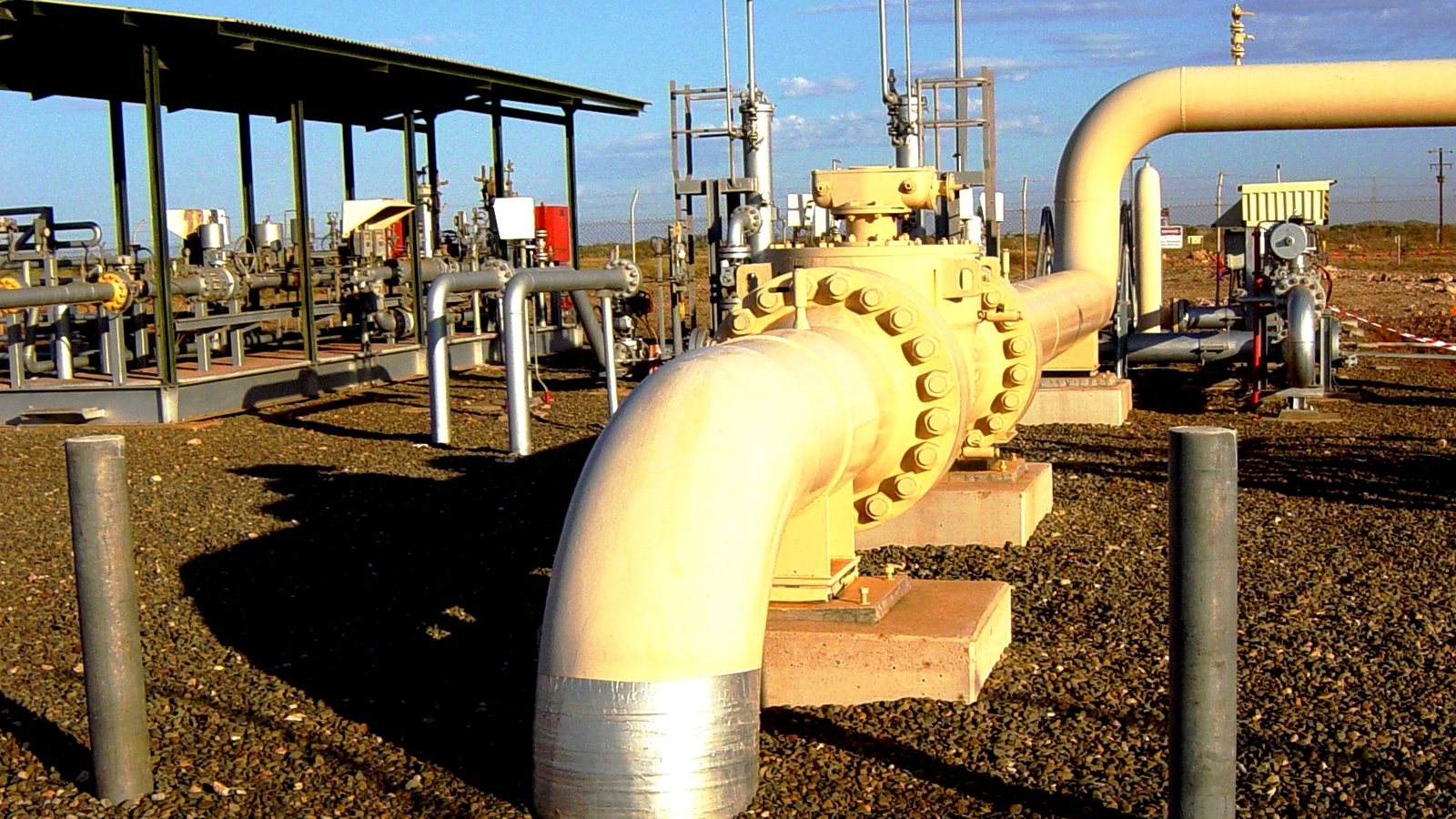
Illustrative image. Photo: Glen Dillon, CC BY 3.0, via Wikimedia Commons — source



[…] network means the new gas can reach buyers without a separate pipeline build-out, at a time when Turkey’s gas import mix has become a closely watched question amid broader efforts across the region to diversify supply […]
[…] Who Supplies Türkiye With Natural Gas? (Who Powers Who? series) […]
[…] Who Supplies Türkiye With Natural Gas? (Who Powers Who? serisi, İngilizce) […]
[…] Who Supplies Turkiye With Natural Gas? […]
[…] Who Supplies Turkey With Natural Gas? […]
[…] Who Supplies Turkiye With Natural Gas? […]
[…] Who Supplies Türkiye With Natural Gas? (Who Powers Who? series) […]
[…] gas to several former Soviet states and Balkan countries, including supply arrangements with Turkey, where it remains a significant supplier via […]