Where Does Italy Get Its Natural Gas?

Last updated: 27 October 2026 · Last verified: 27 October 2026
Italy has spent the past three years rebuilding its gas map almost from scratch. Russian pipeline flows, once a meaningful share of national supply, have nearly disappeared; Algeria has re-emerged as the single largest supplier; and LNG — barely a niche source a decade ago — is now the largest category of all. This page sets out who actually supplies Italy’s natural gas today, using Italy’s own industry-data tracking rather than EU-wide averages that can obscure a single country’s mix.
Italy’s Natural Gas Supply Mix, 2025
Italy imported about 61.3 billion cubic metres (bcm) of natural gas in 2025, up 3.6% on 2024, according to Qualenergia’s tracking of Italian gas-system data. Algeria was the largest single pipeline supplier, LNG (combined, all origins) was the largest category overall, and direct Russian pipeline gas was down to a residual volume.
| Source | Volume, 2025 | Share of imports | Change vs 2024 |
|---|---|---|---|
| LNG (all origins, combined) | 20.9 bcm | 34.1% | +41.0% |
| Algeria (pipeline, via Mazara del Vallo/TransMed) | 20.1 bcm | 32.8% | -4.7% |
| Azerbaijan (pipeline, via TAP) | 10.0 bcm | 16.3% | -3.0% |
| Northern Europe (pipeline, via the Swiss Passo Gries interconnection) | 8.6 bcm | 14.0% | +43.1% |
| Libya (pipeline, via Gela/Greenstream) | 0.9 bcm | 1.5% | -31.8% |
| Russia (direct pipeline, via Tarvisio) | 0.8 bcm | 1.3% | -86.3% |
Figures are TDE’s calculation of each source’s share of the 61.3 bcm total, based on Qualenergia’s Italian-language tracking of gas-system flow data; Qualenergia is a specialist Italian energy-data publication, not Italy’s grid operator itself, so these numbers should be read as an industry estimate rather than an official Snam or ARERA release. Domestic Italian production added a further 3.4 bcm in 2025, covering about 5.4% of national consumption on top of the imported volumes above — a separate, small supply stream not counted in the import shares.
A separate industry tracker, Energy News Beat, gives a lower total of roughly 59–60 bcm for 2025 and puts Azerbaijani gas at about 9.5 bcm via TAP — in the same range as the Qualenergia figure above but not identical, which is a reminder that Italy, unlike Germany, does not have a single BNetzA-style regulator release that TDE has found giving one definitive annual country breakdown; the figures in this table are the best available cross-checked estimate, not an exact official count.
LNG Breakdown: Qatar and the United States Dominate, Algeria and Others Fill In
Within that 34.1%-of-total LNG category, Qatar and the United States are consistently named as Italy’s largest LNG suppliers. On The Daily Energy’s own Qatar-side tracking, Italy was the largest single European buyer of Qatari LNG in the January–September 2025 period (see Who Buys Qatar’s LNG?). Separately, Italian reporting (Il Sole 24 Ore) found that in May and June 2025, LNG cargoes arriving from the United States briefly exceeded Algerian gas deliveries into the Italian network for those two months — a sign of how quickly the LNG mix can shift month to month. TDE has not found an official, country-by-country annual percentage split of Italy’s 20.9 bcm LNG total (e.g., Qatar vs. US vs. other origins) from a primary Italian source; where that breakdown is published by Snam or ARERA, this page will be updated to cite it directly.
Italy currently receives LNG through several terminals, including the long-running Panigaglia facility and newer floating units such as Piombino and the Ravenna-area Adriatic LNG terminal; a separate industry report found Adriatic LNG supplied 14% of Italy’s total gas demand in the first half of 2026, underlining how much weight the newest LNG capacity is now carrying.
Pipeline Gas: Algeria Rebuilds Its Lead, Azerbaijan Holds Second
Algeria’s Sonatrach has been Italy’s most consistent single pipeline supplier for decades through the TransMed line into Mazara del Vallo in Sicily, and it remains the largest single pipeline source even after a 4.7% year-on-year dip in 2025. Azerbaijan, via the Trans Adriatic Pipeline (TAP) landing at San Foca in Puglia, is the clear second pipeline supplier; TAP only began commercial deliveries in late 2020, so Azerbaijan’s roughly 16% share today represents one of the fastest build-ups of market share of any Italian gas supplier this decade (see Absheron Gas Field Expansion: Owners, Capacity and Timeline for the upstream Azerbaijani field behind these volumes). The “Northern Europe” pipeline category, entering via the Swiss Passo Gries interconnection, is not broken out by ultimate country of origin in the sources TDE reviewed — it represents a mix of gas that has moved through the broader northwest European pipeline grid rather than a single identifiable supplier nation.
What Happened to Russian Gas?
Russian pipeline gas reaching Italy directly via the Tarvisio entry point from Austria fell 86.3% in 2025 to just 0.8 bcm, continuing a collapse that began well before 2025 as Russian piped volumes into Europe wound down more broadly. Russia is now a marginal, residual supplier to the Italian market rather than a structural one, a reversal from a decade ago when Russian pipeline gas was a far larger share of Italian imports.
Frequently Asked Questions
Where does Italy get its natural gas from?
Mainly from LNG (34.1% of 2025 imports, chiefly Qatar and the United States), Algeria by pipeline (32.8%), and Azerbaijan by pipeline via TAP (16.3%), according to Qualenergia’s tracking of Italian gas-system data.
Is Algeria still Italy’s biggest gas supplier?
Among pipeline suppliers, yes — Algeria remained the largest single pipeline source in 2025 despite a 4.7% year-on-year decline, ahead of Azerbaijan. LNG as a combined category (multiple origin countries) is larger than any single pipeline supplier, including Algeria.
Does Italy still import gas from Russia?
Only a small, fast-shrinking amount. Direct Russian pipeline gas via the Tarvisio entry point fell 86.3% in 2025 to about 0.8 bcm, roughly 1.3% of Italy’s total imports.
How much of Italy’s gas comes from LNG versus pipelines?
LNG made up about 34.1% of Italy’s 61.3 bcm of 2025 gas imports — the largest single category — with the remainder arriving by pipeline from Algeria, Azerbaijan, northern Europe and a residual amount from Russia and Libya.
Related The Daily Energy Pages
- Who Buys Qatar’s LNG? (Who Powers Who? series)
- Where Does Germany Get Its LNG? (Who Powers Who? series)
- Where Does Japan Get Its LNG? (Who Powers Who? series)
- Absheron Gas Field Expansion: Owners, Capacity and Timeline
- Italy Adds 4.83 GW of Solar in First Nine Months of 2026
- What Is LNG and How Does It Work?
- What Is Natural Gas and How Is It Used?
Sources
- Qualenergia, “Consumi gas naturale in Italia” data tracking, 2025 full-year figures
- Energy News Beat, reporting on Azerbaijani TAP volumes and Italy’s 2025 gas total
- Il Sole 24 Ore, “Transmed: gas arrived, 20 billion cubic metres in 2025 — here’s how much Algeria weighs on Italian flows”
- Statista, “Natural gas supply in Italy by origin”
- Hydrocarbon Engineering, “Adriatic LNG supplied 14% of Italy’s natural gas demand in 1H26”
- 9Colonne, “US liquefied natural gas gains ground in Italy’s energy mix”
- The Daily Energy internal trade tracking: Italy as largest European buyer of Qatari LNG, January–September 2025 (Kpler/GIIGNL-style cargo tracking)
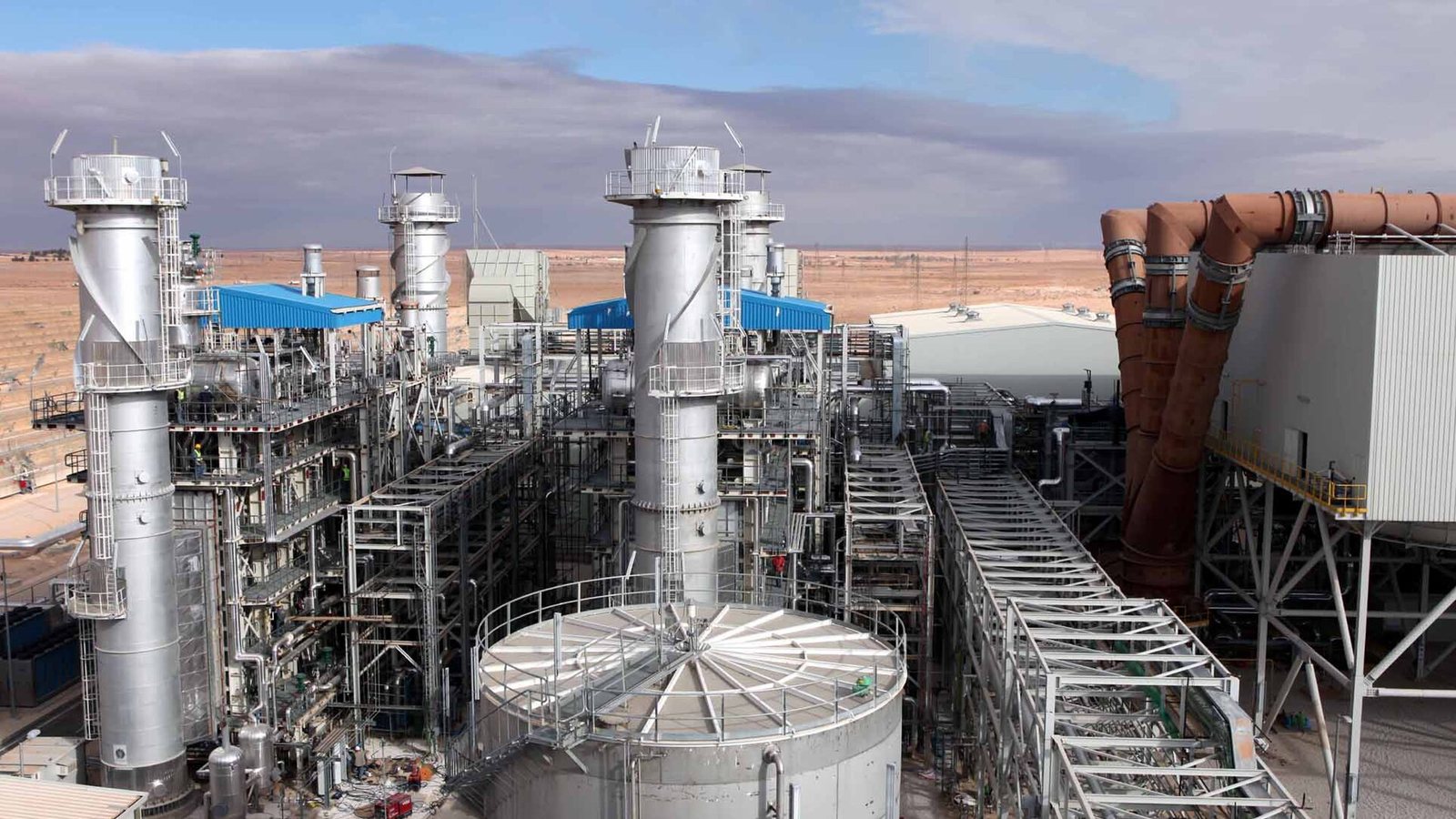
Illustrative image. Photo: Magharebia, CC BY 2.0, via Wikimedia Commons — source