


Who Buys Qatar’s LNG?


Last updated: 10 October 2026 · Last verified: 10 October 2026
Qatar is normally the world’s second-largest exporter of liquefied natural gas, sending roughly 80% of its cargoes to Asia and holding a growing web of multi-decade supply contracts in Europe, South Asia and East Asia. But since early March 2026, the war-driven closure of the Strait of Hormuz has cut Qatar’s actual LNG exports by around 96%, turning a routine “who buys it” question into a live case study of what happens when a single chokepoint carries a fifth of the world’s seaborne LNG. This page tracks both sides: Qatar’s structural buyer base under normal conditions, and the current disruption reshaping who is actually receiving Qatari gas.
Qatar’s LNG Buyers Before the 2026 Crisis
Qatar’s LNG book has historically been Asia-heavy, with China and India as the largest single-country buyers and a smaller but strategically important tranche going to Europe. The figures below reflect ship-tracking and trade data for the nine months before the Strait of Hormuz closure began — a baseline, not a current snapshot.
| Importing Country | Share of Qatar’s LNG Exports | Volume | Year | Source |
|---|---|---|---|---|
| China | ~23% | Not separately disclosed in this dataset | Jan–Sep 2025 | Ship-tracking/trade data cited by Sahmik.com and Free Press Journal |
| India | ~13.8% | 8.5 million tonnes (+11.1% y/y) | Jan–Sep 2025 | Sahmik.com, citing global LNG delivery tracking |
| Taiwan | ~9.9% | Not separately disclosed in this dataset | Jan–Sep 2025 | Sahmik.com |
| South Korea | ~8.5% | Not separately disclosed in this dataset | Jan–Sep 2025 | Sahmik.com |
| Pakistan, Bangladesh, Kuwait, Japan, Singapore, Thailand | Notable buyers; individual shares not disclosed in this dataset | — | Jan–Sep 2025 | Sahmik.com / Free Press Journal |
| Italy | Largest single European buyer of Qatari LNG; Belgium, Poland, Spain received smaller volumes | — | Jan–Sep 2025 | Sahmik.com / Free Press Journal |
These percentages describe deliveries during a specific nine-month window, not annual totals or long-run averages, and different tracking firms sometimes rank buyers slightly differently depending on methodology. Qatar’s own Strait of Hormuz chokepoint profile puts pre-crisis Hormuz dependence even more starkly: about 93% of Qatar’s total LNG exports transited the strait in 2025, according to IEEFA data, meaning almost the entire buyer list above was exposed the moment the strait closed.
The 2026 Hormuz Disruption: A Near-Total Halt
Iran moved to close the Strait of Hormuz in early March 2026 after Israeli and U.S. strikes triggered a wider regional war, and Qatar’s Ras Laffan export complex was attacked that same month. An April 8 ceasefire between the U.S. and Iran did not restore normal shipping. Six months on, Qatar’s LNG trade looks nothing like its pre-war baseline.
| Metric | Value | Period | Source |
|---|---|---|---|
| LNG cargoes loaded by Qatar | 18 cargoes | ~March–September 2026 (six months since closure) | ICIS ship-tracking data, via Reuters |
| LNG cargoes loaded in the same window a year earlier | 509 cargoes | ~March–September 2025 | ICIS ship-tracking data, via Reuters |
| Year-on-year decline in cargoes | ~96% | vs. year-earlier period | ICIS / Reuters |
| Estimated lost LNG sales | ~$24 billion | Since March 2026 | Reuters |
| Pakistan & Bangladesh delivery force majeure | Extended through November 2026 | As of 28 September 2026 | Bloomberg |
| Italy (Edison) delivery force majeure | Extended to early December 2026; deliveries suspended since spring 2026 | As of 28 September 2026 | Bloomberg; CNBC (1 July 2026) |
| QatarEnergy LNG carriers transiting Hormuz | At least 13 transits, including 5 “dark” (AIS-off) transits in the week to 25 September | September 2026 | Discoveryalert.com, citing ship-tracking data |
The disruption is specific to LNG’s physical handling requirements. Crude oil cargoes have at times used ship-to-ship transfers off Oman to partly bypass the most contested stretch of the strait; LNG carriers, which keep cargo cryogenically cooled to around minus 162°C, have far fewer workarounds, so Qatari LNG has had comparatively few ways around the closure compared with crude. QatarEnergy has not disclosed publicly how many contracted cargoes remain stranded or cancelled under its latest force majeure notices.
How Qatar Is Compensating Its Customers
With its own Ras Laffan-loaded cargoes largely unable to move, QatarEnergy has turned to the spot and term U.S. market to keep at least some contracted volumes flowing. The company has purchased roughly 33 U.S. LNG cargoes, worth an estimated $1 billion, mostly from Louisiana-based exporter Venture Global, for delivery to stranded customers in Japan, South Korea, India, Bangladesh and Taiwan. For the duration of the crisis, Qatar’s global trading arm is acting less like a producer shipping its own gas and more like a trader plugging contractual gaps with someone else’s cargoes — a reversal of its usual role as a net LNG seller.
Long-Term Contracted Buyers (Structural Demand)
Underneath the current disruption, Qatar’s buyer base is anchored by a set of multi-decade sales and purchase agreements (SPAs) signed over the past several years. These contracts define future, not current, delivered volumes, and several have not yet started.
| Buyer | Country | Volume | Term | Status | Source |
|---|---|---|---|---|---|
| Petronet LNG | India | 7.5 million tonnes/year | 20 years, DES basis, 2028–2048 | Contract (signed) | S&P Global Commodity Insights / Petronet LNG |
| Gujarat State Petroleum Corp (GSPC) | India | Up to 1 million tonnes/year | 17 years, from 2026 | Contract (signed Oct 2025) | LNG Industry / Enerdata / GIIGNL |
| Petronas LNG | Malaysia | Up to 2 million tonnes/year | 20 years | Contract (signed Feb 2026) | Malay Mail |
| CNPC | China | 4 million tonnes/year | 27 years, ongoing since 2021 | Operational | Company announcements (2021) |
| Sinopec | China | 4 million tonnes/year (North Field East) | 27 years, from North Field East start-up | Contract (signed Nov 2022) | QatarEnergy; Sinopec; industry press (World Oil, Offshore Energy) |
| Sinopec | China | 3 million tonnes/year (North Field South) | 27 years, from North Field South start-up | Contract (signed Nov 2022) | QatarEnergy; Sinopec; industry press (World Oil, Offshore Energy) |
| ConocoPhillips (for Germany) | Germany | Up to 2 million tonnes/year | At least 15 years, from 2026 (Brunsbüttel terminal) | Contract (signed Nov 2022) | ConocoPhillips press release |
| JERA | Japan | 3.0 million tonnes/year | 27 years, DES basis, from 2028 | Contract (signed Feb 2026) | JERA press release |
Combined, QatarEnergy’s SPAs with Sinopec commit 7 million tonnes/year across two 27-year contracts — separate from the CNPC deal above — making Sinopec one of the largest single offtakers of Qatar’s North Field expansion volumes once those trains start up.
What to Watch Next
Qatar’s Hormuz transits picked up toward the end of September 2026: Bloomberg reported that LNG tanker traffic through the strait reached its highest level in more than two months, though still well below the roughly three LNG shipments a day the route saw before the war. Some of the most recent passages have depended on case-by-case Iranian permission, including at least one vessel routed along the Iranian coast under a currently approved path, rather than resuming as an unrestricted shipping lane. Energy minister Saad Sherida Al-Kaabi said Ras Laffan’s undamaged capacity could resume full operations “within a couple of weeks” once Hormuz reopens — a conditional statement, not a reopening date. Qatari executives have told reporters that LNG trade “won’t return to normal” even once the strait fully reopens, according to The National (14 September 2026) — some buyers who sourced replacement U.S. or Australian cargoes during the gap may not fully revert to their original delivery schedules. The next concrete test dates are the current force majeure deadlines: Pakistan and Bangladesh through November 2026, and Edison’s Italian deliveries through early December 2026. Whether QatarEnergy lifts those notices on schedule, extends them again, or the late-September uptick in transits turns into a sustained ramp-up will determine how much of the pre-war buyer table above is restored — and how much of it has permanently shifted to other suppliers.
Frequently Asked Questions
Who is Qatar’s biggest LNG buyer?
Before the 2026 Hormuz disruption, China was Qatar’s largest single-country buyer, accounting for roughly 23% of exports between January and September 2025, ahead of India, Taiwan and South Korea.
Why did Qatar’s LNG exports collapse in 2026?
Iran’s closure of the Strait of Hormuz from March 2026, following a wider Iran-Israel-U.S. war, cut off the only maritime export route for Qatar’s LNG. Cargo loadings fell around 96% year-on-year, from 509 cargoes to 18 over a comparable six-month window, according to ICIS data reported by Reuters.
Is Europe’s LNG supply from Qatar affected by the Hormuz closure?
Yes. Italy, Qatar’s largest European buyer via its Edison contract, has had deliveries suspended since spring 2026 and has had that force majeure extended to early December 2026, according to Bloomberg and CNBC reporting.
How is Qatar supplying customers while Hormuz is disrupted?
QatarEnergy has bought around 33 U.S. LNG cargoes, mostly from Venture Global, for roughly $1 billion, and redirected them to stranded customers in Japan, South Korea, India, Bangladesh and Taiwan rather than shipping its own Ras Laffan-loaded cargoes through Hormuz.
Will Qatar’s LNG exports return to pre-war levels?
Not necessarily on the same terms. Qatari executives have said trade “won’t return to normal” even after Hormuz fully reopens, since some buyers have adjusted their sourcing during the outage. As of September 2026, QatarEnergy carriers are transiting the strait again but only in small, cautious numbers.
Related The Daily Energy Pages
- Qatar Extends LNG Force Majeure Into December as Hormuz Blockage Persists (news)
- What Happens When the Strait of Hormuz Closes? (chokepoint profile)
- What Is LNG and How Does It Work?
- What Is Natural Gas and How Is It Used?
- Who Supplies Türkiye With Natural Gas? (Who Powers Who? series)
- Where Does Japan Get Its LNG? (Who Powers Who? series)
- Where Does China Get Its LNG? (Who Powers Who? series)
- Who Buys Russia’s LNG? (Who Powers Who? series)
- Where Does Germany Get Its LNG? (Who Powers Who? series)
- Where Does Italy Get Its Natural Gas? (Who Powers Who? series)
- ADNOC: Ownership, Leadership and Major Assets
Sources
- Reuters / ICIS ship-tracking data, reported August–September 2026
- Bloomberg, “Qatar Extends LNG Force Majeure as Hormuz Disruptions Drag On,” 28 September 2026
- CNBC, 1 July 2026
- The National, 14 September 2026
- EnergyNow.com / Institute for Energy Research, July 2026
- Discoveryalert.com, September 2026
- Bloomberg, Qatar Hormuz LNG tanker traffic and Energy Minister Al-Kaabi remarks, late September 2026
- Sahmik.com and Free Press Journal, citing global LNG delivery tracking, Jan–Sep 2025 data
- S&P Global Commodity Insights; Petronet LNG; LNG Industry; Enerdata; GIIGNL; Malay Mail; ConocoPhillips; JERA — company and industry-press announcements, 2021–2026
- IEEFA / EIA, via The Daily Energy’s Strait of Hormuz chokepoint profile
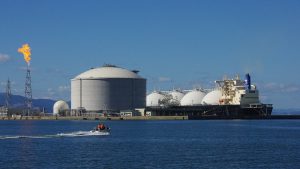
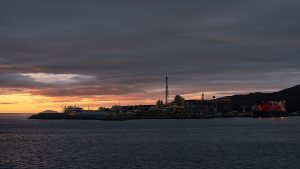
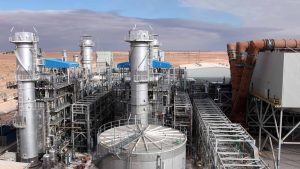
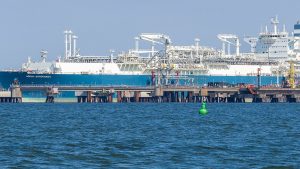
Illustrative image. Photo: VileGecko, CC BY-SA 4.0, via Wikimedia Commons — source

[…] Who Buys Qatar’s LNG? — TDE analysis of Qatar’s LNG export markets […]
[…] The QatarEnergy contract is also tracked from the seller’s side on The Daily Energy’s Who Buys Qatar’s LNG? […]
[…] to avoid a shortage. The disruption is tracked on the exporter side on The Daily Energy’s Who Buys Qatar’s LNG? and Qatar’s North Field LNG Expansion […]
[…] shipping has faced repeated disruption — part of a broader diversification pattern visible in who buys Qatar’s LNG and in the pace of Qatar’s own North Field expansion. Al-Kaabi said the new volumes will […]
[…] for instance, still draws LNG from a more varied mix including Qatar and the United States (see Who Buys Qatar’s LNG?). It leaves German buyers exposed to US Gulf Coast weather disruptions, shipping costs and any […]
[…] was the largest single European buyer of Qatari LNG in the January–September 2025 period (see Who Buys Qatar’s LNG?). Separately, Italian reporting (Il Sole 24 Ore) found that in May and June 2025, LNG cargoes […]
[…] Who Buys Qatar’s LNG? (Who Powers Who? series) […]