


What Is Natural Gas and How Is It Used?

Last updated: September 28, 2026
Natural gas is a fossil fuel found underground that consists mostly of methane (CH₄), along with smaller amounts of other hydrocarbon gas liquids and non-hydrocarbon gases such as carbon dioxide and water vapor. It formed over millions of years from the buried remains of ancient plants and marine organisms, and today it is extracted from underground rock formations, processed to remove impurities, and moved by pipeline or as liquefied natural gas (LNG) to generate electricity, heat homes, power industry, and supply chemical feedstocks.
Definition
Natural gas is a naturally occurring mixture of hydrocarbon gases trapped in rock formations beneath the earth’s surface. According to the U.S. Energy Information Administration (EIA), it is composed mainly of methane, but raw (“wet”) natural gas as it comes out of the ground also contains natural gas liquids (NGLs) — such as ethane, propane, butane, and pentane — plus non-hydrocarbon components like carbon dioxide, nitrogen, hydrogen sulfide, and water vapor. Once processed to remove these components, the result is “pipeline-quality” or “dry” natural gas, the form delivered to homes, power plants, and industrial users.
How It Forms and Is Produced
Natural gas formed from the remains of plants and marine organisms, such as diatoms, that accumulated in thick layers on ancient seafloors and land surfaces. Over millions to hundreds of millions of years, heat and pressure from overlying rock and sediment converted this organic material into coal, crude oil, and natural gas, according to the EIA.
Natural gas occurs in several settings:
- Conventional gas — trapped in large, permeable pockets and cracks between rock layers, from which it flows relatively easily once a well is drilled.
- Unconventional gas — held in the tiny pores of shale, sandstone, and other tight sedimentary rock (“shale gas” or “tight gas”), which requires hydraulic fracturing (“fracking”) — pumping water, sand, and chemicals down a well under high pressure to crack the rock and release the gas.
- Associated gas — produced alongside crude oil in the same reservoir.
- Coalbed methane — gas trapped within coal seams.
Once brought to the surface, wet gas is sent to processing plants that strip out water vapor and non-hydrocarbon gases and separate out the NGLs, leaving dry, pipeline-quality gas ready for transport.
Why It Matters
Natural gas is one of the world’s largest energy sources and, unlike oil, is consumed mainly close to where it is produced because pipeline transport is far cheaper than shipping it as liquid. Global demand hit a fresh record in 2024, rising 2.8%, or roughly 115 billion cubic metres (bcm), year-on-year — a faster pace than the 2010–2020 average — according to the International Energy Agency’s Global Energy Review 2025. Around three-quarters of that growth came from industry and power generation, and roughly 40% of the additional demand came from emerging Asian economies, led by China (gas demand up more than 7%) and India (up about 10%), per the same IEA report.
On the supply side, the United States has been the world’s largest natural gas producer every year since 2009 (EIA). U.S. marketed production is forecast to average a record 122.5 billion cubic feet per day (Bcf/d) in 2026, up from the prior record of 118.5 Bcf/d in 2025, with most of the growth concentrated in the Permian region of Texas and New Mexico and the Haynesville region of Louisiana and Texas, according to EIA’s Short-Term Energy Outlook. Dry natural gas accounted for 38% of total U.S. energy production in 2025 (EIA).
Reserves remain heavily concentrated: Russia, Iran, and Qatar together hold more than half of the world’s proved natural gas reserves, and at 2024 production rates the world had roughly 51 years of proved reserves left (a reserves-to-production, or R/P, ratio), according to the Energy Institute’s Statistical Review of World Energy 2025.
| Metric | Value | Year | Source |
|---|---|---|---|
| U.S. marketed natural gas production (record) | 118.5 Bcf/d | 2025 | EIA Short-Term Energy Outlook |
| U.S. marketed natural gas production (forecast record) | 122.5 Bcf/d | 2026 (forecast) | EIA Short-Term Energy Outlook |
| Global natural gas demand growth | +2.8% (~115 bcm) | 2024 | IEA, Global Energy Review 2025 |
| World reserves-to-production (R/P) ratio | ~51 years | 2024 | Energy Institute, Statistical Review of World Energy 2025 |
Where It Is Used
Natural gas is burned to generate electricity (including in flexible gas turbine and combined-cycle gas turbine plants), to heat homes and water, to dry and process food and other goods in industry, and as a chemical feedstock for fertilizer, plastics, and hydrogen production. It also underpins LNG (liquefied natural gas), in which gas is cooled to about -162°C to shrink its volume roughly 600-fold so it can be shipped overseas by carrier rather than moved by pipeline, opening intercontinental trade between producers such as the United States, Qatar, and Australia and importers across Asia and Europe.
Key Characteristics
- Colorless and odorless in its natural state; utilities add a sulfur-based odorant (mercaptan) so leaks can be detected by smell.
- Burns more cleanly than coal or oil, producing less carbon dioxide and far less particulate matter and sulfur dioxide per unit of energy.
- Priced regionally rather than on one global benchmark: Henry Hub in the United States, the Title Transfer Facility (TTF) in Europe, and the Japan-Korea Marker (JKM) for spot LNG cargoes in Asia are the three most widely referenced natural gas price markers.
- Measured in cubic feet or cubic metres for volume, and often converted to energy units such as British thermal units (Btu) or gigajoules (GJ) for comparison across fuels.
Related Technologies
Key technologies and infrastructure linked to natural gas include hydraulic fracturing and horizontal drilling (which unlocked shale gas), gas processing plants, compressor stations, underground storage caverns used to balance seasonal demand, combined-cycle gas turbine (CCGT) power plants, and the LNG value chain of liquefaction plants, LNG carriers, and regasification/import terminals.
Real-World Examples
The Permian and Haynesville basins in the United States, the supergiant South Pars/North Field straddling Iran and Qatar, and Russia’s West Siberian fields are among the world’s most important natural gas production centers. Natural gas markets have also been highly sensitive to geopolitical disruption: in 2026, a pipeline leak in West Virginia briefly pushed U.S. gas futures to a three-month high, while a blockage near the Strait of Hormuz led Qatar to repeatedly extend force majeure declarations on its LNG exports — illustrating how quickly supply shocks in one region can ripple through global gas and LNG markets.
FAQ
What is natural gas made of?
Mostly methane (CH₄), along with smaller amounts of other natural gas liquids (ethane, propane, butane) and non-hydrocarbon gases such as carbon dioxide, nitrogen, and water vapor, which are removed during processing.
Is natural gas renewable or nonrenewable?
Natural gas is a nonrenewable fossil fuel. It forms over millions of years from buried organic matter and is extracted far faster than it is replenished.
What is the difference between natural gas and LNG?
Natural gas is the gaseous fuel as produced and moved by pipeline. LNG is that same gas cooled to a liquid so it can be shipped by sea in specialized carriers, then warmed back into gas at an import terminal.
Which country produces the most natural gas?
The United States has been the world’s largest natural gas producer every year since 2009, according to the EIA.
What is natural gas used for?
Mainly generating electricity, heating buildings and water, industrial processing, and as a feedstock for chemicals, fertilizer, and hydrogen production.
Related The Daily Energy Pages
- LNG (Liquefied Natural Gas)
- What Is OPEC?
- Qatar Extends LNG Force Majeure Into December
- West Virginia Gas Pipeline Leak Sends US Futures Up 9%
- What Happens When the Strait of Hormuz Closes?
Sources
- U.S. Energy Information Administration, “Natural Gas Explained” (energyexplained/natural-gas)
- U.S. Energy Information Administration, “United States on Track for Record Natural Gas Production in 2026,” Today in Energy
- U.S. Energy Information Administration, Short-Term Energy Outlook, Natural Gas
- International Energy Agency, Global Energy Review 2025 — Natural Gas
- Energy Institute, Statistical Review of World Energy 2025 (74th edition)
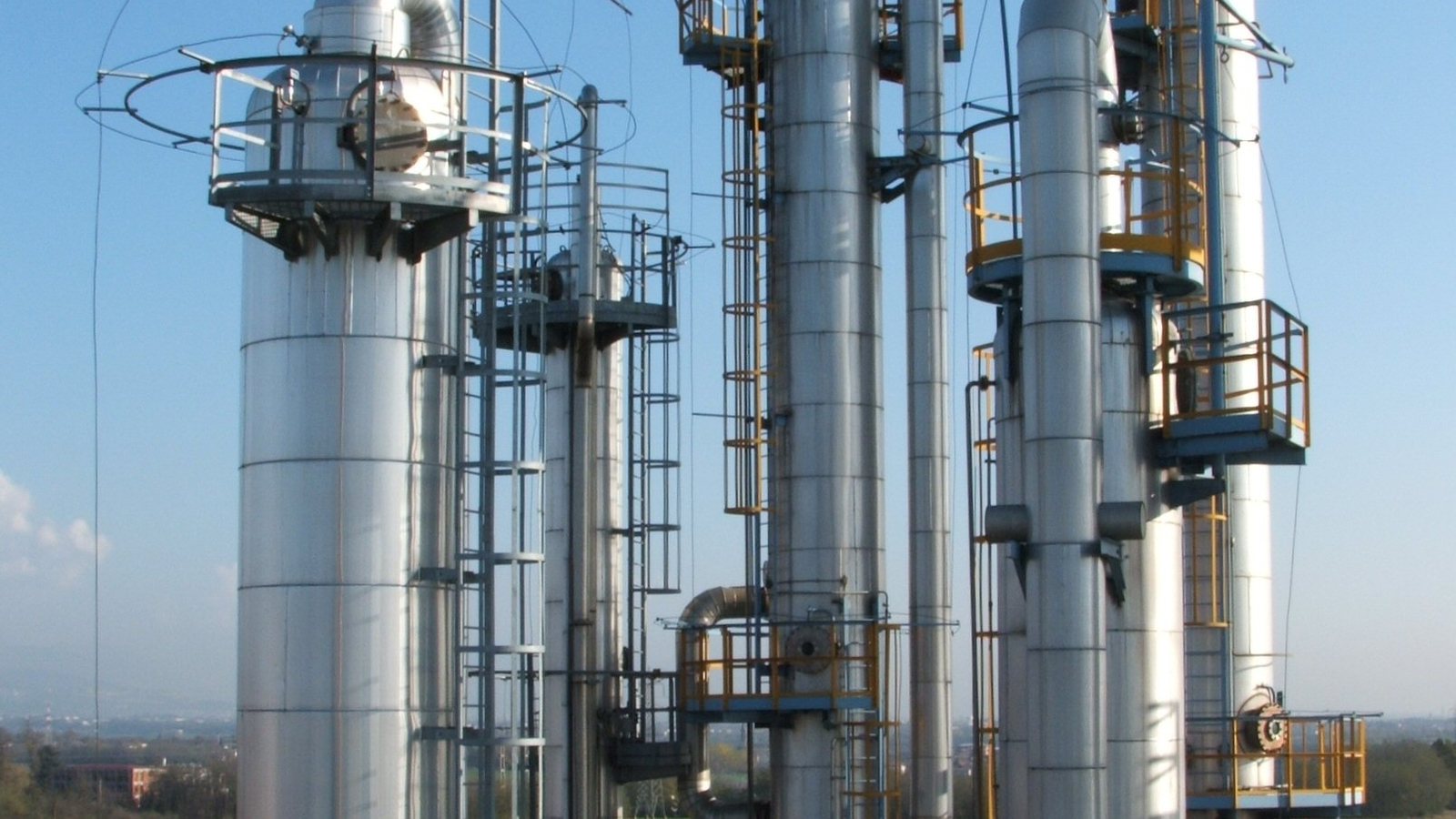
Illustrative image. Photo: User:Luigi Chiesa, CC BY 3.0, via Wikimedia Commons — source





[…] natural gas markets use their own regional reference prices such as Henry Hub, TTF, and JKM (see Natural Gas). Understanding Brent also requires understanding contango and backwardation (how futures prices […]
[…] Natural Gas — the parent resource LNG is made from […]