What Is Carbon Capture and Storage (CCS)?

Last updated: October 19, 2026
Carbon capture and storage (CCS) is a set of technologies that capture carbon dioxide (CO2) before it reaches the atmosphere — typically from a power plant, refinery, or heavy industrial facility — then compress it, transport it by pipeline or ship, and inject it deep underground into porous rock formations for long-term storage. It is one of the few available technologies that can cut emissions directly from sectors such as cement, steel and natural gas processing, where there is no easy substitute for fossil fuels or industrial chemistry.
Definition
CCS covers three linked stages: capturing CO2 at its source, transporting the captured gas to a storage site, and injecting it into deep geological formations where it is intended to remain permanently trapped. The technology does not remove CO2 that is already in the atmosphere — for that, a related but distinct set of technologies, direct air capture (DAC), is used. CCS is also distinct from CCUS (carbon capture, utilization and storage), a broader term that includes capturing CO2 for use in products such as fuels, chemicals or building materials, rather than only for underground storage.
How It Works
Capture. CO2 is separated from a facility’s flue gas or process stream using one of three main approaches:
- Post-combustion capture — CO2 is stripped from exhaust gases after fuel has already been burned, typically using a chemical solvent; this can be retrofitted onto existing power plants and industrial facilities.
- Pre-combustion capture — fuel is converted into a mixture of hydrogen and CO2 before combustion, and the CO2 is separated out, leaving a hydrogen-rich fuel to burn; this is also the basis for “blue” hydrogen production from natural gas.
- Oxy-fuel combustion — fuel is burned in nearly pure oxygen instead of air, producing a flue gas that is mostly CO2 and water vapor, which simplifies capture.
Transport. Once captured and compressed, CO2 typically moves through dedicated high-pressure pipelines. Where a pipeline is not practical — including for offshore storage sites not connected by pipeline — it can instead be shipped as liquefied CO2 by specialized carrier, or in smaller volumes by truck or rail.
Storage. At the storage site, CO2 is injected through a well into a geological formation deep enough and capped by impermeable rock to keep it trapped. The main storage options are deep saline (saltwater) rock formations, depleted oil and gas reservoirs — which have already proven they can hold fluids for geological timescales — and, less commonly, deep unmineable coal seams. Historically, much of the CO2 captured worldwide has instead been used for enhanced oil recovery (EOR), where it is injected into partially depleted oil fields to help extract more oil, with some of the injected CO2 remaining underground afterward.
CCS vs. CCUS vs. Direct Air Capture
| Term | What it captures | What happens to the CO2 |
|---|---|---|
| CCS | CO2 from a point source (power plant, refinery, industrial facility) | Stored permanently in deep geological formations |
| CCUS | CO2 from a point source | Stored underground, used for enhanced oil recovery, or converted into fuels, chemicals or building materials |
| Direct air capture (DAC) | CO2 already diluted in the open atmosphere | Typically stored underground or used in products; a form of carbon dioxide removal (CDR) rather than point-source capture |
Why It Matters
According to the International Energy Agency’s CCUS Projects Database, global CO2 capture and storage capacity in operation stood at just over 50 million tonnes (Mt) per year as of the first quarter of 2025, up from 47.4 Mt a year earlier — modest growth by the IEA’s own assessment. More than 60% of today’s operating capacity remains tied to natural gas processing facilities, which produce a concentrated CO2 stream that is comparatively cheap to capture, rather than to power generation or heavy industry. Eight new CCUS projects started operating in 2024, though most were relatively small, with some capturing as little as 5,000 tonnes of CO2 per year. The IEA’s project pipeline points to roughly 430 Mt per year of capture capacity by 2030 if projects currently announced or under construction are completed on schedule — with projects at an advanced stage or already under construction now accounting for about 60% of that pipeline. For comparison, the IEA’s Net Zero Emissions by 2050 scenario calls for CCS and CCUS to capture roughly 1 billion tonnes (1 Gt) of CO2 per year, meaning even the optimistic 2030 pipeline would still fall well short of that long-term benchmark.
Where It Is Used
- Natural gas processing — stripping naturally occurring CO2 out of raw gas before it enters the pipeline; currently the largest single source of operating CCS capacity.
- Power generation — capturing CO2 from gas- or coal-fired power plants, including some retrofits of existing plants.
- Heavy industry — cement, steel, fertilizer and chemical plants, where CO2 is often an unavoidable byproduct of the chemical process itself, not just of burning fuel.
- Blue hydrogen production — pairing natural gas reforming with carbon capture to produce lower-carbon hydrogen; see The Daily Energy’s guide to green, blue and grey hydrogen.
- Enhanced oil recovery — the single largest historical use for captured CO2, predating most climate-motivated CCS projects.
Related Technologies
CCS is closely linked to direct air capture (DAC), CO2 pipeline and shipping infrastructure, saline aquifer and depleted-reservoir storage characterization, and blue hydrogen production. It is also an input to carbon-pricing and emissions-trading policy, since many CCS projects depend on a carbon price, tax credit or government contract to be economic.
Real-World Examples
Norway’s Northern Lights project — a joint venture of Shell, Equinor and TotalEnergies — began injecting CO2 into a reservoir about 2,600 meters below the seabed in August 2025, completing Phase 1 of the project. Phase 1 is fully booked and can inject up to 1.5 million tonnes of CO2 per year, or 37.5 million tonnes over a 25-year period; the companies operate what they describe as the world’s largest dedicated fleet for commercial CO2 shipping to move liquefied CO2 from emitters to the storage site. An approved Phase 2 expansion is due to become operational in the second half of 2028 and would more than triple capacity to at least 5 million tonnes per year. In the United Kingdom, Eni installed a CO2 injection platform offshore in Liverpool Bay as part of the HyNet industrial CCS cluster — see The Daily Energy’s coverage of Eni’s Liverpool Bay CCS platform — while Subsea7 and Worley have been contracted to fabricate subsea structures for the next phase of Northern Lights; see The Daily Energy’s report on the Northern Lights Phase 2 contract award.
FAQ
What is carbon capture and storage?
A set of technologies that capture CO2 from power plants or industrial facilities, transport it by pipeline or ship, and inject it deep underground for long-term storage instead of letting it reach the atmosphere.
How does CCS work?
CO2 is separated from a facility’s exhaust or process stream using post-combustion, pre-combustion or oxy-fuel capture methods, compressed, moved by pipeline or ship to a storage site, and injected into deep rock formations such as saline aquifers or depleted oil and gas reservoirs.
What is the difference between CCS and CCUS?
CCS stores captured CO2 permanently underground. CCUS (carbon capture, utilization and storage) is the broader term, covering projects where some or all of the captured CO2 is instead used to make fuels, chemicals or building materials, or injected for enhanced oil recovery.
Does carbon capture and storage actually work?
Yes, as a technology — CO2 has been injected into geological storage at commercial scale for decades, including at Norway’s Northern Lights project. The debate in the industry is less about whether the technology works and more about its cost, scale and pace of deployment: the IEA puts global operating capacity at roughly 50 Mt of CO2 per year as of early 2025, far below the nearly 1 billion tonnes per year envisioned in its Net Zero Emissions by 2050 scenario.
Is CCS the same as carbon removal?
No. CCS captures CO2 at the point it is produced, before it reaches the atmosphere. Carbon dioxide removal (CDR) technologies, such as direct air capture, instead pull CO2 that is already diluted in the atmosphere back out of the air.
Related The Daily Energy Pages
- What Is Green Hydrogen and How Is It Made?
- What Is Natural Gas?
- What Is Shell and Who Owns It? Leadership and Key Projects
- TotalEnergies: Ownership, Leadership and Major Projects
- Eni Installs World-First CO2 Platform Offshore UK for Liverpool Bay CCS
- Subsea7 Hires Worley to Fabricate Subsea Structures for Northern Lights CCS Expansion
Sources
- International Energy Agency, “CCUS Projects Around the World Are Reaching New Milestones” (commentary, April 2025) and CCUS Projects Database
- Northern Lights joint venture (Equinor, Shell, TotalEnergies), project status and capacity figures, norlights.com
- Reuters / BusinessGreen reporting on the Northern Lights Phase 1 start-up, August 2025
- The Daily Energy reporting on Eni’s Liverpool Bay CCS platform and the Northern Lights Phase 2 contract award
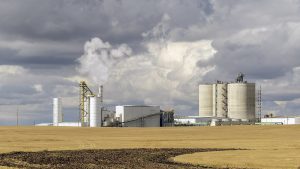
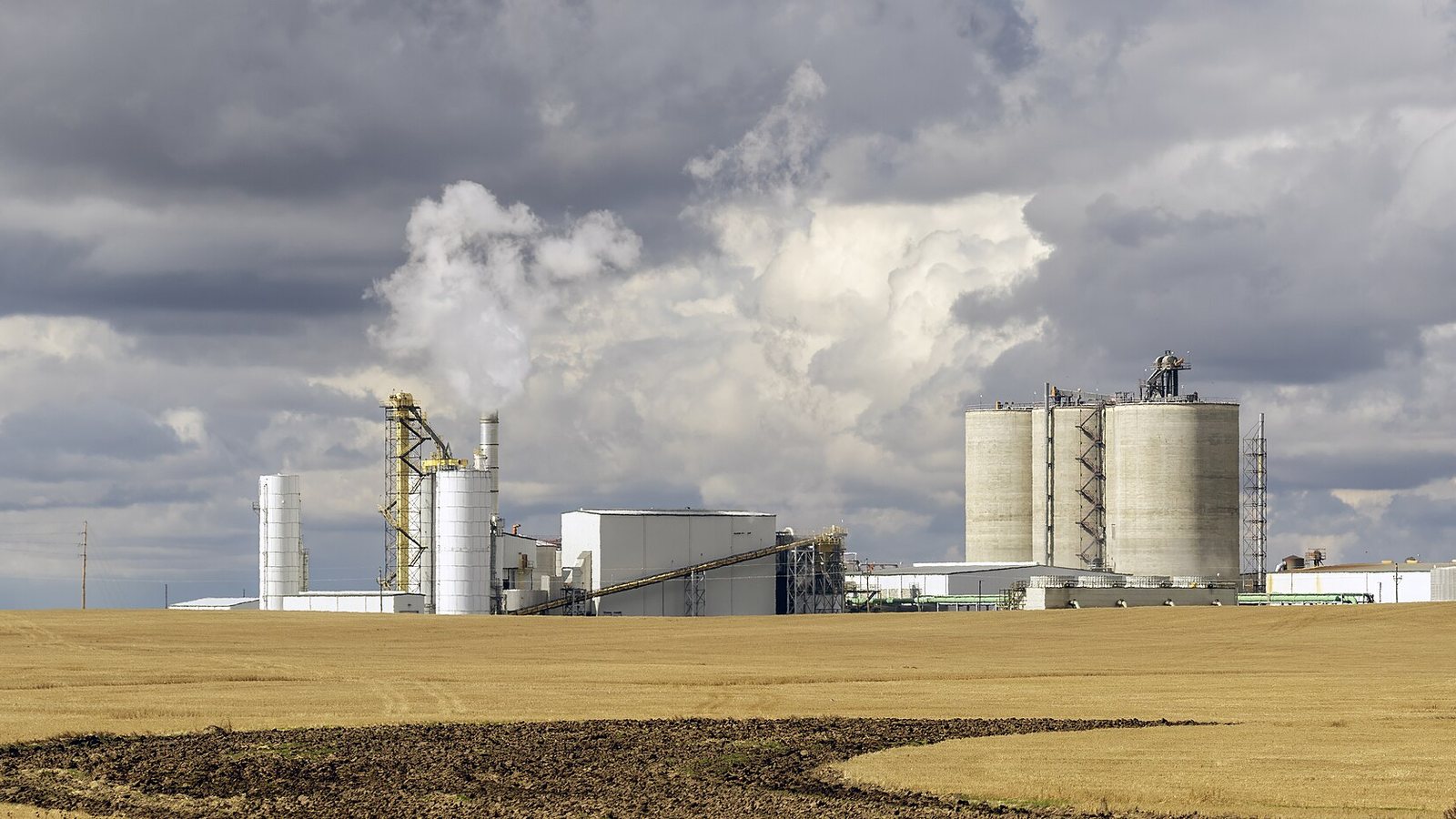
Illustrative image. Photo: Acroterion, CC BY-SA 4.0, via Wikimedia Commons — source