


ExxonMobil: Ownership, Leadership and Major Assets

Last updated: October 2, 2026
What Is ExxonMobil?
ExxonMobil (Exxon Mobil Corporation, NYSE: XOM) is a publicly traded American oil and gas major headquartered in Spring, Texas, a suburb of Houston. It is one of the world’s largest integrated energy companies by market capitalization, active across upstream oil and gas production, fuels and chemicals manufacturing, and an emerging low-carbon business spanning carbon capture, hydrogen and lithium.
Ownership
ExxonMobil is a publicly listed company with no controlling shareholder; its shares trade on the New York Stock Exchange under the ticker XOM, held mainly by institutional investors and index funds. As of mid-September 2026, its market capitalization was approximately $669 billion, making it one of the most valuable listed energy companies in the world.
Leadership
Darren W. Woods has served as Chairman and Chief Executive Officer since January 2017. He joined Exxon in 1992 and held senior roles across refining, chemicals and international operations before becoming CEO.
History
ExxonMobil traces its roots to Standard Oil, founded by John D. Rockefeller in 1870 and broken up by U.S. antitrust action in 1911. Two of the resulting companies, Standard Oil of New Jersey (which became Exxon) and Standard Oil of New York (Socony, which merged with Vacuum Oil in 1931 to form Mobil), operated separately for most of the 20th century. Exxon and Mobil recombined in a roughly $83 billion stock-for-stock merger, completed on November 30, 1999, creating Exxon Mobil Corporation — at the time the largest corporate merger in history.
Main Business
Since a January 2022 reorganization, ExxonMobil operates through three business lines:
- Upstream — oil and gas exploration and production, including U.S. unconventional (Permian Basin), deepwater Guyana, and LNG projects.
- Product Solutions — refining and fuels, chemicals, and specialty products (lubricants, performance chemicals), combining what were previously separate downstream and chemical segments.
- Low Carbon Solutions — carbon capture and storage (CCS), hydrogen and lithium, established to commercialize emissions-reduction technologies for ExxonMobil’s own operations and third-party customers.
Production and Capacity
ExxonMobil reported full-year 2025 net production of 4.7 million oil-equivalent barrels per day, the company’s highest level in more than 40 years, driven by growth in the Permian Basin and Guyana.
| Asset | 2025 production | Note |
|---|---|---|
| Permian Basin (U.S.) | 1.6 million boe/d (net, annual record) | Target: ~2.5 million boe/d by 2030 |
| Guyana, Stabroek Block | 715,000 b/d (gross, annual record) | Yellowtail FPSO started up August 2025 |
| Total company (net) | 4.7 million boe/d | Highest in over 40 years |
Source: ExxonMobil, full-year 2025 results and Guyana operational updates (January 2026).
Under its 2030 plan, ExxonMobil targets total upstream production of roughly 5.5 million oil-equivalent barrels per day by 2030, with the Permian, Guyana and LNG together accounting for about 65% of output.
Major Assets
- Permian Basin (Texas/New Mexico) — ExxonMobil’s largest U.S. unconventional oil and gas position, built up organically and through the 2024 acquisition of Pioneer Natural Resources.
- Stabroek Block, offshore Guyana — a deepwater block where ExxonMobil is operator with a 45% interest; Chevron holds 30% (after completing its acquisition of Hess Corporation in 2025) and CNOOC holds 25%. Producing FPSOs include Liza Destiny, Liza Unity, Prosperity and Yellowtail; Uaru and Whiptail are under development, each with an investment-basis capacity of about 250,000 b/d. Under the 2016 Stabroek Block petroleum agreement, ExxonMobil’s original 10-year exploration period expires in October 2026, and the operator is set to relinquish approximately 20% of the block’s original 6.6-million-acre area as a result — the areas already covered by sanctioned developments and discoveries are retained.
- Imperial Oil (Canada) — a publicly listed Canadian affiliate in which ExxonMobil holds roughly a 69.6% stake, active in Canadian oil sands, refining and retail.
Countries
ExxonMobil operates across more than 50 countries, with its largest upstream production concentrated in the United States (Permian Basin) and Guyana, plus LNG and upstream interests in Qatar, Mozambique and Papua New Guinea, refining and chemicals operations in the U.S. Gulf Coast, Singapore and the Benelux region, and an affiliate business in Canada through Imperial Oil.
Major Projects
- Guyana development (Stabroek Block) — a sequence of FPSO projects (Liza Phase 1 and 2, Payara/Prosperity, Yellowtail, and the upcoming Uaru and Whiptail) that turned Guyana into one of the fastest-growing oil provinces of the 2020s.
- Permian Basin unconventional development — large-scale horizontal drilling and completions across the Delaware and Midland sub-basins, expanded materially by the 2024 Pioneer Natural Resources acquisition.
- Low Carbon Solutions projects — including CCS hub development on the U.S. Gulf Coast and hydrogen and lithium ventures intended to supply both ExxonMobil’s own facilities and external customers.
Subsidiaries
- XTO Energy — ExxonMobil’s U.S. unconventional oil and gas subsidiary, acquired in 2010.
- Imperial Oil — ~69.6%-owned, publicly traded Canadian affiliate (Toronto and New York exchanges).
- Mobil — retained as a retail fuels and lubricants brand alongside the Exxon and Esso brands in different markets.
- ExxonMobil Low Carbon Solutions — the company’s dedicated low-carbon business line.
Recent Developments
Full-year 2025 earnings were $28.8 billion, down from $33.7 billion in 2024 on weaker crude prices and chemical margins, on operating revenue of roughly $332 billion; the company generated $52.0 billion of cash flow from operations and returned $37.2 billion to shareholders ($17.2 billion in dividends and $20.0 billion in buybacks). In Guyana, a 2025 arbitration ruling favored Chevron and Hess over ExxonMobil’s attempt to block Chevron’s acquisition of Hess’s 30% Stabroek Block stake; ExxonMobil subsequently accepted Chevron as its new partner on the block, with CNOOC retaining 25% and ExxonMobil remaining operator at 45%. ExxonMobil’s original Stabroek Block petroleum agreement, signed in 2016, carried a 10-year exploration period due to expire in October 2026; in line with that agreement, ExxonMobil is relinquishing roughly 20% of the block’s original acreage this October while retaining the areas covered by its sanctioned FPSO developments. Separately, ExxonMobil continues to expand oilfield-services activity around its assets: in September 2026, SLB won four contracts to deliver more than 450 wells for Saudi Aramco, illustrating the scale of services demand across major upstream operators including ExxonMobil’s own Permian and Guyana programs.
In its third-quarter 2026 results, filed October 30, 2026, ExxonMobil reported $15.4 billion in net profit ($17.5 billion adjusted), up $2.8 billion from Q2 2026 on stronger cash flow and record refining contributions; the company generated $25.7 billion in operating cash flow, returned $9.4 billion to shareholders, cut net debt to $22.1 billion, and raised its dividend for a 44th consecutive year while guiding to $20 billion of share buybacks in 2027.
FAQ
Who owns ExxonMobil?
ExxonMobil is a publicly traded company (NYSE: XOM) with no controlling owner; its shares are held mainly by institutional investors and index funds.
Who is the CEO of ExxonMobil?
Darren W. Woods has been Chairman and CEO since January 2017.
What are ExxonMobil’s main business segments?
Upstream (oil and gas production), Product Solutions (fuels, chemicals and specialty products), and Low Carbon Solutions (carbon capture, hydrogen and lithium).
How much oil and gas does ExxonMobil produce?
ExxonMobil produced 4.7 million oil-equivalent barrels per day (net) in full-year 2025, its highest level in more than 40 years, led by the Permian Basin and Guyana.
Is ExxonMobil the same company as Exxon or Mobil?
Exxon and Mobil were separate companies until they merged in November 1999 to form Exxon Mobil Corporation; both brand names are still used at the retail level today.
Related The Daily Energy Pages
Sources
- ExxonMobil, “ExxonMobil Announces 2025 Results” press release and 2025 Form 10-K (SEC EDGAR), January 2026
- ExxonMobil corporate newsroom, Guyana operational updates and 2030 Plan announcements, 2025–2026
- Oil & Gas Journal and Rigzone reporting on the Chevron–Hess arbitration and Stabroek Block partnership change, 2025
- Imperial Oil and ExxonMobil corporate disclosures on ownership stakes
- OilNow (Guyana) — reporting on the Stabroek Block 2016 petroleum agreement, its 10-year exploration term and the scheduled October 2026 acreage relinquishment
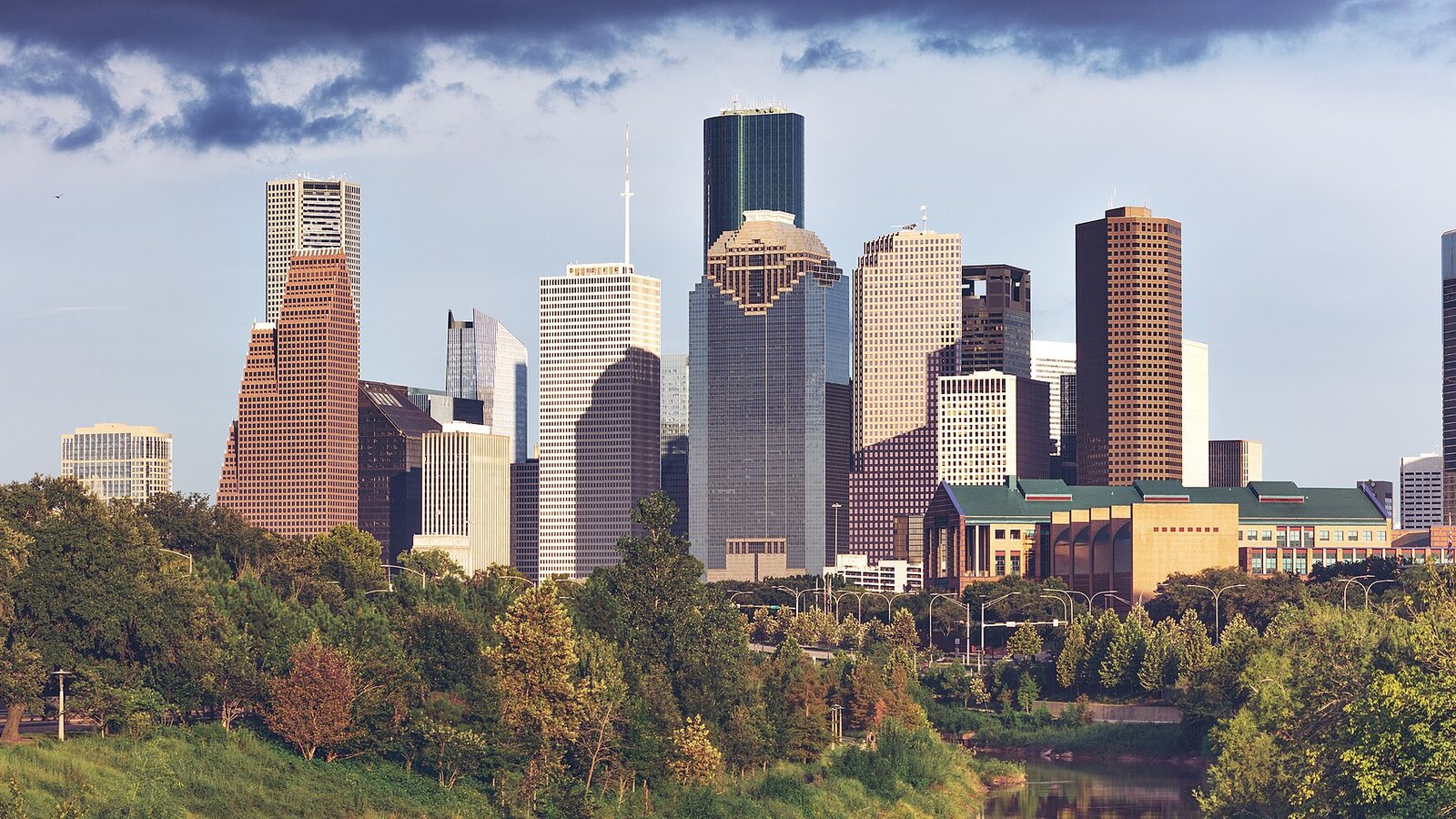
Illustrative image. Photo: David Daniel Turner, CC BY 4.0, via Wikimedia Commons — source



[…] has largely kept BP out of the wave of US shale consolidation that has swept up rivals such as ExxonMobil over the past two years, and the Eagle Ford review appears to have run into the same discipline: […]
[…] that reflects Vietnam’s broader push to reduce dependence on any single crude source as ExxonMobil and other US majors expand their footprint in Asian supply chains. BSR is separately pursuing a $1.489 billion project to raise Dung Quat’s capacity from […]
[…] ExxonMobil — the largest U.S.-headquartered international oil major and a key comparison point for Aramco’s scale and production […]
[…] ExxonMobil — fellow integrated oil and gas major, for comparison of scale and strategy […]
[…] ExxonMobil — fellow international oil major […]
[…] global supply risk. National oil companies such as Saudi Aramco and international majors such as ExxonMobil and Shell all reference Brent-linked pricing in reporting the value of their crude oil sales, and […]
[…] For ExxonMobil’s ownership, leadership, major assets and full company background, see The Daily Energy’s ExxonMobil profile. […]