


Chevron: Ownership, Leadership and Major Assets


Last updated: October 9, 2026
Chevron Corporation is one of the world’s largest integrated oil and gas companies, operating across exploration, production, refining, marketing and chemicals. Headquartered in Houston, Texas, and listed on the New York Stock Exchange under the ticker CVX, Chevron is a widely held public company with no single controlling shareholder. It is run by Chairman and CEO Michael K. Wirth and is the second-largest U.S.-based oil major after ExxonMobil.
Overview
| Full name | Chevron Corporation |
| Founded | 1879 (as Pacific Coast Oil Company); renamed Chevron Corporation on July 1, 1984, after acquiring Gulf Oil |
| Headquarters | 1400 Smith Street, Houston, Texas (relocation from San Ramon, California, announced August 2, 2024) |
| Stock listing | New York Stock Exchange, ticker CVX |
| Chairman & CEO | Michael K. Wirth (since February 1, 2018) |
| Employees | ~39,700, plus ~5,600 service-station staff, across 51 countries (company-reported, year-end 2024) |
| 2025 net income | $12.3 billion (company-reported) |
| Core business | Oil and gas exploration and production (upstream); refining, marketing and transportation (downstream); petrochemicals |
Who Owns Chevron?
Chevron is a publicly traded company with no controlling shareholder, individual or state. Ownership is spread across large index and asset-management firms that hold shares on behalf of pension funds, mutual funds and other investors. According to 2026 shareholder data, BlackRock holds roughly 7.9% of shares outstanding, State Street Investment Management roughly 7.6%, The Vanguard Group roughly 6.8% to 9% depending on how its affiliated filing entities are combined, and Berkshire Hathaway around 4.3%. Estimates vary between data providers because 13F institutional-holdings filings are sometimes reported as a share of total shares outstanding and sometimes as a share of institutional holdings only, and because Vanguard reports its position through several separate filer entities. The top 25 shareholders together hold under half of the company, consistent with Chevron’s status as a widely held S&P 500 constituent rather than a founder- or state-controlled firm, unlike national oil companies such as Saudi Aramco or QatarEnergy.
Leadership
Michael K. Wirth has served as Chairman and Chief Executive Officer since February 1, 2018, succeeding John S. Watson. Wirth joined Chevron in 1982 as a design engineer and rose through supply and trading, downstream and midstream leadership roles before becoming CEO. In July 2023, Chevron’s independent directors waived the company’s mandatory retirement age of 65 for Wirth, a decision tied to the board not yet having an internal successor ready; he has continued in the role through 2026. Eimear Bonner has served as Chief Financial Officer since March 1, 2024, succeeding Pierre Breber. See the full profile of Mike Wirth for his career background.
History
Chevron traces its roots to 1879, when the Pacific Coast Oil Company was formed around an oil discovery at Pico Canyon, north of Los Angeles. Standard Oil acquired the company around 1900, and it later operated as Standard Oil Company of California (Socal) following the 1911 breakup of the original Standard Oil trust. In 1984, Socal acquired Gulf Oil in what was then the largest corporate merger in history, roughly doubling its reserves, and the combined company was renamed Chevron Corporation on July 1, 1984. Chevron went on to acquire Texaco in 2001, forming ChevronTexaco (later shortened back to Chevron), and acquired Unocal in 2005. Its most recent major transaction closed on July 18, 2025, when Chevron completed its approximately $53 billion all-stock acquisition of Hess Corporation, after an International Chamber of Commerce arbitration panel rejected ExxonMobil’s claim to a right of first refusal over Hess’s stake in Guyana’s Stabroek Block.
Business Segments
- Upstream — exploration, development and production of crude oil and natural gas, onshore and offshore, including Chevron’s U.S. shale, deepwater Gulf of America, and international joint ventures such as Tengizchevroil in Kazakhstan.
- Downstream — refining of crude oil into fuels and lubricants, plus marketing under the Chevron and Texaco brands and transportation of crude oil, natural gas and refined products.
- Chemicals — petrochemicals and additives produced through Chevron Phillips Chemical Company, a 50/50 joint venture with Phillips 66, and Chevron Oronite.
Scale and Production
Chevron reported record worldwide and U.S. production in 2025, helped by the Hess acquisition. Worldwide net oil-equivalent production averaged about 3.7 million barrels per day for the year, including roughly 2.3 million barrels per day of liquids and 8.5 billion cubic feet per day of natural gas; full-year worldwide and U.S. production each rose to record levels (up 12% and 16% respectively versus 2024, per Chevron’s own reporting). Fourth-quarter 2025 output averaged about 4.05 million barrels of oil equivalent per day, up roughly 21% year on year. Year-end 2025 proved reserves stood at approximately 10.6 billion barrels of oil equivalent, 8% higher than year-end 2024, with a one-year reserve replacement ratio of 158%. The largest reserve additions came from the Hess acquisition itself, plus extensions and discoveries in Permian Basin shale and tight-oil assets and project approvals in Australia and Guyana.
| Metric | 2025 (full year, company-reported) |
|---|---|
| Worldwide net production | ~3.7 million boe/d |
| Q4 2025 production | ~4.05 million boe/d |
| Proved reserves (year-end) | ~10.6 billion boe (+8% vs. 2024) |
| Reserve replacement ratio | 158% (one-year) |
| Net income | $12.3 billion (down from $17.7bn in 2024) |
| Adjusted earnings | $13.5 billion |
| Cash flow from operations | $33.9 billion |
By geography, year-end 2025 proved reserves were split roughly 43% United States, 15% Australia and 11% Kazakhstan, with the remainder spread across other international positions. These are company-reported figures from Chevron’s fourth-quarter and full-year 2025 results; independent audited verification of the reserve breakdown was not located beyond the company’s own disclosure.
Major Assets and Projects
- Permian Basin — Chevron holds more than 2 million net acres across the Midland and Delaware sub-basins, part of the shale and tight-oil acreage that delivered record Permian production in 2025.
- Tengiz Field, Kazakhstan — Chevron is the largest shareholder in Tengizchevroil (TCO), which operates the onshore Tengiz field; TCO output was running above 1 million barrels of oil equivalent per day in early 2026 as the Future Growth Project ramps up.
- Stabroek Block, Guyana — Chevron gained a 30% non-operated interest in this deepwater block, estimated to hold more than 11 billion barrels of recoverable resources, through its 2025 acquisition of Hess. ExxonMobil operates the block.
- Gorgon and Wheatstone LNG, Australia — Chevron holds equity interests in these two liquefied natural gas projects off Western Australia, among the company’s largest international downstream-adjacent gas assets.
- Gulf of America (Gulf of Mexico) — a deepwater production base that has grown with new project start-ups in recent years, contributing to higher U.S. offshore output.
- Bakken, North Dakota — Chevron added roughly 463,000 net acres in the Bakken shale play through the Hess acquisition.
Countries of Operation
Chevron employs staff across 51 countries and holds upstream, downstream or chemicals interests in dozens of them, with its largest operating positions in the United States, Kazakhstan, Australia and Guyana, plus longstanding downstream and chemicals operations in Asia and significant legacy positions in countries such as Nigeria and Angola.
Recent Developments
- July 18, 2025 — Chevron completed its approximately $53 billion all-stock acquisition of Hess Corporation, adding Guyana, Bakken and Gulf of America assets after an arbitration panel cleared the Guyana dispute with ExxonMobil.
- February 12, 2025 — Chevron announced plans to cut its global workforce by 15% to 20% by the end of 2026, a reduction that could reach roughly 9,000 positions, as part of a cost and structural-simplification drive.
- August 2, 2024, ongoing through 2026 — Chevron is relocating its corporate headquarters from San Ramon, California, to Houston, Texas, with corporate functions migrating over roughly five years; Wirth and other senior leaders moved to Houston by the end of 2024.
- January 30, 2026 — Chevron reported record worldwide and U.S. 2025 production, a 158% one-year reserve replacement ratio, and raised its quarterly dividend 4% to $1.78 per share.
Related Entities
- Mike Wirth — Chairman and CEO of Chevron
- ExxonMobil — largest U.S. oil major and Chevron’s chief domestic rival; also operates the Stabroek Block in Guyana alongside Chevron
- Saudi Aramco — the world’s largest state-owned oil producer, for comparison with a national oil company
- Shell — fellow integrated oil major and LNG operator
- United States Energy Profile — Chevron’s home market and largest production base
- WTI Crude Oil — the U.S. benchmark most relevant to Chevron’s domestic upstream pricing
- Fracking (Hydraulic Fracturing) — the technology behind Chevron’s Permian Basin production
Sources
- Chevron Corporation, Fourth Quarter and Full-Year 2025 Results press release (January 30, 2026)
- Chevron Corporation, Form 10-K for fiscal year 2025, U.S. Securities and Exchange Commission (SEC EDGAR)
- Chevron newsroom — headquarters relocation and senior leadership announcement (August 2, 2024)
- Reuters, Axios, JPT/SPE — Hess acquisition closing and Guyana arbitration coverage (July 2025)
- Hart Energy, CSP Daily News — CEO mandatory retirement age waiver coverage (2023)
- Simply Wall St, EarningsWhispers — institutional shareholder data (2025–2026)
Frequently Asked Questions
Who owns Chevron?
No single shareholder controls Chevron. It is a publicly traded company on the NYSE, with large index managers such as BlackRock, State Street and Vanguard each holding single-digit percentage stakes.
Who is the CEO of Chevron?
Michael K. Wirth has been Chairman and CEO since February 1, 2018. Chevron’s board waived the company’s mandatory retirement age for him in 2023.
Is Chevron bigger than ExxonMobil?
No. ExxonMobil is larger by market capitalization, revenue and production; Chevron is generally considered the second-largest U.S.-based oil major.
Did Chevron buy Hess?
Yes. Chevron completed an approximately $53 billion all-stock acquisition of Hess Corporation on July 18, 2025, gaining a 30% stake in Guyana’s Stabroek Block along with Bakken shale and Gulf of America assets.
Where is Chevron headquartered?
Chevron is relocating its headquarters from San Ramon, California, to 1400 Smith Street in Houston, Texas, a move announced in August 2024 and being phased in over several years.
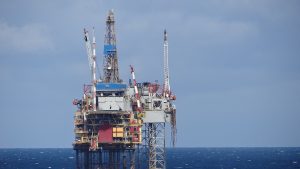
Illustrative image. Photo: Quintin Soloviev, CC BY 4.0, via Wikimedia Commons — source



[…] K. Wirth is the Chairman and Chief Executive Officer of Chevron Corporation, one of the world’s largest integrated oil and gas companies. He has held the role since […]