


What Is Shell and Who Owns It? Leadership and Key Projects

Last updated: September 28, 2026
Shell plc is a British multinational oil, gas and petrochemical company headquartered in London and listed on the London, Amsterdam and New York stock exchanges. Formed in 1907 through the merger of Royal Dutch Petroleum and the “Shell” Transport and Trading Company, it is one of the world’s largest publicly traded energy companies, active across upstream oil and gas, integrated gas and LNG, refining and chemicals, fuel retail, and a growing renewables and energy-solutions business. Unlike Gulf majors such as Saudi Aramco or ADNOC, Shell has no state or controlling shareholder.
Overview
| Founded | April 1907 (merger of Royal Dutch Petroleum Company and the “Shell” Transport and Trading Company) |
| Headquarters | Shell Centre, London, United Kingdom |
| Listing | London Stock Exchange and Euronext Amsterdam (SHEL); New York Stock Exchange, ADR (SHEL) |
| CEO | Wael Sawan (since January 1, 2023) |
| Chairman | Sir Andrew Mackenzie (since May 19, 2021) |
| Employees | Approximately 85,000, in more than 70 countries (as of 2026) |
| Market capitalization | Approximately $283 billion (mid-September 2026) |
| FY2025 revenue | $266.9 billion; FY2025 adjusted earnings $18.5 billion |
Ownership & Shareholders
Shell plc is a widely held public company with no controlling shareholder. Institutional investors hold roughly two-thirds of shares outstanding, with the largest single holders being BlackRock (approximately 9.4–9.6% across its funds), Vanguard Group (approximately 5.6%), and Norway’s sovereign wealth fund manager, Norges Bank Investment Management (approximately 3.2%). No single investor controls more than 10% of the company. This structure contrasts with regional peers that are wholly or majority state-owned, such as Saudi Aramco (majority owned by the Government of Saudi Arabia) and ADNOC (100% owned by the Emirate of Abu Dhabi).
Leadership
Wael Sawan has been Chief Executive Officer of Shell plc since January 1, 2023. He joined Shell in 1997 and previously ran the company’s Upstream, Integrated Gas and Renewables and Energy Solutions businesses before becoming CEO. See the full profile: Who Is Wael Sawan, Shell’s CEO?
Sir Andrew Mackenzie, former CEO of mining group BHP, has served as Shell’s non-executive Chairman since May 19, 2021, leading the single-tier Board of Directors that oversees the Executive Committee.
Business Areas
Shell reports its results across five segments:
- Integrated Gas — natural gas and liquids exploration, LNG liquefaction, and LNG marketing and trading, including gas-to-liquids (GTL).
- Upstream — exploration, development and production of crude oil, natural gas and natural gas liquids.
- Marketing — Mobility (fuel retail), Lubricants, and Sectors & Decarbonisation.
- Chemicals and Products — refining and petrochemicals, producing fuels, base oils and chemical feedstocks.
- Renewables and Energy Solutions — power, carbon capture and storage (CCS), nature-based carbon projects, hydrogen, and Shell Ventures.
Subsidiaries
- Shell USA, Inc. — the group’s principal United States operating subsidiary.
- Shell Canada Limited — substantially expanded in 2026 after Shell completed its acquisition of Canadian gas producer ARC Resources.
- Shell U.K. Limited — North Sea upstream and UK downstream operations.
- Pennzoil and Quaker State — Shell-owned lubricants brands.
- Raízen — Brazilian biofuels and fuel-retail joint venture with Cosan.
Shell has also been actively reshaping its portfolio: notable recent divestments include the Jiffy Lube quick-lube chain, a stake in Indian renewables platform Sprng Energy, and its Nigerian onshore subsidiary, The Shell Petroleum Development Company (SPDC), while it has retained and expanded its deepwater Nigeria and Canadian gas positions.
Countries of Operation
Shell operates in more than 70 countries. Key upstream and integrated-gas operating countries include the United Kingdom and Norway (North Sea), the United States (Gulf of Mexico deepwater and the Permian Basin), Canada (Montney shale gas), Nigeria (deepwater), Brazil, Oman, Malaysia, Brunei and Kazakhstan, alongside a global downstream, trading and marketing footprint.
Oil & Gas Production and Reserves
| Upstream production guidance | Approximately 1,680–1,880 thousand boe/d (Q3 2026 guidance) |
| Integrated Gas production guidance | Approximately 910–970 thousand boe/d |
| Refining (crude distillation) capacity | Approximately 1,362 thousand barrels/stream day (2025): Europe 868, Americas 435, Asia 59 |
Production guidance and refining-capacity figures are drawn from Shell’s quarterly SEC filings (Form 6-K) and 2025 Annual Report; actual quarterly output can vary with maintenance, weather and portfolio changes.
Major Assets
- LNG Canada — Shell holds a 40% interest in this British Columbia LNG export facility, which is running at full capacity; partners are weighing a Phase 2 expansion.
- Montney shale position (Canada) — more than 1.5 million net acres combined following the ARC Resources acquisition.
- Bonga (Nigeria) — deepwater oil hub offshore Nigeria, including the Bonga North development sanctioned in December 2024.
- Gato do Mato (Brazil) — deepwater development in the Santos Basin, 50% Shell-operated.
- Permian Basin (United States) — onshore tight-oil acreage.
- North Sea assets (UK and Norway) — legacy upstream heartland of the company.
Major Projects & Current Investments
| Project | Status | Details |
|---|---|---|
| Acquisition of ARC Resources Ltd. | Completed (2026) | Agreement announced April 28, 2026; equity value approximately $13.6–13.9 billion, enterprise value approximately $16.5 billion including ~$2.5 billion of assumed net debt. Added roughly 370 thousand boe/d of Montney production and about 2 billion boe of 2P reserves. |
| LNG Canada Phase 2 | Pre-FID / under partner evaluation | Would roughly double the facility’s liquefaction capacity; a final investment decision by the joint-venture partners was reported as possible before end-2026. |
| Bonga North (Nigeria) | FID taken December 2024; in development | Estimated cost approximately $5 billion; recoverable resources over 300 million boe. |
Employees
Shell employs approximately 85,000 people in more than 70 countries. By region, the workforce has historically skewed toward Asia (~36,000) and Europe (~30,000), with North America the next largest region (~23,000), based on the company’s most recently published regional breakdown.
Careers
Shell recruits globally across engineering, trading, digital, HSE, legal and corporate functions through its Workday-based careers portal. For a list of currently verified open Shell vacancies, see Shell Careers: Open Positions Right Now.
Recent News
- Shell completed its acquisition of Canadian gas producer ARC Resources in 2026, expanding its position in the Montney shale basin.
- Shell is running a $3.0 billion share buyback programme (plus $1.232 billion carried over from a prior programme) from July 30 to October 23, 2026.
- Shell and its LNG Canada partners were reported in September 2026 to be nearing a decision on doubling the project’s capacity.
Related Entities
- Wael Sawan — Shell CEO
- ADNOC — Abu Dhabi’s state oil company
- Saudi Aramco — world’s largest oil producer
- ExxonMobil — fellow international oil major
- LNG (liquefied natural gas) — core to Shell’s Integrated Gas business
Sources
- Shell Global — Agreement to acquire ARC Resources
- Shell Global — Completion of ARC Resources acquisition
- Shell Global — Who We Are
- Shell Global — Leadership
- Shell Global — Annual Report and Accounts 2025
- SEC EDGAR — Shell plc filings
- Bloomberg — Shell and partners poised to approve LNG Canada expansion
Frequently Asked Questions
Who owns Shell?
Shell plc is a publicly traded company with no controlling shareholder. The largest institutional holders are BlackRock (~9.4–9.6%), Vanguard (~5.6%) and Norway’s Norges Bank Investment Management (~3.2%); institutions collectively hold roughly two-thirds of shares.
Who is the CEO of Shell?
Wael Sawan has been CEO of Shell plc since January 1, 2023.
Is Shell a state-owned company?
No. Unlike Saudi Aramco or ADNOC, Shell has never been state-owned; it is, and has always been since its 1907 formation, a privately held and then publicly listed company.
What did Shell acquire in 2026?
Shell completed the acquisition of Canadian energy company ARC Resources Ltd. in 2026, an approximately $16.5 billion enterprise-value deal that expanded its position in the Montney shale gas basin in British Columbia and Alberta.
How many people does Shell employ?
Shell employs approximately 85,000 people across more than 70 countries, as of 2026.
What business segments does Shell operate in?
Shell reports results across five segments: Integrated Gas, Upstream, Marketing, Chemicals and Products, and Renewables and Energy Solutions.
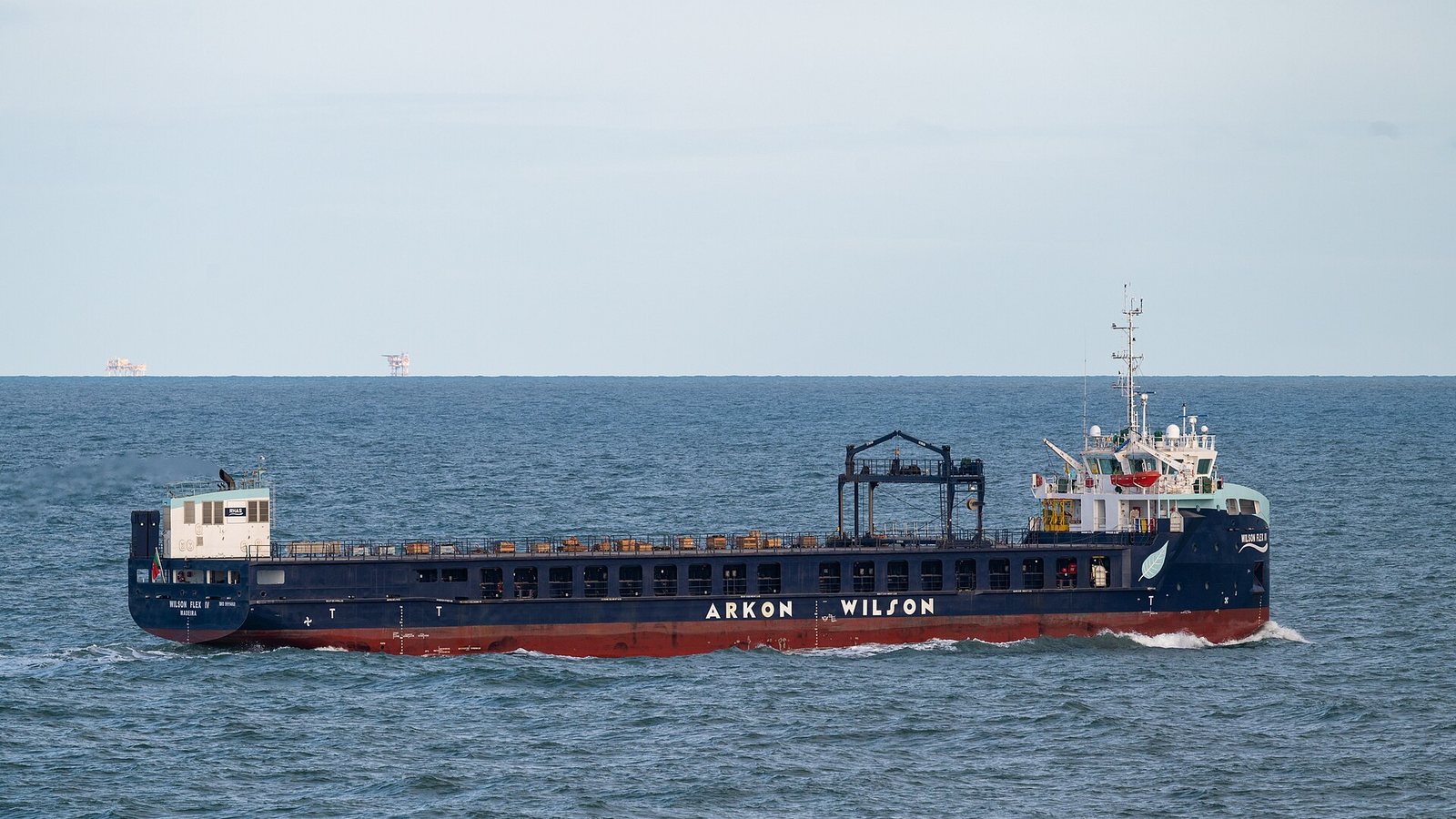
Illustrative image. Photo: GRDN711, CC BY 4.0, via Wikimedia Commons — source



[…] Sawan is the Chief Executive Officer of Shell plc, one of the world’s largest publicly traded oil, gas and petrochemical companies. Born in […]
[…] What Is Shell and Who Owns It? Leadership and Key Projects — full company profile: ownership, leadership, business segments and major projects. […]