


Countries With the Largest Oil Reserves

The countries with the largest oil reserves are led by Venezuela and Saudi Arabia, followed by Iran, Canada and Iraq. Reserves describe oil that can be recovered from known fields under current technology and economic conditions, so they are not the same as production or exports. This article presents the ranking based on the Energy Institute Statistical Review, explains how to read it and shows why the order of reserves differs from the order of producers.
Largest Oil Reserves: The Ranking at a Glance
The table below uses rounded figures for proved reserves at the end of 2023, as published in the Energy Institute Statistical Review of World Energy. Later editions can revise these numbers, so use them as a snapshot and check the newest release for updates.
| Rank | Country | Proved reserves (billion barrels) |
|---|---|---|
| 1 | Venezuela | about 304 |
| 2 | Saudi Arabia | about 267 |
| 3 | Iran | about 209 |
| 4 | Canada | about 163 |
| 5 | Iraq | about 145 |
| 6 | United Arab Emirates | about 113 |
| 7 | Kuwait | about 102 |
| 8 | Russia | about 80 |
| 9 | United States | about 74 |
| 10 | Libya | about 48 |
Together, these ten countries hold the large majority of the world’s proved oil reserves, which total roughly 1.6 trillion barrels in this dataset.
Methodology and Data Sources
No single global body audits every country’s reserves. The main published sources are:
- Energy Institute Statistical Review: compiles national data and widely used industry sources.
- OPEC Annual Statistical Bulletin: reports figures supplied by its member countries.
- US Energy Information Administration (EIA): publishes international estimates.
- Company filings: listed companies report reserves under securities rules.
What “proved reserves” means
Proved reserves are volumes that geological and engineering data show can be recovered with reasonable certainty from known reservoirs under existing economic and operating conditions. The definition depends on oil prices and technology, so a price rise or a new recovery method can raise reserves without any new discovery. Many countries report volumes without independent audit, which is why sources sometimes differ.
Top 10 Breakdown
Venezuela
Most of the country’s reserves are extra-heavy crude in the Orinoco Belt. The oil is thick and expensive to produce and upgrade, so reserves are far larger than current output.
Saudi Arabia
Saudi reserves are mainly conventional light and medium crude with low production costs. The giant Ghawar field has long been the largest conventional oil field in the world. Saudi Aramco manages the system and holds substantial spare capacity.
Iran
Iran has very large oil and gas resources, but sanctions have constrained investment and exports for many years.
Canada
The great majority of Canada’s reserves are in the Alberta oil sands, where bitumen is produced by mining or in-situ methods. Reserves are counted because mature technology and stable regulation make recovery economic.
Iraq
Iraq has giant, low-cost fields, mainly in the south, but output has been limited by infrastructure, security and investment constraints.
UAE and Kuwait
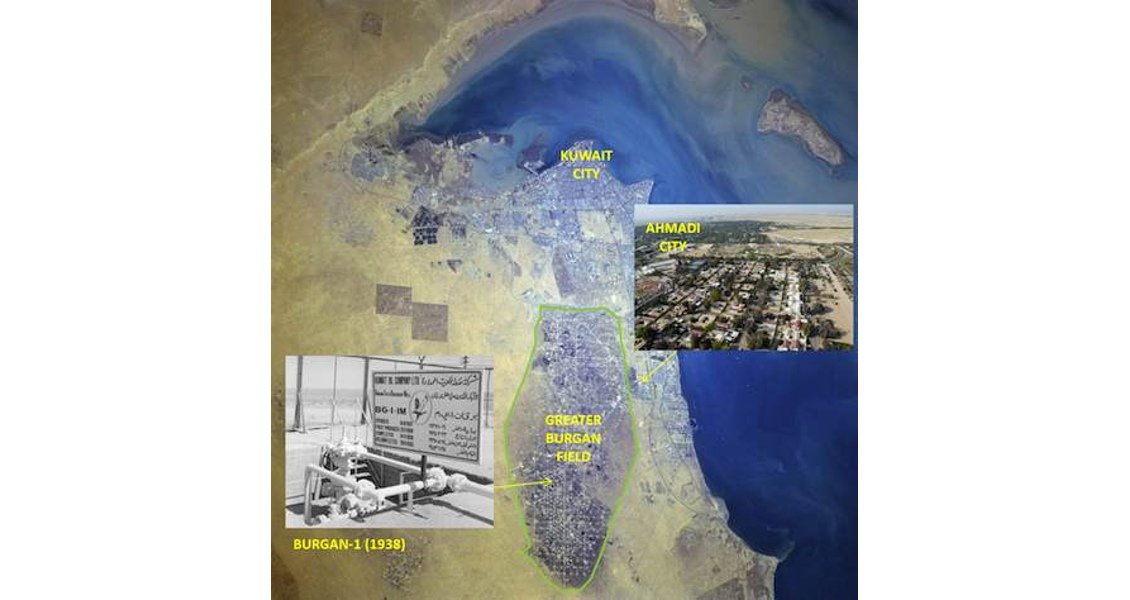
Both hold conventional reserves with low costs. Abu Dhabi accounts for most of the UAE’s total, and Kuwait’s Burgan field is among the largest in the world.
Russia, the United States and Libya
Russia has large reserves across Western Siberia and the Arctic. The US ranks lower on reserves but is the largest producer in the world, thanks to shale oil and fast reserve replacement. Libya holds Africa’s largest proved reserves, but production has been disrupted by political conflict.
Why These Leaders Dominate
- Geology: the Middle East has thick source rocks, large traps and seals that preserved huge accumulations.
- Heavy and unconventional oil: Venezuela and Canada rank high because extra-heavy crude and oil sands can be counted when it is economic to produce them.
- State control: national oil companies hold most of the resource and set long-term development plans.
- Exploration history: some countries have been explored thoroughly, while others still have less well-known basins.
Regional Trends and Surprises
The Middle East holds close to half of the world’s proved reserves, and members of OPEC hold the large majority. Several surprises appear when reserves are compared with production:
- Venezuela leads in reserves but is far from the top in output.
- The United States is the largest producer even though it ranks ninth in reserves.
- Canada’s ranking jumped in the 2000s when oil sands were recognised as reserves.
- Guyana, Brazil and Namibia have gained importance through large offshore discoveries, although they are not in the top ten.
Reserve numbers also change because of reassessment, new technology and policy. A large revision in a single country can reshuffle part of the ranking without any new oil being found.
Reserves vs Production: Venezuela and Saudi Arabia Compared
The comparison of Venezuela and Saudi Arabia reserves is a useful reminder that the top spot does not equal the largest output. Saudi Arabia produces many times more crude than Venezuela because its oil is cheaper to lift, its infrastructure is well developed and it has stable operating capacity. Venezuela’s heavy oil requires diluents, upgraders and heavy investment, which have been difficult to sustain under sanctions and economic stress.
A common measure is the reserves-to-production ratio, which shows how many years reserves would last at the current output. It is a simple guide, not a forecast: reserves change and output is adjusted over time. Worldwide, the ratio is on the order of fifty years.
How to read two different tables
If you compare this ranking with a table from another source, the order of the first few countries may differ slightly. The usual causes are the reporting date, whether a source uses government submissions or its own estimates, and how it treats extra-heavy oil and oil sands. Always check the date and definition before comparing figures, and avoid mixing numbers from different editions in the same table.
What the Numbers Mean for Energy Markets
Large reserves do not guarantee supply. What matters in the market is production capacity, cost, infrastructure, sanctions and policy:
- Price influence: countries with large spare capacity and low costs, such as Saudi Arabia, can influence prices through production decisions.
- Investment flows: operators put money in places where fiscal terms and security allow profitable development.
- Energy security: importers diversify supply, and reserves help them judge which producers will matter in the long term.
- Transition risk: if global demand falls, high-cost reserves may never be produced, so a large number does not always mean large future income.
Frequently Asked Questions About the Largest Oil Reserves
Which country has the largest oil reserves?
Venezuela leads the Energy Institute ranking, followed by Saudi Arabia, though sources vary in method.
Why does the US produce more oil but rank lower in reserves?
Shale oil is developed and replaced quickly, so reserves are booked gradually while production is high.
Are proven reserves the same as total oil in the ground?
No. Proved reserves are only the portion recoverable under current conditions. Resources in the ground are much larger.
Do reserve figures change every year?
Yes. New discoveries, revisions, price changes and better technology all move the numbers.
Where can I find official reserve data?
The Energy Institute Statistical Review, the OPEC Annual Statistical Bulletin and the EIA all publish country data.
Conclusion
The largest oil reserves are concentrated in a small group of countries, led by Venezuela, Saudi Arabia, Iran, Canada and Iraq, while the largest producers are a different list. Reading the ranking correctly means separating geology from economics and politics: reserves show potential, but production depends on cost, investment and access. Always check the date and source of any reserves table before drawing conclusions.
Sources and further reading
- Energy Institute, Statistical Review of World Energy (energyinst.org)
- OPEC, Annual Statistical Bulletin (opec.org)
- US Energy Information Administration, international oil data (eia.gov)
- International Energy Agency, oil market reports (iea.org)


