Japan Tightens Grid-Connection Rules as Battery Storage Queue Hits 172 GW


Japan’s grid coordination body, the Organization for Cross-regional Coordination of Transmission Operators (OCCTO), began enforcing new site-control requirements for grid-scale battery storage developers on October 1, 2026. The rule arrives as the country’s queue of battery projects awaiting a grid connection reached 172 GW of capacity by the end of last year, while only a fraction of that total has actually been built, pv magazine reported on October 2.
A Queue That Doubled in 15 Months
According to figures cited by OCCTO, 172 GW of grid-scale battery capacity was sitting at the connection-study stage as of the end of December 2025. That is the earliest phase in the process, when transmission operators assess a developer’s initial request to connect to the grid. A further 30 GW had progressed to the contract-application stage, a step further along than a study request but still short of an active connection. Only 0.64 GW of battery storage, however, was actually connected to Japan’s grid at that point. The study-stage backlog has grown quickly: it stood at roughly 88 GW in September 2024, meaning it nearly doubled in about 15 months.
Proving Site Control Within Two Months, or Losing Your Place
Under the rule developed by the Next-Generation Grid Working Group, part of Japan’s Ministry of Economy, Trade and Industry (METI), and now enforced by OCCTO, developers must submit documents proving they hold the legal right to use a project site within two months of filing a connection-study request. Projects that miss the deadline lose their place in the queue and forfeit their connection reservation. The requirement exempts projects under the feed-in-tariff and feed-in-premium schemes, as well as certain upgrades to existing sites, and transmission operators retain discretion to extend the deadline where justified.
One Layer in a Broader Anti-Hoarding Push
The October measure builds on two earlier steps targeting what OCCTO and METI have described as queue hoarding: speculative or undercapitalized reservations that crowd out projects closer to actually being built. Since August 1, 2026, a single company has been limited to between five and twelve grid-scale battery connection-study requests per transmission operator’s service area, with the cap varying by region — as low as five in Hokkaido and as high as twelve in Kansai. Since June 2026, battery projects have also had to file matching generation-side and demand-side grid contracts simultaneously, a step intended to stop developers from jumping ahead of others in the queue.
A Global Problem, Addressed With Different Tools
Japan’s effort to clear its interconnection queue comes as the country leans more heavily on variable solar and wind generation, which increases the grid’s need for storage and other flexible resources, and as its electricity market continues to be restructured following liberalization. Congested interconnection queues inflated by speculative reservations are not unique to Japan. Grid operators elsewhere have pursued their own remedies, from FERC’s rejection of Oklo’s bid to rejoin PJM’s interconnection queue in Virginia to Zhejiang’s move to open its electricity spot market to grid-side batteries in China. The tools differ by jurisdiction, but the underlying challenge, matching queued capacity to projects that can realistically be financed and built, is shared.
Actual Build-Out Still Dwarfed by the Queue
The gap between queued and built capacity is stark. Japan’s Long-Term Decarbonization Power Source Auction awarded contracts for 1.25 GW of battery storage across 19 projects in May 2026, including a 67 MW/230 MWh facility in Fukuoka prefecture backed by Itochu, Mitsubishi Estate and Tokyo Century. Even added to the 0.64 GW already connected, actual and contracted capacity remains a small fraction of the 172 GW sitting in the study-stage queue, a gap that helps explain why OCCTO is now tightening entry requirements rather than simply expanding queue capacity. Other grid operators have made comparably modest awards relative to their own pending queues, including New York’s recent award of 950 MW of battery storage across eight projects.
Sources
- pv magazine, October 2, 2026 — reporting on the October 1 rule change and the connection-queue figures.
- OCCTO and METI’s Next-Generation Grid Working Group — the bodies that developed and enforce the connection-study and site-control requirements described above.
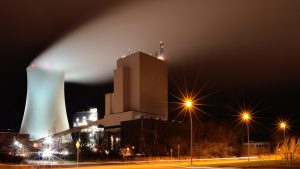
Illustrative image. Photo: Kecko from Eastern Switzerland, CC BY 2.0, via Wikimedia Commons — source