UK, Norway and Canada Launch $10bn ’10by30′ Climate Finance Pact at COP31


Three government-backed development finance institutions from the United Kingdom, Norway and Canada used the second week of COP31 in Antalya, Türkiye, to announce a coordination pact aimed at steering $10 billion toward climate and energy projects in emerging markets by 2030. British International Investment (BII), Norway’s Norfund and FinDev Canada said on November 16 that the initiative, named “10by30,” commits them to share deal pipelines, coordinate due diligence and align climate reporting under a memorandum of understanding, rather than to jointly write a single check.
A Coordination Pact, Not a New Fund
The $10 billion figure describes finance the three institutions aim to channel or help mobilize by 2030, including private capital drawn in alongside their own investments, according to the announcement. No new pooled fund was created. Instead, BII, Norfund and FinDev Canada agreed to identify opportunities and share pipelines and market intelligence, coordinate due diligence on deals they pursue together, and co-invest in flagship transactions. They also plan to develop common methods for measuring climate and development impact and to cooperate on reporting.
Each institution keeps its own existing climate vehicle feeding into the effort: Norfund’s Norwegian Climate Investment Fund, BII’s British Climate Partners platform, and FinDev Canada’s Climate Mobilization Strategy, which the Canadian institution says will contribute fresh capital, blended-finance instruments and technical assistance.
Where the Money Is Meant to Go
The three DFIs named renewable energy generation, transmission and distribution infrastructure, energy storage, sustainable fuels and industrial decarbonization as target sectors — a mix that points squarely at the grid and storage bottlenecks that have slowed renewables build-out in many emerging markets. “Our shared determination is to create the opportunities that will move private capital at an unprecedented scale,” BII chief executive Leslie Maasdorp said. Norfund CEO Erik Sandersen framed the rationale as a matter of pace as much as size: “Climate finance needs both scale and speed.” FinDev Canada’s Lori Kerr said the goal was “scaling investment into commercially viable mitigation opportunities,” while UK Economic Secretary to the Treasury Lucy Rigby described the pact as “backing practical action to unlock investment for the energy transition in emerging markets.”
A Fraction of the Larger Climate Finance Goal
Ten billion dollars by 2030 is a small slice of what governments have already pledged. Under the Baku-to-Belém roadmap agreed at COP29, developed countries are supposed to help mobilize $1.3 trillion a year for developing-country climate action by 2035, built on an earlier $300-billion-a-year public finance floor. The UK and Canada each used COP31 to restate that commitment separately from 10by30: the UK pointed to roughly £6 billion in international climate finance through development assistance over three years, plus £6.7 billion in other public investment, while Canada announced C$116 million for 12 climate finance projects, which it described as the first tranche under a new five-year climate finance goal. Those national pledges run alongside, not inside, the DFI pact’s $10 billion target.
COP31’s Uneven Signal on the Energy Transition
The 10by30 launch came against a COP31 backdrop short on consensus. Negotiators in Antalya have struggled to agree on cover-text language about a broader transition away from fossil fuels, with the Arab Group and Russia among those resisting firmer wording, even as the European Union and a handful of other countries have backed a voluntary goal to raise electrification to 35% of final energy use by 2035. International Energy Agency executive director Fatih Birol captured the tension at the summit: “We will still use oil and gas, but the dominant source of energy is becoming electricity.” The DFI pact does not resolve that argument, but it signals that some financiers are moving ahead on grids and storage finance regardless of where the text lands.
10by30 joins a run of COP31 energy announcements out of Antalya, including a Saudi Arabia-Türkiye electricity memorandum advancing a 5 GW renewables plan, a 39-country pledge to triple nuclear capacity by 2050, and the UK’s separate push for global levies on polluting industries.
Sources
- British International Investment, as republished by NextBillion, “BII, FinDev Canada and Norfund Join Forces to Deliver $10 Billion in Climate Finance by 2030” (Nov. 16, 2026) — figures, mechanics, named quotes.
- SolarQuarter, “BII, FinDev Canada and Norfund join forces to deliver $10 billion in climate finance by 2030” (Nov. 16, 2026) — corroborating figures and COP31 context.
- Carbon Pulse, “COP31: Countries announce partnership for $10 bln in climate finance” — independent corroboration of the announcement.
- Down To Earth, “COP31: Canada, UK reaffirm $1.3 trillion climate finance goal, announce new commitments” — UK and Canada national pledge figures.
- Climate Change News, “COP31 Bulletin Day 8” (Nov. 17, 2026) — electrification pledge and Fatih Birol quote context.
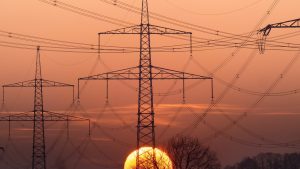
Illustrative image. Photo: Ömer Ünlü, CC BY 2.0, via Wikimedia Commons — source