


Canada Fast-Tracks Pacific Link Pipeline to Open Asian Oil Markets

Canada’s federal government has designated the proposed Pacific Link oil pipeline a “project of national interest,” Prime Minister Mark Carney said on October 1, putting the roughly 1-million-barrel-per-day line on an accelerated single-window regulatory review as Ottawa pushes to give Alberta’s crude producers a more direct route to Asian buyers.
Pacific Link — previously discussed under the working name West Coast Oil Pipeline — would run about 1,250 kilometers (775 miles) from Bruderheim, northeast of Edmonton, Alberta, to a new deepwater marine terminal near Delta, British Columbia, largely following the existing Trans Mountain pipeline corridor. Alberta’s government estimates construction would cost between C$35.2 billion and C$43.7 billion.
Why Ottawa is fast-tracking the review
More than 90% of Canada’s crude exports still go to the United States, and the country’s only existing outlet to the Pacific, the 890,000-bpd Trans Mountain pipeline, is already running at full capacity. Carney’s government has framed Pacific Link as a way to reduce that dependence and position Canada as a larger supplier to Asian refiners, a goal that has taken on added political urgency as a referendum on Alberta independence approaches; the federal government has pointed to the pipeline as evidence that Ottawa can deliver market access for the province’s oil sands producers without separation.
Under the national-interest designation, the project moves through a single federal review process rather than the multiple overlapping assessments that have slowed past Canadian pipeline proposals. Ottawa has set a target of completing that review by September 1, 2027, which officials say could allow construction to begin shortly afterward, with the line targeted to enter service around 2032 or 2033 — a multi-year timeline that leaves the project’s economics exposed to shifts in oil demand and financing conditions between now and then.
Scale of the investment
Ottawa estimates Pacific Link could add more than C$20 billion a year to Canadian GDP once operating, support as many as 140,000 jobs at the peak of construction, and generate roughly C$100 billion in cumulative government revenue by 2060. Those figures are government projections tied to the project’s current design and are not guarantees; final costs and the capacity ultimately built will depend on the federal review, financing arrangements, and agreements still to be reached with Indigenous communities and British Columbia, whose government has previously been cautious about new oil pipeline capacity to its coast.
The push to diversify Canadian crude exports comes in the same week that the Shell-led LNG Canada joint venture took a final investment decision on a C$33 billion expansion of its Kitimat LNG terminal, doubling that facility’s export capacity to 28 million tonnes a year. Taken together, the two projects reflect a broader federal and provincial push to build out British Columbia’s Pacific coast as an energy export hub for both oil and gas, rather than relying solely on the US market.
What still has to happen
A national-interest designation speeds up review timelines but does not itself approve the pipeline; Pacific Link still needs to clear the federal assessment, secure financing commitments from its backers, and reach agreements with the Indigenous nations and the province whose territory and waters the route would cross. Alberta’s government, which has pushed hardest for the project, says it is prepared to help structure financing, but it has not detailed firm commitments from oil-sands producers who would ultimately need to book capacity on the line for it to proceed to construction.
Sources
- Oilprice.com, “Canada Fast-Tracks 1 Million-Bpd Pacific Link Oil Pipeline to Asia,” October 1, 2026 — route, capacity and designation detail.
- BOE Report, “Prime Minister Carney Lists the West Coast Oil Pipeline, Now Known as Pacific Link, as a Project of National Interest,” October 1, 2026 — official government statement.
- Enerdata, “Canada Moves Ahead With 1 Mb/d Oil Export Corridor to the Pacific” — review timeline and context.
- The Deep Dive, “Canada Fast-Tracks Pacific Link Oil Pipeline While Financing Remains Open” — cost estimate and financing status.
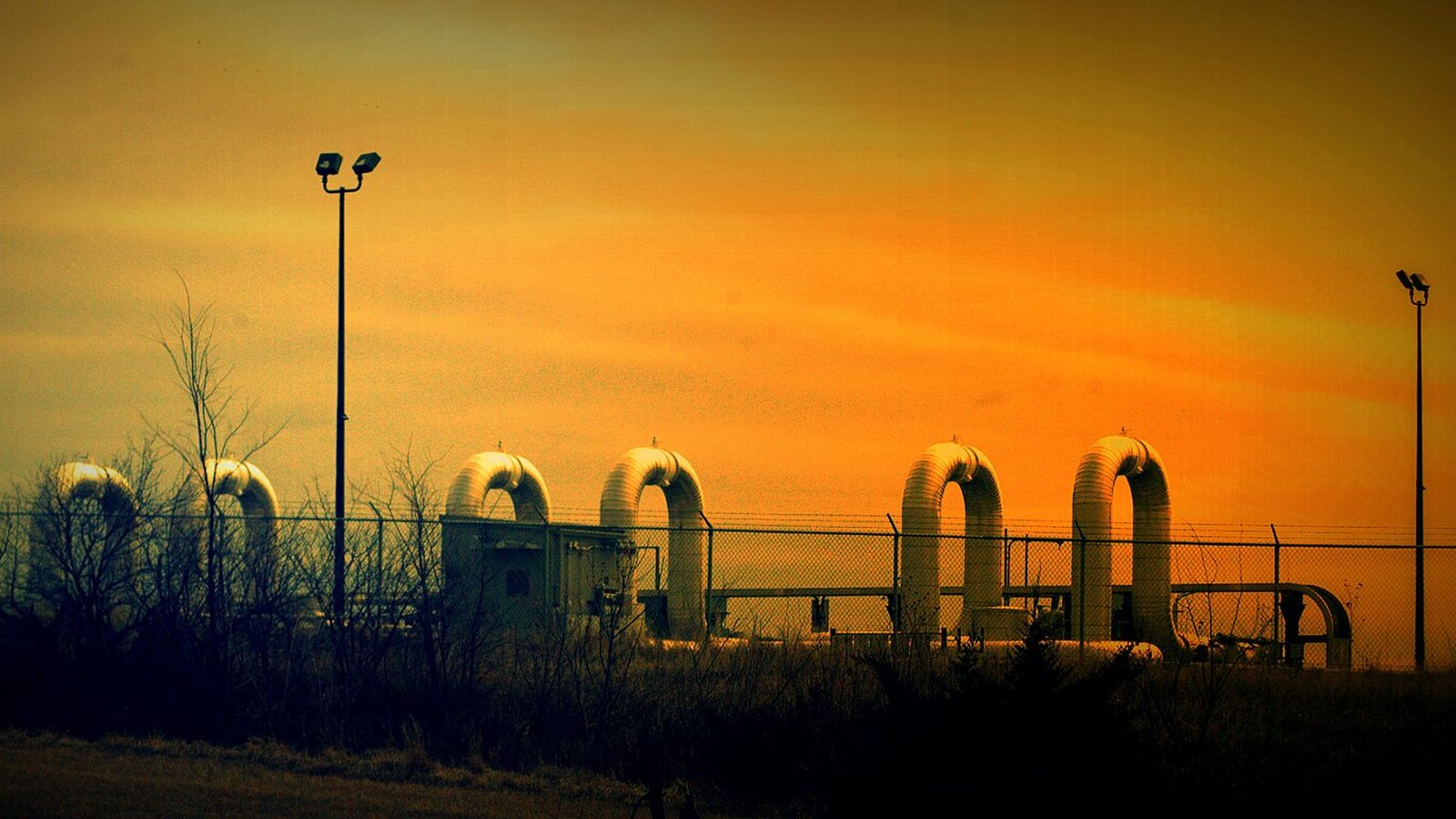
Illustrative image. Photo: shannonpatrick17 from Swanton, Nebraska, U.S.A., CC BY 2.0, via Wikimedia Commons — source


.jpg)