


Trump Rejects Iran’s Seven-Day Plan to Reopen the Strait of Hormuz


President Donald Trump on Saturday rejected a seven-day proposal from Iran to reopen the Strait of Hormuz and resume nuclear negotiations, keeping shut the Gulf chokepoint that normally carries roughly a fifth of the world’s seaborne oil. The rejection, first reported by the Wall Street Journal and confirmed by multiple US networks, came hours after Iranian Foreign Minister Abbas Araghchi said Tehran had submitted a “concrete” roadmap to Washington through Qatari mediators.
Iran’s Roadmap, Delivered Through Doha
Araghchi said that if Washington met a short list of conditions, “the strait can be reopened and normal maritime passage restored within seven days.” According to reporting from NBC News, Iran’s plan asked the United States to follow through on commitments both countries had reportedly made in a June memorandum of understanding, and to accept a maritime transit corridor through the strait that Iran and Oman had previously worked out between themselves. In exchange, Tehran offered to lift its blockade of the waterway and return to talks aimed at ending its months-long confrontation with Israel and the United States.
The offer followed a round of side talks between American and Iranian negotiators at the United Nations in New York earlier in the week, which had briefly lifted hopes of a phased reopening and pulled oil prices back from session highs.
Why the White House Said No
Trump told reporters he did not want Iran to “immediately open the Hormuz Strait,” arguing that doing so now would hand Tehran an economic lifeline before it had made concessions elsewhere. “They are dying — the money isn’t coming in,” he said, framing the closure as leverage rather than an emergency to be resolved quickly. A US official described the administration’s position as “strong” and said Washington was “not in a rush” to strike a deal.
The Wall Street Journal separately reported that Trump has told aides he expects US strikes on Iran to resume after November’s midterm elections, suggesting the rejection reflects a broader calculation about timing rather than a final refusal to negotiate. The White House has not set out a public counter-offer to Iran’s roadmap.
A Chokepoint Still Running Far Below Normal
The Strait of Hormuz, the narrow passage between Iran and Oman that forms the only sea route out of the Persian Gulf, has carried a fraction of its usual traffic since the conflict escalated, with tanker owners rerouting or holding vessels outside the strait rather than risk transiting it. NBC News, citing shipping-tracking data, put oil movement through the strait at roughly 40 million barrels over the preceding 48 hours — a figure that, if sustained, would still fall well short of the pre-war baseline of close to a fifth of global oil consumption that normally transits the waterway alongside most of Qatar’s LNG exports. Independent confirmation of precise current flow volumes remains difficult given the fluid security situation, and estimates from different outlets have varied.
Gulf producers have leaned on workarounds in the meantime. Saudi Arabia, for instance, has been moving crude to its Red Sea export terminal at Yanbu via the East-West Pipeline that bypasses Hormuz entirely, though that route has nowhere near the capacity to replace normal Gulf-wide tanker traffic.
The Conflict’s Reach Extends to Saudi Arabia
The standoff over the strait is unfolding alongside a wider escalation in regional hostilities. A Saudi-led coalition said it intercepted two drones fired toward Riyadh and ballistic missiles aimed at the Khamis Mushait area near Abha in the kingdom’s southwest, attributing the attacks to Iran-aligned Houthi forces in Yemen. The incidents underline how the Hormuz standoff is not an isolated financial or diplomatic dispute but is tied to active military exchanges across the Gulf and Red Sea, raising the stakes for any government or company weighing whether to test the waterway.
What It Means for Oil-Dependent Economies
For now, the practical effect of Trump’s rejection is to extend the uncertainty that has kept Gulf oil exporters and Asian refiners on edge for months. Every day the strait stays effectively closed adds to freight costs, insurance premiums and the risk calculus for tanker operators, while importers in Japan, South Korea, China and India — the strait’s biggest downstream customers — continue to draw on inventories and alternative supply routes. Neither side has set a new date for talks, and Araghchi’s own comments suggested Tehran now regards the next move as Washington’s to make.
Why Hormuz Carries Outsized Weight
The strait’s importance to global energy security has long exceeded its size: at its narrowest point it is only about two miles wide in each shipping lane, yet it is the sole maritime outlet for crude from Saudi Arabia, Iraq, the UAE and Kuwait, as well as almost all of Qatar’s liquefied natural gas, which feeds buyers across Asia and Europe. Previous flare-ups around the waterway — including tanker seizures and attacks in 2019 — briefly moved oil prices without producing a sustained closure, which is part of why markets have watched this current standoff so closely: a chokepoint that stays disrupted for months, rather than days, is a different order of problem for refiners and for governments managing strategic reserves.
Sources
- NBC News, “Iran says choice on reopening Hormuz rests with United States’ offer,” Sept. 26, 2026, https://www.nbcnews.com/world/iran/iran-says-choice-reopening-hormuz-rests-united-states-offer-rcna599956 — Araghchi’s seven-day plan terms, Trump’s rejection quote, strait traffic estimate.
- CNBC, “Trump rejects Iran’s conditional ceasefire proposal, WSJ reports, as Saudi coalition intercepts projectiles,” Sept. 26, 2026, https://www.cnbc.com/2026/09/26/trump-rejects-irans-conditional-ceasefire-proposal-wsj-reports.html — WSJ report on renewed strikes after midterms, Saudi coalition interception.
- CNN, “Trump rejects Iran’s latest proposal to reopen the Strait of Hormuz,” Sept. 26, 2026, https://www.cnn.com/2026/09/26/middleeast/trump-rejects-iran-proposal-hormuz-intl — confirmation of Trump’s rejection and “they are dying” quote.
- Al Jazeera, “Iran war live: Tehran offers US plan to reopen Hormuz within seven days,” Sept. 26, 2026, https://www.aljazeera.com/news/liveblog/2026/9/26/iran-war-live-tehran-offers-us-plan-to-reopen-hormuz-within-seven-days — Iran’s proposal timeline and diplomatic context.
- The National, “Iran war latest: Saudi coalition ‘intercepts Houthi drones headed for Riyadh’,” Sept. 26, 2026, https://www.thenationalnews.com/news/mena/2026/09/26/live-us-iran-war-saudi-arabia-riyadh/ — detail on intercepted drones and missiles.
Related: What Happens When the Strait of Hormuz Closes?
Related: Why Are Oil Prices Rising?
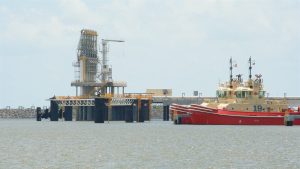
Illustrative image. Photo: PH2 Elliot, U.S. Navy, Public domain, via Wikimedia Commons — source



[…] importance since the strait became effectively unusable for normal shipping earlier this year; diplomatic efforts to reopen Hormuz, including a seven-day plan Iran offered and the Trump administr…, have not restored normal transit. Losing the East-West line, even temporarily, meant losing one of […]
[…] için fiilen kullanılamaz hale geldiğinden bu yana orantısız bir önem kazandı; İran’ın sunduğu ve Trump yönetiminin reddettiği yedi günlük plan da dahil olmak üzere … normal geçişi henüz geri getirmedi. Doğu-Batı hattının geçici de olsa kaybedilmesi, […]
[…] […]
[…] to normal traffic, an offer the Trump administration rejected within a day, with the White House dismissing the proposal as insufficient. Washington has signaled it is prepared to extend military pressure on Iran beyond the US midterm […]