Taiwan Pledges $4.4 Billion for Alaska LNG as Trump Claims a Much Bigger Deal

Taiwan’s Ministry of Economic Affairs confirmed on Wednesday that the island will buy roughly 6 million metric tons of liquefied natural gas a year from the long-delayed Alaska LNG project once it is operating, and said Taiwan could invest up to $4.4 billion in the venture — a commitment considerably narrower than the one President Donald Trump described a day earlier. Speaking at a rally in Alaska on Tuesday, Trump said Taiwan had "just agreed to buy 30% of the gas" from the project for the next 20 years, calling it "one of the biggest deals ever made" and putting a price tag of up to $80 billion on the purchase.
What Taipei actually confirmed
The ministry’s statement was narrower and far more conditional than Trump’s framing. It said Taiwan’s state-owned CPC Corporation signed a letter of intent on the Alaska project in March 2025, and that the two sides have since made "significant progress" after more than a year of talks and technical evaluation. The 6-million-tonne annual volume and the $4.4 billion investment ceiling were the only figures the ministry confirmed. It did not specify a contract length, did not confirm Trump’s 30%-of-output claim, and said the project’s investment structure, shareholding ratios and other commercial terms "will be settled through subsequent negotiations and contract procedures." The ministry described the plan as a way to diversify Taiwan’s gas supply, add import flexibility, and deepen energy cooperation with Washington — language that stopped well short of calling it a signed offtake agreement.
A familiar gap between the announcement and the contract
The mismatch between Trump’s numbers and Taiwan’s is not new to Alaska LNG. In late September, Trump announced that South Korea had agreed to put $54 billion into the same 807-mile pipeline, only for a senior official in Seoul to say the commitment had not been finalized and that any decision would follow "domestic legal procedures and the principle of commercial viability." Taiwan’s statement follows the same arc: a presidential announcement with large, round figures, followed within a day by a government clarification tying the real commitment to a volume and an investment ceiling rather than a binding, dollar-denominated contract. In both cases, the project in question is Alaska LNG — a three-part scheme combining a gas treatment plant at Prudhoe Bay, the pipeline itself, and a liquefaction and export terminal at Nikiski — that Alaska Gasline Development Corporation (AGDC) and lead developer Glenfarne Group have spent much of the past decade trying to push to a final investment decision. The U.S. Department of Energy has conditionally authorized the Nikiski terminal to export up to 20 million tonnes of LNG a year for 30 years, a ceiling well above what either Taiwan or South Korea have so far discussed buying.
A 2032 start date, at the earliest
Even under Taiwan’s own account, the purchase is years away. The ministry said that if the project proceeds on schedule, it could begin supplying Taiwan’s gas needs "at the earliest" in 2032 — meaning the volumes at the center of this week’s announcement would not reach Taiwanese terminals for roughly six years, assuming the treatment plant, pipeline and export terminal all clear a final investment decision, financing and construction in that window. Taiwan imports the large majority of its natural gas as LNG and has limited domestic storage relative to its summer and winter demand swings, a vulnerability that has pushed Taipei to diversify suppliers since Russia’s invasion of Ukraine disrupted global gas flows in 2022. CPC Corporation already holds long-term contracts with suppliers including Qatar and the United States; Alaska would add a geographically distinct route that bypasses the Strait of Malacca and the South China Sea chokepoints that most of Taiwan’s current LNG cargoes must transit.
A delicate moment in Taipei-Washington ties
The announcement lands at a politically sensitive time for the island. A $14 billion U.S. arms package for Taiwan has been stalled since Trump’s May summit with Chinese leader Xi Jinping, and Trump has described arms sales to Taiwan as a "very good negotiating chip" in his dealings with Beijing — a characterization that has unsettled some lawmakers in Taipei, even as Washington separately approved a smaller, $11 billion arms package in December. Some Taiwanese legislators have urged caution about the Alaska investment specifically, pointing to the project’s decade-long history of delays and the risk of committing capital to a pipeline that has yet to reach a final investment decision. CPC Corporation has not published its own statement detailing the commercial terms it is negotiating, and the ministry gave no date for when those negotiations might conclude.
What still has to happen
For either the Taiwanese or the South Korean pledge to become binding, AGDC and Glenfarne still need to reach a final investment decision on Alaska LNG as a whole, backed by signed offtake agreements rather than government statements of intent. The front-end engineering and design work that consultancy Worley has been running for AGDC has continued through 2026 without producing that decision. Until it does, Taiwan’s $4.4 billion ceiling and South Korea’s $54 billion pledge both remain commitments to keep negotiating rather than commitments to spend.
Sources
- Associated Press via NBC News, "Taiwan says it plans to buy liquefied natural gas from Alaska pipeline project," October 14, 2026 — for the Ministry of Economic Affairs statement, the 6-million-tonne and $4.4 billion figures, the March 2025 CPC Corporation letter of intent, and Trump’s rally remarks and the Taiwan-U.S. arms package context.
- Seoul Economic Daily, "Taiwan Confirms Plan to Buy 6 Million Tons of Alaska LNG a Year," October 14, 2026 — for confirmation of the ministry’s figures and the 2032 earliest start date.
- TheDailyEnergy, "Trump Says South Korea Will Put $54 Billion Into Alaska LNG Pipeline; Seoul Calls It Premature," September 30, 2026 — for background on the parallel South Korean pledge, the Alaska LNG project structure, and the DOE’s conditional export authorization.
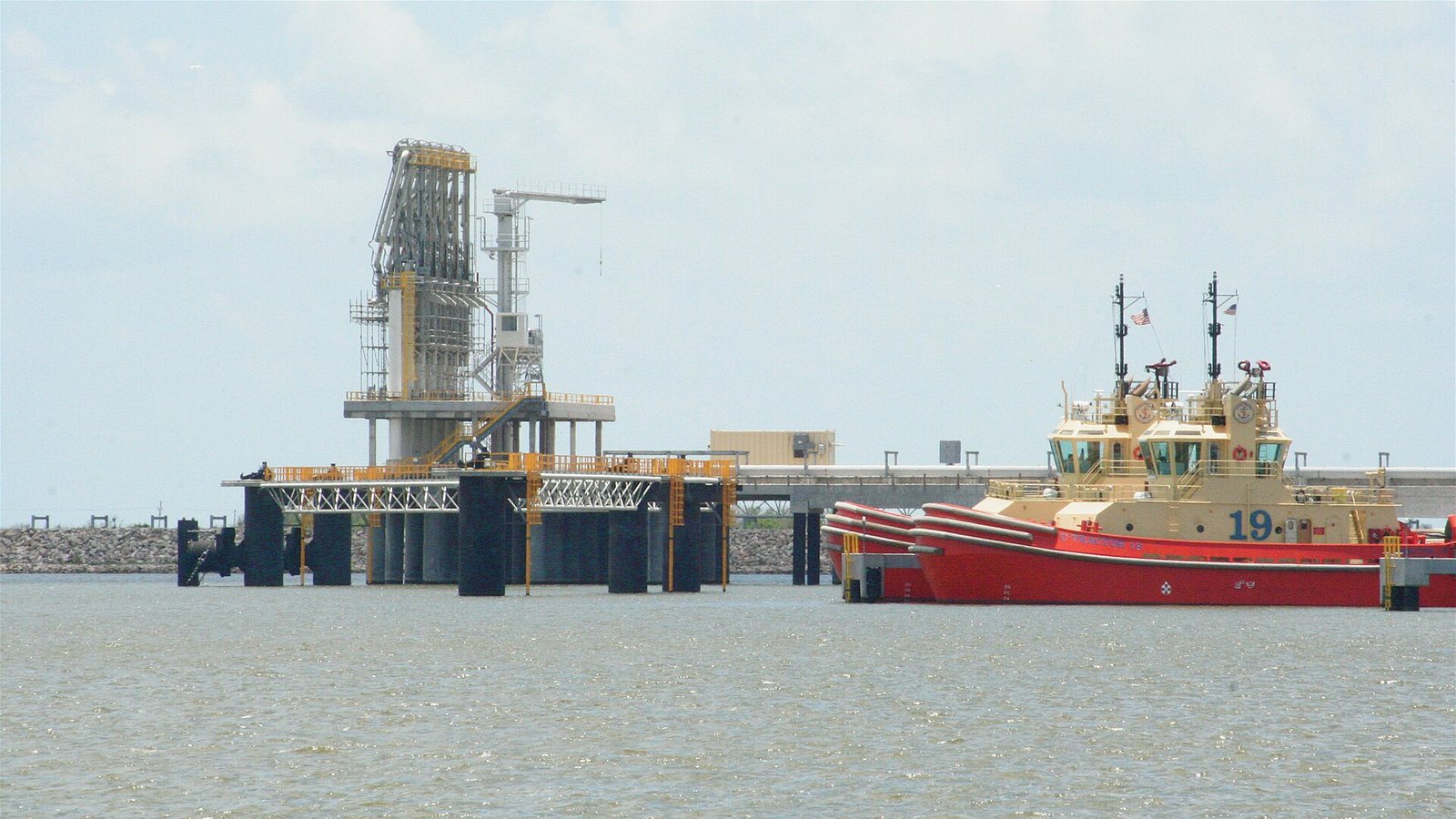
Illustrative image. Photo: roy.luck, CC BY 2.0, via Wikimedia Commons — source