


Saudi Arabia Energy Profile: Oil, Gas, Power (2026)

Last updated: October 14, 2026
Saudi Arabia holds the world’s second-largest proved oil reserves, leads OPEC+ supply policy, and is racing to build gas, solar and nuclear capacity at home so it can export more crude instead of burning it domestically. In 2026 that system has also been tested directly: Houthi strikes on Red Sea shipping and repeated attacks on the kingdom’s own pipelines and air defenses have periodically cut Saudi oil exports in half and pushed Brent above $106 a barrel. This profile lays out the current numbers behind Saudi oil, gas, power and policy, and the 2026 security crisis now shaping all of them, with the year and source attached to every figure.
Energy Overview
Saudi Arabia’s energy system is built around Saudi Aramco, the state oil company that holds essentially all of the kingdom’s crude production and most of its gas. Oil and gas together still supply almost all domestic electricity generation, and oil exports remain the government’s largest single revenue source. Under Vision 2030, Riyadh is trying to diversify that system on two fronts at once: growing non-associated gas output (led by the giant Jafurah field) so more crude can be exported rather than burned for power, and building out solar, wind and eventually nuclear capacity through the ACWA Power-led National Renewable Energy Program (NREP). Since mid-2026, a regional war has disrupted both the Strait of Hormuz and Red Sea shipping lanes that Saudi exports depend on, forcing Aramco to reroute crude between its Gulf and Red Sea terminals and making energy security, not just energy diversification, the kingdom’s most immediate priority.
Oil
Saudi Aramco’s maximum sustainable crude production capacity is about 12 million barrels per day (b/d), and Riyadh has directed Aramco to raise that ceiling toward 13 million b/d, according to Energy Intelligence reporting in 2026. Actual output is governed by Saudi Arabia’s OPEC+ quota, which seven OPEC+ members — including Saudi Arabia, Russia, Iraq, Kuwait, Kazakhstan, Algeria and Oman — held unchanged for October 2026 while the group negotiated new 2027 baselines; Saudi Arabia’s October 2026 target was set at 10.478 million b/d.
Actual production has run well below that target for most of 2026. The International Energy Agency’s September 2026 Oil Market Report put Saudi crude supply at just 5.97 million b/d in August 2026 — a more-than-three-decade low — down from 8.24 million b/d in July, against an implied OPEC+ target of 10.42 million b/d. The gap was driven by Houthi attacks on Red Sea shipping, which cut combined Saudi and UAE Red Sea-bypass export flows from a June 2026 peak of 7.8 million b/d to 5.5 million b/d in August, and by a September 13 drone attack that forced Aramco to halt the East-West (Petroline) crude pipeline and suspend loadings at Yanbu port, pushing more barrels back through the Strait of Hormuz. The IEA’s October 2026 report showed a sharp rebound as repairs progressed: Gulf crude exports rose 4.4 million b/d to 13.9 million b/d and Hormuz flows rose 3.7 million b/d to 10.9 million b/d region-wide. Shipping-data provider Kpler estimated Saudi crude exports recovered to about 5.4 million b/d in September 2026, up from 2.446 million b/d in August, as Ras Tanura loadings rose to roughly 3.6 million b/d — still well below the pre-crisis February 2026 level of 6.411 million b/d.
Estimates vary on the exact pace of recovery because vessel-tracking data can miss tankers that switch off transponders, and because Aramco does not publish daily output figures; treat month-to-month numbers from shipping trackers as estimates rather than official data. The domestic crude benchmark context: Saudi crude prices off the Brent and WTI markers, and on October 14, 2026, Brent traded above $106 a barrel after Iran threatened to extend tanker attacks beyond Hormuz — a direct continuation of the supply risk described above.
Natural Gas
Saudi Arabia’s gas strategy centers on Jafurah, the largest unconventional (shale) gas field in the Middle East Gulf, with in-place resources estimated at 229 trillion cubic feet of raw gas and 75 billion barrels of associated condensate and liquids. Aramco began first production at Jafurah in December 2025; Saudi Arabia’s 2026 budget statement cited an initial processing rate of about 450 million cubic feet per day (MMcf/d) of raw gas, roughly 2.5 times Aramco’s long-standing target. A second development phase is scheduled for 2027, with Aramco aiming for 2 billion cubic feet per day (Bcf/d) of sales gas from Jafurah by 2030 as part of a broader plan to raise national sales-gas capacity about 80% above 2021 levels by 2030. The Tanajib gas plant, which started operations in December 2025, is expected to reach 2.6 Bcf/d of raw gas processing capacity in 2026, mainly supporting the offshore Marjan and Zuluf fields.
Electricity Mix
Saudi Arabia’s power sector remains almost entirely fossil-fueled: natural gas supplies roughly 62% of generation and oil roughly 38%, with renewables under 1% of actual generation, according to EIA-sourced figures reported by Climate Scorecard in 2026. That low renewables generation share sits alongside a fast-growing installed base — the gap reflects how recently most solar and wind capacity has come online relative to a power system still dominated by gas- and oil-fired baseload and, in summer, oil-fired plants that run to cover air-conditioning peaks above 40°C. There is no meaningful coal-fired generation or hydropower in the Saudi grid.
Solar and Wind
Cumulative operating solar and wind capacity reached 19.3 GW as of August 2026 (17.8 GW of it solar), according to KAPSARC’s Renewables Tracker, out of a total development pipeline of 63.8 GW across 53 projects — meaning roughly 30% of the pipeline is installed, 37% is under development and 32% is tendered but not yet under construction. Saudi Arabia’s Vision 2030 target, revised upward in 2023, calls for 130 GW of renewable capacity (including about 58.7 GW solar and 40 GW wind) by 2030, delivered mainly through the Saudi Power Procurement Company’s (SPPC) National Renewable Energy Program; SPPC has signed power purchase agreements covering more than 47.7 GW to date, and plans to award roughly 14 GW more in 2026 through NREP Round 7. Independent forecasters are more cautious: GlobalData and MEED projected in March 2026 that installed renewable capacity will reach only about 74.2 GW by 2030 — well short of the 130 GW target. ACWA Power, the kingdom’s dominant private power developer, holds a large share of the operating and pipeline renewable portfolio, including the Sudair solar plant.
Nuclear
Saudi Arabia has no operating commercial nuclear reactor as of 2026. The King Abdullah City for Atomic and Renewable Energy (K.A.CARE) is running a tender for the kingdom’s first plant, reported as a two-reactor, 2.8 GW project, with Russia’s Rosatom among the shortlisted bidders alongside other international vendors. Riyadh and Moscow have signed a bilateral framework agreement on the peaceful use of nuclear energy, and Saudi officials have outlined a longer-term ambition of around 17.6 GW of nuclear capacity by 2032. Estimates vary on timing and vendor selection, and no construction contract had been publicly awarded as of this update — treat near-term nuclear capacity figures as planning targets, not committed capacity.
Reserves
| Resource | Estimate | Notes / source |
|---|---|---|
| Proved crude oil reserves | ~267.2 billion barrels (end-2024 data) | OPEC Annual Statistical Bulletin 2025; world’s second-largest after Venezuela (~303 billion barrels) |
| Independent reserves audit | 268.5 billion barrels | DeGolyer & MacNaughton third-party audit, reported 2026 — slightly above the latest unaudited official figure |
| Jafurah gas field (in place) | ~229 trillion cubic feet raw gas; ~75 billion barrels condensate/liquids | Aramco/Argus Media reporting, 2026; in-place resource, not a proved-reserves figure |
Reserves and resources are not the same measure: the OPEC and audited figures above are proved crude oil reserves, while the Jafurah number is an in-place resource estimate for unconventional gas and condensate, which is converted to proved reserves only as wells are drilled and appraised.
Major Companies
- Saudi Aramco — the state oil company and operator of nearly all Saudi crude and gas production; majority-owned by the Saudi government and the Public Investment Fund (PIF), with a minority public float on the Saudi Exchange (Tadawul) since its December 2019 IPO, enlarged by a June 2024 secondary share offering.
- ACWA Power — the kingdom’s largest private power, desalination and green-hydrogen developer, majority-aligned with PIF and the main vehicle for Saudi Arabia’s renewable energy build-out.
- Public Investment Fund (PIF) — Saudi Arabia’s sovereign wealth fund, a large minority shareholder in both Aramco and ACWA Power and the central financing vehicle for Vision 2030 energy diversification projects, including NEOM.
- K.A.CARE — the government body overseeing Saudi Arabia’s civilian nuclear and renewable energy programs, including the first nuclear plant tender.
Major Fields
Ghawar is the largest conventional oil field ever discovered and remains the anchor of Saudi production. Aramco’s 2019 bond prospectus put Ghawar’s maximum sustainable crude capacity at 3.8 million b/d as of December 31, 2018 — well below the 5 million-plus b/d long assumed in the market, and far below its 1981 production peak of 5.7 million b/d. Ghawar still accounts for roughly 30% or more of Saudi Arabia’s total crude capacity and also produces an estimated 2 billion cubic feet per day of associated gas. Aramco does not disclose current field-by-field output for its other major fields, which include Safaniya (the world’s largest offshore oil field), Khurais and Shaybah; industry estimates for their capacity vary and are not independently audited.
Refineries
Aramco’s total net refining capacity exceeds 4 million b/d, split roughly between 1 million b/d wholly owned domestically, 1.9 million b/d in domestic joint ventures, and 2.5 million b/d in international ventures, per company and trade-press reporting. Key domestic plants include:
| Refinery | Location | Capacity | Notes |
|---|---|---|---|
| Ras Tanura | Eastern Province | ~550,000 b/d | Aramco’s oldest and largest wholly owned refinery, about 16% of national capacity |
| SATORP | Jubail | ~465,000 b/d | Joint venture with TotalEnergies |
| SAMREF | Yanbu | ~400,000 b/d | Joint venture with ExxonMobil; a framework agreement signed December 2025 is evaluating a major capacity upgrade |
| YASREF | Yanbu | ~400,000 b/d | Joint venture with Sinopec |
| Jazan | Jazan | ~400,000 b/d | Integrated refinery and gasification complex |
Estimates vary on Saudi Arabia’s total national refining capacity once non-Aramco and independent capacity is included; figures above 6 million b/d circulate in some trade press but lack a clear primary-source citation, so they are not used here.
Pipelines and Energy Security
The East-West Pipeline (Petroline) carries Eastern Province crude roughly 1,200 km across the kingdom to Red Sea export terminals at Yanbu, letting Saudi Arabia bypass the Bab el-Mandeb chokepoint for part of its exports and reducing (but not eliminating) dependence on the Strait of Hormuz. Reported pipeline capacity is about 7 million b/d, but flows fell to roughly 2 million b/d in August 2026 after Houthi and other attacks damaged infrastructure, and a September 13, 2026 drone attack forced a further halt to pipeline operations and Yanbu loadings, pushing more Saudi crude back through Hormuz. This is the core of why Saudi Arabia’s 2026 energy security problem is geographic as much as military: its two main export corridors, the Gulf/Hormuz route and the Red Sea/Petroline route, have both come under direct attack in the same year, and Houthi missile attacks reaching Riyadh itself in October 2026 show the conflict is no longer confined to shipping lanes.
Major Projects
- Jafurah gas field, Phase 2 — targeting 2 Bcf/d of sales gas by 2030, alongside the Tanajib gas plant ramp-up.
- NEOM Green Hydrogen Project — a roughly one-third ACWA Power joint venture with Air Products and NEOM Company for one of the world’s largest green ammonia plants.
- First nuclear power plant tender — a planned two-reactor, 2.8 GW project run by K.A.CARE, with Rosatom among the shortlisted bidders.
- SPPC NREP Round 7 — roughly 14 GW of new solar and wind capacity planned for award in 2026.
Energy Policy
Saudi Arabia’s energy strategy runs through Vision 2030, the economic-diversification program launched in 2016 under Crown Prince Mohammed bin Salman, which set the original renewable energy targets later revised upward to 130 GW by 2030. On oil policy, Saudi Arabia co-leads OPEC+ supply decisions alongside Russia; the group paused further monthly output adjustments from October 2026 to negotiate new 2027 production baselines, a sign that managing the 2026 supply shock has temporarily taken priority over the group’s usual month-to-month quota changes. Domestically, the government continues to use PIF and Aramco as twin vehicles for diversification spending, from NEOM to renewable power, even as the kingdom spends heavily on naval and air-defense protection for its oil infrastructure.
Latest News
- Oil Tops $106 as Iran Threatens to Extend Tanker Attacks Beyond Hormuz (October 14, 2026)
- Saudi Arabia Intercepts More Houthi Missiles as Riyadh Reels From Deadliest Attack in Over a Decade (October 13, 2026)
- Why Are Oil Prices Rising?
- What Happens If the Bab el-Mandeb Strait Closes?
Frequently Asked Questions
How much oil does Saudi Arabia produce?
Saudi Arabia’s maximum sustainable crude production capacity is about 12 million b/d, and its OPEC+ target for October 2026 was 10.478 million b/d, but actual output has run well below both figures for most of 2026 — as low as 5.97 million b/d in August — because of attacks on export pipelines and Red Sea shipping, with exports recovering to roughly 5.4 million b/d by September.
How large are Saudi Arabia’s oil reserves?
Proved crude oil reserves are about 267.2 billion barrels per the OPEC Annual Statistical Bulletin (end-2024 data), with a 2026 independent audit putting the figure slightly higher at 268.5 billion barrels — the world’s second-largest reserves after Venezuela.
Does Saudi Arabia have nuclear power?
Not yet. As of 2026 there is no operating commercial reactor; K.A.CARE is running a tender for a first two-reactor, 2.8 GW plant, with Russia’s Rosatom among the shortlisted bidders.
Why has Saudi Arabia’s oil production dropped in 2026?
Houthi attacks on Red Sea shipping and a September 2026 drone strike that halted the East-West pipeline forced Aramco to reroute exports through the Strait of Hormuz, which is itself under threat from Iranian tanker-attack warnings — cutting Saudi exports sharply in August before a partial recovery in September.
What share of Saudi Arabia’s electricity comes from renewables?
Renewables supplied under 1% of actual 2025/2026 generation despite 19.3 GW of installed solar and wind capacity as of August 2026, because gas (~62%) and oil (~38%) still dominate a power system built around large baseload and summer cooling demand.
Related The Daily Energy Pages
- What Is Saudi Aramco? Ownership, Leadership and Production
- ACWA Power: Ownership, Leadership and Projects
- What Is OPEC?
- What Is Brent Crude?
- What Is WTI Crude Oil?
- What Happens If the Bab el-Mandeb Strait Closes?
- US Energy Profile: Oil, Gas, Power and Policy (2026)
Sources
- OPEC Annual Statistical Bulletin 2025, proved reserves (end-2024 data)
- DeGolyer & MacNaughton independent reserves audit, reported via Energy Intelligence, 2026
- International Energy Agency, Oil Market Report, September and October 2026 editions
- Energy Intelligence, Saudi Arabia crude production capacity reporting, 2026
- Kpler shipping-data estimates on Saudi crude exports, August–September 2026, via IDN Financials and Al Jazeera
- Al Jazeera, “Why Saudi Arabia’s East-West pipeline matters for global oil,” September 14, 2026
- Argus Media and World Oil, Jafurah and Tanajib gas project reporting, 2026
- Climate Scorecard, “Saudi Arabia: The Status of Solar and Wind Energy,” 2026 (EIA-sourced generation mix)
- KAPSARC Renewables Tracker, cumulative and pipeline solar/wind capacity, August 2026
- MEED and GlobalData, 2030 renewable capacity shortfall reporting, March 2026
- MEED, Saudi Arabia nuclear tender and Rosatom shortlisting reporting
- Saudi Aramco 2019 bond prospectus, Ghawar field capacity disclosure
- Company and trade-press reporting on Aramco refining capacity (Ras Tanura, SATORP, SAMREF, YASREF, Jazan)
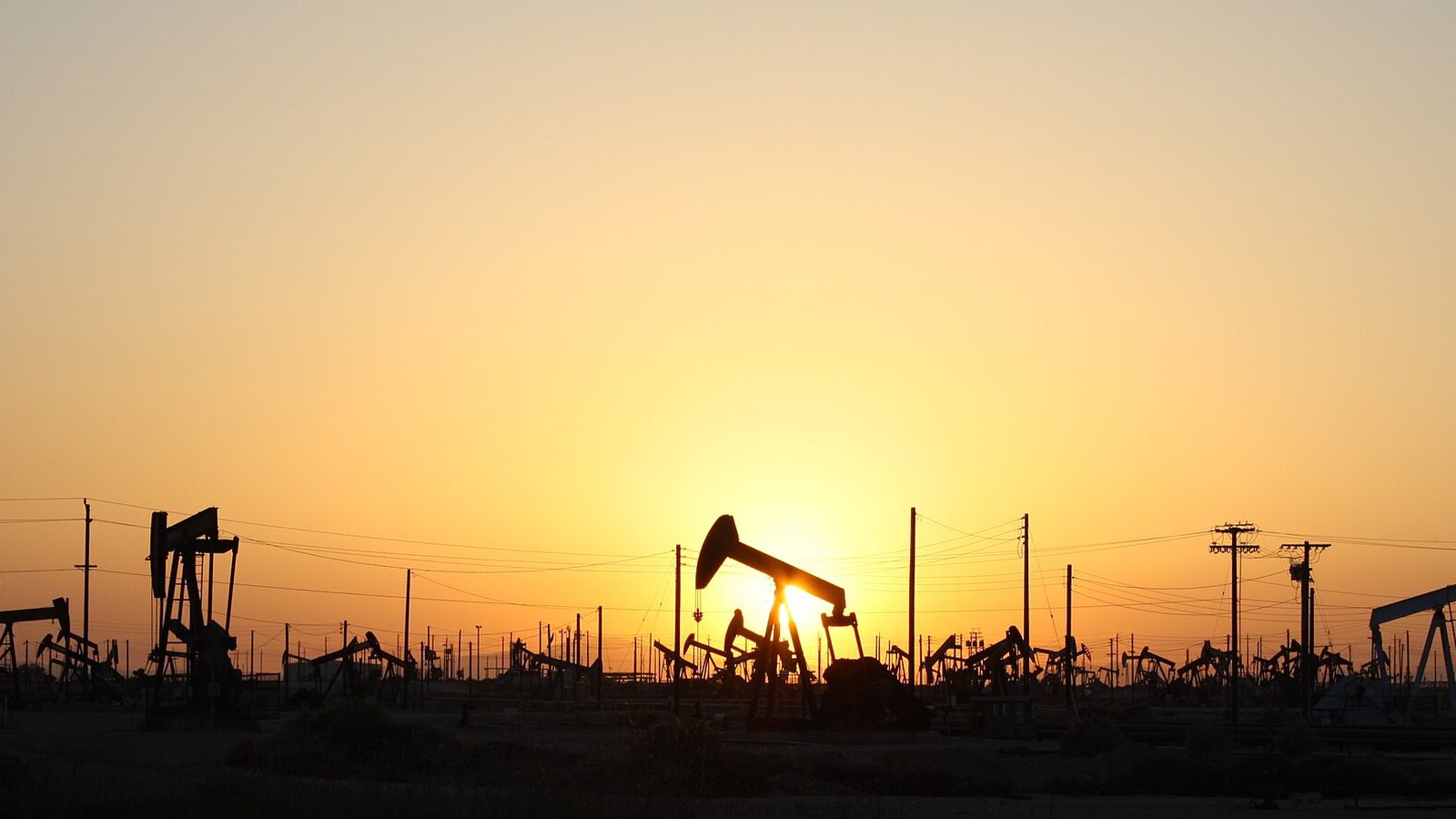
Illustrative image. Photo: Arne Hückelheim, CC BY-SA 3.0, via Wikimedia Commons — source



[…] about 40% higher than the next two largest producers, Russia (roughly 9.9 million b/d in 2024) and Saudi Arabia (9.6 million b/d in 2025), combined. The US overtook Russia and Saudi Arabia to become the […]