UK Approves Nearly 2 GW of Battery-Backed Solar Farms in a Single Month

The UK government approved nearly 2 gigawatts of solar capacity in October 2026, granting planning consent to four large battery-backed solar farms through its Nationally Significant Infrastructure Project (NSIP) process. The latest and largest, Elements Green’s Great North Road Solar and Biodiversity Park northwest of Newark-on-Trent, received its decision from the Secretary of State on October 27.
Four projects, one planning route
Great North Road is rated at 1.12 GW of DC solar capacity with 440 MW / 880 MWh of co-located battery storage, and has secured a grid connection agreement covering 800 MW of import and export — developers describe it as set to become one of the largest solar sites in the UK once built. The same week brought consent for Cubico’s roughly 150 MW Frodsham Solar project near Chester, which has a connection agreement with SP Energy Networks to supply up to 100 MW into the existing Frodsham substation. Earlier in October, RES’s roughly 450 MW Steeple Renewables project in Nottinghamshire — expected to use grid capacity freed up by the nearby West Burton coal plant’s closure — and Island Green Power’s up to 500 MW Green Hill Solar Farm in Northamptonshire also received consent, on October 9 and October 8 respectively. All four, like every solar project over 100 MW in England, were processed as NSIPs, decided directly by the Secretary of State for Energy Security and Net Zero rather than by local planning authorities.
A perfect record for solar in the NSIP pipeline
Every solar scheme that has gone through the NSIP route to a decision has so far been approved, continuing an unbroken run that started with Cleve Hill Solar Park in Kent — approved in 2020 and now operating commercially since July 2025 as one of the UK’s first NSIP-era solar farms — part of the same infrastructure build-out that has also delivered offshore wind projects such as the 3.6 GW Dogger Bank wind farm. That track record matters to developers because NSIP status, created for the largest energy, transport and water infrastructure, comes with a fixed statutory timetable and removes a layer of local political risk that has previously stalled smaller solar applications decided by district councils. It has also attracted battery storage as a near-default add-on: three of October’s four approvals pair solar with grid-scale batteries, reflecting how developers now bid for a single grid connection to host both technologies rather than applying for them separately.
Grid capacity, not land, is now the bottleneck
Two of the month’s approvals explicitly tie their consent to spare grid capacity being vacated elsewhere: Steeple Renewables to the West Burton coal closure, and Frodsham to an existing substation agreement with distribution operator SP Energy Networks. That pattern underscores a shift in what actually limits new solar in England — it is increasingly transmission and distribution headroom, not available farmland or planning appetite, that determines where the next gigawatt of solar can connect. With National Grid ESO contending with a lengthy connections queue nationwide, projects able to point to a secured or soon-to-be-freed grid slot, as all four October approvals did, have a clear edge in reaching construction. The UK’s grid operators are chasing the same problem from the transmission side too: Ofgem is preparing a record £3.5 billion tender for the Hornsea 3 offshore wind transmission assets, a sign of how much new wiring the country’s renewables pipeline now requires, onshore and offshore alike.
What the four projects still need before construction
An NSIP consent is a development consent order, not a construction permit in the sense of a finished financing package: developers still need to reach financial close, secure equipment supply contracts and, in most cases, line up a route to market such as a Contracts for Difference auction or a corporate power purchase agreement before building begins. Great North Road’s 800 MW grid connection agreement and Frodsham’s substation deal with SP Energy Networks both suggest those two projects are further along the pre-construction path than Green Hill or Steeple, whose grid arrangements were less explicit in the approval documents. Even so, developers and the Planning Inspectorate alike are likely to point to October’s unbroken run of approvals as evidence that the NSIP route, now five years and more than 2 GW of cumulative solar capacity into its operating life, has become the default path for any UK solar project large enough to qualify.
Sources
- pv magazine, “UK government approves nearly 2 GW of co-located solar in October,” October 28, 2026 — project list, capacities, approval dates.
- UK Planning Inspectorate — NSIP process for nationally significant energy infrastructure.
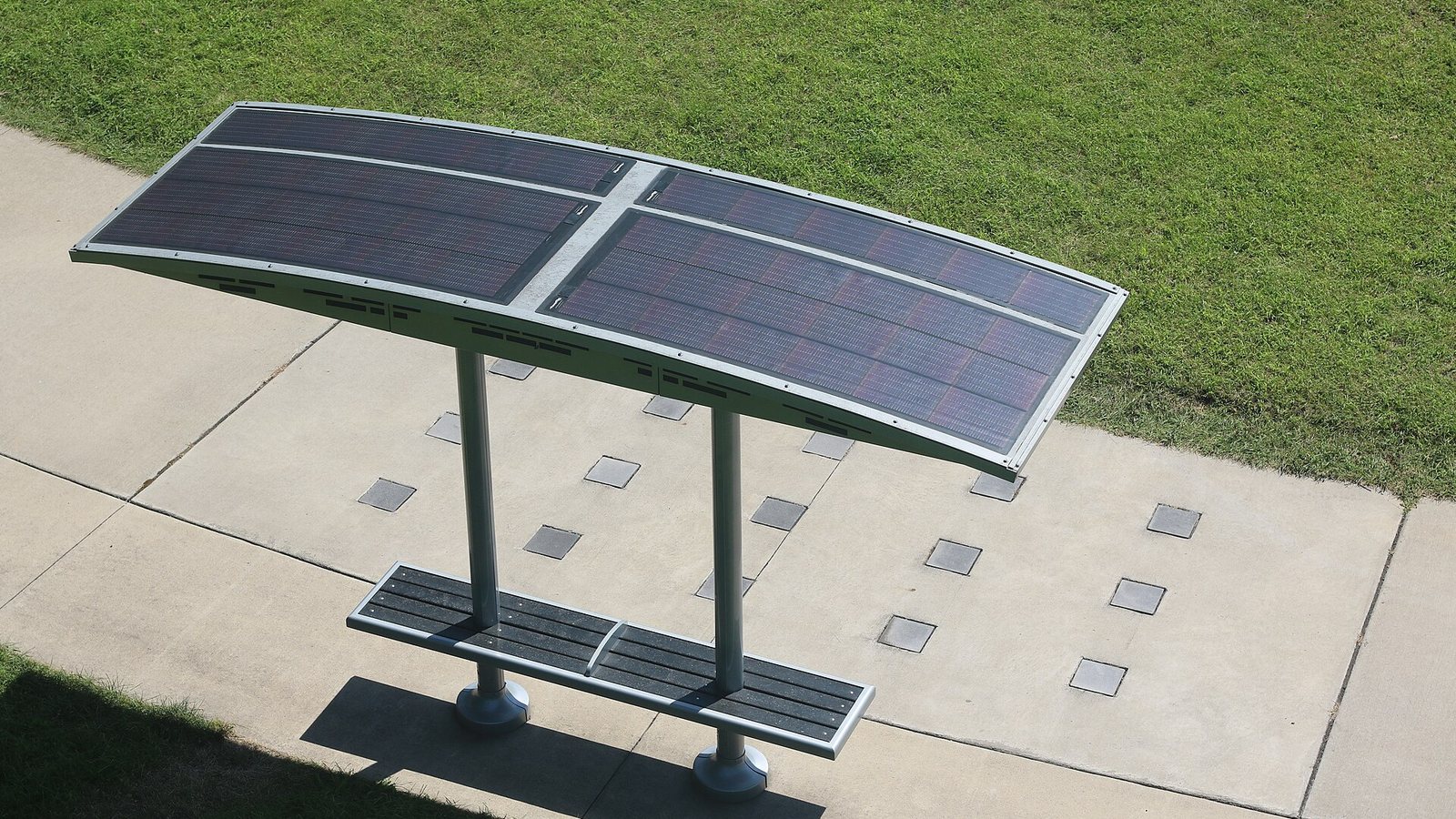
Illustrative image. Photo: Grendelkhan, CC BY-SA 4.0, via Wikimedia Commons — source