


ACME Signs $4.2 Billion Deal to Expand Green Hydrogen Complex in Oman’s Duqm Zone

Indian conglomerate ACME Group has signed an investment agreement with Oman’s Public Authority for Special Economic Zones and Free Zones (OPAZ) to build two additional phases of its green hydrogen and green ammonia complex in the Special Economic Zone at Duqm (SEZAD), according to the authority and multiple industry publications including Hydrogen Central and Zawya. The agreement, signed October 6, 2026, covers a combined investment of roughly OMR1.6 billion, about $4.2 billion, and brings the project’s second and third phases into Oman’s national green hydrogen framework.
What the New Phases Add
Each of the two new phases is designed to produce 400,000 tonnes of green ammonia and 71,000 tonnes of green hydrogen per year, for a combined 800,000 tonnes of ammonia and 142,000 tonnes of hydrogen annually once both are complete. The two phases will occupy roughly 80 square kilometres inside SEZAD. ACME said commercial operations are targeted for 2030 for Phase 2 and 2033 for Phase 3, timelines that put first output from the expansion roughly four years out and full output about seven years out.
The agreements take the form of Project Development and Usufruct Agreements, the land-use and development structure Oman uses to formally fold privately developed projects into SEZAD and its wider hydrogen strategy, rather than a construction contract or a final investment decision on specific equipment orders.
Building on an Existing Phase 1 Project
ACME is not new to Duqm. The company signed its original memorandum of understanding with Oman’s zone authority in 2021 to build a green hydrogen and ammonia facility there, targeting roughly 2,200 tonnes per day of green ammonia output, an investment ACME put at around $2.5 billion at the time. That first-phase project has since drawn initial funding: Oman’s economic zone authority said in 2025 that ACME had secured a $140 million first tranche within a larger $540 million financing package, and officials there described it then as the first green hydrogen project in the sultanate to secure both financing and a long-term offtake agreement.
Tuesday’s agreement extends that existing footprint rather than replacing it, effectively tripling the number of production phases under development at the Duqm site from one to three. ACME has not disclosed the financing structure, lenders or anchor offtake buyers for the two new phases.
Oman’s Bet on Green Hydrogen Exports
The expansion adds to a cluster of green hydrogen and ammonia projects that Gulf states have lined up as they look to diversify export revenue beyond oil and gas. Oman has pitched Duqm specifically as a hub for energy-intensive green fuel production, drawing on the country’s wind and solar resources and its deep-water port access for ammonia exports to Asia and Europe. Neighbouring Saudi Arabia’s NEOM Green Hydrogen Project, a roughly $8.5 billion facility being built by ACWA Power, Air Products and NEOM itself, is a useful scale marker: it is designed for 1.2 million tonnes of green ammonia a year and began entering commissioning in 2026 ahead of a planned 2027 start-up. ACME’s three Duqm phases combined would produce a fraction of that volume, underscoring that Oman’s play is built around several mid-sized projects rather than a single Saudi-scale mega-plant.
India’s own government has separately been negotiating green hydrogen cooperation arrangements with Oman, part of a broader push by New Delhi to secure future supply and investment links for Indian developers like ACME operating in the Gulf’s export-oriented hydrogen sector. That push runs alongside India’s own domestic build-out, including the $19 billion third phase of its Green Energy Corridor transmission program, which is meant to move renewable power to where it can supply electrolysers and other green-fuel demand at home.
The Gap Between Signing and Shipping
Green ammonia and hydrogen projects of this size still face the same unresolved questions across the industry: firm offtake contracts at a price buyers will commit to for a decade or more, reliable renewable power supply at the scale electrolysis requires, and financial close on debt packages big enough to build gigawatt-scale renewables alongside the chemical plant itself. ACME’s statement did not specify how much of the $4.2 billion will be debt versus equity, or whether offtake agreements for the new phases’ ammonia and hydrogen output have been signed. Until those pieces are in place, Tuesday’s agreement marks a land-use and planning milestone for the expansion rather than a financial close or construction start.
Sources
- Hydrogen Central, “ACME’s Duqm hydrogen project joins Oman’s national green energy framework,” October 2026 — investment figure, capacity figures, phase timeline, SEZAD integration.
- Zawya, “Oman SEZAD earns global companies’ confidence with over $500mln funding for ACME green hydrogen project,” 2025 — Phase 1 financing figures and OPAZ official comment.
- ACWA Power / company project pages and Solar Quarter, NEOM Green Hydrogen Project coverage, 2026 — comparator project cost, capacity and commissioning timeline.
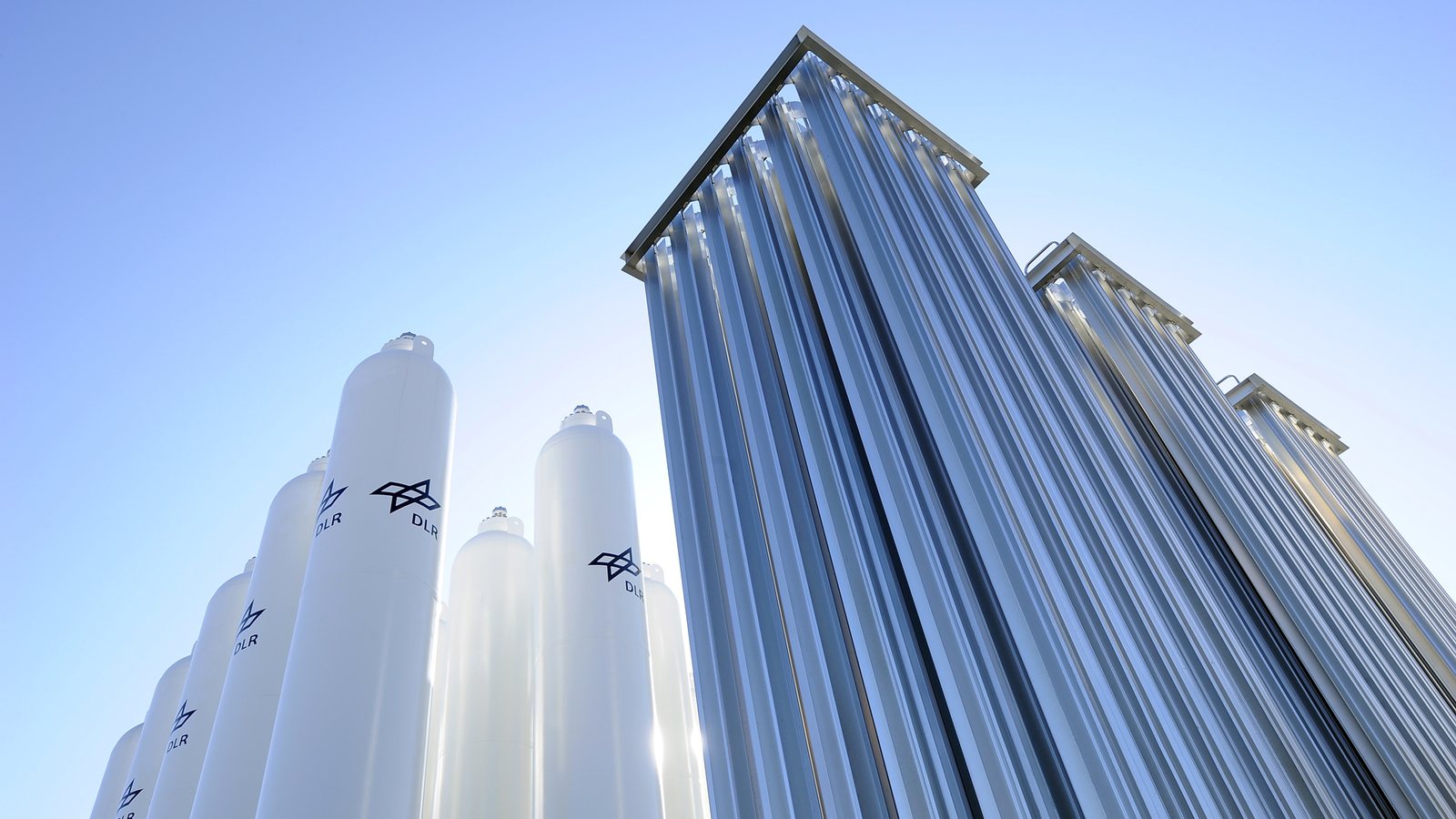
Illustrative image. Photo: DLR, CC BY 3.0 de, via Wikimedia Commons — source


