


What Is QatarEnergy? Ownership, Leadership and Expansion

Last updated: October 2, 2026
QatarEnergy is Qatar’s state-owned, fully integrated oil and gas corporation and the operator of the world’s largest liquefied natural gas (LNG) export business. Headquartered in Doha, it holds exclusive rights to Qatar’s hydrocarbon resources and is the parent of the group that produces nearly all of the country’s oil, gas, petrochemicals and fertilisers. Unlike Shell or ExxonMobil, which are shareholder-owned public companies, QatarEnergy is wholly owned by the State of Qatar, placing it in the same state-ownership category as Saudi Aramco and ADNOC.
Overview
| Founded | 1974, as Qatar General Petroleum Corporation (QGPC); operated for years as Qatar Petroleum (QP) before being rebranded QatarEnergy on October 11, 2021 |
| Headquarters | Doha, Qatar |
| Ownership | 100% owned by the State of Qatar |
| President & CEO / Minister of State for Energy Affairs | Saad Sherida Al-Kaabi (CEO since 2014; minister since November 2018) |
| Employees | Estimated at just over 30,000 worldwide (Revelio Labs workforce data, March 2026) — QatarEnergy does not publish an official consolidated headcount |
| Current LNG capacity | Approximately 77 million tonnes per annum (mtpa), produced from 14 trains at Ras Laffan, before the North Field expansion trains come fully online |
Ownership
QatarEnergy is wholly and directly owned by the State of Qatar. It is not listed on any stock exchange and has no private or institutional shareholders. The company acts as both regulator and operator of Qatar’s upstream and downstream hydrocarbon sector, holding equity stakes — alongside international partners — in almost every oil, gas, LNG, petrochemical and fertiliser venture operating in the country.
Leadership
Saad Sherida Al-Kaabi has been President and CEO of QatarEnergy since 2014 and was appointed Qatar’s Minister of State for Energy Affairs in November 2018, making him the country’s top energy policymaker as well as the head of its national energy company. See the full profile: Who Is Saad Al-Kaabi, Qatar’s Energy Minister and QatarEnergy CEO?
History
QatarEnergy traces its origins to 1974, when the State of Qatar established the Qatar General Petroleum Corporation (QGPC) to take direct control of the country’s oil and gas resources, which until then had been developed mainly through foreign concessions. The company later operated for many years as Qatar Petroleum (QP) before being renamed QatarEnergy on October 11, 2021, a change the company said was intended to reflect a broader strategy spanning energy transition activities alongside its core oil and gas business.
A pivotal moment in the company’s modern history was the January 2017 merger of its two LNG operating subsidiaries, Qatargas and RasGas, into a single unified LNG operator (later rebranded QatarEnergy LNG in 2022), consolidating all 14 LNG trains at Ras Laffan Industrial City under one operating structure.
Main Business
- Upstream oil and gas — exploration and production of crude oil, condensate and natural gas, principally from the offshore North Field.
- LNG — liquefaction, shipping and marketing of LNG through QatarEnergy LNG, the world’s largest LNG producer and exporter, operating all 14 of Qatar’s LNG trains at Ras Laffan.
- Refining and petrochemicals — through affiliates including Qatar Petrochemical Company (QAPCO) and other Ras Laffan-based ventures producing fuels, base oils, ethylene and polyethylene.
- Fertilisers — through Qatar Fertiliser Company (QAFCO), one of the world’s largest single-site urea and ammonia producers.
- Domestic fuel distribution — through Qatar Fuel Company (Woqod), which operates Qatar’s retail fuel stations.
- International upstream — exploration and production interests outside Qatar, including recent entries into blocks offshore Angola, Cyprus, Namibia, Egypt and Uruguay (as announced on QatarEnergy’s newsroom through 2026).
Production & Capacity
| Metric | Value | Period / Source |
|---|---|---|
| LNG production capacity (current, pre-expansion) | ~77 mtpa from 14 trains at Ras Laffan | 2026, QatarEnergy LNG |
| North Field East (NFE) expansion | 4 trains × 8 mtpa = 32 mtpa; project cost ~$28.75 billion | Phase 1 trains targeted to start production 2025–2026 depending on source; full ramp-up by 2027 (QatarEnergy; trade press) |
| North Field South (NFS) expansion | 2 additional trains, raising total capacity toward ~126 mtpa | Targeted completion 2027 (QatarEnergy; trade press) |
| North Field West (NFW) — newly announced | Further raises targeted capacity to ~142 mtpa | Announced 2026 (QatarEnergy) |
| Longer-term ambition cited by Al-Kaabi | More than doubling from 77 mtpa toward ~160 mtpa, of which 142 mtpa from North Field trains | Qatar Tribune, 2026 — company officials’ public remarks; treat as a stated target, not an audited reserve or production figure |
Estimates of the exact final capacity and timing vary between QatarEnergy’s own announcements and trade-press reporting as the North Field East, South and newly announced West phases are sequenced; figures above should be read as the most recent publicly stated targets rather than fixed, audited outcomes.
Major Assets
- North Field — the world’s largest non-associated natural gas field, shared with Iran’s South Pars field across the Gulf median line; the source of virtually all of Qatar’s gas and LNG.
- Ras Laffan Industrial City — the dedicated industrial complex north of Doha housing QatarEnergy LNG’s 14 liquefaction trains plus associated gas processing, condensate and petrochemical plants.
- Golden Pass LNG (United States) — a liquefaction export terminal at Sabine Pass, Texas, jointly developed with ExxonMobil; QatarEnergy holds a 70% interest and ExxonMobil 30%. The project began shipping its first LNG cargo in April 2026 from the first of three planned trains, which together are designed for roughly 18.1 mtpa of capacity.
Countries of Operation
QatarEnergy’s core production base is domestic, in Qatar’s North Field and associated onshore facilities. Internationally, its most significant operating asset is the Golden Pass LNG project in the United States. The company has also expanded its international exploration portfolio in 2026 with new entries into offshore blocks in Angola, Cyprus, Namibia, Egypt and Uruguay, though these remain exploration-stage interests rather than producing assets.
Major Projects
| Project | Status | Details |
|---|---|---|
| North Field East (NFE) | Under construction / phasing into production | Four 8-mtpa LNG trains; QatarEnergy holds the majority interest with international partners including TotalEnergies taking equity stakes in specific trains. |
| North Field South (NFS) | Under construction | Two additional LNG trains intended to push total Qatari LNG capacity toward ~126 mtpa. |
| North Field West (NFW) | Announced, 2026 | Latest expansion phase, aimed at lifting capacity further toward a stated ~142 mtpa target before the end of the decade. |
| Golden Pass LNG (Train 1) | First LNG exported April 2026 | Joint venture with ExxonMobil (QatarEnergy 70% / ExxonMobil 30%) at Sabine Pass, Texas; three trains planned, ~18.1 mtpa total design capacity. |
Subsidiaries
- QatarEnergy LNG — formed from the January 2017 merger of Qatargas and RasGas; rebranded from “Qatargas” to QatarEnergy LNG in 2022; operates all 14 LNG trains at Ras Laffan.
- Qatar Petrochemical Company (QAPCO) — ethylene and polyethylene production at Mesaieed.
- Qatar Fertiliser Company (QAFCO) — one of the world’s largest single-site urea/ammonia complexes.
- Qatar Fuel Company (Woqod) — domestic retail fuel distribution.
- Industries Qatar (IQ) — publicly listed holding company for Qatar’s petrochemicals, steel and fertiliser interests, chaired by Saad Al-Kaabi.
Recent Developments
- QatarEnergy and ExxonMobil’s Golden Pass LNG project in Texas shipped its first export cargo in April 2026, the first LNG production from Train 1 of the three-train facility.
- QatarEnergy announced the North Field West (NFW) expansion phase in 2026, targeting a further increase in national LNG capacity toward roughly 142 mtpa before 2030, on top of the North Field East and South phases already under way.
- QatarEnergy extended force-majeure declarations on some LNG cargoes into December 2026 amid shipping disruption linked to fighting around the Strait of Hormuz — see TDE — Qatar Extends LNG Force Majeure Into December.
Related Entities
- Saad Al-Kaabi — QatarEnergy President & CEO and Qatar’s Minister of State for Energy Affairs
- LNG (liquefied natural gas) — QatarEnergy is the world’s largest LNG producer and exporter
- ExxonMobil — QatarEnergy’s partner in the Golden Pass LNG project
- Saudi Aramco — fellow Gulf state-owned national oil company
- Natural Gas — the resource underpinning QatarEnergy’s North Field business
- Who Buys Qatar’s LNG? — TDE analysis of Qatar’s LNG export markets
Sources
- QatarEnergy — About Us
- QatarEnergy LNG — About Us
- The Peninsula Qatar — Qatar Petroleum is now QatarEnergy (October 11, 2021)
- Government Communications Office, Qatar — Minister of State for Energy Affairs
- Qatar News Agency — QatarEnergy marks first LNG export cargo from Golden Pass LNG project in Texas (April 2026)
- Qatar Tribune — QatarEnergy is becoming world’s biggest exporter of LNG, chemical fertilisers, helium: Al-Kaabi (2026)
- TDE — Qatar Extends LNG Force Majeure Into December as Hormuz Blockage Persists
Frequently Asked Questions
Who owns QatarEnergy?
QatarEnergy is 100% owned by the State of Qatar. It has no private shareholders and is not listed on any stock exchange.
Who is the CEO of QatarEnergy?
Saad Sherida Al-Kaabi has been President and CEO of QatarEnergy since 2014. He has also served as Qatar’s Minister of State for Energy Affairs since November 2018.
Is QatarEnergy the same as Qatar Petroleum?
Yes. QatarEnergy was known as Qatar Petroleum (and, before that, the Qatar General Petroleum Corporation, founded in 1974) until it was rebranded QatarEnergy on October 11, 2021.
How much LNG does QatarEnergy produce?
As of 2026, QatarEnergy LNG operates 14 trains at Ras Laffan with roughly 77 million tonnes per annum (mtpa) of capacity. Multiple expansion phases — North Field East, North Field South and the newly announced North Field West — are under way to raise this toward a stated target in the 126–160 mtpa range by the end of the decade, though exact figures and timing vary by source.
What is QatarEnergy’s stake in Golden Pass LNG?
QatarEnergy holds a 70% interest in the Golden Pass LNG export terminal in Texas, with ExxonMobil holding the remaining 30%. The project shipped its first LNG export cargo in April 2026.
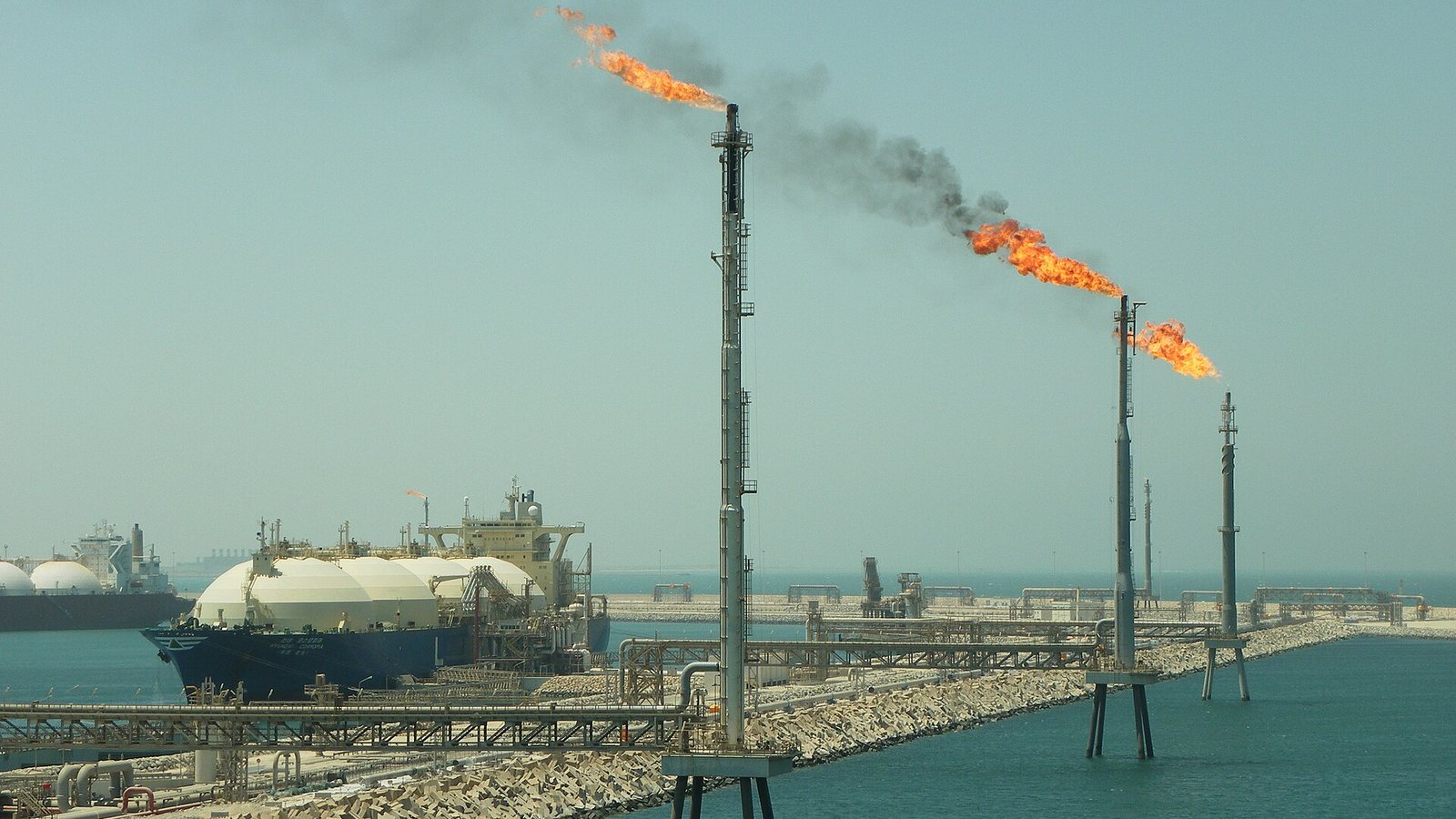
Illustrative image. Photo: Matthew Smith @ Flickr, CC BY 2.0, via Wikimedia Commons — source


[…] Sherida Al-Kaabi is Qatar’s Minister of State for Energy Affairs and the President and CEO of QatarEnergy, the state-owned corporation that controls nearly all of Qatar’s oil and gas resources. […]