Germany’s Energy Transition (Energiewende) Explained

The Germany Energiewende, or “energy turn”, is the country’s long-term plan to replace nuclear power and fossil fuels with renewable electricity, higher efficiency and, eventually, climate neutrality. It began as a civil-society idea in the 1980s, became law through feed-in tariffs in 2000, and accelerated after the Fukushima accident in 2011. The last German nuclear plants closed in April 2023, and renewables now supply roughly half of electricity consumption. This guide explains the main facts, the mix, the companies and the risks.
Germany Energiewende: Overview and Key Figures
The word Energiewende was popularised by a 1980 study from the Öko-Institut, a German research institute, that argued economic growth was possible without oil and uranium. It later became the label for a series of laws and political decisions.
Milestones
- 1991: the Electricity Feed-in Act obliged utilities to buy renewable power.
- 2000: the Renewable Energy Sources Act (EEG) introduced guaranteed feed-in tariffs, which drove rapid growth in solar and wind.
- 2002: a first nuclear phase-out law was agreed.
- 2011: after the Fukushima accident, Germany reversed a lifetime extension for nuclear plants and legislated a phase-out.
- 2020: a law set coal power exit by 2038 at the latest.
- April 2023: the last three reactors (Isar 2, Emsland and Neckarwestheim 2) were shut down.
Current targets include climate neutrality by 2045 and a renewable share of about 80 percent of electricity consumption by 2030, as set in the EEG. Readers should check the Federal Ministry for Economic Affairs and Climate Action for the latest wording, since policy details change with each government.
Energy Mix and Resources
Germany has limited oil and gas, large lignite deposits and a strong industrial base. That combination shaped the Germany Energiewende from the start: the country needs to cut emissions from coal while keeping heavy industry competitive.
The electricity mix has shifted in three main ways:
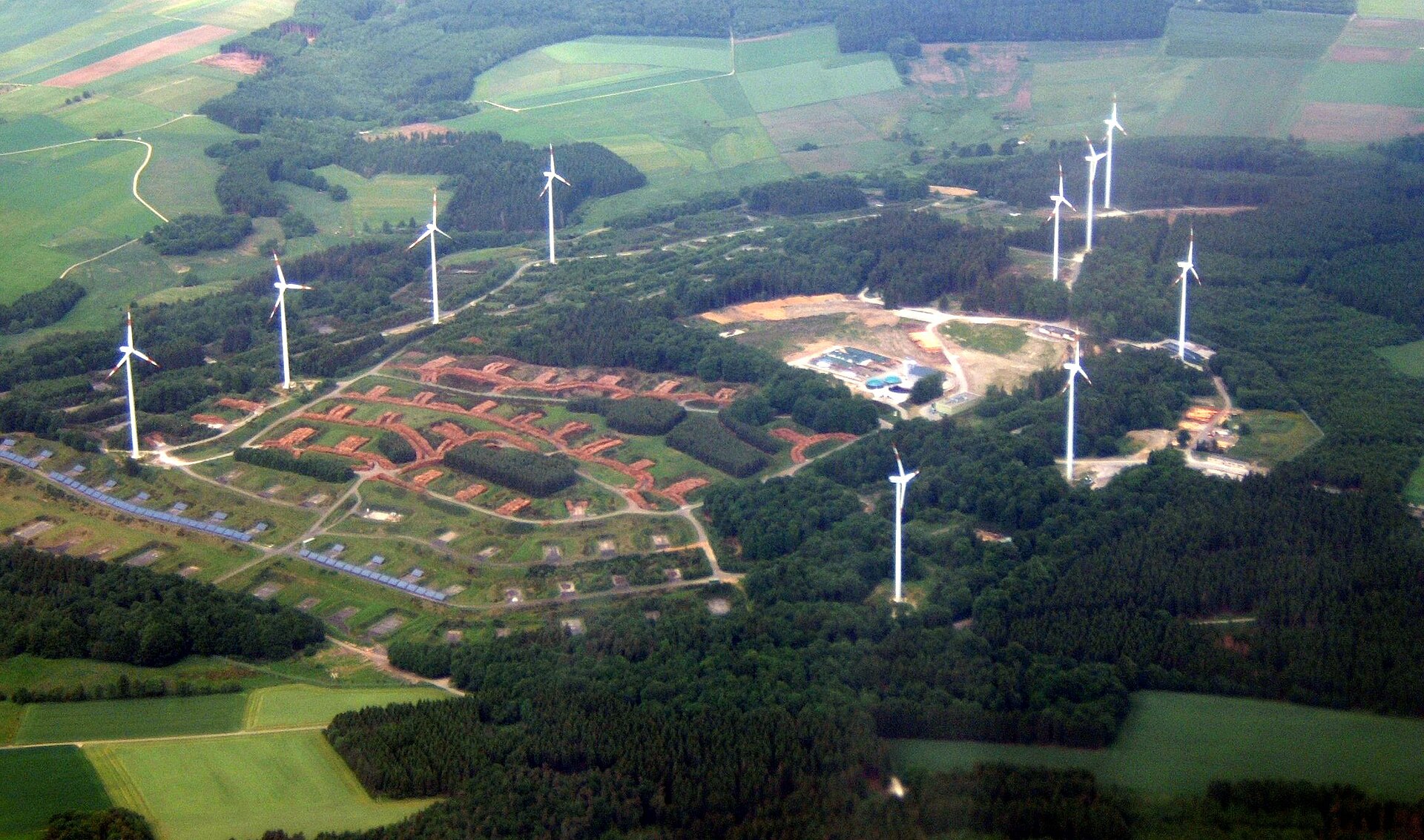
- Wind is the largest renewable source, with onshore turbines in the north and centre and offshore farms in the North Sea and Baltic Sea.
- Solar has grown quickly on rooftops and in ground-mounted plants, and it now provides a large share of summer midday power.
- Coal and gas remain important for flexibility and winter supply, but coal generation has declined over the long term.
According to industry association BDEW and research institute ZSW, renewables passed half of gross electricity consumption in 2023. Electricity is only a part of total energy use, however. Heating, transport and industry still depend heavily on oil, natural gas and coal, so the overall renewable share of final energy is much lower.
Beyond electricity: heat, transport and industry
Power is the part of the Germany Energiewende that has moved fastest. Buildings are heated mostly with natural gas and heating oil, and the government has been promoting heat pumps, district heating and better insulation. Transport remains largely oil-based, although electric vehicle sales and charging infrastructure are growing. Industry, especially steel and chemicals, is exploring electrification and hydrogen. These sectors move more slowly because the equipment lasts for decades and the investment cases are harder.
Major Companies and Projects
The Energiewende involves several types of players:
- Utilities: RWE, E.ON, EnBW and Uniper, which are adjusting from coal and nuclear to renewables, grids and trading. Vattenfall, owned by the Swedish state, is also present in Germany.
- Grid operators: the four transmission operators (50Hertz, Amprion, TenneT Germany and TransnetBW) and hundreds of local distribution companies.
- Equipment makers: wind turbine makers such as Enercon and Nordex, and Siemens Energy through its wind and grid businesses.
- Citizen and community energy: cooperatives, farmers and households own a significant part of solar and onshore wind capacity, which is unusual compared with many countries.
Flagship infrastructure includes offshore wind clusters connected by high-voltage cables, and large north-south direct-current power lines such as SuedLink, designed to carry wind power from the north to industrial regions in the south.
Imports, Exports and Infrastructure
Germany sits in the middle of Europe’s electricity system and exchanges power with many neighbours. After the nuclear shutdowns, the country recorded net electricity imports in 2023, mostly in hours when imported power was cheaper than domestic output.
Gas is the other pillar. Before 2022, Russia supplied roughly half of Germany’s gas imports. After Russia’s invasion of Ukraine, deliveries through Nord Stream stopped, and Germany built floating LNG import terminals at Wilhelmshaven, Brunsbüttel and Lubmin, with the first starting in December 2022. Norway, the Netherlands and Belgium became more important suppliers, along with LNG cargoes from the United States and other producers.
| Area | Main challenge | Typical response |
|---|---|---|
| Power grid | Moving wind power from north to south | New direct-current lines, grid reinforcement |
| Gas supply | Replacing Russian pipeline gas | LNG terminals, new suppliers, storage rules |
| Flexibility | Covering calm, dark winter periods | Gas plants, storage, demand response, imports |
| Hydrogen | Supply for steel, chemicals, heavy transport | Planned hydrogen core network, imports |
Policy and Investment Outlook
Policy for the coming years centres on faster permitting, more offshore wind, large solar additions, grid expansion and a legal framework for new gas-fired power plants that can later switch to hydrogen. The government also supports heat pumps and building efficiency through the Buildings Energy Act, which was politically contentious when first introduced.
Investment is driven by a mix of auction schemes, private capital, public development banks such as KfW, and EU frameworks including the emissions trading system. Companies increasingly sign long-term power purchase agreements to secure renewable electricity. Details of current auctions and targets are published by the Federal Network Agency (Bundesnetzagentur).
Risks and Challenges
- Electricity prices: household and industrial prices are among the higher ones in Europe, partly due to taxes, grid charges and the cost of expanding the system.
- Grid delays: transmission lines have taken longer to build than renewable plants, which leads to curtailment and costly redispatch measures.
- Security of supply: a system with a lot of wind and solar still needs reliable backup for low-output periods.
- Industrial competitiveness: energy-intensive sectors such as chemicals and steel warn about costs compared with other regions.
- Public acceptance: local resistance to wind turbines and power lines can slow projects.
What the Germany Energiewende Means for Global Energy Markets
Germany’s feed-in tariffs helped create an early mass market for solar panels, which contributed to the global fall in costs. The country is also a very large buyer of LNG and a key player in European gas and power trading. Its decisions on coal, nuclear and hydrogen influence prices and investment across the continent, and many countries study its experience, both the successes and the cost overruns.
Frequently Asked Questions About the Germany Energiewende
What does Energiewende mean?
It is German for “energy transition” and refers to the shift to renewable energy and lower consumption.
When did Germany shut down its nuclear plants?
The last three reactors stopped producing power in April 2023, after a short extension caused by the energy crisis.
Is Germany phasing out coal?
Yes. Legislation sets 2038 as the latest date for ending coal-fired power, and policymakers have discussed an earlier date in some regions.
How much of Germany’s electricity is renewable?
Industry data shows that renewables supplied slightly more than half of electricity consumption in 2023, and the share has been rising.
Why is the Energiewende controversial?
Critics point to costs, delays in grid expansion and reliance on gas during the transition. Supporters point to emission cuts, technology cost reductions and reduced exposure to fuel imports.
Conclusion
The Germany Energiewende is one of the largest national energy transformations in the industrial world. It has delivered a majority-renewable power sector and exited nuclear, but it still faces demanding tasks in grids, flexibility, heating and industry. Its next phase will be judged by how quickly Germany can build networks and backup capacity while keeping energy affordable.
Sources and further reading
- Federal Ministry for Economic Affairs and Climate Action (bmwk.de)
- German Environment Agency, Umweltbundesamt (umweltbundesamt.de)
- Federal Network Agency, Bundesnetzagentur (bundesnetzagentur.de)
- BDEW, German Association of Energy and Water Industries (bdew.de)
- Fraunhofer Institute for Solar Energy Systems, Energy-Charts (energy-charts.info)
- International Energy Agency (iea.org)
- Energy Institute, Statistical Review of World Energy (energyinst.org)