Biggest Oil Producing Countries in the World
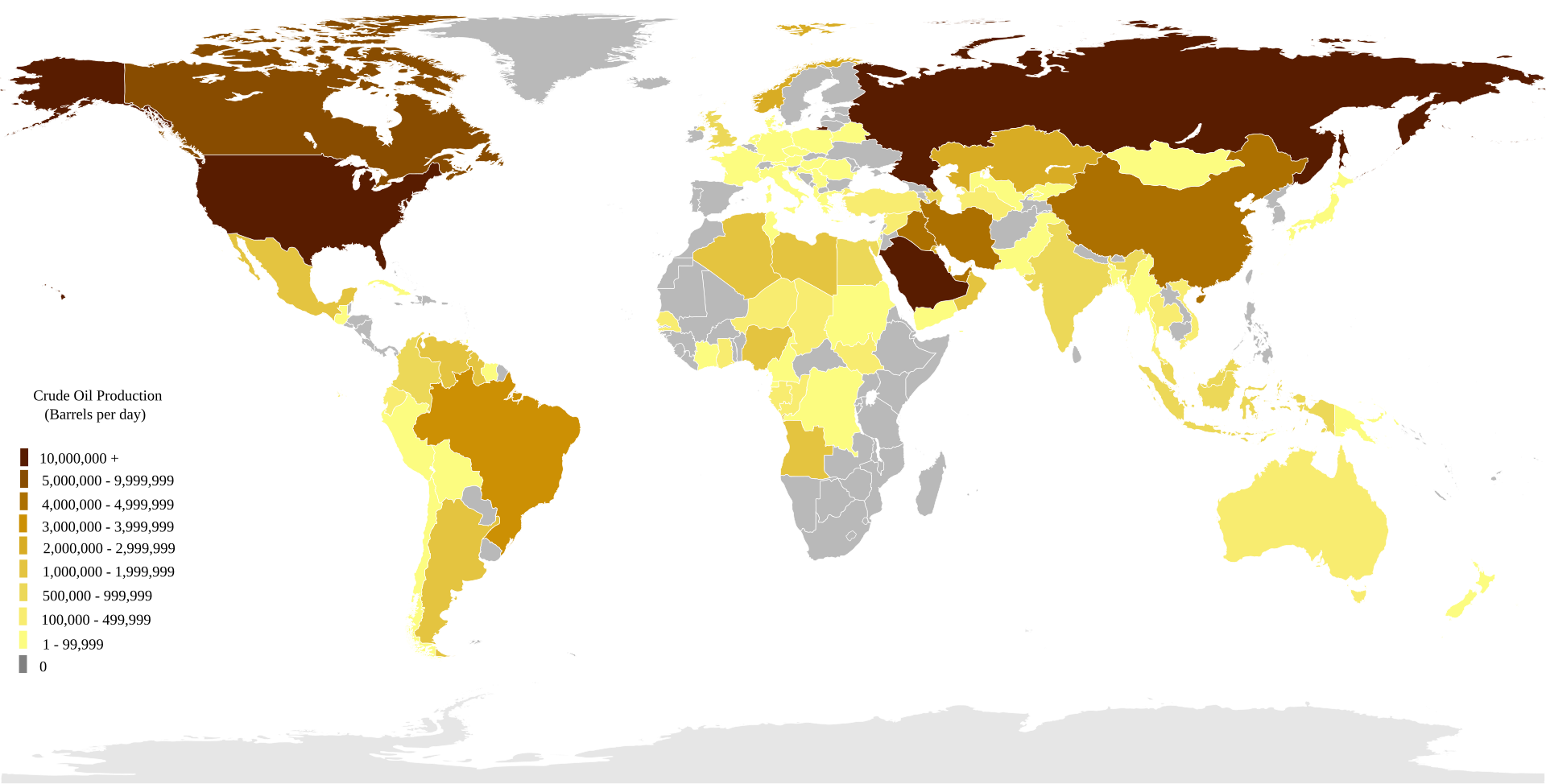

The United States is the biggest oil producing country in the world, pumping a record 13.6 million barrels of crude oil per day in 2025, ahead of Russia at about 9.9 million and Saudi Arabia at 9.6 million, according to the US Energy Information Administration (EIA). Together with Canada, Iraq, China and Iran, these producers account for most of the world's supply. This ranking explains the numbers, the method and what they mean for energy markets.
Biggest Oil Producing Countries: The Ranking at a Glance
The table shows the largest crude oil producers in 2025. Crude oil here includes lease condensate, the light liquid recovered at the wellhead, and excludes natural gas liquids, biofuels and refined products.
| Rank | Country | Crude oil production, 2025 (million barrels per day) |
|---|---|---|
| 1 | United States | 13.6 |
| 2 | Russia | 9.9 |
| 3 | Saudi Arabia | 9.6 |
| 4 | Canada | 4.9 |
| 5 | Iraq | 4.4 |
| 6 | China | 4.3 |
| 7 | Iran | 4.2 |
The top three figures come from EIA's full-year review. Ranks 4 to 7 come from EIA data reported as an average of January to November 2025, so small revisions are possible. The United Arab Emirates and Kuwait also rank in the world's top ten.
Methodology and Data Sources
Rankings of oil producers differ depending on what is counted. EIA's crude oil measure includes lease condensate. Other sources, such as the International Energy Agency or OPEC, may report total liquids, which also include natural gas liquids and sometimes biofuels, and that changes both the numbers and the order. For example, a country with large gas liquids output appears higher in a total-liquids list. When you compare rankings, always check the unit, the product definition and the year. The figures in this article are crude oil plus lease condensate in million barrels per day.
Why the United States Leads
The United States has led global crude production since the shale boom. Horizontal drilling and hydraulic fracturing opened tight oil formations such as the Permian Basin, and efficiency improvements allowed output to grow even as rig counts fell. EIA reports that 2025 output set a record at 13.6 million barrels per day, about 40% above the level of Russia or Saudi Arabia. US output responds quickly to price changes, because private companies decide how many wells to drill, unlike state-controlled producers that follow national policy.
Russia and Saudi Arabia: Policy-Driven Output
Russia produced about 9.9 million barrels per day in 2025, largely unchanged from 2024. Saudi Arabia produced 9.6 million barrels per day, up from 9.2 million in 2024. Saudi output is a deliberate policy decision within the OPEC+ group, since the kingdom's stated maximum sustainable capacity is 12 million barrels per day. The gap between production and capacity makes Saudi Arabia the market's main spare-capacity holder, which gives it influence over prices that other producers lack.
Canada, Iraq, China and Iran
Canada's output comes largely from oil sands in Alberta and is exported mostly to the United States. Iraq is an OPEC member with large, low-cost fields in the south. China produces oil mainly for its own large refining system but remains the world's biggest crude importer. Iran, with about 5% of world output, has production that depends heavily on sanctions and export access. Each of these countries faces different constraints, from pipeline capacity to maintenance of ageing fields.
How Concentrated Is World Oil Supply?
Oil production is concentrated. The EIA data show that five countries produced about half of the world's oil in 2025, and the United States, Russia and Saudi Arabia together accounted for close to 40% of global supply. Based on EIA data for January 2026, the world produced 84.5 million barrels per day of crude oil and lease condensate, with the top ten producers supplying about 73%, OPEC about 32% and the wider OPEC+ group about 55%. This concentration is why decisions in a few capitals can move global prices.
What the Numbers Mean for Energy Markets
Record US output keeps global supply ample and puts a ceiling on prices when demand is weak. At the same time, OPEC+ members can adjust production to defend prices. For importers in Europe and Asia, a diverse set of suppliers lowers risk, while for exporters, competing barrels reduce pricing power. Traders watch monthly EIA and OPEC reports, rig counts and inventory data to judge whether supply is growing faster than demand.
How to Read Oil Production Rankings Without Being Misled
Rankings of oil producers look simple, but four details change the order. First, the definition: some tables count crude oil and lease condensate only, while others add natural gas liquids, biofuels and refinery gains under "total liquids". A country with large gas-liquids output moves up on a total-liquids list. Second, the period: a single month can differ from an annual average, and countries that sit close together, such as Russia and Saudi Arabia, can swap places from one release to the next. Third, output is not capacity: Saudi Arabia and other OPEC+ members often produce below what their fields could deliver because of group agreements. Fourth, production is not reserves: a country with very large resources may rank lower on daily output because of investment levels, sanctions or cost.
A practical rule for writers and analysts is to quote the source, the definition and the month together, for example "crude oil including lease condensate, as reported by the U.S. Energy Information Administration". That one sentence prevents most contradictions between articles. It also explains why the International Energy Agency, OPEC and the U.S. government can publish slightly different figures for the same country without any of them being wrong.
Frequently Asked Questions About the Biggest Oil Producing Countries
Which country produces the most oil? The United States, at a record 13.6 million barrels per day of crude oil in 2025, according to EIA.
Is Saudi Arabia the largest oil producer? No. It ranks third, but it holds the world's largest spare capacity and is the largest exporter.
What is the difference between crude oil and total liquids? Crude oil with lease condensate excludes natural gas liquids and biofuels. Total liquids include them, which can change the ranking.
How many countries produce half of the world's oil? Five countries, according to the 2025 data summarised above.
How often does the ranking change? Changes at the top are rare, but countries in the middle of the table can swap places from year to year when sanctions, maintenance or policy shifts change output.
Conclusion
The biggest oil producing countries are led by the United States, with 13.6 million barrels per day, followed by Russia and Saudi Arabia, and just five countries supply half of the world's crude. Policy, sanctions and technology keep reshaping the order, so the safest way to follow the ranking is to compare consistent data from EIA each year. The Daily Energy will keep tracking production news and market effects.
Sources: US EIA, Today in Energy (crude oil production, 2025); Energy Now, Half the world's oil comes from just five countries (EIA data, ranks 4 to 7); Wikipedia, List of countries by oil production (January 2026 world total and shares).