Energy in Saudi Arabia: Oil, Gas and Renewables

Saudi Arabia holds about 17% of the world's proved oil reserves and still generates almost all of its electricity from natural gas and oil, but it has set a target for half of its generating capacity to come from renewables by 2030. That combination of a giant hydrocarbon base and a fast-growing solar and wind programme makes Saudi Arabia energy policy one of the most closely watched stories in the market.
Saudi Arabia Energy: Overview and Key Figures
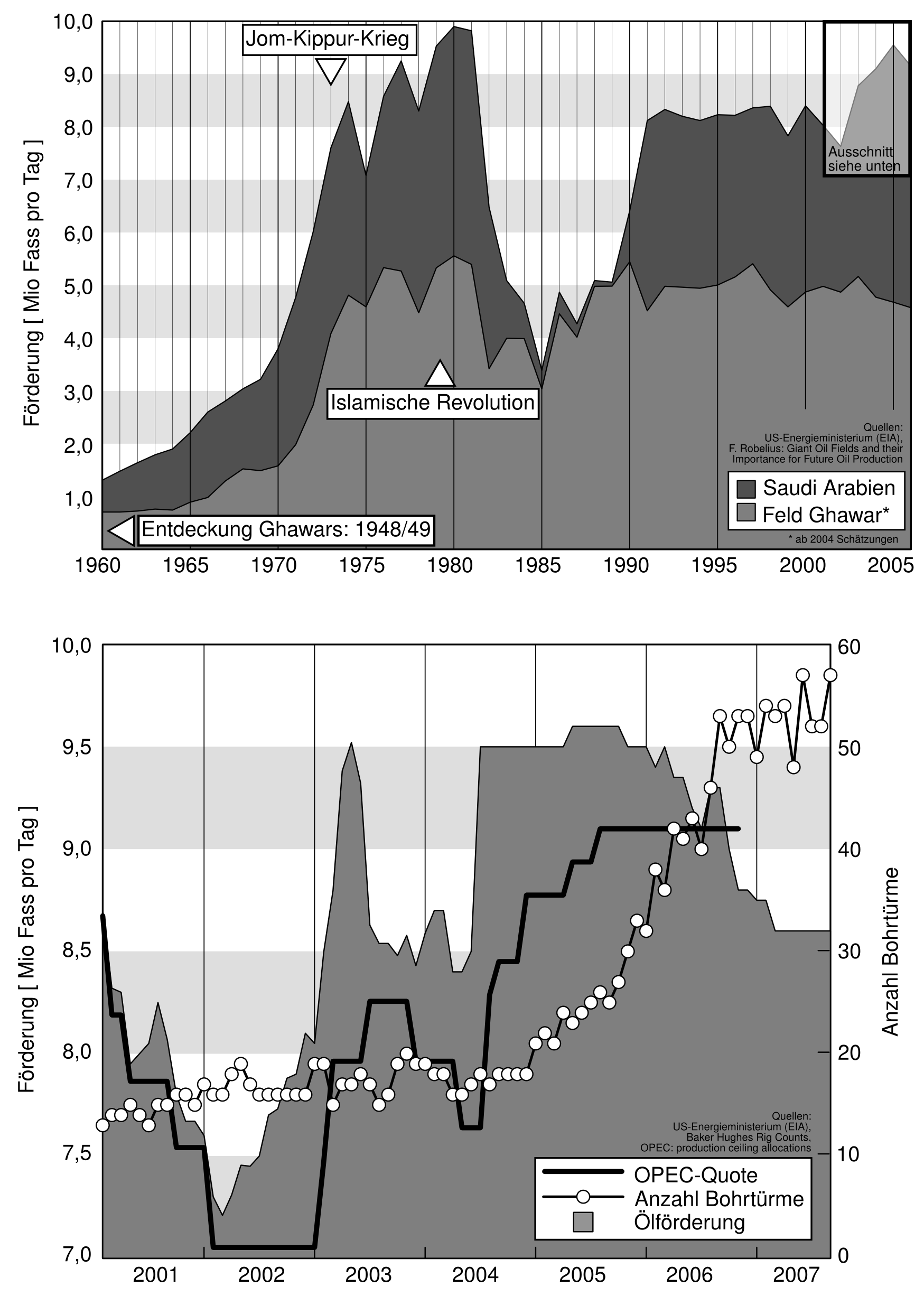
The kingdom is the world's largest crude oil exporter and one of its three biggest producers. The US Energy Information Administration (EIA) reports that Saudi crude oil output was 9.5 million barrels per day in 2023, down 9% from 10.4 million in 2022, because of OPEC+ production cuts. EIA's later figure for 2025 is 9.6 million barrels per day, up from 9.2 million in 2024. Total liquids production, which includes natural gas liquids, was 11.1 million barrels per day in 2023.
The state oil company, Saudi Aramco, says its maximum sustainable crude capacity is 12 million barrels per day. In January 2024 it dropped an earlier plan to reach 13 million barrels per day by 2027. The difference between capacity and actual output shows that production is a policy choice within the OPEC+ framework, not a technical limit.
Oil: Production, Exports and Refining
In 2023 Saudi Arabia exported about 7.0 million barrels per day of crude oil, equal to 34% of OPEC's crude exports, plus 1.3 million barrels per day of petroleum products. Asia takes about 75% of the crude. Exports leave mainly from Gulf terminals, but the East-West pipeline, with a capacity of 5 million barrels per day, carries crude to the Red Sea port of Yanbu, which gives the kingdom an export route that does not pass through the Strait of Hormuz.
Domestic refining capacity is 3.3 million barrels per day, run at an average of 76% in 2023. Refined products supply local demand and also serve export markets. In summer, power plants burn more crude oil directly to meet air-conditioning demand, which reduces the volume available for export. That seasonal pattern is one reason Saudi planners want more gas and renewables in the power mix.
Natural Gas: The Next Growth Engine
Saudi Arabia produced about 4.3 trillion cubic feet of dry gas in both 2022 and 2023 and consumes all of it at home, mainly for power generation, desalination and industry. About 51% of production in 2023 came from non-associated fields, meaning gas that is not a by-product of oil production, up from 48% a year earlier.
The key project is Jafurah, the kingdom's largest unconventional gas field, with 229 trillion cubic feet of resources according to EIA. Aramco says production has started, and EIA reports a target of 2.0 billion cubic feet per day by 2030. Extra gas will replace oil in power plants and feed the petrochemical industry. EIA also notes that flaring rose to 88 billion cubic feet in 2023, which shows why gas capture remains a priority.
Electricity: Gas, Oil and the Rise of Solar
Saudi electricity generation was an estimated 453 terawatt-hours in 2023. Natural gas supplied about 62% and oil about 38%, while renewables were under 1%. Renewable output grew from 1 terawatt-hour to 3 terawatt-hours in that year, and installed renewable capacity reached about 2.8 gigawatts at the end of 2023.
Desalination matters for the power system as well, because it supplies drinking water in a country with few natural freshwater sources. EIA estimates that desalination used around 6% of electricity in 2020.
Renewables: Targets and Projects
Vision 2030 is the national programme to diversify the economy, and energy is a core part of it. The government's target is for 50% of generation capacity to come from renewables by 2030, compared with 3% at the end of 2023. At the same time, it plans to raise the gas share of capacity from 46% in 2022 to 50%, so that oil burning in power plants falls.
Several projects show progress.
- Sudair solar: 1,500 megawatts of solar, operating since 2023.
- Dumat Al-Jandal wind: 400 megawatts of wind, operating since 2022.
- Al-Shuaibah 2: a 2,060-megawatt solar project that EIA lists as due in 2025.
As of mid-2024, EIA counted over 21 gigawatts of renewable projects in the pipeline, most of them solar, with 9.7 gigawatts scheduled for completion by 2026. Delivering the 50% target will require much faster build-out than the pace of 2023.
Nuclear and Other Long-Term Plans
Saudi Arabia also plans a civil nuclear programme. A state company, the Saudi Nuclear Energy Holding Company, was created in March 2022, and published plans for reactor numbers and capacity have varied. Check official announcements for current status rather than relying on older targets.
Risks and Challenges
The main challenges are demand growth, execution speed and market dependence. Electricity demand rises quickly in hot summers and with industrial expansion. Renewable projects need transmission lines and storage to deliver power at night. And government revenue still depends heavily on oil prices and OPEC+ decisions.
What It Means for Global Energy Markets
Because Saudi Arabia is such a large exporter, its choices affect oil prices, and its domestic energy policy affects export availability. If gas and solar replace crude burning at home, more oil can be exported or the same exports can be sustained with lower production. Asia, which buys most Saudi crude, is directly exposed to these changes. Gas expansion also strengthens the kingdom's petrochemical industry, which competes in global markets.
Frequently Asked Questions About Saudi Arabia Energy
How much oil does Saudi Arabia produce? EIA reports 9.6 million barrels per day of crude oil in 2025, up from 9.2 million in 2024.
What is Saudi Arabia's main source of electricity? Natural gas, at about 62% of generation in 2023, followed by oil at about 38%.
What is the Vision 2030 renewable target? To produce 50% of electricity generation capacity from renewables by 2030.
Does Saudi Arabia export natural gas? No. It uses all of its gas domestically, although it is investing in expanding gas supply.
How large are Saudi oil reserves? About 17% of the world's proved oil reserves, according to EIA.
Conclusion
Saudi Arabia remains the central swing producer of the oil market, but its domestic energy system is changing. Gas from Jafurah and new solar and wind farms are meant to cut oil burning in power plants, and the 2030 renewable target gives a clear benchmark to track. Follow The Daily Energy for updates on production decisions, project start-ups and policy changes.
Sources: US EIA, Saudi Arabia Country Analysis Brief (last updated October 2024; figures are for 2023 unless stated); US EIA, Today in Energy (2025 crude production); Aramco, Fourth quarter and full year results (Jafurah production started); Wikipedia, Energy in Saudi Arabia (nuclear company).