Iraq’s Crude Output Hits Highest Level Since 2019 as Gulf Producers Ramp Up, IEA Says

Iraq’s crude oil production climbed to 4.6 million barrels per day in October, its highest level since 2019, as Gulf members of OPEC+ pumped above their pledged output levels for a second straight month, the International Energy Agency said in its Oil Market Report for November. The increase came as more crude moved out of the Persian Gulf on smaller tankers that transfer cargoes to supertankers waiting beyond the contested Strait of Hormuz.
Baghdad Pumps Past Its OPEC+ Quota
Iraq’s October output rose by 540,000 barrels a day from September, the IEA said, pushing production about 170,000 barrels a day above the country’s OPEC+ quota. Iraq is OPEC’s second-largest producer after Saudi Arabia, and most of its crude moves for export through the Basra terminals on the Gulf coast.
The jump follows months in which Iraq, along with other Gulf members of the alliance, pumped well below pledged levels. OPEC+’s core producers agreed on October 4 to hold their output targets steady for November, but World Oil reported at the time that conflict in the Middle East was still “shuttering swaths of the group’s output,” with production in Saudi Arabia, Iraq and Kuwait running significantly below pre-conflict levels. October’s numbers suggest that gap started closing.
Saudi Arabia and Kuwait Add Barrels, Too
Saudi Arabia’s output rose by roughly 1 million barrels a day on the IEA’s count, from 8.93 million bpd in September to 9.99 million bpd in October — about 480,000 bpd short of its OPEC+ quota. Riyadh’s own figures, reported separately to OPEC, put October production higher still, at 10.563 million bpd, just above a quota of around 10.5 million bpd.
The two sets of numbers are not actually contradictory: OPEC’s monthly report shows Saudi Arabia sent only about 9.2 million bpd to the market in October, with the rest of the increase going into storage. That distinction between production, storage builds and market supply is one reason Gulf output data can look inconsistent between agencies month to month.
Kuwait’s production rose from 1.58 million bpd in September to 2.03 million bpd in October, the IEA said — still about 650,000 bpd below its OPEC+ ceiling, leaving Kuwait with more room to add barrels than its two larger neighbors.
Shuttle Tankers Keep Barrels Moving Through Hormuz
The IEA linked part of the regional increase to a shift in how crude leaves the Gulf. More cargoes, the agency said, are now loaded onto smaller tankers that shuttle through the Strait of Hormuz and transfer their crude to supertankers waiting in the safer waters of the Gulf of Oman, rather than sending full-size vessels through the chokepoint directly. The approach lets exporters keep volumes moving even while the strait itself remains a flashpoint.
The Hormuz corridor has repeatedly disrupted energy flows this year. Brent crude settled at a six-month high in late October after a tanker attack near the strait, and Qatar’s LNG exports have run under force majeure since the spring after strikes on its Ras Laffan export hub. The shuttle-tanker workaround described by the IEA shows Gulf oil exporters adapting around that risk even as gas shipments through the same waters remain snarled.
Iraq’s Place in the Global Supply Picture
Iraq holds the world’s fifth-largest proven oil reserves, and it has long ranked among the biggest oil-producing countries, trailing only Saudi Arabia within OPEC. Unlike Gulf neighbors with large spare capacity cushions, Baghdad has comparatively little room to add production beyond what its Basra export infrastructure and oilfields in the south can handle, which makes a 540,000-bpd monthly jump a meaningful swing rather than a routine adjustment.
The increase also puts Iraq’s compliance with its OPEC+ production agreement back in focus. Overshooting a quota by 170,000 bpd is modest next to the swings the conflict has caused in Gulf output this year, but it is the kind of gap OPEC+ delegates tend to flag at the group’s next scheduled meeting, particularly if other members argue they are holding back output while Iraq pumps above its allotment.
What It Means for the Market
Higher Gulf output does not necessarily mean a looser oil market right away. Brent prices have stayed elevated through the autumn on a war-risk premium tied to the Hormuz disruptions, and the IEA’s own demand outlook points to softer consumption growth in the fourth quarter. Whether October’s production gains mark the start of a sustained recovery toward pre-conflict Gulf output, or a one-month rebound tied to specific cargoes and storage drawdowns, should become clearer once the IEA’s December report tracks whether Iraq, Saudi Arabia and Kuwait keep adding barrels — and whether Baghdad’s quota overshoot narrows or widens.
For now, the numbers mark a notable milestone for Iraq specifically: its highest production level since 2019, in a year when Gulf supply has otherwise been defined by disruption rather than growth.
Sources
- International Energy Agency, Oil Market Report, November 2026 — Iraq, Saudi Arabia and Kuwait October production figures; Hormuz shuttle-tanker trend. Cited via Oilprice.com.
- Charles Kennedy, “Iraq’s Oil Production Soars to 2019 High as Hormuz Flows Surge,” Oilprice.com, November 13, 2026 — IEA figures and OPEC self-reported Saudi data.
- OPEC, Monthly Oil Market Report — Saudi Arabia’s self-reported October production and market-supply figures, via Oilprice.com.
- “OPEC+ Holds November Oil Production Targets Steady as Supply Remains Constrained,” World Oil, October 4, 2026 — context on conflict-depressed Gulf output and the November quota decision.
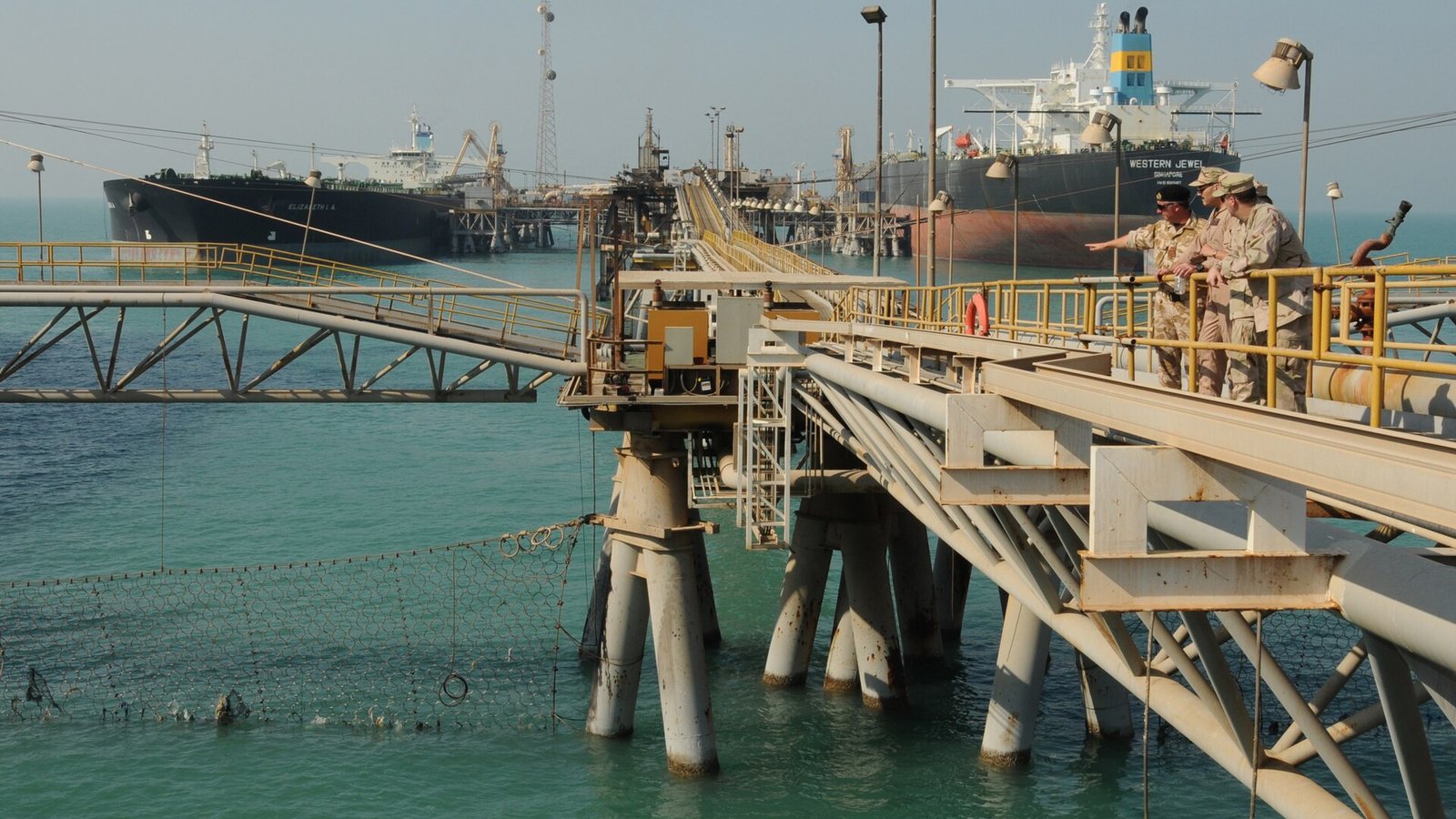
Illustrative image. Photo: U.S. Navy photo by Mass Communication Specialist 2nd Class Arif Patani, Public domain, via Wikimedia Commons — source