Russia Energy Profile: Oil, Gas, Power and Sanctions (2026)

Last updated: November 4, 2026
Russia is the world’s largest exporter of natural gas and one of its top three crude oil producers, with an energy system built on vast Soviet-era West Siberian oil and gas fields, a Pacific-facing pipeline network it has expanded since 2022, and a domestic power mix still dominated by gas-fired thermal plants, nuclear and hydro. Since its full-scale invasion of Ukraine, Russia has redirected most of its oil exports from Europe to China and India, kept gas flows to Europe to a trickle via Ukraine’s shutoff and TurkStream, and had large parts of its energy data — including monthly oil production — classified as a state secret, so independent figures below often rely on IEA, OPEC and tanker-tracking estimates rather than official Russian releases.
Energy Overview
Russia remains one of the “big three” global oil producers alongside the United States and Saudi Arabia, and by far the largest pipeline gas supplier to Eurasia. Its energy sector — oil, gas and coal exports plus related taxes — has historically funded 30–40% of the federal budget, though that share has fallen since 2022 as sanctions, price caps and discounted sales to Asian buyers cut into revenue. Moscow Times reporting (February 2026) put Russia’s energy export revenues around 27% below pre-war levels. Because Moscow stopped publishing detailed monthly oil-output data in 2022, external agencies disagree on current volumes: the IEA estimated roughly 8.7–8.96 million barrels a day (b/d) for early-to-mid 2026, while Russia’s own Economy Ministry projected a 2026 base case of about 511 million tonnes of crude and condensate (roughly 10.26 million b/d) — a gap of over a million barrels a day that reflects both classification and differing definitions (crude-only versus crude-plus-condensate).
Electricity Mix
Russia’s Unified Energy System generated about 1,166 terawatt-hours (TWh) of electricity in 2025, down 1.2% from 2024, according to the grid operator System Operator of the Unified Energy System; Rosatom-cited Rosstat data puts the figure slightly higher, at 1,194 TWh, illustrating a recurring gap between agencies. Thermal power plants (mostly gas, with some coal and oil) supplied the majority of generation, followed by nuclear and hydro.
| Source | Share of generation (2025) |
|---|---|
| Thermal (gas, coal, oil) | ~57.5% |
| Nuclear | ~19% |
| Hydro | ~17% |
| Industrial/other plants | ~6% |
| Wind and solar | <1% |
Source: Russia’s System Operator of the Unified Energy System, 2025 data, as reported by TASS (January 2026). Ember’s global dataset, built on 2024 figures, splits the thermal category further into gas (~44%) and coal (~19%), and puts overall low-carbon generation at 35.7% — below the global average of 43% — with a grid carbon intensity of roughly 450 gCO₂/kWh.
Oil
Russia’s crude output has fluctuated through 2026 under OPEC+ quota commitments, Ukrainian drone strikes on refineries and export terminals, and sanctions enforcement. The IEA cut its 2026 Russia forecast to about 8.7 million b/d; separate monthly estimates put output anywhere from 8.8 million b/d (IEA, April 2026) to over 9.1 million b/d (OPEC, March 2026). Most Russian crude now moves to China and India rather than Europe, which stopped seaborne Russian crude imports in 2022–2023. An estimated 44% of October 2026 seaborne exports moved on sanctioned “shadow fleet” tankers, per one industry tracker, while Energy Intelligence estimated that less than 20% of seaborne volumes still use Western-insured vessels.
Natural Gas
Russia holds the world’s largest natural gas reserves and was historically Europe’s largest pipeline gas supplier before 2022. Gazprom’s piped exports to Europe have collapsed to a fraction of pre-war levels — cut by a further 44% in 2025 to about 18 billion cubic metres (bcm), per Moscow Times reporting on Gazprom data — leaving TurkStream and its Balkan Stream extension as essentially the only remaining route into the EU after Ukraine halted transit in January 2025. China has become the key growth market: Gazprom’s Power of Siberia pipeline delivered 38.8 bcm in 2025 and was contracted to rise toward 44 bcm under a 2025 deal with China’s CNPC, with Russian officials targeting 50 bcm for 2026 (via Power of Siberia and a Kazakhstan transit route) — a target not yet independently confirmed as met. Russia’s Economy Ministry projected national gas production at 688.4 bcm for 2026; first-half 2026 output of 349 bcm was reported up 3.9% year-on-year.
Coal
Russia produced roughly 429–440 million tonnes of coal in 2025, depending on the source (Rosstat versus Deputy PM Alexander Novak’s preliminary figures, which include newly annexed Ukrainian territories), with exports estimated at 157–211 million tonnes depending on the measure used. Export volumes have shifted decisively toward Asia-Pacific buyers as European demand evaporated, though shipments to China itself fell about 4% in the first nine months of 2025. The Energy Ministry’s stated goal for 2026 is to hold output and exports flat at the 2025 level.
Nuclear
Russia operates 36 power reactors with a combined net capacity of about 26.8 gigawatts (GW), per the World Nuclear Association, supplying roughly a fifth of national electricity. State nuclear operator Rosenergoatom reported 218.35 billion kWh of nuclear generation in 2025, up 1.3% year-on-year. A new VVER-TOI unit at Kursk NPP-2 reached full capacity in March 2026. The government has backed plans for roughly 30 GW of new domestic nuclear capacity — up to 38 new units by 2042 — targeting a rise in nuclear’s share of generation from about 19–20% today to 25% by 2045; because some new units replace retiring reactors, total capacity will not simply double. Separately, state nuclear firm Rosatom was reported in 2026 to have 41 power units under construction or contracted in 11 countries abroad, including Akkuyu in Türkiye (first unit reported 95%-plus complete, late-2026 launch targeted) and Rooppur in Bangladesh (first unit’s physical launch, April 2026).
Solar and Wind
Wind and solar remain marginal in Russia’s power mix — under 1% of generation as of Ember’s most recent confirmed (2024) breakdown — reflecting limited policy support and Russia’s comparative advantage in gas, hydro and nuclear. Market researcher GlobalData has forecast Russian renewable capacity (excluding large hydro) reaching about 18.4 GW by 2035, which would still leave renewables a minor share of a system of roughly 260–270 GW of total installed capacity.
Hydro
Hydropower supplied about 17% of Russian electricity generation in 2025. Siberia hosts the country’s largest stations, including the Sayano-Shushenskaya and Krasnoyarsk dams on the Yenisei river system, which anchor power-intensive industries such as aluminium smelting in the region.
Reserves and Resources
Official and international figures on Russian oil reserves diverge by classification. Deputy PM Alexander Novak has cited “profitable” proven reserves of about 15 billion tonnes (enough for roughly 32 years at current output) and total geological recoverable resources of about 31 billion tonnes (roughly 62 years). The Energy Institute’s Statistical Review of World Energy (the successor to BP’s annual review) puts Russia’s proved reserves lower, at about 14.8 billion tonnes, versus Moscow’s own classification of 16.8 billion tonnes — a reminder that “reserves” figures depend heavily on the reporting standard used. Russia’s natural resources ministry reported oil and condensate reserves grew by 640 million tonnes in 2025 through new exploration and reclassification. Russia also holds the world’s largest natural gas reserves (concentrated in West Siberia’s Yamalo-Nenets region) and some of its largest coal reserves.
Major Companies
| Company | Sector | Notes |
|---|---|---|
| Rosneft | Oil | Majority state-owned; Russia’s largest oil producer; CEO Igor Sechin; sanctioned by the UK and EU since 2022, and by the US (OFAC) since October 2025 |
| Lukoil | Oil | Russia’s largest privately held oil company; co-founded by CEO Vagit Alekperov; sanctioned by the UK (October 2025) and the US (October 2025), with roughly 34 majority-held subsidiaries designated |
| Gazprom | Gas | State-controlled gas monopoly; operator of the pipeline network to Europe and Asia; see dedicated Gazprom entry |
| Novatek | Gas / LNG | Russia’s largest independent gas producer; operator of Yamal LNG and the US-sanctioned Arctic LNG 2 project |
| Surgutneftegas | Oil | Mid-sized, secretive producer known for a large foreign-currency cash reserve |
| Tatneft | Oil | Producer based in Tatarstan; partly regionally owned |
| Rosatom | Nuclear | State nuclear corporation; domestic operator and the world’s largest reactor exporter |
| Transneft | Pipelines | State pipeline monopoly operating Druzhba, ESPO and most trunk oil lines |
Major Fields and Basins
West Siberia’s Khanty-Mansi region holds close to a third of Russia’s oil reserves and includes Samotlor (one of the largest oil fields ever discovered, with roughly 815 million tonnes of reserves cited in regional data) and Priobskoye (around 1.6 billion tonnes). The Yamalo-Nenets region to the north is the country’s dominant gas province, hosting supergiant fields such as Urengoy, Yamburg and the more recently developed Bovanenkovo on the Yamal Peninsula. Vankor, part of Rosneft’s giant Vostok Oil development in the Russian Arctic, adds roughly 255 million tonnes of reserves and is central to Moscow’s push to open new Arctic production as West Siberia’s legacy fields mature. Because Russia stopped publishing detailed field-level and national output data after 2022, these reserve figures are drawn from older regional disclosures and should be treated as indicative rather than current.
Pipelines
- Druzhba — the historic westbound crude pipeline to Central Europe; repeatedly disrupted in 2026 by drone strikes and deliberate Russian supply cuts (including a halt to Kazakh transit volumes feeding Germany’s PCK refinery), with flows to Hungary and Slovakia briefly cut in February 2026 after pipeline damage.
- ESPO (Eastern Siberia–Pacific Ocean) — a roughly 4,857 km crude line from Taishet to the Pacific export terminal at Kozmino, Russia’s main eastern oil outlet to China and other Asian buyers; Transneft has flagged plans to expand its capacity.
- Power of Siberia — Gazprom’s gas pipeline to China, delivering 38.8 bcm in 2025 and contracted to rise toward 44 bcm.
- TurkStream and Balkan Stream — the last significant Russian gas route into the EU following Ukraine’s January 2025 transit halt; compressor stations came under attack between February and April 2026.
- Nord Stream 1 and 2 — the Baltic Sea gas pipelines to Germany, non-operational since the September 2022 subsea explosions; one Nord Stream 2 string remains structurally intact but is not in commercial use.
Refineries
Russia’s refining sector is concentrated in large Soviet-era plants, including the Omsk refinery in Siberia (operated by Gazprom Neft, among the country’s largest by capacity) and major coastal and Volga-region refineries. Ukrainian long-range drone strikes have repeatedly hit Russian refineries and export infrastructure through 2025–2026, periodically forcing unplanned maintenance and contributing to domestic fuel-market volatility, though Moscow does not routinely disclose plant-by-plant outage data.
LNG
Russia produced roughly 32 million tonnes of LNG in 2025, according to energy data provider Enerdata. Novatek’s Yamal LNG plant on the Yamal Peninsula remains the country’s main operating LNG export facility. The newer Arctic LNG 2 project has struggled commercially since US sanctions hit it in late 2023: its first train has shipped intermittently, a second train began loading cargoes in 2025, and a first cargo reportedly reached China in 2026 after a year-long wait — though it remains unclear whether that marks a sustained shift in Chinese buyers’ willingness to take sanctioned volumes. A 2026 US sanctions law has also raised questions about Yamal LNG’s own shipping fleet, which could face new restrictions depending on enforcement.
Major Projects
- Vostok Oil — Rosneft’s flagship Arctic oil development encompassing the Vankor cluster and new fields on the Taymyr Peninsula, central to Russia’s plan to offset declining legacy West Siberian output.
- Arctic LNG 2 — Novatek’s sanctioned LNG project, bringing a second production train into intermittent operation through 2025–2026.
- Power of Siberia 2 (reported in 2026 under the working name “Power of Baikal”) — a proposed pipeline via Mongolia to China with capacity cited around 50 bcm/year; one Reuters-sourced report estimated it could take a decade to materially lift China-bound export capacity, underlining that the project remains at an early, unresolved stage.
Energy Policy
Russian energy policy since 2022 has centered on three responses to Western sanctions: redirecting oil and LNG exports toward China and India, building a “shadow fleet” of tankers and reinsurance arrangements to keep crude moving outside the Western-insured shipping system, and classifying detailed production and trade data that was previously public. The EU/G7 price cap on Russian seaborne crude stood at $44.10 per barrel as of mid-2026 after the European Commission delayed a scheduled revision to January 2027; some G7 members reportedly lowered a separate cap to $47.60 from $60 in September 2026, and the EU and G7 have discussed replacing the price-cap mechanism entirely with a blanket ban on providing maritime services (insurance, flagging, shipping) to Russian oil cargoes. The EU’s 19th sanctions package added 117 tankers to a port-access ban, bringing the total designated “shadow fleet” to 557 vessels. Separately, the UK and EU sanctioned Rosneft and Lukoil directly in October 2025, followed by comprehensive US (OFAC) sanctions on both companies the same month — a significant escalation that complicated even non-Western buyers’ ability to pay for Russian crude through the banking system.
Frequently Asked Questions
How much oil does Russia produce?
Estimates vary because Russia stopped publishing detailed monthly output data in 2022. The IEA put output at roughly 8.7–8.96 million barrels a day for early-to-mid 2026, while Russia’s own Economy Ministry projected a higher 2026 base case equivalent to about 10.26 million barrels a day of crude and condensate. OPEC’s estimates have fallen in between, around 9.1–9.2 million b/d in early 2026.
Where does Russia’s natural gas go now that Europe has cut purchases?
China is now the main growth market, receiving gas via the Power of Siberia pipeline (38.8 bcm in 2025, contracted toward 44 bcm). Remaining European deliveries move almost entirely through TurkStream and its Balkan Stream extension, after Ukraine ended transit of Russian gas in January 2025; direct exports to the EU have fallen to roughly 18 bcm a year, a small fraction of pre-2022 volumes.
Is Russian oil still being exported despite sanctions?
Yes. Russia continues to export several million barrels a day of crude, mostly to China and India, using a mix of price-cap-compliant cargoes and a sanctioned “shadow fleet” of tankers with opaque ownership and insurance. Estimates of the shadow fleet’s share of October 2026 seaborne exports ranged from under 20% to roughly 44%, depending on the tracking methodology.
How much of Russia’s electricity comes from nuclear power?
Nuclear supplied about 19% of Russian electricity generation in 2025, behind thermal plants (~57.5%) and ahead of hydro (~17%), according to Russia’s grid operator. The government has set a long-term target of raising nuclear’s share to 25% by 2045.
Related The Daily Energy Pages
- Gazprom: Ownership, Pipelines and Production
- What Is Natural Gas and How Is It Used?
- China Energy Profile
- Saudi Arabia Energy Profile
- US Energy Profile
- What Is OPEC?
- What Is Brent Crude?
- Who Buys Russia’s Oil?
- How Much Oil Passes Through the Turkish Straits?
- What Is the Strait of Hormuz and Why Does It Matter?
Sources
- International Energy Agency (IEA), Oil Market Report, 2026 monthly estimates of Russian crude output
- Russia Ministry of Economic Development, 2026 base-case oil and gas production forecasts, cited by Reuters and Interfax
- System Operator of the Unified Energy System of Russia, 2025 generation data, via TASS, January 2026
- Ember, Global Electricity Review, Russia country data (2024–2025)
- Rosenergoatom / World Nuclear Association, Russia reactor fleet and 2025 generation data
- Enerdata, “Russia produced 32 Mt LNG and 440 Mt coal,” 2025 data
- Energy Institute, Statistical Review of World Energy, reserves data
- Moscow Times, reporting on Gazprom export volumes and sanctions, 2025–2026
- European Commission / Council of the EU, Russian oil price cap and sanctions package announcements, 2026
- US Treasury (OFAC) and UK sanctions notices on Rosneft and Lukoil, October 2025
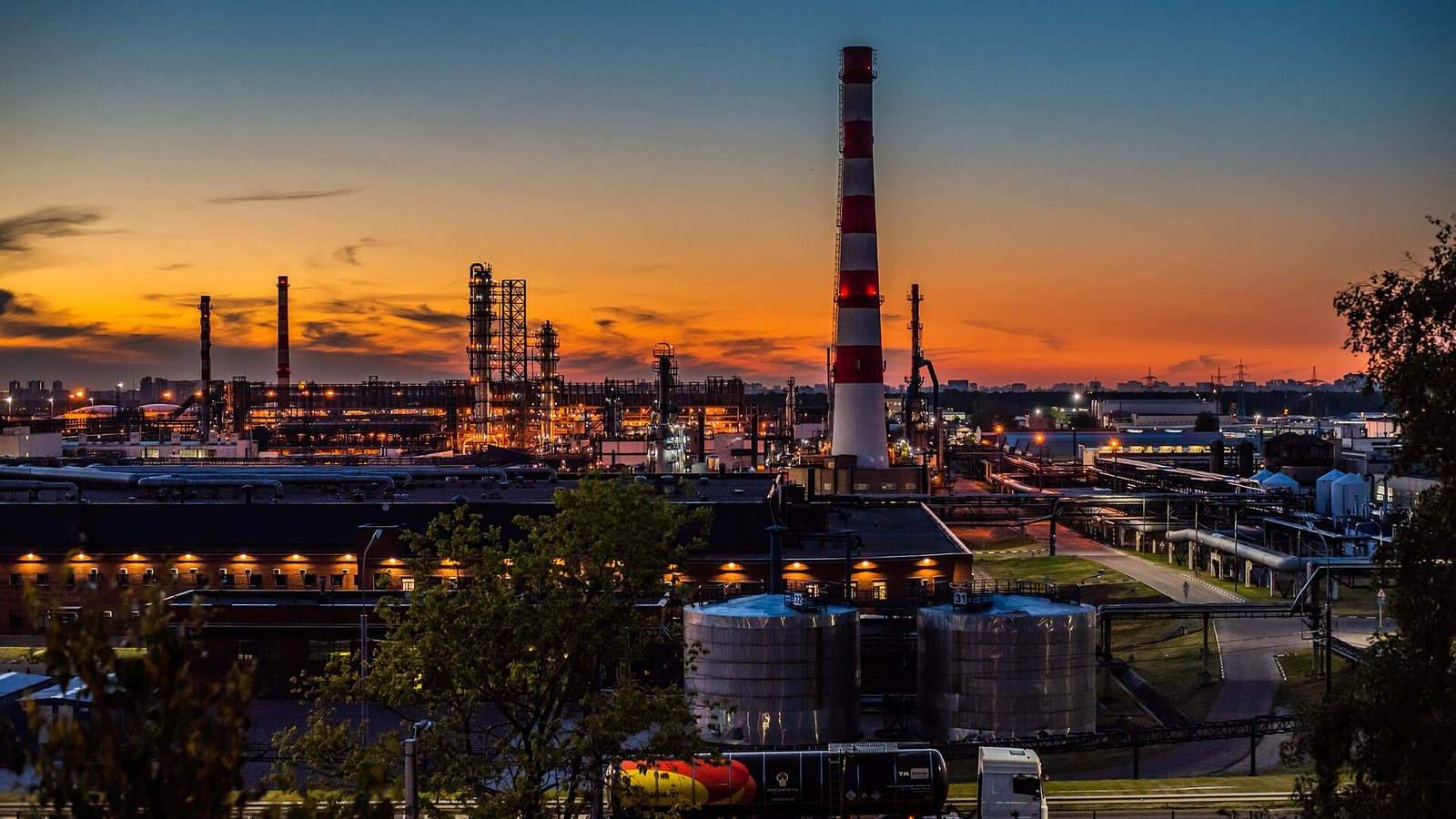
Illustrative image. Photo: kishjar? from Moscow, Russia, CC BY 2.0, via Wikimedia Commons — source