


China Energy Profile: Coal, Oil, Gas and Power (2026)

Last updated: October 28, 2026
China is the world’s largest energy consumer, the largest electricity market, the largest coal producer and importer of crude oil, and — at the same time — the country adding more solar and wind capacity each year than the rest of the world combined. No other country’s energy system spans that range: a power grid still anchored by coal, a renewables build-out of unprecedented scale, the world’s biggest nuclear construction program, and an oil and gas import dependence that shapes its foreign policy from the Strait of Hormuz to the Russian Far East.
Energy Overview
China’s total electricity consumption crossed 10 trillion kWh (10,368 TWh) for the first time in 2025, up about 5% year-on-year, according to China’s National Energy Administration (NEA) — roughly double the electricity use of the United States. Total installed power generation capacity reached approximately 3.89 TW (3,890 GW) by the end of 2025, a 16.1% increase on the year, per China Electricity Council (CEC) data. Non-fossil sources — hydro, nuclear, wind, solar and other renewables — accounted for about 61.7% of that installed capacity, and for the first time, combined wind and solar capacity (1.84 TW) overtook thermal (mostly coal and gas) capacity.
That capacity shift has not yet fully flowed through to generation. Coal remains the single largest source of electricity actually produced, though its share is falling steadily: from roughly 70% of generation in 2015 to about 54% in 2025, according to the energy think tank Ember’s Global Electricity Review 2026. Some individual months in 2026 have seen coal’s share dip below 50% for the first time, but annual-average coal generation share for a full calendar year has not yet fallen that far — a distinction worth keeping in mind when comparing headlines.
Electricity Mix
| Source | Share of 2025 generation | Note |
|---|---|---|
| Coal | ~54% | Down from ~70% in 2015; still the largest single source |
| Hydro | ~13% | Largest non-fossil source; ~1,462 TWh generated |
| Wind + solar | ~22% | ~1,128 TWh wind + ~1,173 TWh solar (estimates vary by source) |
| Nuclear | ~4.6% | ~485 TWh; fleet expanding fast from a low base |
| Natural gas and other | remainder | Gas plays a smaller role in China’s power mix than in the US or Europe |
Source: Ember, Global Electricity Review 2026 (full-year 2025 generation data); China Electricity Council and NEA (installed capacity, year-end 2025). Figures from different trackers vary by a few percentage points depending on methodology — treat the shares above as directional rather than exact.
Oil
China is the world’s largest crude oil importer and the second-largest oil consumer after the United States. Domestic crude production has been broadly flat for years, running around 4.3–4.4 million barrels per day in 2026 (Trading Economics, citing national statistics) — enough to cover only a minority of national demand, with the gap filled by imports.
China’s 2025 crude imports averaged roughly 11.6 million barrels per day, up about 4.9% from 2024, according to customs data cited by shipping analysts BIMCO. Import volumes have swung sharply month to month in 2026: they fell to around 7.8 million b/d in May — the lowest since October 2017 — after the Strait of Hormuz crisis pushed up prices and disrupted flows, before partially recovering later in the year. Russia has been China’s largest single crude supplier in several recent months (2.37 million b/d in March 2026, per trade reporting), ahead of Saudi Arabia and other Gulf suppliers.
Proven oil reserve estimates vary considerably by source and vintage: the Oil & Gas Journal put China’s reserves at about 24.4 billion barrels as of January 2014, while a later industry estimate cited roughly 26 billion barrels for 2021. No single authoritative, current-year figure was identified in this research pass — treat any specific reserves number for China with caution and prefer the originating agency’s own release where possible.
Natural Gas
Domestic gas production has been rising briskly: output reached 173.7 billion cubic meters (Bcm) in the first eight months of 2025, up 6.1% year-on-year, already meeting the government’s full-year growth target, per S&P Global Commodity Insights. Demand growth, by contrast, is slowing — the NEA projected only 2–3% consumption growth for 2025, down from about 8% in 2024.
Because domestic output is growing faster than demand, LNG imports have fallen for over a year in a row even as pipeline imports rise. China’s total pipeline gas imports were estimated at about 84.6 Bcm in 2025, up 11% year-on-year, with flows on the Russia–China Power of Siberia pipeline rising roughly 29% to near 39 Bcm. Reports of a deal to expand Power of Siberia’s capacity to more than 100 Bcm/year come from a single source as of this writing and should be treated as unconfirmed pending an official joint statement from Gazprom and CNPC.
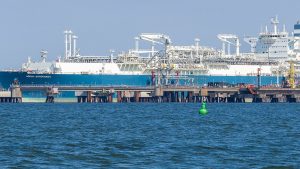
China remains the world’s largest LNG importer by volume, but only narrowly: customs data put 2025 LNG imports at 68.43 million tonnes, down 10.6% year-on-year, against Japan’s 64.98 million tonnes (down 1.4%). Analysts have flagged that China’s “largest LNG importer” crown is at risk if high spot prices keep favoring domestic gas and pipeline supply over new LNG purchases. Russia has become China’s third-largest LNG supplier, behind Australia and Qatar.
Coal
China is the world’s largest coal producer and consumer by a wide margin. Raw coal output hit a record 4.83 billion tonnes in 2025, up 1.2% year-on-year, according to China’s National Bureau of Statistics — growth that was deliberately throttled in the second half of the year through production quotas and safety inspections after a period of oversupply and falling prices. Coal imports fell 9.6% to about 490 million tonnes in 2025 as cheaper, abundant domestic supply reduced the need for imports.
China’s coal reserves were estimated at about 207 billion tonnes by the Ministry of Natural Resources as of end-2022 — the most recent specific figure identified in this research pass. Even as output hits records, coal-fired power plants are burning less of it in relative terms, as cheap renewable generation increasingly displaces coal dispatch on the grid — the central tension running through China’s entire energy transition.
Nuclear
China operates roughly 60 commercial nuclear power reactors across 18 sites, with combined capacity estimated at around 58.7–64 GW depending on the source and cutoff date. More importantly for the sector’s trajectory: China has about 36 reactors under construction across 19 sites — by far the largest nuclear construction program in the world — expected to add roughly 38.9 GW of capacity. As of April 2026, Chinese state media reported that the country’s combined operating-plus-under-construction nuclear capacity had become the largest in the world, overtaking the United States.
The buildout is dominated by three state-owned groups: China National Nuclear Corporation (CNNC), China General Nuclear Power Group (CGN) and State Power Investment Corporation (SPIC). Most new units use the domestically designed Hualong One (HPR1000) reactor, now in what Chinese state broadcaster CGTN has called “batch-scale expansion.” CNNC is also advancing the CFR-600, a sodium-cooled fast reactor demonstration unit at Xiapu, a technology path distinct from the conventional pressurized-water reactors that dominate the rest of the fleet. China plans to commission seven new reactors in 2026 alone.
Solar
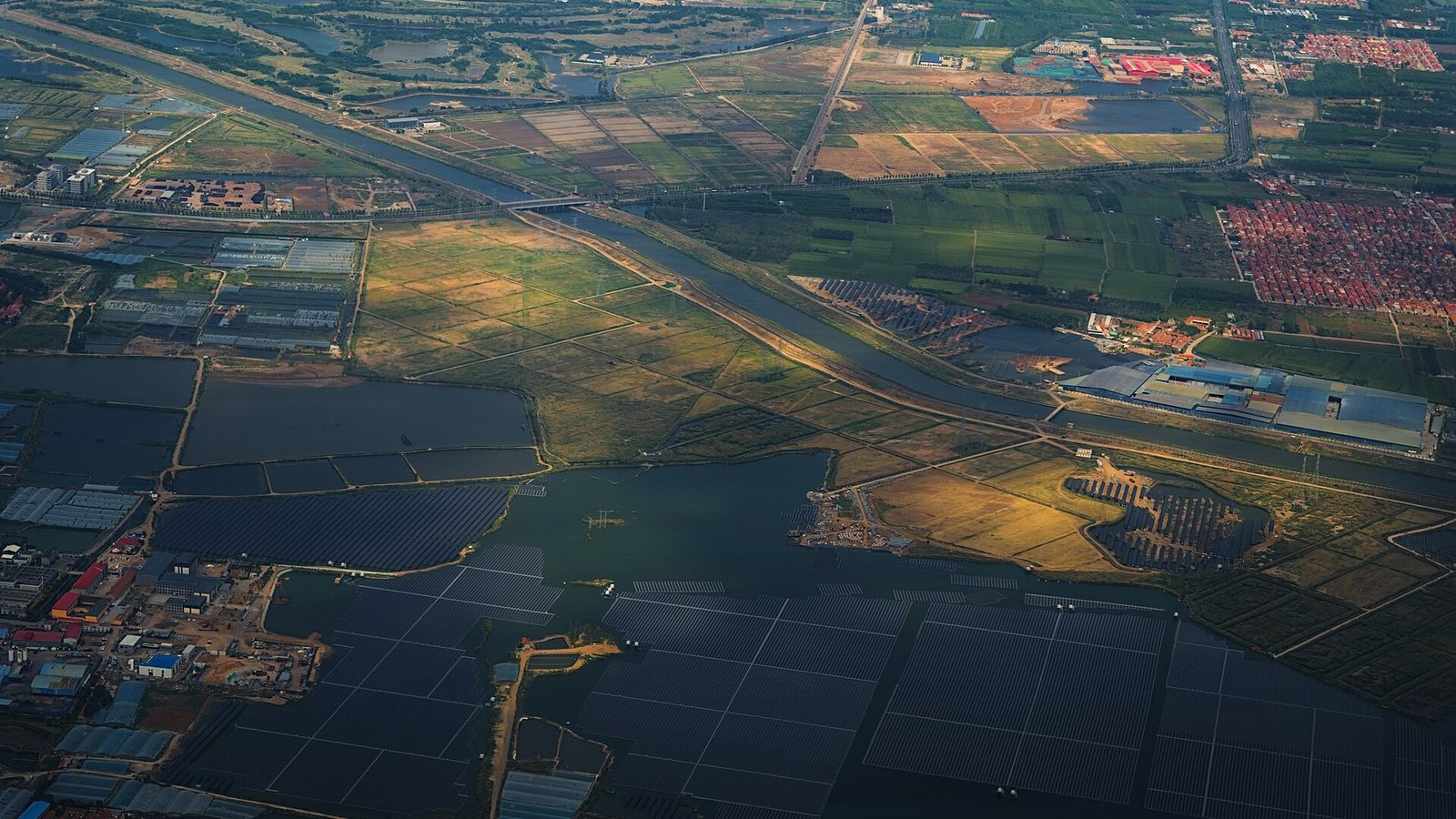
China installed a record 315 GW of new solar capacity in 2025 — more than the rest of the world combined in most recent years — according to NEA data released in January 2026, taking cumulative installed solar capacity to roughly 1.2 terawatts. That made China the first country to cross the 1 TW mark for solar alone. Growth has been uneven month to month: additions peaked at a record 92.92 GW (AC) in a single month in May 2025, then slowed as China shifted from a feed-in-tariff system to market-based pricing for new renewable projects in June 2025, removing some of the incentive to rush projects online before a subsidy deadline.
Wind
Wind additions also set a record in 2025, at 119.33 GW, per the same NEA release. Combined, China’s wind and solar fleets added more than 430 GW of capacity in a single year — the largest annual renewable build-out recorded anywhere, by any country, to date. Cumulative wind-plus-solar capacity reached about 1.84 TW by the end of 2025, equal to 47.3% of China’s total installed power capacity, and for the first time exceeded installed thermal (coal and gas) capacity.
Hydro
China’s hydropower fleet is the largest in the world. NEA data put total installed hydro capacity at roughly 436–440 GW by mid-2025, split between about 379 GW of conventional hydropower and 61 GW of pumped-storage hydro — the latter growing especially fast as the grid uses pumped storage to balance variable wind and solar output. The Three Gorges Dam, rated at 22.5 GW, remains the world’s single largest power station by installed capacity, though it is now a small fraction of China’s total hydro fleet. China added more pumped-hydro capacity in 2024 alone (about 7.75 GW) than most countries have installed in total.
Other Renewables and Storage
Beyond wind, solar and hydro, China is building new-style grid-scale battery storage at a rapid pace to firm up its variable renewable output, with national 2030 storage targets around 300 GW under recent planning documents. Biomass and geothermal remain minor contributors to the national mix by comparison with wind, solar and hydro.
Reserves and Resources
| Resource | Estimate | Year / Source |
|---|---|---|
| Coal reserves | ~207 billion tonnes | End-2022, Ministry of Natural Resources |
| Oil reserves (proven) | ~24–26 billion barrels (estimates vary) | 2014–2021, Oil & Gas Journal / industry estimates |
| Shale gas (Sichuan Basin, cumulative verified) | >1 trillion m³ | 2019, CNPC/PetroChina disclosure |
| Tarim Basin shale resources (undiscovered, technically recoverable) | ~1.4 billion bbl oil; ~26.9 Tcf gas | 2018, USGS assessment |
Reserve figures for China should be read with particular caution: official releases are infrequent, methodologies differ between government and company sources, and “reserves” (proven, economically recoverable) is routinely conflated in press coverage with “resources” (a much larger, less certain estimate of what may exist underground). The Tarim and Sichuan basin numbers above come from a mix of company announcements and USGS geological assessment — not a single national reserves audit.
Major Companies
| Company | Core business | Scale indicator |
|---|---|---|
| State Grid Corporation of China | Transmission and distribution grid operator (covers most of mainland China; China Southern Power Grid covers the south) | ~$544.6bn revenue; China’s highest-ranked company on the Fortune Global 500 for multiple consecutive years |
| CNPC / PetroChina | Upstream oil & gas, pipelines, refining (PetroChina is CNPC’s listed arm) | ~$404.7bn revenue (PetroChina); investing over 41 billion yuan (~$6bn) in new energy and advanced materials in 2025 |
| Sinopec (China Petroleum & Chemical Corp) | China’s largest refiner; also upstream and chemicals | ~$393.3bn revenue |
| CNOOC | Offshore oil and gas exploration and production | ~$117bn market capitalization (2025) |
| China Energy Investment Corporation | Coal mining and coal-fired power generation; the world’s largest coal-power generator by capacity | Ranked #84 on the Fortune Global 500 (2024 list) |
All three listed national oil companies — PetroChina, Sinopec and CNOOC — reported declining profits in 2025 as global energy prices softened, according to Bloomberg reporting from March 2026, even as each continues to expand clean-energy and petrochemical investment alongside its core oil and gas business.
Major Fields and Basins
- Daqing (Heilongjiang, Songliao Basin) — China’s largest conventional oil field, in production since 1959 with initial reserves historically put above 8 billion barrels. Now mature and in production decline, CNPC has been pushing into unconventional Gulong shale oil within the broader Daqing complex to extend the field’s life.
- Tarim Basin (Xinjiang) — one of China’s most important deep oil and gas basins; Sinopec has reported a major discovery there with reserves on the order of 1.7 billion tonnes of oil, while the US Geological Survey separately assessed roughly 1.4 billion barrels of undiscovered, technically recoverable shale oil and 26.9 Tcf of shale gas in its Paleozoic formations.
- Sichuan Basin — China’s leading shale gas production center, with cumulative natural gas output above 80 Bcm and shale gas alone contributing roughly 27 Bcm; PetroChina had verified over 1 trillion cubic meters of shale gas reserves there as of 2019.
Pipelines
- Power of Siberia — the main Russia–China gas pipeline, with flows rising toward roughly 38–39 Bcm in 2025 and a long-term contracted ramp to 38 Bcm/year of design capacity; reports of a further expansion deal toward 100+ Bcm/year remain unconfirmed by an official joint statement as of this writing.
- China–Central Asia gas pipeline (Lines A, B, C) — carries Turkmen, Uzbek and Kazakh gas into western China; a planned Line D, discussed for years with a mooted 2026 start, has been projected (in older industry forecasts) to help lift total Central Asian supply from around 40 Bcm to as much as 65 Bcm/year by 2030. Treat that 2030 figure as a dated projection rather than a confirmed outcome.
- China–Myanmar oil and gas pipelines — give China an overland import route for Middle Eastern and African crude and for gas that bypasses the Strait of Malacca and the South China Sea, a strategic diversification route frequently cited in Chinese energy-security planning.
- West–East Gas Pipeline network — the backbone domestic trunk system moving gas from western production basins (including Tarim and Sichuan) to demand centers on the eastern seaboard.
Refineries
China holds the world’s largest crude refining capacity, estimated at roughly 18.5 million barrels per day as of 2024 — narrowly ahead of the United States (about 18.4 million b/d) — after overtaking the US for the top spot around 2022–2023. Actual throughput runs well below nameplate capacity: refiners processed an average of about 14.13 million b/d in 2024, and state refiners cut runs further in 2026, to roughly 8.4 million b/d by mid-year amid price volatility and softer margins, according to Reuters reporting.
Sinopec, PetroChina and CNOOC together account for roughly 60% of national refining capacity, with the balance held by independent “teapot” refiners, mostly concentrated in Shandong province. Individual large refineries include the independent Zhejiang Dayushan complex (around 800,000 b/d, commissioned 2019 and later expanded), Sinopec’s Zhenhai refinery (reported at 460,000–540,000 b/d depending on source) and PetroChina’s Dalian and Jieyang complexes (each above 400,000 b/d). Capacity figures for individual Chinese refineries vary notably between sources, reflecting both genuine expansions and the difficulty of tracking the independent refining sector precisely.
LNG
China is the world’s largest LNG importer by volume as of 2025, though its lead over Japan has narrowed to a few million tonnes and some analysts expect Japan could retake the top spot if China’s pipeline and domestic gas supply keep displacing LNG purchases. See the Natural Gas section above for import volumes and supplier mix; Australia, Qatar and Russia are China’s three largest LNG suppliers, in that order.
Major Projects
- CNNC’s CFR-600 sodium-cooled fast reactor program at Xiapu — China’s first demonstration-scale fast reactor effort, a technology distinct from the Hualong One PWR fleet being built in “batch-scale” elsewhere in the country.
- CNPC’s push into Gulong shale oil within the Daqing complex, aimed at offsetting decline from the conventional field.
- Continued build-out of ultra-high-voltage (UHV) transmission corridors to move wind, solar and hydro power from resource-rich western and northern provinces to demand centers on the coast — a precondition for absorbing the 1.84 TW of wind and solar capacity now on the grid.
- Expansion of pumped-storage hydro capacity, targeted to roughly double from recent levels, to help balance the variable output of the growing wind and solar fleet.
Energy Policy
China’s State Council issued an Action Plan for Achieving Carbon Peaking during the 15th Five-Year Plan period (2026–2030) in early July 2026 (reported dates vary slightly, July 5 or July 9, between official and secondary sources). The plan requires CO2 emissions to peak before 2030 but — notably — does not specify a peak year, a peak emissions level, or a required rate of post-peak decline, giving planners considerable flexibility in execution.
Headline targets include: non-fossil energy sources reaching 25% of primary energy consumption by 2030; a 17% reduction in carbon intensity (CO2 per unit of GDP) over the 2026–2030 period; and a 2035 interim goal of cutting economy-wide net greenhouse-gas emissions by 7–10% from peak levels. A separate NEA/NDRC renewable-energy plan sets a 2030 new-energy-storage target of around 300 GW. Coal consumption is targeted to peak by 2030 without a specified cap, and analysts expect coal plants to remain in service — increasingly in a flexible, backup role rather than for baseload — well past that point. China’s longer-standing goal of carbon neutrality by 2060, announced in 2020, continues to frame the broader strategy even though the 15th Five-Year Plan documents themselves emphasize the nearer-term 2030 peak more than the 2060 target.
Frequently Asked Questions
Why does China import so much oil?
Domestic crude production has been roughly flat for years at around 4.3–4.4 million barrels per day, while national demand is far higher. Most of China’s largest conventional fields, including Daqing, are mature and in decline, so imports fill the gap — making China the world’s largest crude oil importer.
How much oil does China have?
Estimates of China’s proven oil reserves vary by source and year, roughly in the 24–26 billion barrel range in the most recent specific figures available (dating from 2014–2021). No single current, authoritative national reserves figure was identified in this research pass; treat any precise number with caution.
Is China the world’s largest coal producer?
Yes. China produced a record 4.83 billion tonnes of raw coal in 2025 and is both the largest coal producer and the largest coal consumer in the world, though output growth was deliberately slowed through quotas in the second half of 2025.
Does China import more LNG than Japan?
Yes, but narrowly. China imported 68.43 million tonnes of LNG in 2025 versus Japan’s 64.98 million tonnes. China overtook Japan as the top LNG importer in 2023, but falling Chinese LNG demand (down 10.6% in 2025) means the gap has narrowed and some analysts think Japan could regain the top spot.
Why is China building so many nuclear reactors?
China has about 36 reactors under construction — the largest nuclear build-out in the world — as part of a strategy to add reliable, low-carbon baseload power that can run alongside its fast-growing but variable wind and solar fleet, while reducing long-term reliance on coal and imported fossil fuels.
Related The Daily Energy Pages
- What Is Natural Gas and How Is It Used?
- What Is Gazprom? Ownership, Pipelines and Production
- Saudi Arabia Energy Profile: Oil, Gas, Power (2026)
- US Energy Profile: Oil, Gas, Power and Policy (2026)
- What Is a Small Modular Reactor (SMR)?
- What Is Green Hydrogen and How Is It Made?
- What Is Carbon Capture and Storage (CCS)?
- What Is Brent Crude?
- What Is WTI Crude Oil?
Sources
- China National Energy Administration (NEA) — 2025 electricity consumption and renewable capacity releases, January 2026
- China Electricity Council (CEC) — year-end 2025 installed generation capacity data
- Ember, Global Electricity Review 2026
- China National Bureau of Statistics — 2025 raw coal output
- China General Administration of Customs (GACC) — 2025 coal and LNG import data
- S&P Global Commodity Insights — 2025 domestic gas production and pipeline import estimates
- BIMCO and Reuters shipping/trade reporting — 2025–2026 crude oil import volumes
- U.S. Geological Survey — Tarim Basin shale assessment (2018)
- CNPC/PetroChina, Sinopec, CNOOC — corporate disclosures on reserves, refining and financial results
- Bloomberg, CGTN, Reuters, Yicai Global and industry trade press — company and nuclear-sector reporting, 2025–2026
- China’s State Council — Action Plan for Achieving Carbon Peaking During the 15th Five-Year Plan Period (2026)
Illustrative image. Photo: Benlisquare, CC BY-SA 4.0, via Wikimedia Commons — source



[…] China Energy Profile — pipeline gas buyer via Power of Siberia […]