Who Buys Russia’s Oil?


Last updated: 3 November 2026 · Last verified: 3 November 2026
Russia remained one of the world’s top three crude oil exporters through 2026 despite nearly four years of Western sanctions, a G7 price cap, and an EU embargo on direct imports. The sanctions didn’t stop the oil — they rerouted it. China and India now absorb the large majority of Russian seaborne crude, Türkiye has become the dominant buyer of Russian refined oil products rather than crude itself, and a shrinking but persistent flow of EU imports continues through carve-outs and third-country relabeling. This page tracks who is actually buying Russian oil in 2026, using customs data and tanker-tracking research rather than sanctions-list assumptions.
Crude Oil: China and India Dominate
Since the G7/EU price cap took effect in December 2022, Russia’s seaborne crude oil exports have concentrated overwhelmingly in two buyers. The Centre for Research on Energy and Clean Air (CREA), which tracks Russian fossil fuel trade from customs and shipping data, put the cumulative split as follows in its most recent published breakdown:
| Buyer | Share of Russia’s crude exports | Period | Source |
|---|---|---|---|
| China | ~50% | Cumulative, December 2022 – October 2026 | CREA, cited by Siasat Daily/IANS (18 Oct 2026) |
| India | ~37% | Cumulative, December 2022 – October 2026 | CREA, cited by Siasat Daily/IANS (18 Oct 2026) |
| Türkiye | ~5% | Cumulative, December 2022 – October 2026 | CREA, cited by Siasat Daily/IANS (18 Oct 2026) |
| European Union | ~5% | Cumulative, December 2022 – October 2026 | CREA, cited by Siasat Daily/IANS (18 Oct 2026) |
These are cumulative shares across nearly four years, not a single month’s snapshot, and CREA’s own monthly readings move around that average — a May 2026 breakdown put China at 50% and India at 36%, with Türkiye at 6% and the EU at 5%, close to the figures above. The two anchor buyers both have official, bilateral trade data behind them. China’s General Administration of Customs reported that Russia supplied 77.653 million tonnes of oil to China in January–August 2026, worth $44.842 billion — up 18.1% in volume and 33.4% in value year-on-year, from 65.75 million tonnes worth $33.615 billion in the same period of 2025. India doesn’t publish an equivalent customs breakdown, but CREA’s tracking shows Russian crude purchases hit a record EUR 4.5 billion in June 2026, up 34% month-on-month, with crude making up 83% of India’s total Russian fossil fuel imports that month; by September 2026, Indian buying had fallen 13% month-on-month, the second straight monthly decline and the lowest level since April 2026. The Daily Energy’s Where Does India Get Its Oil? page tracks India’s full crude supplier mix, including the month-by-month swings in Russian volumes, in more depth.
Oil Products: Türkiye Is the Real Story
Crude oil isn’t the only — or even the most revealing — side of Russia’s oil trade. Refined products (diesel, naphtha, fuel oil) follow a different and more concentrated pattern, with Türkiye emerging as by far Russia’s largest single buyer since the EU’s February 2023 ban on direct imports of Russian-origin fuel.
| Metric | Value | Period | Source |
|---|---|---|---|
| Türkiye’s share of Russia’s oil-product exports | ~5% (pre-war) → ~10% → ~24% | 2021 → 2022 → end of 2024 | ITC/Trademap mirror data, via Re-Russia.net (23 Oct 2025) |
| Value of Russian oil-product exports to Türkiye | $3.7bn → $17.6bn → $18.5bn | 2021 → 2023 → 2024 | CREA, via Re-Russia.net (23 Oct 2025) |
| Cumulative value, 2022–2024 | $44.54 billion | 2022–2024 | CREA, via Re-Russia.net (23 Oct 2025) |
| Cumulative fuel exports to Türkiye since EU sanctions | “Some $50 billion”, ~10% of Russia’s oil revenue, ~7% of total energy revenue | Since February 2023 EU ban | CREA, cited by The Wall Street Journal (27 Dec 2025) |
Several of these figures use different bases — share of Russia’s total product exports, dollar value, and share of Russian oil revenue — so they shouldn’t be read as a single consistent percentage. What they agree on directionally is a sharp, sustained rise in Turkish purchases of Russian fuel since the EU product ban took effect, and a Turkish refining and blending sector that has become a documented transit point: a CREA/Centre for Studies on Democracy analysis found the EU itself imported roughly €3 billion of oil products from Turkish ports handling Russian oil between February 2023 and February 2024, with 86% of those Turkish-port product imports (by value) originally Russian.
That flow has softened more recently. Turkish refiners received around 900,000 tonnes of crude from Russian ports in July 2026, down from 1.2 million tonnes in June, according to Reuters reporting; and Türkiye’s imports from Russia fell by roughly 22.8% (€3.5 billion) in January–April 2026 versus a year earlier. Türkiye’s total crude oil imports — across all suppliers — held roughly stable at around 650,000 barrels/day through the first half of 2026, meaning the decline is specifically a Russia-sourced trend, not a fall in Turkish refining demand overall. The Daily Energy’s Turkish Straits oil tanker traffic page covers the chokepoint through which most of this crude physically moves.
Why These Buyers, and Why Now
The concentration in China, India and Türkiye is explained by discount economics and shipping logistics more than by any coordinated policy stance. Russian Urals and ESPO crude have traded at persistent discounts to Brent and Dubai benchmarks since the price cap and EU embargo took hold, making Russian barrels commercially attractive to refiners with no legal obligation to avoid them. India’s refiners in particular have said repeatedly that their purchases are commercial decisions, not a response to Western sanctions policy, even as Washington imposed direct sanctions on Russia’s two largest oil majors, Rosneft and Lukoil, in October 2025 and pressed New Delhi through tariff threats over the following year. China’s state-run and independent (“teapot”) refiners have absorbed Russian ESPO pipeline crude and Pacific-loaded cargoes at scale, aided by proximity and existing pipeline infrastructure via the ESPO line and ship-borne deliveries from Far East ports. A large share of this trade, across all three buyers, moves on a “shadow fleet” of tankers operating outside mainstream Western insurance and shipping services — a structure built specifically to keep Russian oil moving despite sanctions, rather than circumvent a formal physical embargo that doesn’t exist for these countries.
What to Watch Next
Three developments will shape how this buyer map looks heading into 2027. The European Commission is preparing additional legislation to phase out remaining Russian oil imports into the EU entirely by the end of 2027, which would close the roughly 5% residual EU crude share and tighten scrutiny of Turkish-port product re-exports into Europe. Washington’s posture toward India and China could shift again: President Trump signed an executive order on 19 October 2026 suspending new Russia-related sanctions and tariffs tied to Russian oil purchases, a step that — if it holds — reduces near-term pressure on both countries to keep diversifying away from Russian barrels, after a year of tariff threats aimed specifically at Russian-oil buyers. And India’s own import data, which swung from a three-year low in December 2025 to a record high in July 2026 and then declined again by September 2026, suggests the China/India/Türkiye split in the table above is a multi-year average, not a stable baseline — it is likely to keep moving with sanctions enforcement, shipping economics and Middle East supply risk through 2027.
Frequently Asked Questions
Who are the biggest buyers of Russian oil?
China and India together have bought roughly 87% of Russia’s seaborne crude oil exports since the December 2022 price cap took effect (China ~50%, India ~37%), according to CREA. Türkiye and the European Union have each taken a further ~5% of crude, while Türkiye is by far the largest buyer of Russian refined oil products.
Does Türkiye buy Russian oil?
Yes, though mostly refined products rather than crude. Türkiye’s share of Russia’s oil-product exports rose from around 5% before the war to roughly 24% by the end of 2024, according to ITC trade data cited by Re-Russia.net, and CREA estimates Russian refiners have shipped roughly $50 billion in fuel to Türkiye since the EU’s February 2023 product ban. Turkish purchases of Russian crude itself have been smaller and declined further in 2026.
Does India still buy Russian oil despite US sanctions?
Yes. Russian crude purchases hit a record EUR 4.5 billion in June 2026 before falling 13% month-on-month by September 2026, according to CREA data. Indian officials have said the purchases are commercial decisions based on price discounts, not a formal sanctions response.
Does the EU still import Russian oil?
Direct EU imports of Russian crude are banned, but CREA estimates the EU still accounts for roughly 5% of Russia’s cumulative crude exports through other channels, and separate CREA/CSD research found the EU imported around €3 billion of oil products from Turkish ports handling Russian-origin oil between February 2023 and February 2024. The European Commission is preparing legislation to phase out remaining Russian oil imports by the end of 2027.
How much oil does Russia export in total?
Russia does not publish a single consolidated figure matching Western tracking methodologies, but Chinese customs data alone show 77.653 million tonnes of oil supplied to China in the first eight months of 2026, and CREA’s tanker-tracking and customs research covers additional volumes to India, Türkiye, the EU and smaller buyers.
Related The Daily Energy Pages
- Where Does India Get Its Oil? (Who Powers Who? series)
- Who Supplies Türkiye With Natural Gas? (Who Powers Who? series)
- China Energy Profile: Coal, Oil, Gas and Power (2026)
- What Is Gazprom? Ownership, Pipelines and Production
- How Much Oil Passes Through the Turkish Straits?
- Trump Suspends New Russia Oil Sanctions as Crude Slides From Five-Month High
- Russia to Release 36 Million Barrels of Diesel as IEA Warns of Tightness Into 2027
- What Is Brent Crude?
Sources
- Centre for Research on Energy and Clean Air (CREA), cumulative Russian crude export shares since December 2022, cited by Siasat Daily/IANS, “India’s Imports of Russian Crude Dip in Sep Amid Price Rise” (18 October 2026)
- China General Administration of Customs (GACC) bilateral trade data, via RIA Novosti / Ghana News Agency, “Russia’s Oil Deliveries to China Up 18.1% Y/Y in January-August 2026” (20 September 2026)
- CREA, India Russian crude import figures for June and September 2026, via PTI / Organiser (13 July 2026) and Siasat Daily/IANS (18 October 2026)
- ITC/Trademap mirror trade data and CREA, via Re-Russia.net, “23.10 Analytics” (23 October 2025)
- CREA, cited by The Wall Street Journal (Matthew Dalton), “Europe Tried to Slam the Door on Russian Energy. It Didn’t Account for Türkiye” (27 December 2025)
- CREA / Centre for the Study of Democracy (CSD), “A Kremlin Pit Stop: The EU Imported €3bn of Oil Products From Turkish Ports Handling Russian Oil” (2024)
- Reuters, via Charter97, Türkiye Russian-port crude receipts, July vs June 2026
- MEES, Türkiye total crude import volumes, H1 2026
- US Department of the Treasury, OFAC sanctions on Rosneft and Lukoil under Executive Order 14024 (22 October 2025)
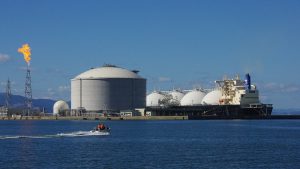
Illustrative image. Photo: kishjar? from Moscow, Russia, CC BY 2.0, via Wikimedia Commons — source