South Korea Approves 10-Year Extension for Kori 3 and 4, Clears Way for 2027 Restart

South Korea’s Nuclear Safety and Security Commission (NSSC) approved a 10-year operating license extension for the Kori 3 and 4 reactors on October 27, clearing the way for state utility Korea Hydro & Nuclear Power (KHNP) to restart both units in the first half of 2027.
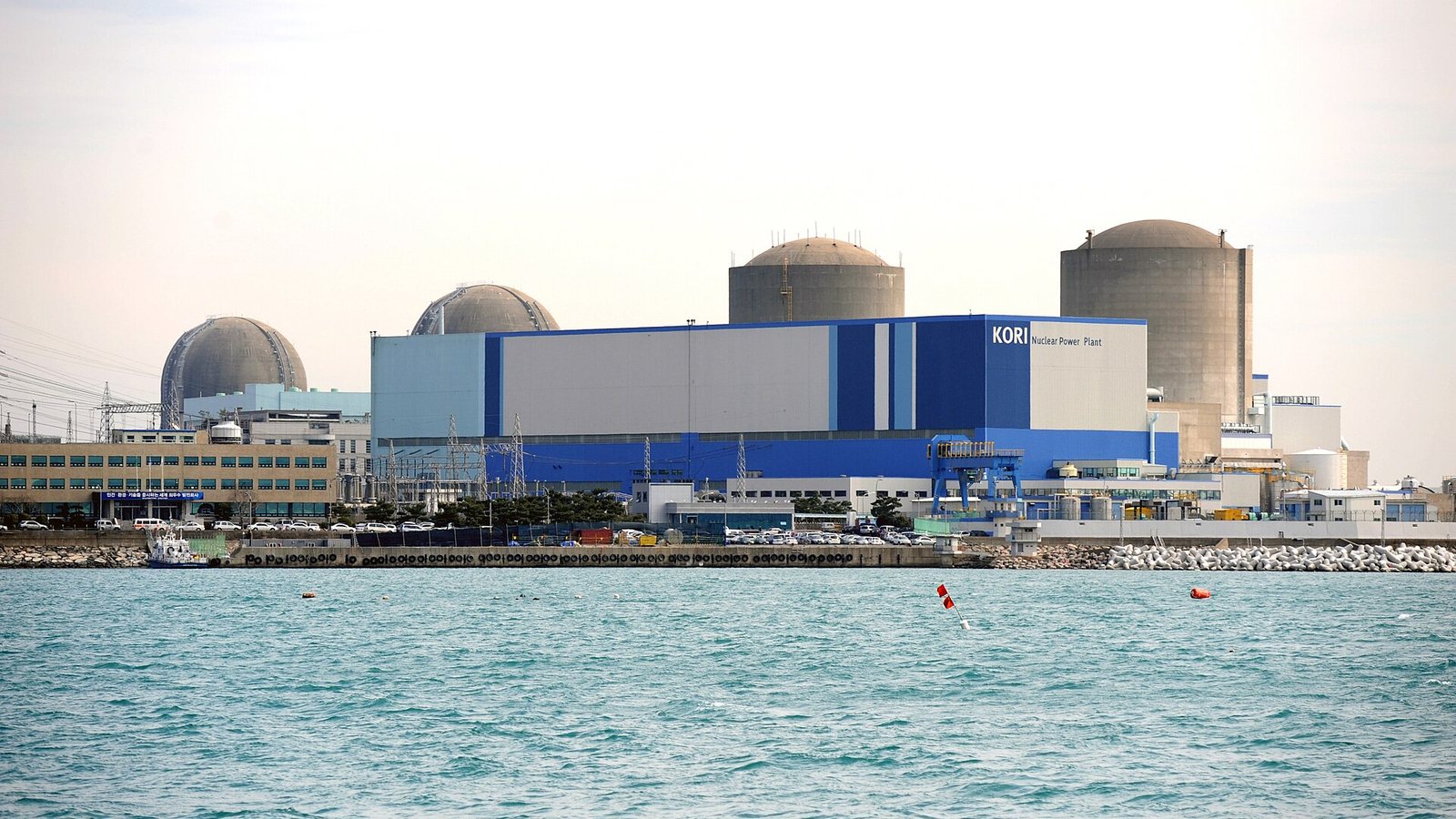
The two Westinghouse-designed pressurized water reactors, each rated at 1,025 MWe, sit at the Kori Nuclear Power Plant near Busan, in Gijang County. Kori 3 was licensed in 1984 and Kori 4 in 1985; their 40-year design lives expired in September 2024 and August 2025, respectively, and both units have been offline since. Under the new approval, Kori 3 can run until September 2034 and Kori 4 until August 2035.
A four-year review of two ageing units
KHNP filed for the license amendment in November 2023, well before either reactor’s original permit lapsed. The Korea Institute of Nuclear Safety, the NSSC’s technical review arm, then carried out a four-year safety review alongside a radiation environmental impact assessment. The commission reviewed Kori 3 and Kori 4 separately: although the two reactors share a design, differing operating and maintenance histories meant their equipment condition and ageing had to be assessed unit by unit rather than as a pair.
KHNP President Kim Hoe-cheon said continued operation of the two units would help meet rising power demand from the semiconductor and AI industries while supporting the country’s carbon-neutrality goals, and pledged to prioritize safety ahead of the restart. NSSC Chairman Choi Won-ho said the regulator would “thoroughly inspect the site to ensure that Kori units 3 and 4 are operated safely,” and that it would verify the facility upgrades KHNP has committed to before either unit is reconnected to the grid.
Feeding Korea’s AI-era power demand
The extension restores roughly 2 GW of dispatchable, low-carbon capacity to South Korea’s grid at a moment when data centers and chip fabs are becoming a bigger draw on the country’s electricity system — the same pressure that helped push Seoul to commit $120 billion toward building eight new nuclear reactors in the United States, where several Korean contractors and component suppliers are involved. At home, extending existing Westinghouse-designed units, the same reactor lineage Westinghouse is investing $1 billion to refuel in South Carolina, is faster and cheaper than building new capacity, which is why Korea — like Japan’s restarted fleet and the US’s recently revived Palisades plant — is leaning on life extensions to buy time while new projects move through planning.
Kori’s place in a fleet under review
Kori 3 and 4 are not isolated cases. Kori 1, the country’s first commercial reactor, was permanently shut down in 2017 after 40 years of service and became Korea’s first unit to enter formal decommissioning, approved by the NSSC in June 2025. Kori 2 went through the same extension process and returned to service in April after its original license lapsed in 2023. Nine more ageing units from the Hanbit, Hanul and Wolsong plants are queued for similar reviews over the next several years.
South Korea currently operates 26 reactors that supply about one-third of the country’s electricity, a share the government wants to protect even as it expands renewables and advances new builds such as Shin-Hanul. Bringing Kori 3 and 4 back online rather than retiring them buys time for that longer-term buildout while keeping existing low-carbon capacity on the grid through the mid-2030s.
Sources
- World Nuclear News, “Korea’s Kori 3 and 4 get go-ahead to restart,” October 27, 2026 — NSSC decision, reactor specifications, review timeline and quotes from KHNP and the NSSC. world-nuclear-news.org
- The Korea Herald (via Yonhap), “Nuclear watchdog approves 10-year lifespan extension for Kori units 3, 4,” October 27, 2026 — independent confirmation of the NSSC decision and timeline. koreaherald.com
Illustrative image. Photo: IAEA Imagebank, Public domain, via Wikimedia Commons — source