Westinghouse to Invest $1 Billion in New US Nuclear Fuel Plant


Westinghouse says it will spend roughly $1 billion on a new factory next to its existing Columbia Fuel Fabrication Facility in South Carolina to produce LEU+ fuel, aiming to start operations in 2030.
Westinghouse Electric Company announced on October 21 that it will invest approximately $1 billion in a new nuclear fuel factory at its Columbia Fuel Fabrication Facility in Hopkins, South Carolina, calling it the first new fleet-scale nuclear fuel plant built in the United States in more than 50 years. Construction has begun on the facility, which Westinghouse expects to bring into operation in 2030. The announcement followed a Richland County Council vote on October 20 to approve a 40-year property tax incentive package for the project.
Why the existing plant cannot do the job
The new building will sit next to Westinghouse’s current Columbia facility, which has operated since 1968 and employs more than 1,200 people making low-enriched uranium (LEU) fuel for the US reactor fleet. Most US commercial reactors run on LEU enriched to between 3% and 5% uranium-235. Westinghouse says its existing equipment and process technology at Columbia cannot produce LEU+, fuel enriched above the standard LEU range, so a purpose-built facility is required instead of a retrofit. The new plant will use a “dry” conversion process similar to one already running at Westinghouse’s Springfields facility in the UK, with more automation than the 1968-era building next door.
What LEU+ is for
LEU+ fuel is not simply a higher grade of ordinary fuel. Westinghouse says it allows reactors to run longer operating cycles between refuelling outages, which can lower a plant’s operating costs, and supports “uprates,” projects that increase the power output of reactors already in service without building new ones. The US Department of Energy’s UPRISE programme is targeting a 5-gigawatt increase in capacity from the existing nuclear fleet by 2029 largely through this kind of uprate work, and Westinghouse frames the new plant as infrastructure that programme will need. The company says the first US commercial use of greater-than-5%-enriched LEU+ fuel came last year, when lead test assemblies using its ADOPT pellets were loaded into Unit 2 at Southern Company’s Vogtle plant in Georgia, fuel that was manufactured at the Columbia facility. The Daily Energy has covered related US fuel-supply moves, including General Matter’s first NRC license application for a uranium enrichment plant in Paducah, Kentucky, and the Department of Energy’s acceleration of a separate fast-spectrum molten chloride reactor programme.
The economics behind the incentive package
Westinghouse paired the announcement with an economic impact study conducted with researchers at the University of South Carolina’s Darla Moore School of Business, which projects a $4.9 billion impact across the state over ten years, including about $3.8 billion in Richland County specifically. At peak construction, the company expects several hundred contractors on site alongside an in-house team of 30 to 50 people. In exchange, Richland County’s incentive package lowers the facility’s taxable assessment ratio from 10.5% to 4% and freezes its property tax rate for four decades, terms typical of large US manufacturing expansions competing for state and local backing. Westinghouse President and CEO Dan Sumner called it “our largest single manufacturing investment to support the operating fleet,” and the company separately credited federal tax credit programmes alongside the South Carolina and Richland County incentives for making the project viable.
Part of a wider US push on fuel supply
The investment lands as US utilities and policymakers confront two related constraints on expanding nuclear power: enough uranium enrichment capacity, most of which has historically depended on Russian-linked supply chains, and enough fuel fabrication capacity to turn that enriched uranium into usable reactor fuel. Washington has pushed both fronts over the past year, and Westinghouse’s Columbia expansion addresses the fabrication side specifically, rather than enrichment itself. With first production not expected until 2030, the plant will not ease any near-term fuel constraints facing reactor operators or the growing list of advanced reactor and SMR developers seeking higher-assay fuel, but it signals that Westinghouse is betting on sustained demand for enriched fuel well beyond the current wave of uprate and life-extension projects at existing plants.
Sources
- World Nuclear News, “Westinghouse invests USD1 billion in US LEU+ fuel plant,” October 21, 2026 — investment amount, location, 2030 timeline, UPRISE programme context, Vogtle deployment.
- Business Wire (via FinancialContent), “Westinghouse Announces Landmark Expansion in South Carolina to Advance Next-Generation Nuclear Fuel,” October 21, 2026 — company statement, CEO quote.
- NucNet, “Westinghouse To Invest $1 Billion In New US Higher Enrichment Nuclear Fuel Facility,” October 21, 2026 — economic impact study figures.
- Construction Review Online, “$1B Westinghouse LEU+ Fuel Facility Expansion, 40 Year Tax Incentives Approved in South Carolina,” October 21, 2026 — Richland County Council tax incentive terms, approval date.
- ExchangeMonitor, “Westinghouse to construct $1 billion LEU+ fuel facility in South Carolina,” October 21, 2026 — site and process details.
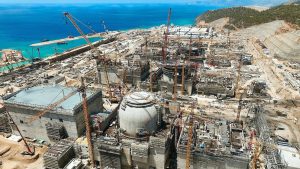
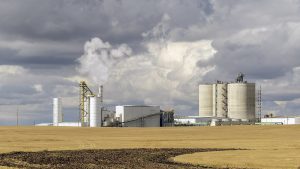
Illustrative image. Photo: Nuclear Regulatory Commission from US, Public domain, via Wikimedia Commons — source