Eni Installs World-First CO2 Platform Offshore UK for Liverpool Bay CCS

Eni has delivered and installed the Douglas platform in Liverpool Bay off the coast of north-west England, a purpose-built structure the Italian energy company describes as the world’s first offshore platform dedicated entirely to transporting and storing carbon dioxide from industrial decarbonisation. The installation, confirmed on 8 October, marks the first offshore hardware milestone for the Liverpool Bay carbon capture and storage (CCS) project, which Eni says is now roughly half complete.
A new platform built to move CO2, not hydrocarbons
The Douglas platform will act as the offshore receiving hub for the wider Liverpool Bay CCS network, the backbone of the HyNet industrial decarbonisation cluster serving factories and power plants across North West England and North Wales. Rather than producing oil or gas, its job is the reverse: taking captured CO2 piped out from onshore industrial sites and routing it into Eni’s own depleted gas reservoirs beneath the Irish Sea for permanent storage. Eni put the topside’s weight at roughly 1,885 tonnes, with a 1,755-tonne jacket structure and eight foundation piles weighing a combined 730 tonnes — a scale closer to a mid-sized production platform than a simple injection point, reflecting the compression and metering equipment needed to handle CO2 at the volumes the project is targeting.
According to Eni, the platform went from contract award to delivery in under 18 months, using what the company calls an accelerated engineering, procurement, construction and commissioning (EPCI) programme. The topside was fabricated and loaded out at a shipyard in Piombino, Italy, before being transported to the Irish Sea for installation. Eni has not published a total cost for the Douglas platform alone, but the wider Liverpool Bay transport and storage system carries a supply-chain investment of roughly £2 billion and is expected to support about 2,000 jobs during construction.
Reusing North Sea infrastructure instead of building from scratch
Liverpool Bay’s economics rest heavily on reuse. The project repurposes platforms and pipelines that once carried natural gas out of the same depleted fields it will now use for storage, cutting the amount of new offshore steel required compared with a greenfield CCS scheme. Three existing platforms in the network — Hamilton, Hamilton North and Lennox — are being converted from the kind of offshore gas production infrastructure found across the North Sea and Irish Sea to CO2 injection, while new pipeline sections link them to the Douglas hub and to the Point of Ayr terminal onshore in Flintshire, where captured CO2 arrives from HyNet’s industrial emitters. Eni secured UK government backing and reached financial close on the scheme in April 2025, when regulators set out a first-phase capacity of 4.5 million tonnes of CO2 a year, with potential expansion toward 10 million tonnes annually sometime after 2030 if demand from the cluster’s industrial customers grows as planned.
A race to prove offshore CO2 storage works at scale
The “world’s first” label Eni is applying to the Douglas platform is the company’s own characterisation, and it rests on a narrow definition — a platform purpose-built, rather than retrofitted, specifically for CO2 transport and storage duty. Other UK and Norwegian CCS schemes store CO2 offshore but route it through subsea wells rather than a dedicated surface platform of this kind. Whether or not the superlative holds up to scrutiny, the underlying bet fits a broader pattern across the energy transition, in which forecasters expect low-carbon power sources to keep gaining ground through the 2030s: that depleted oil and gas reservoirs, already mapped and understood after decades of production, offer the cheapest and most defensible path to storing CO2 at the volumes needed for heavy industry to cut emissions without shutting down.
For HyNet, the platform’s arrival offshore is a visible sign that a cluster long discussed in planning documents and financing announcements is turning into physical infrastructure. The remaining work — commissioning the platform, converting the three existing structures, and completing the onshore collection network — will determine whether CO2 actually starts flowing to the Douglas hub on the schedule Eni and its UK government backers have set out, and whether the 2030s expansion to 10 million tonnes a year materialises as industrial customers sign up.
Sources
- Offshore Energy, “‘World-first’ CCS platform for industrial decarbonization stands tall offshore UK,” 8 October 2026 — platform specifications, delivery timeline, Eni statements.
- Offshore Magazine / UK North Sea Transition Authority, reporting on the April 2025 financial close and first-phase capacity figures for Liverpool Bay CCS.
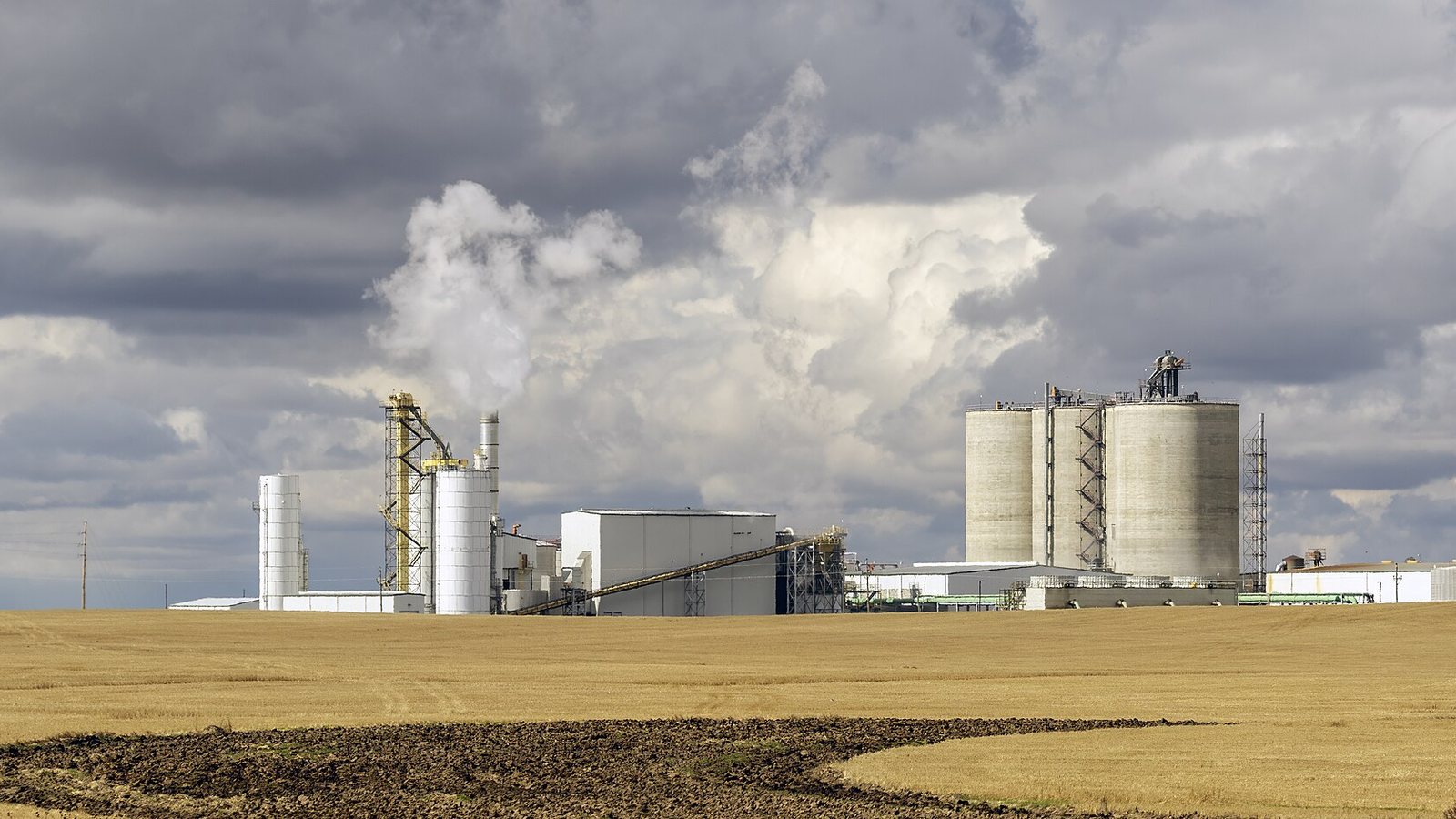
Illustrative image. Photo: Acroterion, CC BY-SA 4.0, via Wikimedia Commons — source