Nuclea Energy Completes Acquisition of Moltex’s Molten-Salt Reactor and Fuel-Recycling Technology

Nuclea Energy has completed its acquisition of the technology and patent portfolio of Moltex Energy Limited, a UK-based reactor developer that had been in administration, after closing conditions were satisfied on Nov. 17. The deal, carried out through Nuclea’s Canadian subsidiary, hands the US-listing-bound microreactor developer a molten-salt reactor design and a used-fuel recycling process that Moltex had spent more than a decade developing, according to World Nuclear News, which reported the closing on Nov. 20.
A Failed UK Developer’s Technology Finds a Buyer
Moltex Energy entered administration, the UK’s equivalent of bankruptcy protection, before agreeing in August to sell its assets to Nuclea Energy Canada Inc. in a cash deal that a filing Nuclea made with US securities regulators ahead of its planned Nasdaq listing valued at roughly C$11.5 million. The sale followed a competitive bidding process and required clearance under the UK’s National Security and Investment Act, given that one of the assets is a process for handling spent nuclear fuel. With that clearance obtained and the deal closed, Nuclea now owns a portfolio the companies describe as covering roughly 80 granted patents across nine patent families, plus several pending applications.
For Nuclea, a developer that until now was known chiefly for its Morpheus lead-cooled microreactor concept, the purchase is a bet that reactor technology can outlive the company that built it. “This acquisition broadens Nuclea Energy’s capabilities beyond microreactors,” chief executive Josef Freundorfer said, while executive chairman Sagar Sanghera described the deal as a chance to “execute on a generational opportunity in clean baseload power and nuclear fuel recycling.”
What Nuclea Actually Bought
The centerpiece is the Stable Salt Reactor-Wasteburner, or SSR-W, a fast-spectrum molten-salt reactor design sized at 300 to 500 megawatts electric and intended to run on fuel recycled from existing nuclear waste rather than freshly mined uranium. The design has cleared Phase 1 of the Canadian Nuclear Safety Commission’s pre-licensing Vendor Design Review, a step that assesses a design’s basic safety case well before any construction application, though it is not itself a construction or operating approval.
Feeding that reactor is the other half of the deal: WATSS, short for Waste To Stable Salt, a pyrochemical process that converts used fuel into a liquid chloride salt usable as reactor fuel without the water-based reprocessing chemistry used in some other countries. In testing at Canadian Nuclear Laboratories, the companies say the process recovered more than 90% of the transuranic elements — the long-lived, highly radioactive fraction of spent fuel — from legacy CANDU fuel, and that pairing WATSS with the SSR-W could cut the volume of high-level waste ultimately destined for deep geological disposal by as much as 95%. Those figures come from the companies and have not been independently replicated at commercial scale; CANDU is the heavy-water reactor design used in Canada’s existing fleet and several reactors abroad, which is why spent CANDU fuel was the test feedstock.
A Sector Still Sorting Winners From Losers
The deal lands in the middle of a consolidation wave in advanced nuclear that this publication has tracked through 2026, when global nuclear M&A reached $10.3 billion in the first nine months of the year. That wave has produced casualties as well as combinations: Bechtel walked away from building TerraPower’s Natrium reactor in Wyoming earlier this year, a reminder that even well-funded advanced-reactor projects can lose construction partners, while the US Department of Energy has been pushing in the opposite direction, accelerating the final stage of a separate fast-spectrum molten chloride reactor experiment that is unrelated to Moltex’s design but shares the same reactor class. Moltex’s own collapse into administration, despite having a design that had cleared early Canadian regulatory review, underscores how capital-intensive the path from patent portfolio to operating reactor remains — a gap in the supply chain that incumbents such as Westinghouse and BWXT have built decades-long positions to fill.
What Nuclea is betting is that the engineering, not the balance sheet, was the hard part, and that owning both a waste-burning reactor design and the fuel-recycling process meant to feed it gives it a more complete offering than either technology alone. Whether it can fund that offering through to construction, where Moltex ultimately could not, has not yet been tested.
Sources
- World Nuclear News, “Nuclea Energy concludes Moltex acquisition,” Nov. 20, 2026 — deal closing date, acquired technology, company quotes, CNL/CNSC testing and review claims. world-nuclear-news.org
- World Nuclear News, “Nuclea Energy to acquire Moltex Energy technology portfolio,” Aug. 2026 — original deal announcement and administration/bidding-process background. world-nuclear-news.org
- Nuclea Energy Inc., Form F-1/A filing with the US Securities and Exchange Commission, 2026 — approximate C$11.5 million deal value and planned Nasdaq listing. sec.gov
- Dealroom.co, “Nuclea buys Saint John’s Moltex for C$11.5M in nuclear consolidation play,” 2026 — deal structure and patent-portfolio count. dealroom.co
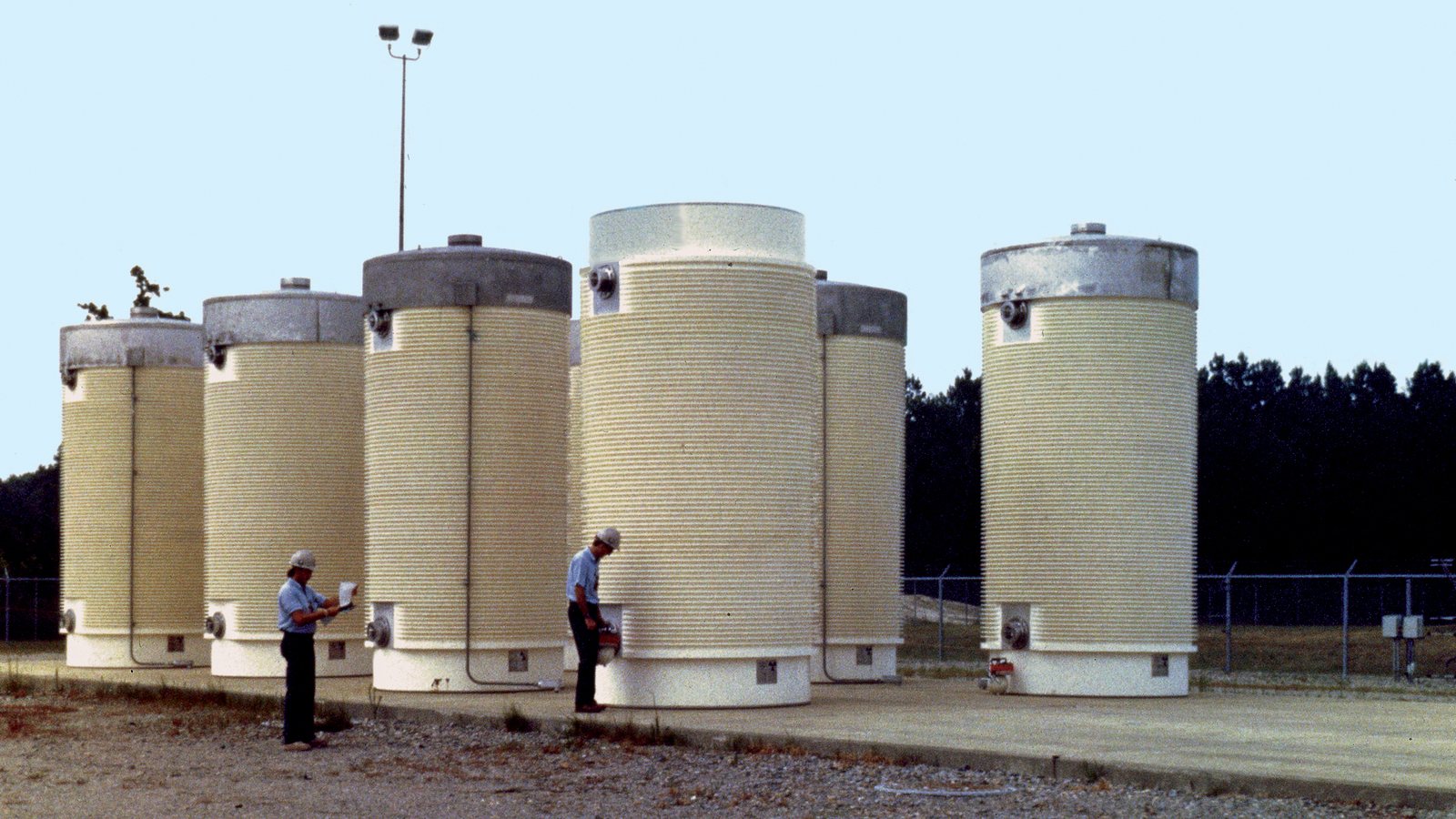
Illustrative image. Photo: Nuclear Regulatory Commission, Public domain, via Wikimedia Commons — source