Slovakia Buys Out Czech Stake in JESS, Clearing Path for New Bohunice Reactor


Slovakia’s state nuclear company JAVYS has taken full ownership of JESS, the project vehicle set up to build a new nuclear power plant at Jaslovské Bohunice, after the government agreed to pay the Czech utility ČEZ €189 million (about $211 million) for its 49% stake. The transaction, confirmed on 8 October, ends a long-running ownership dispute and hands Bratislava sole control over a project it now wants to accelerate with Westinghouse as its lead partner.
A joint venture that outlived its original purpose
JESS, formally Jadrová energetická spoločnosť Slovenska, was created in December 2009 as a 51:49 joint venture between JAVYS and ČEZ to prepare the groundwork for additional nuclear capacity next to the existing Bohunice plant. For years the company did little more than hold permits and planning documents while an earlier plan to bring in Russia’s Rosatom as a construction partner collapsed in 2014. ČEZ’s appetite for the project faded further after the 2022 energy crisis redirected the Czech utility’s capital toward its own new-build program at Dukovany, and Prague had signalled for more than a year that it wanted out.
The exit became a pricing fight rather than a straightforward handover. An initial valuation of €189 million prepared by EY was contested inside the Slovak government, with the economy ministry arguing the figure undervalued the stake’s unused permits and site rights. A second opinion from KPMG, delivered over the summer, confirmed EY’s original number, clearing the last obstacle to a deal. Slovak Prime Minister Robert Fico’s cabinet formally set aside the funds for the buyout on 30 September, and the share transfer to JAVYS was completed on 8 October.
Fico ties the deal to a faster build
For Fico, the point of taking full control is speed. “If we have a chance to build a new nuclear power plant, we must go full steam ahead and with full commitment,” he said, arguing that JESS’s existing permits and planning documents let Slovakia “significantly accelerate” construction at Bohunice rather than starting a new approval process from scratch. The government has also granted the project strategic investment status, a designation that fast-tracks permitting and land-use decisions for infrastructure Bratislava considers a national priority.
ČEZ, for its part, framed the sale as consistent with how large reactor projects are increasingly financed. “The construction of new nuclear power plants is carried out all over the world under the direction of the state,” the Czech utility said, a line that also describes its own approach at home: ČEZ’s board is majority state-owned, and its two new units at Dukovany and Temelín are being built with the Czech state as the dominant financial backer. With no clear commercial role left to play at JESS, ceding its stake let ČEZ focus capital on projects closer to home.
Washington and Westinghouse move into the frame
JESS’s new, simplified ownership structure matters because it clears the way for an outside partner. Slovak officials have pointed to a memorandum discussed with the United States for a state-owned, 1,200 MWe American reactor design, and Westinghouse is expected to be Bratislava’s main technology partner for the new unit at Bohunice. That would put Slovakia alongside Poland, which is already moving ahead with Westinghouse’s AP1000 design and began ordering long-lead components for its first unit this week, and the Czech Republic, which chose Westinghouse’s AP1000 for new capacity at Dukovany before pivoting to a different vendor selection process for additional units. A Slovak reactor built around similar US technology would give Westinghouse a second active customer in Central Europe within the same nuclear supply chain and workforce pool.
No capacity, site layout or construction timeline for the planned Bohunice unit has been made public, and Fico’s government has not published a target in-service date. What has changed is that a single, unambiguous owner can now take those decisions instead of a Czech-Slovak board that had not agreed on the project’s direction for years. Fico pointed to a broader cluster of justifications for pressing ahead, from Slovakia’s automotive manufacturing base to artificial-intelligence and data-centre demand and the European Commission’s own push for more firm, low-carbon power on the grid.
What the deal does and does not settle
The buyout settles who owns JESS, not what gets built or when. Slovakia already operates four Russian-designed VVER reactors at Bohunice and Mochovce, the newest of which, Mochovce 4, entered commercial operation in 2023 after a construction history stretching back to the 1980s. A new unit at Bohunice would be the country’s first built around Western technology, a shift that carries its own supply-chain and licensing questions even with JESS’s paperwork in hand. The government has yet to disclose financing terms for the new build itself, separate from the €189 million JAVYS just paid for ownership of the project company. For now, Bratislava has bought itself the ability to decide — on its own, without a Czech partner at the table — how fast it wants to move.
Sources
- World Nuclear News, “Slovakia buys out Czech stake in new nuclear project,” 8 October 2026 — deal confirmation, price, quotes from Fico and ČEZ.
- oenergetice.cz, “ČEZ set to exit JESS, Bratislava earmarks CZK 4.6 billion for buyout,” 2026 — valuation dispute, EY/KPMG assessments.
- TASR, reporting on the Slovak cabinet’s 30 September 2026 decision and the KPMG valuation review.
- TheDailyEnergy.com reporting on Poland’s AP1000 long-lead component orders, for Westinghouse’s parallel Central European program.
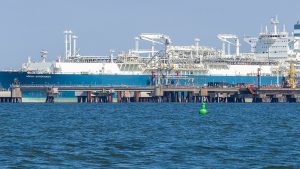
Illustrative image. Photo: Fischer.H, CC BY-SA 4.0, via Wikimedia Commons — source