Japan’s Power Prices Hit Highest Level Since 2023 as Hormuz Crisis Chokes LNG Supply

Tokyo Electric Power Company Holdings (TEPCO), Japan’s largest utility, has raised its October fuel-cost surcharge again, and industry data point to a further increase in November. The driver is a sharp rise in the price of imported liquefied natural gas, which utilities say is being squeezed by the tanker-attack crisis in the Strait of Hormuz. Japan’s day-ahead wholesale power price has climbed to its highest level since January 2023, according to oilprice.com, rising roughly 20% in a single week as a domestic heatwave met the costlier fuel supply.
Fuel costs behind the rate rise
Japanese utilities set their monthly fuel-cost adjustment using a trailing three-month average of import costs, filed with regulators in advance. TEPCO’s own published fuel-cost notices show the average price of imported LNG running at about ¥100,400 per tonne over May-July 2026, the base period for October bills, up from roughly ¥91,500 per tonne in the March-May period — close to a 10% rise quarter-on-quarter. Coal averaged about ¥23,400 per tonne over the same May-July window. TEPCO’s model household in the Kanto region faces an October bill of about ¥9,185 before a temporary government fuel subsidy and ¥8,275 after it.
The company’s preliminary fuel-cost data for the following adjustment, based on June-August costs, shows LNG averaging closer to ¥106,700 per tonne — pointing to another rate increase when TEPCO files its November adjustment, regardless of what happens in the Gulf between now and then.
A Hormuz-sized hole in LNG supply
The immediate trigger is thousands of kilometres away. Tanker attacks in and around the Strait of Hormuz, which have continued in waves since late September, have cut transits through the chokepoint to multi-month lows and left some Qatari LNG cargoes delayed or rerouted, according to oilprice.com’s Japan market coverage. The same report puts spot LNG prices at roughly double their level before the regional conflict involving Iran escalated earlier this year. Qatar is one of Japan’s largest LNG suppliers, so disruption to its loading schedule feeds directly into the price Japanese utilities pay on the spot market when long-term contract volumes fall short.
The link between the Gulf and Japanese utility bills has become a recurring theme this month: tanker attacks near the strait have continued even as talks between Washington and Tehran have stalled, and oil prices have swung within a five-month range as traders weigh the risk of further escalation against steady Gulf crude flows. Japan’s own LNG import mix leaves it more exposed than most large economies to exactly this kind of Gulf-origin shock.
Utilities lean back on coal
Faced with costlier LNG, Japanese generators are turning back to coal where they can. JERA, the country’s largest power generator and a joint venture between TEPCO and Chubu Electric, has estimated that supplementing gas-fired output with coal-fired generation during periods of LNG market disruption could cut nationwide annual generation costs by roughly ¥3 trillion, according to Japan Energy Hub. The outlet reports that JERA is weighing a return to long-term, coal-backed power purchase agreements as early as summer 2026 — a notable reversal for a company that has spent the past decade retiring coal capacity under Japan’s decarbonisation targets.
A subsidy clock running down
For now, households are shielded in part by a nationwide, time-limited subsidy on electricity and gas bills that Tokyo has kept in place through at least October: about ¥3.50 per kWh for low-voltage customers and ¥1.80 per kWh for high-voltage customers in August and October, rising to ¥4.50 and ¥2.30 respectively in September, per TEPCO’s published rate notices. With LNG costs already trending higher for the November adjustment and no confirmed extension of the subsidy beyond October, the gap between wholesale fuel costs and what households actually pay is likely to narrow just as winter heating demand picks up — unless the Strait of Hormuz situation eases first.
Sources
- TEPCO, fuel-cost adjustment notices for October and November 2026 billing (published August 2026), tepco.co.jp — fuel cost figures, subsidy rates, model household bill.
- Oilprice.com, “Japan Power Prices Surge to Highest Since 2023” (October 19, 2026) — day-ahead price move, Hormuz/LNG supply linkage.
- Japan Energy Hub, report on JERA’s coal-backed PPA plans (2026) — JERA cost estimate and coal strategy.
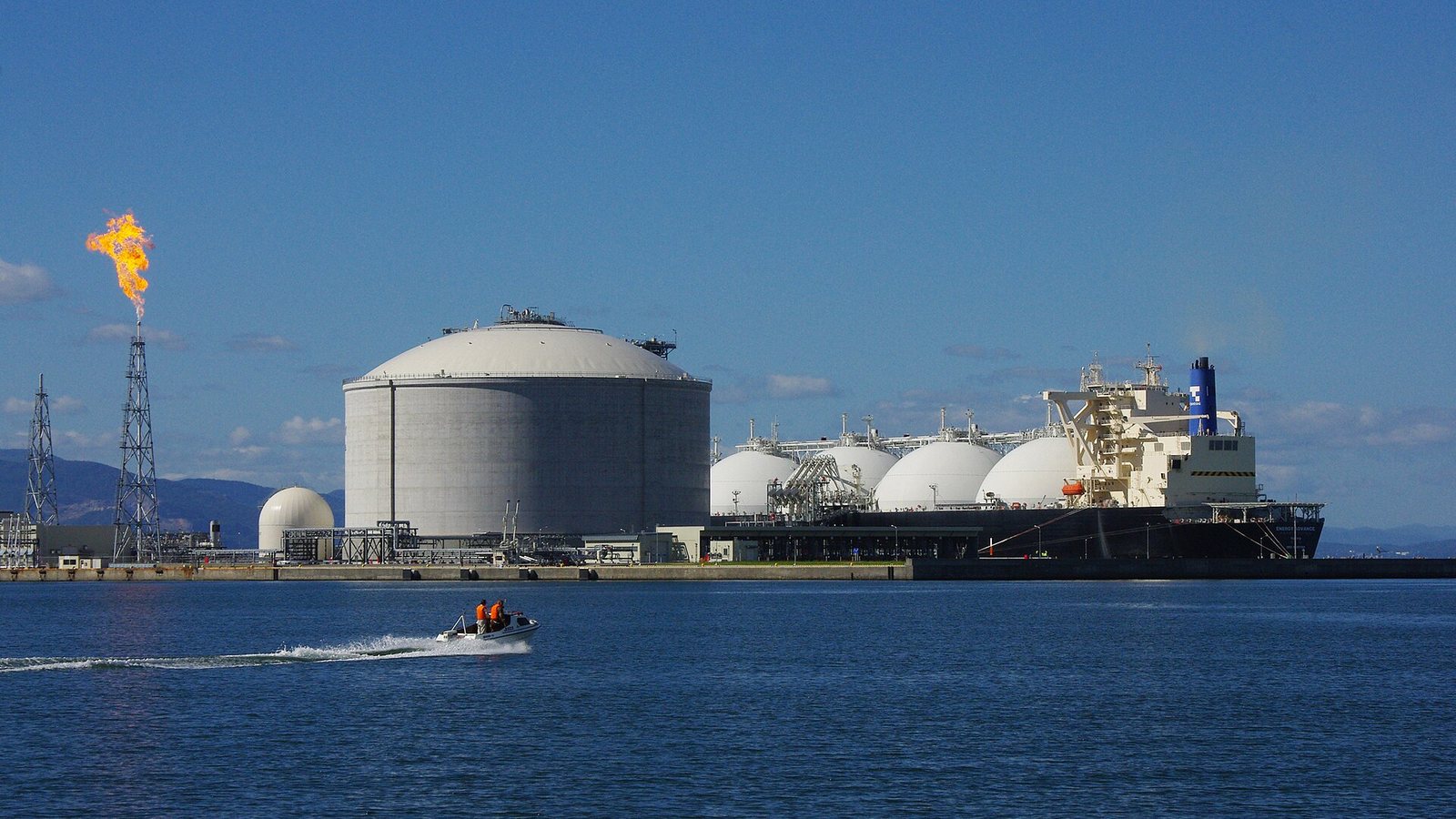
Illustrative image. Photo: とまりん♪, CC BY-SA 2.1 jp, via Wikimedia Commons — source