What Is a Power Purchase Agreement (PPA)?


Last updated: November 2, 2026
A power purchase agreement (PPA) is a long-term contract between an electricity buyer and a generator that locks in a price for power over several years. PPAs let renewable energy developers secure predictable revenue to finance a wind or solar project, and let buyers — utilities, governments or corporations — hedge against future electricity price swings while often also claiming the clean-energy attributes of the output.
Definition
A PPA sets the price, volume, duration and terms under which a buyer (the “off-taker”) agrees to purchase electricity — or, in financial versions, to settle the difference in its price — from a specific generating asset. Contract lengths commonly run 10 to 20 years, long enough to underpin project financing for a new wind, solar, gas or nuclear plant. PPAs exist throughout the power sector, but the term is most strongly associated today with corporate and utility purchases of renewable electricity.
How It Works
At its simplest, a generator agrees to sell its output at an agreed (“strike”) price for the life of the contract, rather than selling into the spot wholesale market where prices fluctuate hour to hour. The buyer pays that fixed or formula-based price regardless of where the wholesale market moves. There are three main structures:
| Structure | Does power physically change hands? | Key feature | Typical buyer requirement |
|---|---|---|---|
| Physical (sleeved) PPA | Yes | Generator and buyer sit on the same grid; a licensed utility “sleeves” (delivers and balances) the power for a fee | Buyer typically needs the project in its market/grid area |
| Virtual / synthetic PPA | No — financial only | Structured as a contract-for-difference: if the market price is above the strike price, the generator pays the buyer the difference; if below, the buyer pays the generator | Buyer can be in a different market or grid area than the project |
| Private wire PPA | Yes | Power flows directly from a nearby generator to the buyer’s site via a dedicated line, bypassing the public grid | Buyer must be physically close to the generation site |
In most renewable PPAs, every megawatt-hour of generation also carries an energy attribute certificate — a Renewable Energy Certificate (REC) in the United States or a Guarantee of Origin in the European Union — which the buyer typically receives bundled with the power or the financial settlement. These certificates are what let a buyer claim it is using renewable electricity, separate from the physical electrons it actually draws from the grid.
Why It Matters
- Project financing. Banks and investors are far more willing to finance a new wind or solar farm once it has a long-term PPA locking in revenue, because that removes much of the uncertainty of selling into a volatile spot market. PPAs are one of the main tools that have made utility-scale renewables financeable at scale.
- Price certainty for buyers. A fixed-price PPA protects a buyer from future increases in electricity costs — valuable for industrial users and, increasingly, for technology companies running power-hungry data centers.
- Corporate decarbonization. PPAs are the primary mechanism large companies use to back “100% renewable” or net-zero electricity claims, since building or buying a dedicated project adds new renewable capacity to the grid (often called “additionality”), unlike simply buying certificates on their own.
- Market signal. Because PPA volumes are tracked closely by analysts, they serve as a leading indicator of how much new renewable capacity is being committed before it is built.
Where It Is Used
Corporate and utility PPAs are used worldwide, but volumes are concentrated in a few markets. According to BloombergNEF’s tracking, global corporate clean-energy PPA volume reached an estimated 55.9 GW in 2025 — the second-highest year on record, though about 10% below 2024’s record, as the number of active corporate buyers narrowed even as a handful of very large buyers expanded their purchases.
| Region | 2025 volume (BloombergNEF estimate) | Trend vs. 2024 |
|---|---|---|
| Americas | ~32.1 GW (US ~29.5 GW, a record) | Grew — the only region to do so |
| Europe, Middle East & Africa | ~17 GW | Fell about 13% |
| Asia-Pacific | ~6.9 GW | Fell sharply, driven by slower activity in India and South Korea |
Technology companies dominate global corporate buying: Meta, Amazon, Google and Microsoft together accounted for roughly half of global corporate clean PPA activity in 2025, driven in large part by electricity demand from AI data centers. Meta and Amazon each contracted for just over 10 GW individually that year, according to BloombergNEF. Utilities such as NextEra Energy in the United States and developers such as ACWA Power in the Middle East and North Africa rely on long-term PPAs — often signed with governments or state utilities — to underpin new wind, solar and storage projects.
Key Characteristics
| Characteristic | Typical range or feature |
|---|---|
| Contract length | 10–20 years, sometimes longer for nuclear or large infrastructure |
| Pricing | Fixed price, escalating price, or indexed/floating formula |
| Risk allocation | Price risk shifts from the generator to the buyer (or is shared), in exchange for revenue certainty for the project |
| Certificates | Usually bundled (RECs in the US, Guarantees of Origin in the EU) |
| Common buyers | Corporations (especially technology and industrial firms), utilities, governments |
Related Technologies and Concepts
- Levelized cost of electricity (LCOE) — the underlying generation cost that PPA prices are negotiated around.
- Green hydrogen — a growing category of projects increasingly financed with PPA-style offtake agreements for both the electricity input and the hydrogen output.
- Renewable Energy Certificates (RECs) and Guarantees of Origin — the tradable attribute instruments typically bundled with a renewable PPA.
- Contracts for Difference (CfDs) — a government-backed pricing mechanism that works on similar principles to a virtual PPA, used widely in the United Kingdom and the European Union to support offshore wind and other low-carbon generation.
Real-World Examples
- Technology company data centers: Amazon, Google, Meta and Microsoft have each signed dozens of corporate PPAs globally — mostly wind and solar, increasingly paired with battery storage and, in some recent deals, nuclear and small modular reactor projects — to cover the rising electricity demand of AI and cloud computing.
- Dogger Bank Wind Farm: the world’s largest offshore wind project under construction in the UK North Sea relies on UK Contracts for Difference — a government-run variant of the fixed-price PPA model — to guarantee revenue for its output.
- ACWA Power projects in Saudi Arabia and other markets are typically structured around long-term power and water purchase agreements signed with state offtakers, which is the standard financing model for utility-scale solar and wind in the Gulf region.
- NextEra Energy, one of the world’s largest generators of wind and solar power, sells much of its contracted renewable output under long-term PPAs with utilities and corporate buyers across the United States.
FAQ
What is the difference between a physical and a virtual PPA?
In a physical PPA, the buyer takes delivery of real electricity, which requires the generator and buyer to be on the same grid, usually with a utility “sleeving” the power for a fee. In a virtual (synthetic) PPA, no electricity changes hands; instead the parties exchange cash based on the difference between the market price and an agreed strike price, which lets the buyer be located anywhere, even on a different grid from the project.
How long does a typical PPA last?
Most corporate and utility renewable PPAs run 10 to 20 years, long enough for lenders to finance the underlying wind or solar project against that locked-in revenue stream.
Who uses power purchase agreements?
Utilities, governments and large corporations — especially technology, industrial and retail companies — are the main PPA buyers. Technology companies with large data center electricity demand have become the single largest category of corporate PPA buyers globally.
Does a PPA guarantee the electricity is “green”?
A renewable PPA is usually bundled with a certificate (a REC or Guarantee of Origin) that lets the buyer claim the environmental attributes of that generation, but the physical electrons the buyer actually consumes still come from the local grid mix. The certificate, not the wiring, is what supports the “renewable electricity” claim.
Related The Daily Energy Pages
- LCOE (Levelized Cost of Electricity)
- NextEra Energy
- ACWA Power
- Dogger Bank Wind Farm
- Green Hydrogen
- John Ketchum (NextEra Energy CEO)
Sources
- BloombergNEF, 1H 2026 Corporate Energy Market Outlook — global corporate clean-energy PPA volume and regional/buyer breakdown for 2025
- National Renewable Energy Laboratory (NREL), U.S. Department of Energy — research on corporate procurement of utility-scale renewable energy via power purchase agreements
- DLA Piper — legal guidance on corporate PPA structures (physical/sleeved vs. virtual/synthetic)
- Company disclosures: NextEra Energy, ACWA Power
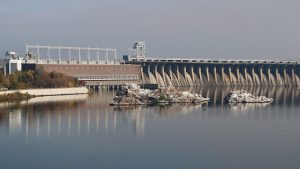
Illustrative image. Photo: kallerna, CC BY-SA 4.0, via Wikimedia Commons — source