Blackstone-Led Investors Pay $3.1 Billion for Stake in Mitsubishi’s LNG Canada Holding

Funds managed by Blackstone Credit & Insurance, together with four Canadian pension investors — Canada Pension Plan Investment Board, the Ontario Municipal Employees Retirement System (OMERS), the Investment Management Corporation of Ontario (IMCO) and the Public Sector Pension Investment Board (PSP Investments) — have agreed to buy a 49.9% non-controlling stake in Diamond LNG Canada Ltd., the Mitsubishi Corporation subsidiary that holds Mitsubishi’s 15% interest in the LNG Canada export terminal in Kitimat, British Columbia. Blackstone and Mitsubishi put the deal’s value at $3.1 billion in announcements on Monday, coming weeks after LNG Canada’s shareholders took a final investment decision to build a second phase that would double the plant’s export capacity.
A financial partner, not a new operator
The transaction does not touch Mitsubishi’s direct 15% ownership of LNG Canada itself. Instead, the incoming investors are buying into Diamond LNG Canada, the holding vehicle through which Mitsubishi’s stake sits, diluting Mitsubishi’s economic exposure to the project without transferring voting control. Mitsubishi said in its announcement that it "will welcome the Funds as a financial partner" in the holding company while keeping its position in Canada’s gas and LNG value chain; the company added that the deal has no effect on LNG Canada’s offtake volumes or customers.
Where LNG Canada’s ownership stands
LNG Canada is Canada’s first LNG export project, and its first cargo left Kitimat in 2025. Shell operates the terminal and is its largest shareholder with 40%, alongside Malaysia’s Petronas (25%), PetroChina (15%), Mitsubishi (15%) and South Korea’s Kogas (5%). Monday’s deal affects only the capital structure behind Mitsubishi’s slice of that ownership; the other shareholders are unaffected.
A second phase about to double capacity
The deal lands weeks after LNG Canada’s partners confirmed a final investment decision on Phase 2, which adds two more liquefaction trains and would take the plant’s capacity from 14 million tonnes per annum (mtpa) to 28 mtpa once it starts up in the early 2030s. Shell has said it expects to receive close to 6 mtpa of additional LNG once the expansion is running. Phase 2 was the first of five energy and infrastructure projects that Canadian Prime Minister Mark Carney designated for fast-tracked federal approval last year, as Ottawa looks to diversify gas export markets away from the United States and toward Asia. Ottawa’s other fast-tracked priorities include the Pacific Link oil pipeline to Asian markets.
Institutional capital circling LNG Canada
Monday’s purchase is a separate transaction from a bigger, still-unresolved process around LNG Canada: Reuters reported in April that Apollo Global Management, Blackstone and KKR were competing to buy part of Shell’s own 40% stake, in a deal that people close to the process valued at $10 billion to $15 billion. That sale process, which would affect the project’s largest shareholder rather than Mitsubishi’s indirect position, has not been concluded. British Columbia’s other major LNG venture, Ksi Lisims LNG, signed its own long-term supply deal with Germany’s SEFE last month. Taken together, the two processes point to rising interest from private credit and pension funds in operating LNG infrastructure, which offers long-dated, contracted cash flows once a project like LNG Canada is already producing.
Sources
- OilPrice.com, November 2, 2026, citing Blackstone and Mitsubishi Corporation announcements — deal structure, buyer group and $3.1 billion value.
- Shell statement, late September 2026, via OilPrice.com — Phase 2 capacity and LNG Canada’s Asia-market positioning.
- Gas Processing News, citing Reuters, April 30, 2026 — Apollo, Blackstone and KKR bidding for part of Shell’s own LNG Canada stake.
- TheDailyEnergy.com reporting on LNG Canada’s shareholder structure and Phase 2 FID.
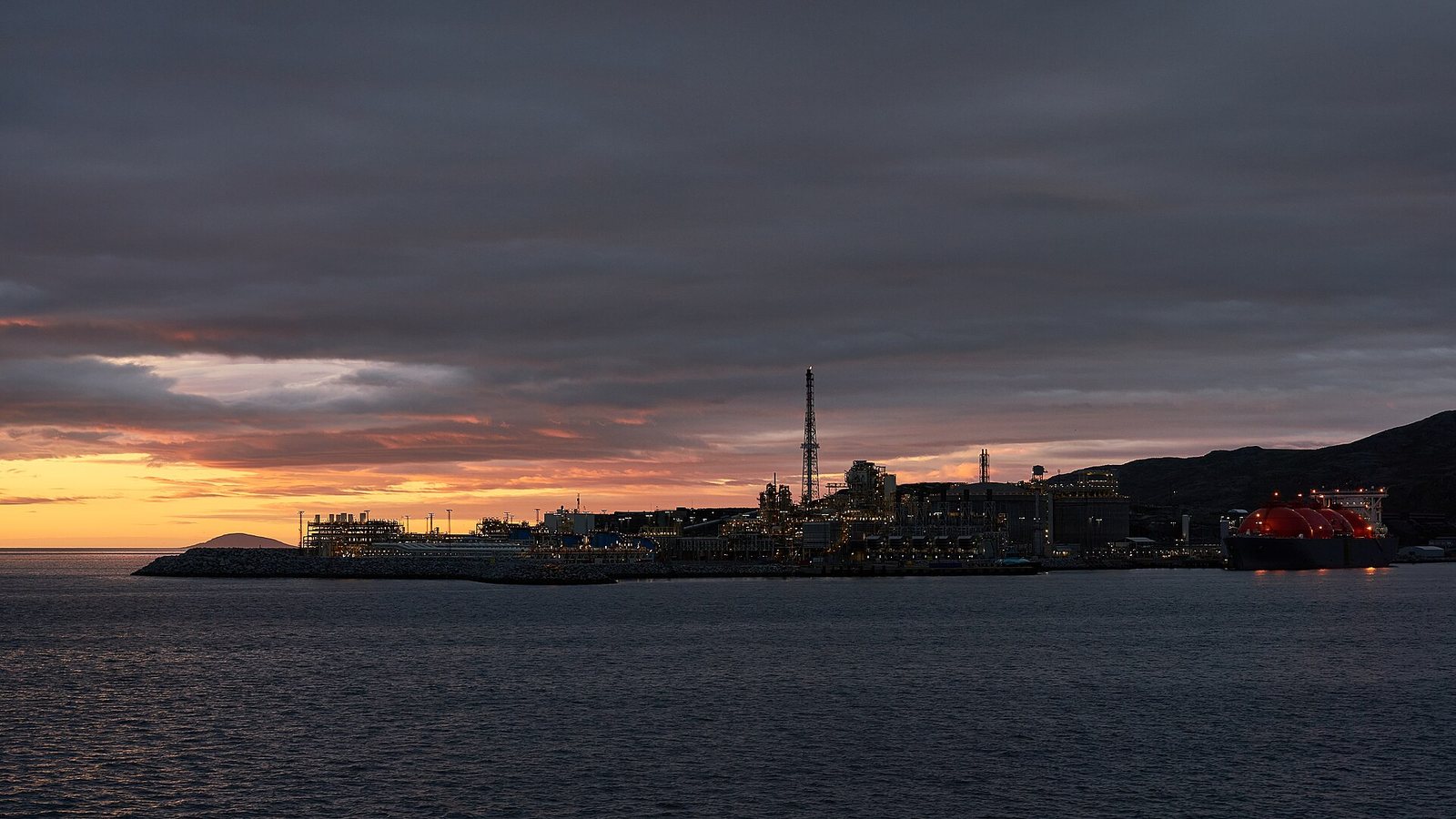
Illustrative image. Photo: Virtual-Pano, CC BY-SA 4.0, via Wikimedia Commons — source