Colombia’s LNG Imports Hit a Record Share of Gas Supply as Drought Risk Builds


Colombia’s natural gas supply relied on imported LNG for a record 31% of volumes in July 2026, the US Energy Information Administration (EIA) said this week, as domestic production keeps shrinking and the government braces for a strong El Niño that could cut deeply into the hydropower the country depends on for most of its electricity.
A gas field base that keeps shrinking
Colombia’s marketed natural gas production has been on a steady slide since 2022. Output averaged 1,070 million cubic feet per day (MMcf/d) that year, fell to 772 MMcf/d by 2025, and has averaged just 673 MMcf/d from January through August 2026, according to data from the Gestor del Mercado de Gas Natural (BEC) cited by the EIA. The country’s largest producing fields — Cusiana, Cupiagua, Pauto Sur and the offshore Guajira complex — have been in decline since 2022, and no comparably sized discovery has been brought into production to offset them. Colombia’s National Hydrocarbons Agency (ANH) reported that proved natural gas reserves fell 39% between 2022 and 2025, to 1.7 trillion cubic feet, a reserves base that gives the country little room to reverse the production slide on its own in the near term.
LNG terminals are multiplying to fill the gap
Colombia currently has a single operating LNG import terminal, SPEC LNG, on the Caribbean coast near Cartagena, which is now undergoing expansion work that could start up as early as late October 2026. A second facility, Buenaventura LNG on the Pacific coast, is targeting a startup around November 2026, and two more projects — Puerto Bahia LNG and Ballenas LNG — could begin operating next year. The buildout reflects a judgment by Colombian authorities and private developers that LNG imports are no longer a temporary drought-season bridge but a structural part of the country’s gas balance, given how far reserves and production have fallen behind demand.
A strong El Niño raises the stakes for gas-fired power
The timing adds urgency. Colombia’s government has declared a national disaster to prepare for drought linked to an expected strong El Niño, and the US National Oceanic and Atmospheric Administration’s Climate Prediction Center said in October that there is now a greater than 83% chance of a strong-to-very-strong event persisting through early 2027. El Niño years typically bring drier conditions to northern South America from December through February, cutting the hydropower that supplied 81% of Colombia’s electricity in 2025, against 8% from gas and 4% from coal.
The last comparable event shows how quickly that mix can shift. During the strong El Niño of March 2024, hydropower’s share fell to 55% while gas rose to 22% and coal to 15%. A milder, more recent stress test is already visible in the data: by July 2026, hydropower’s share had slipped to 66% as gas and coal each climbed to 12%. If the El Niño advisory plays out as NOAA expects, the EIA says gas-fired generation is likely to take on a still larger role over the coming winter — making the pace of new LNG terminal start-ups, and the price Colombia pays for cargoes, a direct factor in the reliability of its power supply.
Buying into an already tight global LNG market
Colombia’s timing is also unfortunate from a pricing standpoint. Middle East tensions tied to the Iran war have already added at least $39 billion to the world’s collective LNG import bill this year, according to Rystad Energy, and buyers from Qatar’s established customer base to gas-import-dependent European economies are competing for cargoes in a market where supply disruption has pushed prices well above pre-crisis levels. A country ramping up LNG imports as a structural necessity, rather than drawing on long-term contracts secured years in advance, is more exposed to that volatility — a dynamic Colombian utilities and regulators will have to manage through the coming Southern Hemisphere summer regardless of how the El Niño event itself develops.
Related The Daily Energy pages: Iran War Adds at Least $39 Billion to World’s LNG Bill, Rystad Says · Who Buys Qatar’s LNG? · Where Does Germany Get Its LNG?
Sources
- US Energy Information Administration, “LNG imports make up increasing share of Colombia’s natural gas supply”, Today in Energy, October 29, 2026 — primary source for all production, reserves, LNG terminal and electricity-mix figures, citing Colombia’s Gestor del Mercado de Gas Natural (BEC) and National Hydrocarbons Agency (ANH).
- NOAA Climate Prediction Center, El Niño Advisory, October 2026 — cited by the EIA for the greater-than-83% probability of a strong-to-very-strong El Niño persisting through early 2027.
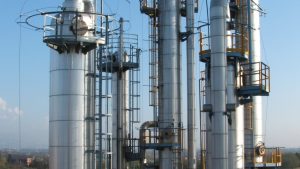
Illustrative image. Photo: Virtual-Pano, CC BY-SA 4.0, via Wikimedia Commons — source