


Why Is Rolls-Royce Building SMRs?


Last updated: October 11, 2026
Rolls-Royce, the British engineering group best known for powering Royal Navy submarines and civilian aircraft, is also building small modular reactors (SMRs) for the civilian grid through a separate company, Rolls-Royce SMR Ltd. The business has signed a government-backed contract to build three reactors in Wales, taken on state-owned investors from the Czech Republic and Qatar, and is pursuing export deals across Europe. This page, part of The Daily Energy’s Energy & Defence coverage, explains why a defence contractor is building civilian nuclear power plants, who owns the business, and where its reactor technology is headed next.
From Submarine Reactors to Civilian SMRs
Rolls-Royce has designed and supported the pressurised water reactors (PWR) that power Royal Navy submarines since the 1960s, work carried out through its defence division alongside the Barrow-in-Furness shipyard, which builds the hulls. That line of reactors has evolved from the original PWR1 design through PWR2, used in the Vanguard and Astute-class submarines, to PWR3, now entering service in the Dreadnought class. Rolls-Royce SMR Ltd, set up in 2021 as a separate company, was built to commercialise reactor engineering, licensing and manufacturing experience from that defence business for civilian power generation — without transferring classified submarine reactor designs, which remain restricted under UK and US defence agreements. The civilian SMR is a distinct, publicly disclosed design rated at 470 megawatts electric (MWe), roughly the output of a mid-sized gas-fired power station, built around a factory-fabricated, modular construction approach rather than the bespoke on-site builds used for large reactors. (For how that underlying naval reactor technology actually works, see TDE’s explainer on how a nuclear-powered submarine works.)
The Wylfa Programme and UK Government Backing
On April 13, 2026, Rolls-Royce SMR signed a contract with Great British Energy – Nuclear (GBE-N), the UK government’s state nuclear developer, to deliver three SMR units at the Wylfa site in north Wales, a former Magnox nuclear power station location. The agreement followed Rolls-Royce SMR’s selection as preferred bidder in a UK government competition in 2025.
| Item | Detail |
|---|---|
| Contract signed | April 13, 2026, with Great British Energy – Nuclear |
| Site | Wylfa, Isle of Anglesey, north Wales |
| Units planned | Three SMRs, 470 MWe design each |
| Government funding committed | Up to £2.6 billion allocated toward the contract and wider programme |
| National Wealth Fund support | Up to £599 million earmarked for SMR design work |
| Contract structure | Two-stage agreement covering site-specific design and preparation for site construction, including ordering long lead-time equipment |
| Target for power generation | Mid-2030s (goal stated by GBE-N in 2025; no revised date announced as of this writing) |
The UK government has said billions of pounds in additional procurement are still required to fully fund the Wylfa programme, meaning the project’s total cost is not yet fully committed as of late 2026.
Who Owns Rolls-Royce SMR
Rolls-Royce SMR Ltd is majority owned by its parent, Rolls-Royce Holdings, but has brought in outside investors tied to its nuclear and export strategy.
| Shareholder | Stake | Notes |
|---|---|---|
| Rolls-Royce Holdings | ~57.8% (as of December 2025) | Parent company; also builds Royal Navy submarine reactors through a separate defence division |
| CEZ Group | ~20% (phased acquisition) | Czech state-controlled utility; deal tied to Rolls-Royce SMR’s role as preferred reactor supplier for the Czech Republic’s SMR programme |
| Qatar Investment Authority (QIA) | ~10% (original stake) | Sovereign wealth fund of Qatar |
| BNF Resources | Undisclosed | Jointly, with Rolls-Royce plc, acquired Constellation’s stake in December 2025 |
Constellation (formerly Exelon Generation), an early investor, exited in December 2025, when Rolls-Royce plc and BNF Resources bought its remaining stake of under 5%.
Why a Defence Contractor Is Building Civilian Reactors
Three factors explain the move. First, Rolls-Royce’s defence division already holds the nuclear licensing, security clearances, specialist welding and quality-assurance capability needed to manufacture reactor pressure vessels and components — infrastructure that is expensive to build from scratch but can be adapted to a civilian product line. Second, the UK government has treated civilian SMRs as a way to use and retain the skilled nuclear workforce built up around the submarine programme at Barrow-in-Furness and Derby, rather than letting that capacity sit idle between naval contracts. Third, civilian demand for firm, carbon-free power — from national grids and increasingly from data centres — is a larger and faster-growing market than defence shipbuilding alone, giving Rolls-Royce a commercial reason to build out SMR Ltd as a separate growth business.
International Expansion
Beyond the UK, Rolls-Royce SMR has pursued reactor-export deals in several European markets.
- Czech Republic: Selected in 2024 as preferred SMR supplier ahead of competitors offering French, American and Japanese designs; CEZ Group, the state-controlled utility, is both the programme’s lead developer and a Rolls-Royce SMR shareholder. Reporting has linked the partnership to potential deployment at the Temelín nuclear site.
- Netherlands: Rolls-Royce SMR signed an exclusive agreement with ULC-Energy, a Dutch nuclear development company, to pursue SMR deployment in the country.
- Sweden: Rolls-Royce SMR has said it is pursuing a similar partnership, though no signed agreement comparable to the Czech or Dutch deals has been confirmed in company disclosures reviewed for this page.
Rolls-Royce SMR has stated an ambition of up to 3 gigawatts (GW) of deployed capacity across its European pipeline, combining the Wylfa units with export markets.
Where the Technology Overlaps With Civilian Energy
The commercial logic sits entirely on the civilian side once the reactor design itself is separated from the restricted submarine technology. A 470 MWe SMR competes with the same customer base as other civilian nuclear and firm-power technologies: national utilities seeking to replace retiring coal and gas plants, industrial sites wanting on-site low-carbon power, and — increasingly — data-centre operators and hyperscale computing customers seeking reliable, carbon-free electricity that doesn’t depend on weather, a demand driver also cited by competing SMR vendors such as GE Vernova and Westinghouse. The manufacturing approach — factory-built modules assembled on-site rather than a fully bespoke construction project — is aimed at the same cost and schedule problems that have affected large civilian reactor projects, and is the main reason SMR designs across the industry, defence-linked or not, are being pitched as a faster way to add nuclear capacity.
Latest Developments
- September 2026: Škoda JS, a CEZ Group subsidiary, was named sole supplier of control rod drive mechanisms for the Rolls-Royce SMR 470 MWe design — read the full story: Škoda JS Named Sole Supplier of Control Rod Drives for Rolls-Royce SMR.
- April 2026: Rolls-Royce SMR signed its delivery contract with Great British Energy – Nuclear for three units at Wylfa, Wales.
For a broader view of defence companies active across energy technologies, see The Daily Energy’s Which Defence Companies Are Investing in Energy Technologies?
Frequently Asked Questions
Is Rolls-Royce SMR the same company that builds submarine reactors?
No. Rolls-Royce SMR Ltd is a separate company, majority owned by Rolls-Royce Holdings, set up in 2021 to build civilian small modular reactors. Rolls-Royce’s submarine reactor work is carried out by a different part of the group under UK defence rules, and the classified submarine reactor designs are not transferred to the civilian SMR business.
How big is a Rolls-Royce SMR reactor?
Rolls-Royce SMR’s civilian design is rated at 470 megawatts electric (MWe) per unit, roughly comparable to a mid-sized gas-fired power station, built using factory-fabricated modules rather than a fully custom on-site build.
Who owns Rolls-Royce SMR?
Rolls-Royce Holdings holds roughly 57.8% as of December 2025. CEZ Group, the Czech state-controlled utility, is acquiring about 20%. Qatar Investment Authority holds an original 10% stake. BNF Resources, together with Rolls-Royce plc, bought out former investor Constellation’s remaining stake in December 2025.
When will the Wylfa reactors start generating power?
No confirmed date has been announced. Great British Energy – Nuclear has stated a goal of connecting Wylfa projects to the grid in the mid-2030s, a target set in 2025 that has not been revised in company or government statements reviewed for this page.
Is the Wylfa programme fully funded?
Not yet. The UK government has allocated up to £2.6 billion toward the Rolls-Royce SMR contract and wider programme, including up to £599 million from the National Wealth Fund for design work, but officials have said billions of pounds in further procurement are still required to fully fund construction.
Where else is Rolls-Royce SMR trying to sell its reactors?
Rolls-Royce SMR is the preferred supplier for a Czech government SMR programme led by CEZ Group, has an exclusive agreement with Dutch developer ULC-Energy, and has said it is pursuing a similar partnership in Sweden, though no signed Swedish agreement has been confirmed.
Sources
- Rolls-Royce SMR — Shareholder Update, December 2025 — rolls-royce-smr.com
- American Nuclear Society (ANS Nuclear Newswire) — “Rolls-Royce, GBE-N contract kickstarts U.K.’s SMR plans for Wylfa site,” April 2026 — ans.org
- UK Government — “UK SMR programme at Wylfa hitting target for British contracts” — gov.uk
- CEZ Group — “The CEZ Group has become a shareholder of Rolls-Royce SMR,” investor announcement — cez.cz
- Nuclear Engineering International (NucNet) — “Rolls-Royce SMR signs landmark agreement for three reactors at Wylfa” — nucnet.org
- Rolls-Royce — “Naval Nuclear Propulsion Plant,” defence division overview — rolls-royce.com
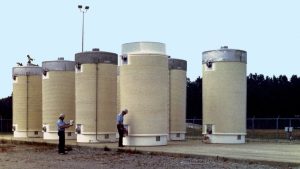
Illustrative image. Photo: Nuclear Regulatory Commission, Public domain, via Wikimedia Commons — source


[…] Rolls-Royce SMR […]
[…] Rolls-Royce SMR […]
[…] engineering now underpins a wider industrial story: the companies that build naval reactors — Rolls-Royce, Westinghouse, BWXT, General Atomics — are also the companies building small modular reactors […]
[…] The RITM-200’s compact, long-refueling-interval design has also drawn interest beyond icebreakers — the same reactor family underpins some of Russia’s floating power plant and small modular reactor concepts, the kind of compact naval-derived reactor technology also under development by Western manufacturers such as Rolls-Royce. […]