Who Buys Malaysia’s LNG?

Last updated: November 17, 2026 · Last verified: November 17, 2026
Malaysia is the world’s fifth-largest LNG exporter, shipping roughly 26–27 million tonnes a year — mostly from Petronas’s Bintulu complex and its two floating LNG units — to three main buyers: Japan, China and South Korea. Those three took close to 90% of Malaysia’s LNG by volume in the most recent full-year breakdown available, and all three already appear as buyers on TDE’s own importer-view pages. Malaysia’s exporter-side has kept moving in 2026: a new 20-year supply deal with Japan’s JERA, a first cargo out of the Petronas-backed LNG Canada project, and a public push to add new buyers in Vietnam and the Philippines.
Who buys Malaysia’s LNG, by volume (latest full year)
The most recent full-year, volume-based breakdown comes from the Energy Institute’s Statistical Review of World Energy, covering 2023 (26.75 million tonnes / ~7% of global LNG trade that year). It is the most complete country-by-country volume split publicly available; Malaysia’s and Petronas’s own disclosures for 2024–2025 give facility-level cargo counts (below) rather than a destination breakdown in the same format.
| Buyer country | Volume | Share of exports | Year | Source |
|---|---|---|---|---|
| Japan | ~14.3 bcm | ~40% | 2023 | Energy Institute, Statistical Review of World Energy |
| China | ~9.7 bcm | ~26% | 2023 | Energy Institute, Statistical Review of World Energy |
| South Korea | not disclosed in bcm | ~23% | 2023 | Energy Institute, Statistical Review of World Energy |
| Thailand | not disclosed in bcm | ~7% | 2023 | Energy Institute, Statistical Review of World Energy |
| Taiwan | not disclosed in bcm | ~2% | 2023 | Energy Institute, Statistical Review of World Energy |
A fresher but partial picture: export value by quarter, 2025
Malaysia’s national statistics office, DOSM, publishes LNG export value and destination shares every quarter — more current than the 2023 volume data, but measuring a different thing (ringgit value, not tonnes or cubic metres) and only one quarter at a time. The three leading buyers are consistent with the 2023 volume table, but their order shuffles quarter to quarter as prices and cargo scheduling shift.
| Quarter | Export value | Japan | China | South Korea | Source |
|---|---|---|---|---|---|
| Q1 2025 | RM15.5 billion | 46% | 20.1% | 24.3% | DOSM |
| Q2 2025 | RM10.3–10.4 billion | 35.3% | 23.4% | 24.5% | DOSM |
| Q3 2025 | RM12.2 billion | 37.7% | 29.6% | 25.6% | DOSM |
| Full-year 2024 (for comparison) | RM16.7 billion (Q4 2024 alone) | 39.8% | 21.3% | 30.2% | DOSM |
Two distinctions matter here. First, value shares and volume shares are not interchangeable — a cargo sold under an oil-linked formula in a high-price quarter can outweigh a larger but cheaper shipment elsewhere. Second, DOSM’s Q4 2025 release (needed to complete a full 2025 year) was not yet published as of this update; this table will be refreshed once it is.
Where the gas actually comes from: Petronas’s own 2025 disclosure
Petronas reported delivering 563 LNG cargoes in 2025, of which 383 shipped from the Petronas LNG complex at Bintulu, Sarawak, and 41 from the floating facilities PFLNG Satu and PFLNG Dua — the balance coming from its international positions, including the Shell/Petronas-backed LNG Canada project, whose first cargo sailed to Japan in July 2025. Petronas has said it wants to diversify beyond its traditional Japan/China/South Korea base into Vietnam and the Philippines, even as it also warns of rising domestic Malaysian gas demand (partly from data centres) competing for the same supply.
New contracts: JERA’s 20-year deal
On June 10, 2026, Petronas LNG signed a 20-year sale-and-purchase agreement with Japan’s JERA for up to roughly 2 million tonnes/year, starting in 2028 and running to the late 2040s. The deal follows a June 2025 memorandum of understanding and was announced during Malaysian Prime Minister Anwar Ibrahim’s visit to Japan — part of Tokyo’s broader push to lock in long-term supply as the Iran war disrupts Gulf LNG flows (the same disruption behind Qatar’s buyer-side contract problems this year). Separately, TotalEnergies has bought 30% stakes in Malaysia’s Lang Lebah and B14 gas fields, upstream positions that feed the same export chain.
The supply chain
Petronas (Bintulu onshore plant / PFLNG Satu and Dua floating units / LNG Canada equity cargoes) → LNG carrier → import terminal in the buyer country → domestic utility. On the buyer side, Malaysian LNG shows up as a named supplier on TDE’s own importer-view pages: it was Japan’s second-largest LNG source at 25.0% in January 2026 (see Where Does Japan Get Its LNG?) and South Korea’s second-largest at 16.1% of full-year 2025 imports (see Where Does South Korea Get Its LNG?). China’s LNG mix, where Malaysia is a mid-tier supplier behind Qatar, Australia and Russia, is covered on Where Does China Get Its LNG?.
What to watch in the next 12 months
- JERA’s 2028 start date for the new 20-year Petronas SPA — the first cargoes under this specific deal are still two years out.
- DOSM’s Q4 2025 and full-year 2025 release, which will complete the most current annual value-share picture.
- Diversification into Vietnam and the Philippines, markets Petronas has publicly flagged but not yet detailed in binding volumes.
- Domestic demand pressure from Malaysia’s own data-centre and power-sector gas needs, which Petronas has cited as a competing claim on the same gas supply used for export.
FAQ
Who buys Malaysia’s LNG?
Mainly Japan, China and South Korea, which together took close to 90% of Malaysia’s LNG exports in the most recent full-year volume breakdown (2023: Japan ~40%, China ~26%, South Korea ~23%). Thailand and Taiwan take smaller shares.
Is Malaysia a top LNG exporter?
Yes — it ranked as the world’s fifth-largest LNG exporter in recent Energy Institute data, shipping about 26–27 million tonnes a year, roughly 7% of global LNG trade.
Does Malaysia export LNG to China?
Yes. China was Malaysia’s second-largest buyer by export value in two of the three 2025 quarters reported by DOSM (20.1%–29.6% of quarterly export value) and its second-largest by volume in the 2023 Energy Institute data (~26%).
What is Petronas?
Petronas is Malaysia’s state-owned oil and gas company and the operator of the country’s LNG export complex at Bintulu, Sarawak, plus two floating LNG facilities (PFLNG Satu and Dua) and international positions including Canada’s LNG Canada project.
Related The Daily Energy pages
- Where Does Japan Get Its LNG?
- Where Does South Korea Get Its LNG?
- Where Does China Get Its LNG?
- Who Buys Qatar’s LNG?
- Who Buys Russia’s LNG?
- TotalEnergies Buys 30% Stakes in Malaysia’s Lang Lebah and B14 Gas Fields
- Shell and Partners Approve LNG Canada Phase 2
- What Is LNG and How Does It Work?
Sources: Energy Institute, Statistical Review of World Energy (2023 volume shares, via industry reporting); Department of Statistics Malaysia / DOSM (quarterly 2025 export value and destination shares); Petronas (2025 cargo counts, JERA SPA terms); The Star, OGJ, Rigzone, Baird Maritime, Businesstoday.com.my (JERA–Petronas deal, June 2026).
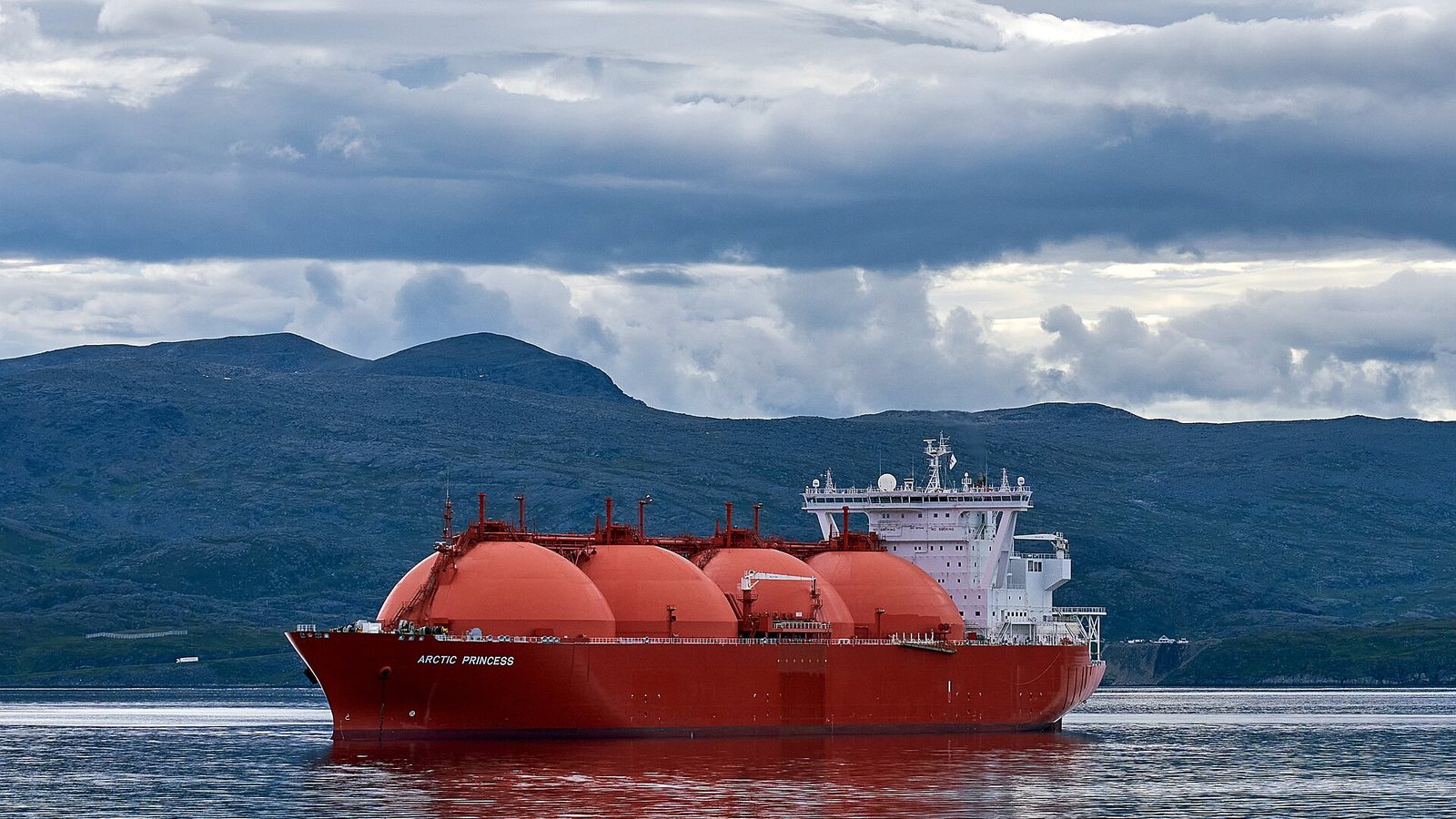
Illustrative image. Photo: Virtual-Pano, CC BY-SA 4.0, via Wikimedia Commons — source