What Is LPG and How Is It Different From LNG?

Last updated: November 16, 2026
LPG (liquefied petroleum gas) is a fuel made mostly of propane, normal butane and isobutane — hydrocarbons that are gases at room temperature but turn liquid under modest pressure, which is what makes them easy to store and ship in tanks and cylinders. In the United States, products sold under the LPG label are almost always HD-5 propane; in most other markets, LPG is a propane-butane blend used for heating, cooking, vehicle fuel (autogas) and as a petrochemical feedstock.
Definition: What Is LPG?
The U.S. Energy Information Administration (EIA) describes LPG as “a generic industry term referring to propane, butanes, or mixtures of the two.” It is one of several hydrocarbon gas liquids (HGLs) separated from natural gas at processing plants or from crude oil at refineries. LPG is not the same substance as LNG (liquefied natural gas): LNG is almost pure methane cooled to about −162°C to become liquid, while LPG is propane and/or butane, which liquefy at ordinary temperatures once put under moderate pressure — a few atmospheres rather than cryogenic cooling.
In the U.S. consumer market, the EIA notes that “virtually all HGL products distributed in the U.S. consumer market with the LPG label is HD-5 propane,” a propane purity grade. Outside the U.S., retail LPG for home heating and cylinder cooking is more commonly a propane-butane mix, with the ratio adjusted seasonally since butane performs poorly in cold weather.
How LPG Is Produced
LPG comes from two sources:
- Natural gas processing — propane and butane are stripped out of raw natural gas before it is sent into gas pipelines, alongside ethane and natural gasoline.
- Crude oil refining — refineries produce propane and butane as byproducts of distillation and cracking units.
Because it is a co-product of both the oil and gas value chains, LPG supply tends to track upstream oil and gas activity (including U.S. shale output) rather than being produced as a dedicated target product.
Why LPG Matters
LPG is one of the most widely used household and off-grid fuels in the world, because it can be bottled in a portable cylinder and does not require a gas pipeline connection. That makes it the default cooking and heating fuel across large parts of Asia, Africa, Latin America and rural Europe, where piped natural gas infrastructure does not reach every home. It also underpins:
- Rural and off-grid energy access — LPG cylinders are often the first “modern” cooking fuel that displaces wood, charcoal or kerosene in developing economies.
- Autogas — LPG is used to power vehicles in markets such as Turkey, Poland, Italy and South Korea, where it is taxed more lightly than gasoline.
- Petrochemical feedstock — propane and butane are cracked into propylene and other building blocks for plastics.
- Seasonal gas-system balancing — because propane demand is steady in production but peaks in winter, it is withdrawn from storage to meet heating-season demand (see Storage, below).
Where LPG Is Used
| Use | Description |
|---|---|
| Home heating & water heating | Common where piped gas is unavailable; delivered by truck to residential tanks. |
| Cooking | Bottled cylinders are the leading clean cooking fuel in much of the developing world. |
| Autogas (vehicle fuel) | LPG-converted or factory LPG vehicles run on propane-butane blends in several European and Asian markets. |
| Agriculture | Used for crop drying and some greenhouse heating. |
| Petrochemicals | Propane and butane are cracked to make propylene, ethylene and other plastics feedstocks. |
| Industrial & commercial | Forklifts, kilns, and off-grid industrial heat. |
Data year: 2026 end-use categories; exact volumes vary by country and are not estimated here.
How LPG Is Transported and Stored
According to the EIA, LPG moves through the energy system in several ways:
- Pipelines — dedicated high-vapor-pressure pipelines, or as batches inside pipelines that also carry other refined products.
- Specialized gas tankers — ocean-going LPG carriers keep the cargo liquid through pressure, refrigeration, or both, moving propane and butane between exporting regions (notably the U.S. Gulf Coast and the Middle East) and importing markets in Asia and Europe.
- Rail and barge — pressurized tank cars and barges move LPG in regions not served by pipelines, such as the U.S. West, New England and Florida.
- Truck delivery — consumer-grade propane is delivered by truck to pressurized tanks at homes, farms and businesses.
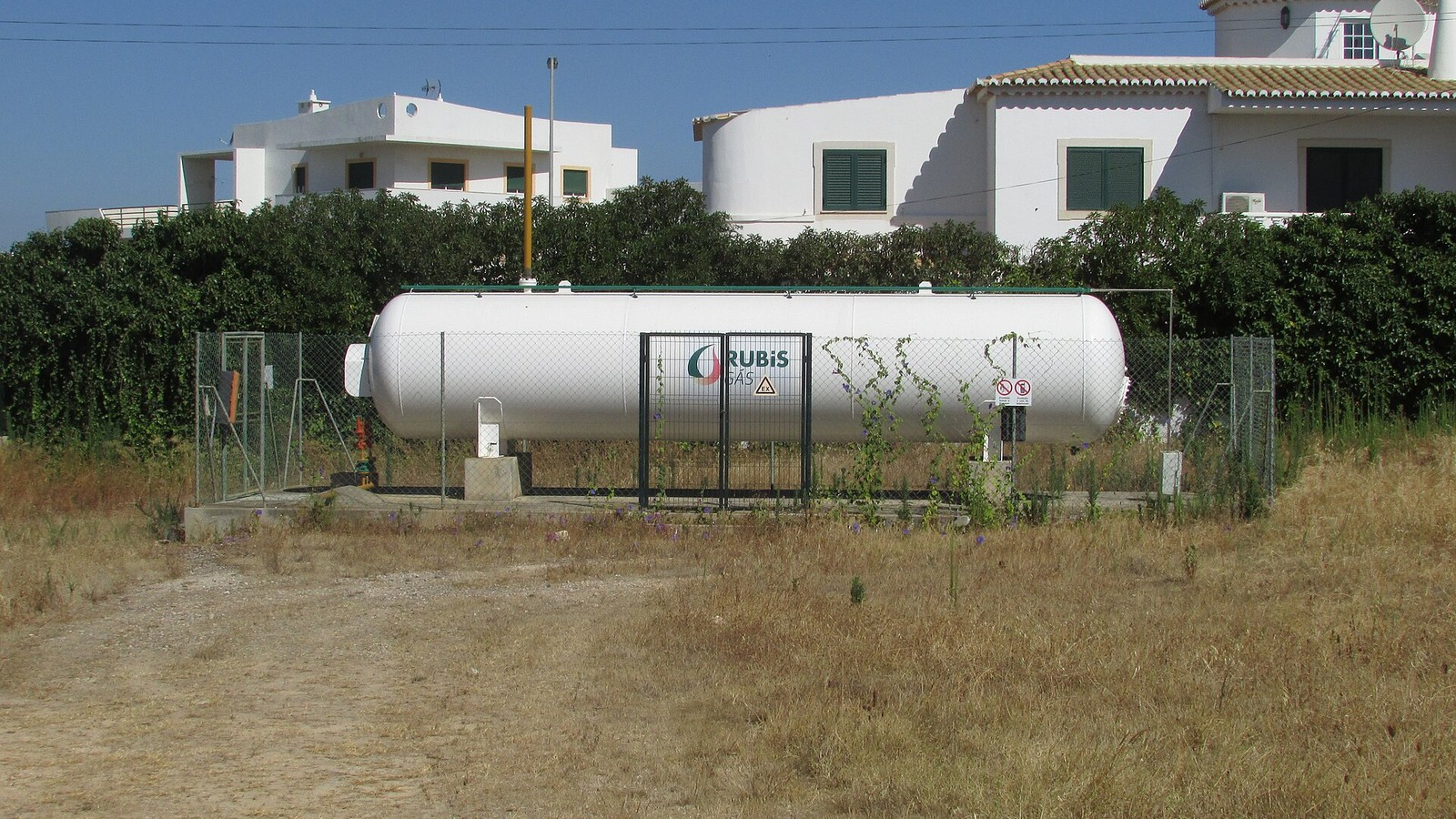
Storage matters because propane production is relatively steady year-round while demand peaks in the colder months. The EIA notes that large volumes are stored as pressurized liquid in underground caverns — mostly in salt formations, with some mined from shale, granite or limestone — and drawn down as winter heating demand rises. Above-ground tanks are the main storage method in regions such as New England where the geology does not suit underground caverns. Near end users, LPG is held in pressurized (and sometimes refrigerated) tanks that range from small camping-stove canisters to bullet-shaped tanks holding up to about 90,000 gallons at industrial sites.
Key Characteristics
| Property | Propane | Normal Butane |
|---|---|---|
| Chemical formula | C₃H₈ | C₄H₁₀ |
| State at room temperature | Gas (liquefies under modest pressure) | Gas (liquefies under modest pressure) |
| Typical use | Year-round LPG grades, cold-weather autogas | Blended into LPG seasonally; also petrochemical feedstock |
| Cold-weather performance | Vaporizes well in cold climates | Poor vaporization in cold climates; reduced in winter blends |
LPG vs. LNG
LPG and LNG are often confused because both are “liquefied gas,” but they are different products with different supply chains:
- LPG is propane and/or butane, liquefied under modest pressure at near-ambient temperature, and distributed mainly for heating, cooking, autogas and petrochemicals. See: What Is LNG and How Does It Work?
- LNG is methane (natural gas) cooled to roughly −162°C to shrink it to about 1/600th of its gaseous volume for intercontinental shipping, then regasified for pipeline delivery or power generation.
Related Technologies
LPG sits alongside other hydrocarbon gas liquids (ethane, natural gasoline) separated at gas processing plants, and alongside LNG and pipeline natural gas as one of the ways gaseous hydrocarbons reach end users. It also competes with electrification (induction cooking, heat pumps) in markets extending clean-cooking and heating access.
Real-World Examples
- India’s LPG subsidy programs (such as Pradhan Mantri Ujjwala Yojana) have been used to expand cylinder access in rural households as an alternative to wood and kerosene.
- Autogas LPG conversion is widespread in Turkey, Poland and South Korea, where tax treatment makes it cheaper per kilometer than gasoline in many years.
- U.S. Gulf Coast LPG export terminals ship propane and butane produced alongside shale gas and oil to markets in Asia and Latin America.
FAQ
Is LPG the same as natural gas?
No. LPG is propane and/or butane, which are heavier hydrocarbons than methane, the main component of natural gas. LPG is stored and shipped as a pressurized liquid in tanks and cylinders, while piped natural gas is usually delivered as a gas through pipelines.
Is LPG the same as LNG?
No. LNG is liquefied methane (natural gas) cooled to about −162°C. LPG is liquefied propane/butane, which liquefies under modest pressure near room temperature. They have different production processes, supply chains and end uses.
What is LPG used for?
Home heating and cooking (especially where there is no gas pipeline connection), vehicle fuel (autogas), agricultural crop drying, and as a petrochemical feedstock for plastics production.
Where does LPG come from?
It is separated from raw natural gas at processing plants, and produced as a byproduct of crude oil refining.
Why is LPG stored underground?
Because propane production is steady year-round but demand peaks in winter, producers store surplus volumes in underground caverns (often salt formations) during low-demand months and withdraw them as heating-season demand rises.
Related The Daily Energy Pages
- What Is Natural Gas and How Is It Used?
- What Is LNG and How Does It Work?
- What Are Upstream, Midstream and Downstream in Oil and Gas?
- What Is Brent Crude and Why Does It Matter?
- What Is OPEC+ and How Does It Control Oil Supply?
Sources
- U.S. Energy Information Administration, “Transporting and Storing Hydrocarbon Gas Liquids,” Energy Explained, accessed November 2026.
- U.S. Energy Information Administration, Petroleum & Other Liquids glossary and NGL/LPG definitions documentation.
Illustrative image. Photo: Kolforn, CC BY-SA 4.0, via Wikimedia Commons — source