Canada Commits C$200 Million to Push Woodfibre LNG Past Its Original Export Capacity

The Canadian government is putting C$200 million (about US$140 million) into Woodfibre LNG, a liquefied natural gas export terminal under construction near Squamish, British Columbia, to help the project grow beyond the 2.1 million-tonnes-a-year (mtpa) capacity it is currently building toward. Energy and Natural Resources Minister Tim Hodgson announced the funding in Vancouver on November 13, framing it as a step toward lifting Woodfibre’s output to 2.6 mtpa by 2030, even though the facility has not yet shipped its first cargo.
Money for debottlenecking, not a new plant
The C$200 million is structured as a three-year commitment rather than a lump sum, and it is explicitly tied to engineering and equipment work — often called debottlenecking — that would let the existing single-train facility process more gas without a second liquefaction train. Woodfibre LNG’s chief executive described the funding as support for evaluating whether a bigger throughput is achievable within the current site footprint. The company has said any expansion still depends on three separate tests: whether it is technically feasible, commercially viable, and acceptable to the Squamish Nation, whose consent underpins the project’s environmental approvals.
A nearly-finished project asking for more before it opens
Woodfibre LNG is roughly 75% complete, according to the company’s own November progress figures, with construction on its original 2.1 mtpa scope expected to wrap up in mid-to-late 2027 and first export cargoes to follow after that. The project is owned by Woodfibre LNG Limited Partnership, split 70% to Pacific Energy Corporation (Canada) Limited and 30% to Enbridge Inc., and its total build cost has climbed to roughly US$8.8 billion. That a capacity increase is already being funded before a single tanker has loaded says less about Woodfibre’s own economics and more about Ottawa’s eagerness to lock in Pacific-facing LNG capacity while it is still under construction, rather than waiting for a second, separately permitted expansion years down the line.
Why Ottawa is subsidizing capacity it hasn’t built yet
Canada’s LNG export industry is barely a year old: LNG Canada’s Kitimat terminal, the country’s first large-scale facility, only began shipping cargoes in 2025, and a second Kitimat phase and the Haisla Nation-backed Cedar LNG project — which itself received a similar federal contribution of up to C$200 million through the Strategic Innovation Fund in earlier years — are still ramping up. Hodgson had already signaled this ambition before the funding was confirmed, telling reporters Woodfibre’s capacity could eventually grow well beyond its current permits; the company did not dispute the substance of those remarks at the time, though it stopped short of confirming specific numbers. Canada remains a minor player among the world’s largest LNG exporters, but Woodfibre’s pitch to Ottawa rests partly on a feature that sets it apart from most LNG terminals worldwide: it plans to run its liquefaction compressors on BC Hydro’s largely hydroelectric grid power instead of burning gas on-site, which the company and the federal government have both cited as grounds for marketing the output as comparatively low-carbon LNG to Asian buyers.
Local pushback follows the federal money
The funding announcement has not gone unopposed locally. A British Columbia legislator representing the Squamish area publicly tied the investment to a recent spate of extreme flooding events around the Squamish estuary, arguing the region’s infrastructure and ecology are already under strain. The advocacy group My Sea to Sky, which has long opposed the terminal’s location at the mouth of Howe Sound, said it is consulting lawyers over the federal investment, though it has not specified what legal avenue it is pursuing. Neither the province nor Woodfibre LNG has responded in detail to those objections.
What it means for Canada’s Pacific LNG push
If the expansion to 2.6 mtpa goes ahead, Woodfibre would still be a mid-sized player next to Qatar’s North Field expansion or the US Gulf Coast’s mega-terminals, but it would add roughly 500,000 tonnes a year of incremental Pacific-basin supply at a time when Canada is trying to establish a shipping-distance advantage into Asian markets — the same buyers courted by established exporters like Qatar’s North Field LNG expansion — into South Korea, Japan and China that Gulf Coast cargoes routed through the Panama Canal cannot match. For now, the C$200 million buys Woodfibre time and engineering certainty to study that expansion — not a guarantee that it will happen, or that the Squamish Nation and local communities will ultimately sign off on it.
Sources
- CBC News, “B.C.’s Woodfibre LNG gets $200M federal cash injection,” November 13, 2026 — funding amount, three-year structure, ministerial announcement. cbc.ca
- The Energy Mix, “$200M Subsidy to Woodfibre LNG Will Help ‘Diversify Energy Exports’: Hodgson,” November 2026 — minister’s rationale, capacity target. theenergymix.com
- CHEK News, “Feds investing $200M in B.C.’s Woodfibre LNG over three years,” November 2026 — project completion status, local opposition. cheknews.ca
- Castanet Kamloops, “Federal minister reveals ambition to triple Woodfibre LNG capacity,” November 2026 — earlier ministerial comments on expansion scope. castanetkamloops.net
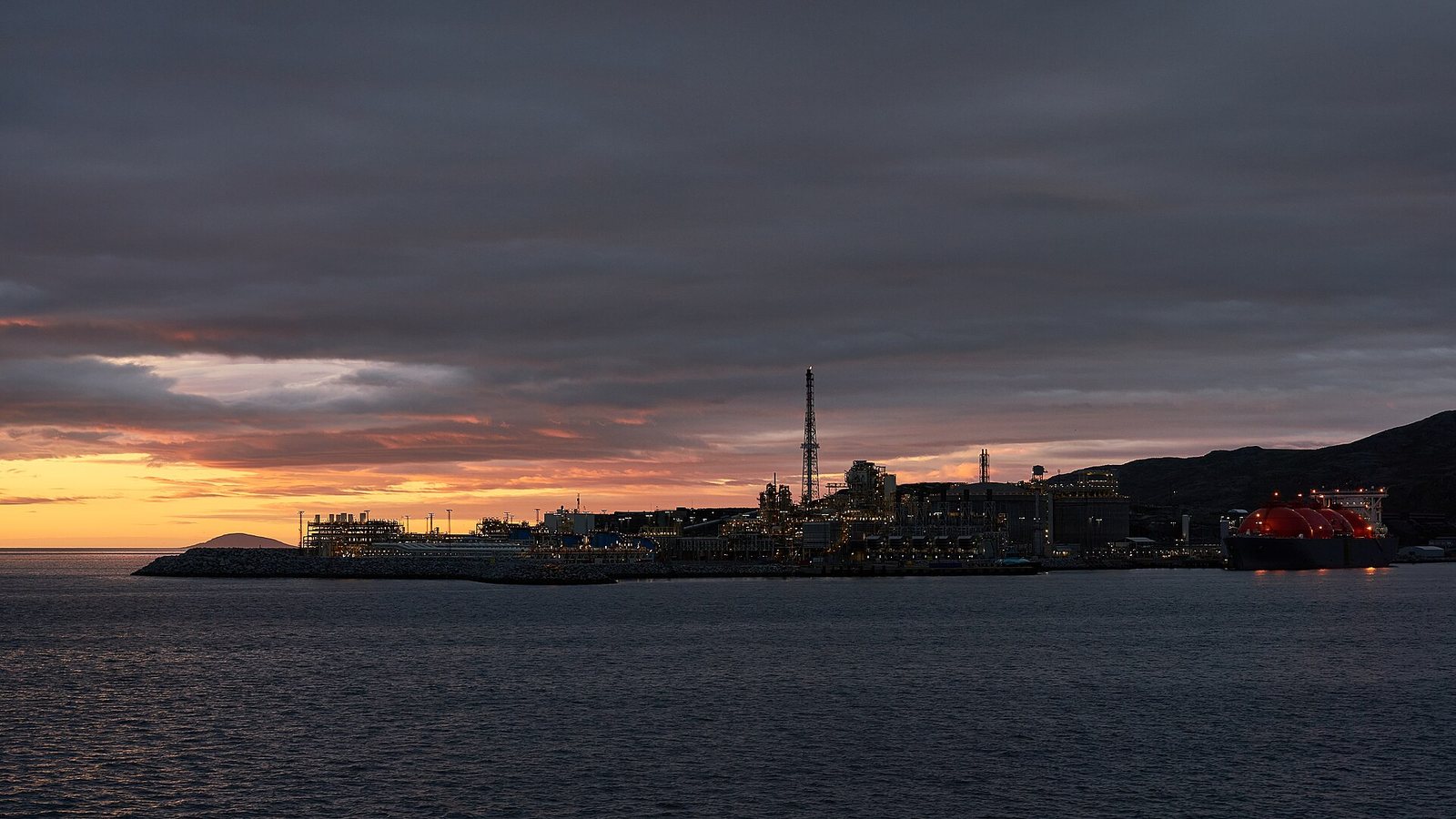
Illustrative image. Photo: Virtual-Pano, CC BY-SA 4.0, via Wikimedia Commons — source