What Is LNG and How Does It Work?
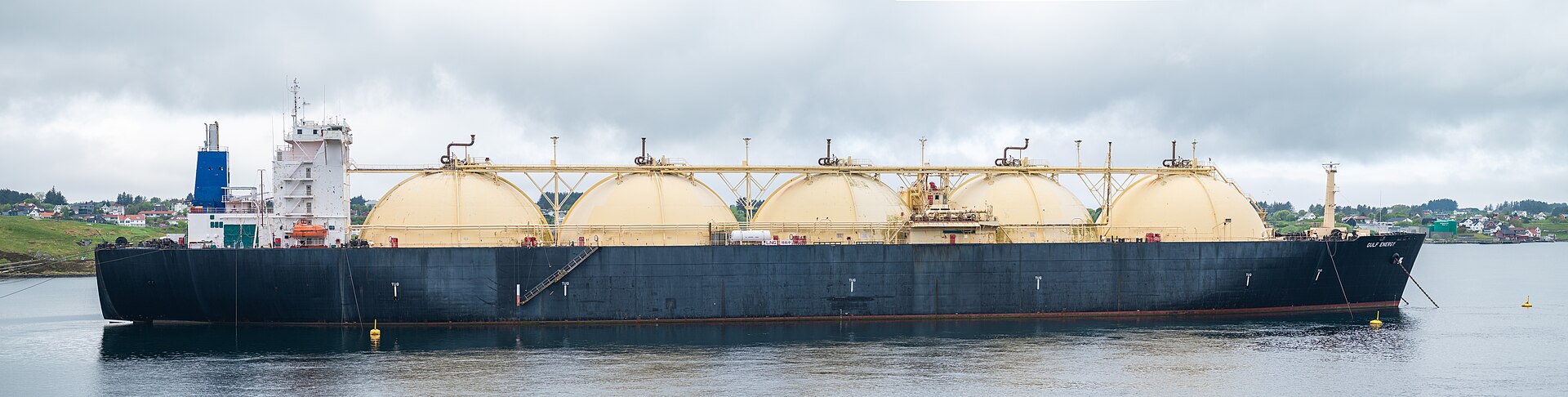

LNG, or liquefied natural gas, is natural gas that has been cooled to about −162 °C (−260 °F) until it becomes a liquid. In that form it takes up roughly 1/600th of the volume of the same gas at normal temperature and pressure, which is what makes it possible to ship gas across oceans in tankers instead of pipelines.
This guide explains what LNG is, how the supply chain works from the gas field to your power plant, who buys and sells it, and how safe it is.
What Is LNG? A Simple Definition
Natural gas is mostly methane. At normal conditions it is a gas that needs large pipelines or storage caverns. Cool it to about −162 °C and it condenses into a clear, colourless liquid that can be stored at close to atmospheric pressure in insulated tanks. That liquid is LNG.
The key number is the volume reduction. One unit of LNG holds about 600 units of gas. A tanker can therefore carry the energy of a very large amount of gas in a hull that fits through a port. LNG is odourless, colourless, non-toxic and non-corrosive.
How LNG Works Step by Step
The LNG chain has five links.
- Pretreatment. The gas arriving from the field is cleaned. Plants remove hydrogen sulfide, carbon dioxide, water, mercury and heavier hydrocarbons, because these would freeze or damage equipment at very low temperatures.
- Liquefaction. Circulating refrigerants cool the gas to roughly −145 °C to −163 °C until it turns into a liquid.
- Storage. The liquid goes into double-walled, insulated tanks at near-atmospheric pressure.
- Transport. Specialised tanker ships carry LNG internationally, and cryogenic trucks move smaller volumes over land.
- Regasification. At the import terminal, pumps push the LNG through vaporisers that warm it back to a gas, which then enters the pipeline network.
The most expensive step is liquefaction. Building a liquefaction plant takes years and billions of dollars, which is why LNG projects need long-term buyers before the final investment decision.
Key Types and Technologies
Two terms come up often. A liquefaction terminal sits on the export side and turns gas into LNG. A regasification terminal sits on the import side and turns it back. Some importers use floating storage and regasification units (FSRUs), ships that act as a terminal and can be moved or added faster than a land-based plant. This is one reason countries without pipelines, or in need of extra winter capacity, have added FSRUs quickly.
LNG is also used as a fuel in some ships and heavy vehicles. Refuelling these vehicles needs training, because contact with the cold liquid can cause frostbite.
Main Advantages and Limitations
Advantages
- It turns gas into a tradable global commodity that can move to wherever demand and prices are highest.
- It reduces dependence on a single pipeline route and gives buyers more suppliers.
- It burns with fewer air pollutants than coal when used for power.
Limitations
- Liquefaction and shipping use a lot of energy and add cost, so LNG is usually more expensive than pipeline gas over short distances.
- Projects need very large upfront investment.
- Methane leaks along the chain reduce the climate benefit, so leak control matters.
Leading Exporters and Importers
As of 2023, the United States, Australia and Qatar had the largest LNG export capacity. In 2017 the largest exporters by volume were Qatar, Australia and Malaysia, which shows how quickly the US moved up. On the buying side, China, Japan and South Korea were the biggest importers as of 2023. Asian demand explains why so many new projects are built with long-term contracts that link price to oil or to regional gas indexes.
For current project news, see our coverage of LNG deals and terminals.
Is LNG Safe?
LNG as a liquid is not explosive and cannot ignite. The hazards come from what happens when it warms up. Vapour becomes flammable when it mixes with air at roughly 5% to 15% gas. Cold LNG touching water can cause a rapid phase transition, a physical explosion without fire. The cold liquid can also freeze skin, and a leak in an enclosed space can displace oxygen.
The worst accident in the industry's history was a tank failure in Cleveland, Ohio, in 1944, which killed about 130 people. Modern tanks use double walls, secondary containment and strict siting rules, and the shipping record since has been far better. Safety depends on engineering standards and trained crews, not on the fuel alone.
Future Outlook
Global demand will keep shaping the LNG market: buyers in Asia want security of supply, European buyers have turned to LNG to replace pipeline imports, and new export plants in North America and the Gulf are expanding capacity. Over the longer term, how fast power systems shift to renewables will decide how much LNG the world needs. Our energy-security coverage tracks these shifts every day.
Frequently Asked Questions About LNG
What does LNG stand for? Liquefied natural gas.
At what temperature does natural gas become LNG? At about −162 °C (−260 °F).
How much smaller is LNG than natural gas? About 1/600th of the volume.
Can LNG explode? The liquid itself cannot ignite. Vapour can burn when it is 5% to 15% of the air, so leaks must be controlled.
Which countries import the most LNG? China, Japan and South Korea, as of 2023.
LNG Glossary: Terms You Will See in the News
A liquefaction train is a processing unit that cools treated natural gas until it becomes liquid; export terminals usually have one or several trains. Regasification is the reverse step at the import terminal, where LNG is warmed and returned to gas for pipelines. A floating storage and regasification unit (FSRU) is a vessel that does this job offshore, which lets a country add import capacity faster than it could by building a land terminal. Boil-off is the small amount of LNG that evaporates during storage and shipping and is often used as fuel or reliquefied.
Contracts and prices have their own language. A long-term contract fixes supply for many years, usually linked to an oil price or a gas hub price. A spot cargo is sold for near-term delivery at the prevailing market price. Common price references include Henry Hub in the United States, TTF in the Netherlands for European gas, and JKM for spot LNG delivered to Japan and Korea. When a headline says European or Asian gas prices rose, it is usually quoting one of these benchmarks.
LNG vs Pipeline Gas vs LPG
LNG is often confused with other gas products. Pipeline gas travels as a gas through fixed infrastructure, which is cheap over moderate distances but ties a seller to specific buyers. LNG is the same natural gas, mainly methane, cooled into a liquid so ships can carry it anywhere with a terminal, trading flexibility for the cost of liquefaction. LPG, or liquefied petroleum gas, is a different product made mostly of propane and butane, used for cooking, heating and some industrial purposes.
The practical difference is flexibility. A pipeline commits both seller and buyer for decades, while LNG lets a cargo change destination when prices or demand shift. That is why LNG has become central to energy security discussions, especially for countries that want more than one supplier.
Conclusion
LNG lets gas travel like oil: cooled to about −162 °C, shrunk to 1/600th of its volume, shipped in specialised tankers and turned back into gas at the destination. It connects producers such as the US, Australia and Qatar with buyers such as China, Japan and South Korea, and it is now central to energy security. Keep reading The Daily Energy for daily LNG market news.
Source: Wikipedia, Liquefied natural gas (accessed 4 Nov 2026).