


BP: Ownership, Leadership and Major Assets

Last updated: October 16, 2026
BP p.l.c. is one of the world’s largest integrated oil and gas companies, operating across exploration and production, refining, fuel marketing, lubricants and gas trading. Headquartered in London and listed primarily on the London Stock Exchange, BP is a widely held public company with no single controlling shareholder. It is led by Chief Executive Officer Meg O’Neill, who became BP’s first female CEO on April 1, 2026, and chaired by Albert Manifold, following a 2025 strategy reset that pulled the company back toward oil and gas and away from renewables.
Overview
| Full name | BP p.l.c. |
| Founded | 1909, as the Anglo-Persian Oil Company; renamed British Petroleum in 1954 and BP p.l.c. in 2001 after the 1998 merger with Amoco |
| Headquarters | 1 St James’s Square, London SW1Y 4PD, United Kingdom |
| Stock listing | London Stock Exchange (primary listing, ticker BP.); New York Stock Exchange (sponsored ADR, ticker BP) |
| Chairman | Albert Manifold (since October 1, 2025) |
| Chief Executive Officer | Meg O’Neill (since April 1, 2026) |
| Employees | Roughly 90,000–100,000, depending on source and year (company and third-party estimates vary) |
| 2025 underlying profit | $7.5 billion (replacement-cost basis, company-reported) |
| Core business | Oil and gas exploration and production (upstream); fuels, retail and lubricants (Customers & Products); LNG, gas trading and low-carbon energy |
Who Owns BP?
BP is a publicly traded company with no controlling shareholder, individual or state. Ownership is spread across large index and asset-management firms holding shares on behalf of pension funds, mutual funds and other investors. According to 2025–2026 shareholder data, BlackRock holds roughly 9% of shares outstanding, The Vanguard Group roughly 4–5%, and State Street Investment Management roughly 2.7–2.9%. Estimates vary between data providers because 13F and regulatory filings are sometimes reported against total shares outstanding and sometimes against institutional holdings only, and because large managers often report through several affiliated filer entities. The top 25 shareholders together hold under half of the company, consistent with BP’s status as a widely held index constituent rather than a founder- or state-controlled firm, unlike national oil companies such as Saudi Aramco. One shareholder has mattered more than its stake size alone suggests: activist fund Elliott Management disclosed a stake that rose above 5% in early-to-mid 2025 and pushed publicly for deeper divestments, including of BP’s solar and offshore wind businesses, which it argued were diluting returns; Elliott’s pressure is widely credited with accelerating the board and leadership changes that followed.
Leadership
Meg O’Neill became Chief Executive Officer on April 1, 2026, becoming the first woman to lead BP and one of the first to lead a major Western oil company. She joined from Woodside Energy, where she had been CEO and Managing Director since 2021, and spent more than two decades before that at ExxonMobil. She succeeded Murray Auchincloss, who stepped down as CEO and board director on December 18, 2025, after less than two years in the permanent role; Carol Howle, BP’s chief operating officer, served as interim CEO and was subsequently named deputy CEO. Albert Manifold, the former chief executive of building-materials group CRH, joined BP’s board as chair-elect on September 1, 2025, and became chairman on October 1, 2025, succeeding Helge Lund. See the full profile of Meg O’Neill for her career background.
History
BP traces its origins to 1909, when the Anglo-Persian Oil Company was formed to develop a concession secured by prospector William Knox D’Arcy, following the discovery of oil at Masjid-i-Suleiman in southwest Persia in 1908. The company was renamed the Anglo-Iranian Oil Company in 1935 and adopted the name British Petroleum in 1954. In 1998, British Petroleum merged with Amoco to form BP Amoco, and after further acquiring the U.S. producer Atlantic Richfield (ARCO) in 2000, the company shortened its name to BP p.l.c. in 2001. On April 20, 2010, a blowout on BP’s Macondo well in the Gulf of Mexico destroyed the Deepwater Horizon drilling rig, killing 11 workers and causing the largest marine oil spill in U.S. history; the resulting cleanup, fines and legal settlements have cost BP more than $65 billion over the following decade. In February 2022, following Russia’s invasion of Ukraine, BP announced it would exit its 19.75% stake in Russian state oil company Rosneft, taking a write-down of roughly $25 billion. Under then-CEO Bernard Looney, BP pursued an aggressive 2020 pledge to cut oil and gas output and grow renewables, but Looney resigned abruptly in September 2023 after failing to fully disclose past personal relationships with colleagues; CFO Murray Auchincloss became permanent CEO in January 2024. In February 2025, facing a weaker share price and a build-up of activist pressure from Elliott Management, Auchincloss announced a strategy “reset” that scaled back low-carbon spending by more than $5 billion a year and raised planned upstream oil and gas investment to roughly $10 billion a year through 2027. In December 2025, BP agreed to sell a 65% stake in its Castrol lubricants business to investment firm Stonepeak for $10.1 billion, part of a $20 billion divestment program; Auchincloss stepped down as CEO the same month, and Meg O’Neill took over as CEO in April 2026.
Business Segments
- Upstream (Production & Operations) — exploration, development and production of crude oil and natural gas, including BP’s deepwater Gulf of America hubs, Permian Basin shale through its bpx Energy unit, and operated positions in Azerbaijan and Angola.
- Customers & Products — refining, fuel retail and marketing, convenience stores, EV charging under the bp pulse brand, and the Castrol lubricants business, 65% of which BP has agreed to sell to Stonepeak.
- Gas & Low Carbon Energy — LNG marketing and trading (just under 27 million tonnes a year in BP’s strategic portfolio), gas supply, and the remaining solar, offshore wind and hydrogen projects that survived the 2025 divestment drive.
Scale and Production
BP reported underlying replacement-cost profit of $7.5 billion for full-year 2025, down from the prior year amid a weaker price environment, while statutory profit attributable to shareholders was just $55 million (versus $381 million in 2024) after adjusting items. Reported upstream production averaged about 2.3 million barrels of oil equivalent a day for 2025, which the company said beat its initial guidance for the year; underlying production was roughly flat year on year once portfolio changes such as the divestment of the UK North Sea’s Culzean gas field were excluded. The organic reserves replacement ratio rose to 90% for 2025, up from an average of roughly 50% over the prior two years, as BP targets a 100% ratio by the end of 2027. For 2026, BP has guided to reported upstream production of 2,180,000 to 2,270,000 boe/d, a lower figure that reflects further divestments and Middle East disruption rather than a decline in underlying output.
| Metric | 2025 (full year, company-reported) |
|---|---|
| Reported upstream production | ~2.3 million boe/d |
| Statutory net profit | $55 million (vs. $381 million in 2024) |
| Underlying replacement-cost profit | $7.5 billion |
| Operating cash flow | $24.5 billion |
| Capital expenditure | $14.5 billion (including $13.6 billion organic) |
| Organic reserves replacement ratio | 90% (up from ~50% average in 2023–2024) |
These are company-reported figures from BP’s fourth-quarter and full-year 2025 results, published February 10, 2026; independent audited verification beyond BP’s own disclosure was not located.
Major Assets and Projects
- Gulf of America (Gulf of Mexico) — a deepwater production base anchored by hubs including Atlantis, Thunder Horse and Mad Dog; the Atlantis Major Facility Expansion started up in mid-2026, and BP expects its wholly owned Tiber-Guadalupe hub and the Kaskida development (targeted at up to 80,000 barrels a day, startup around 2029) to add further growth.
- Permian Basin — BP’s U.S. onshore shale and tight-oil acreage is run through its bpx Energy subsidiary across the Midland and Delaware sub-basins.
- Azerbaijan — BP operates the offshore Azeri-Chirag-Guneshli (ACG) field and holds stakes in the Baku-Tbilisi-Ceyhan (BTC) and South Caucasus pipelines; ACG recently began non-associated natural gas production for the first time.
- Angola — through Azule Energy, a 50/50 joint venture with Eni, BP took a final investment decision on the roughly 250-million-barrel Greater PAJ offshore project (first oil targeted for the first half of 2029) and started gas production from the Quiluma field in March 2026.
- Castrol — BP’s global lubricants brand, 65% of which is being sold to investment firm Stonepeak for $10.1 billion in enterprise value; BP will retain a 35% stake in the resulting joint venture, with completion expected by the end of 2026.
Countries of Operation
BP operates across dozens of countries on six continents. Its largest upstream positions are in the United States (Gulf of America and the Permian Basin), Azerbaijan and Angola, with additional production and legacy interests in the UK North Sea, Trinidad and Tobago, Egypt, Oman and Iraq. BP sold its stake in Iraq’s giant Rumaila field to PetroChina in 2023. Downstream, retail and lubricants operations span Europe, the Americas and Asia, including fuel stations under the BP and Aral brands.
Recent Developments
- April 1, 2026 — Meg O’Neill became CEO, BP’s first female chief executive, after joining from Woodside Energy.
- February 10, 2026 — BP reported full-year 2025 results: underlying replacement-cost profit of $7.5 billion, a 90% organic reserves replacement ratio, and reported upstream production of about 2.3 million boe/d.
- December 18, 2025 — Murray Auchincloss stepped down as CEO and board director; Carol Howle became interim CEO and was later named deputy CEO.
- December 2025 — BP agreed to sell a 65% stake in Castrol to Stonepeak for $10.1 billion enterprise value, the largest piece of a $20 billion divestment program launched in February 2025.
- October 1, 2025 — Albert Manifold, former CEO of CRH, became BP’s chairman, succeeding Helge Lund.
- February 2025 — Under pressure from activist investor Elliott Management, BP announced a strategy reset that cut planned low-carbon spending and raised upstream oil and gas investment to roughly $10 billion a year through 2027.
Related Entities
- Meg O’Neill — Chief Executive Officer of BP
- Shell — fellow UK-headquartered integrated oil major and BP’s closest domestic rival
- ExxonMobil — the largest Western oil major by market value, and Meg O’Neill’s former employer
- Chevron — fellow integrated oil major, for comparison of scale and strategy
- Saudi Aramco — the world’s largest state-owned oil producer, for comparison with a national oil company
- United States Energy Profile — home to BP’s largest upstream production base, the Gulf of America
Sources
- BP p.l.c., Fourth Quarter and Full-Year 2025 Results press release (February 10, 2026)
- BP p.l.c., Form 20-F Annual Report, U.S. Securities and Exchange Commission (SEC EDGAR, various years)
- BP newsroom — Albert Manifold chair appointment and CEO leadership transition press releases (2025–2026)
- Reuters, Bloomberg, Al Jazeera — leadership transition, Elliott Management campaign and strategy reset coverage (2025–2026)
- Simply Wall St, Investing.com — institutional shareholder data (2025–2026)
Frequently Asked Questions
Who owns BP?
No single shareholder controls BP. It is a publicly traded company on the London Stock Exchange, with large index managers such as BlackRock, Vanguard and State Street each holding single-digit percentage stakes, alongside activist fund Elliott Management.
Who is the CEO of BP?
Meg O’Neill has been CEO since April 1, 2026, becoming BP’s first female chief executive after joining from Woodside Energy.
Why did BP change its strategy in 2025?
Facing weaker profits and pressure from activist investor Elliott Management, then-CEO Murray Auchincloss announced a reset in February 2025 that cut planned low-carbon spending and increased upstream oil and gas investment to roughly $10 billion a year through 2027.
Is BP selling Castrol?
Yes. In December 2025, BP agreed to sell a 65% stake in its Castrol lubricants business to Stonepeak for $10.1 billion in enterprise value, retaining a 35% stake in the resulting joint venture.
Where is BP headquartered?
BP’s headquarters is at 1 St James’s Square, London SW1Y 4PD, United Kingdom.
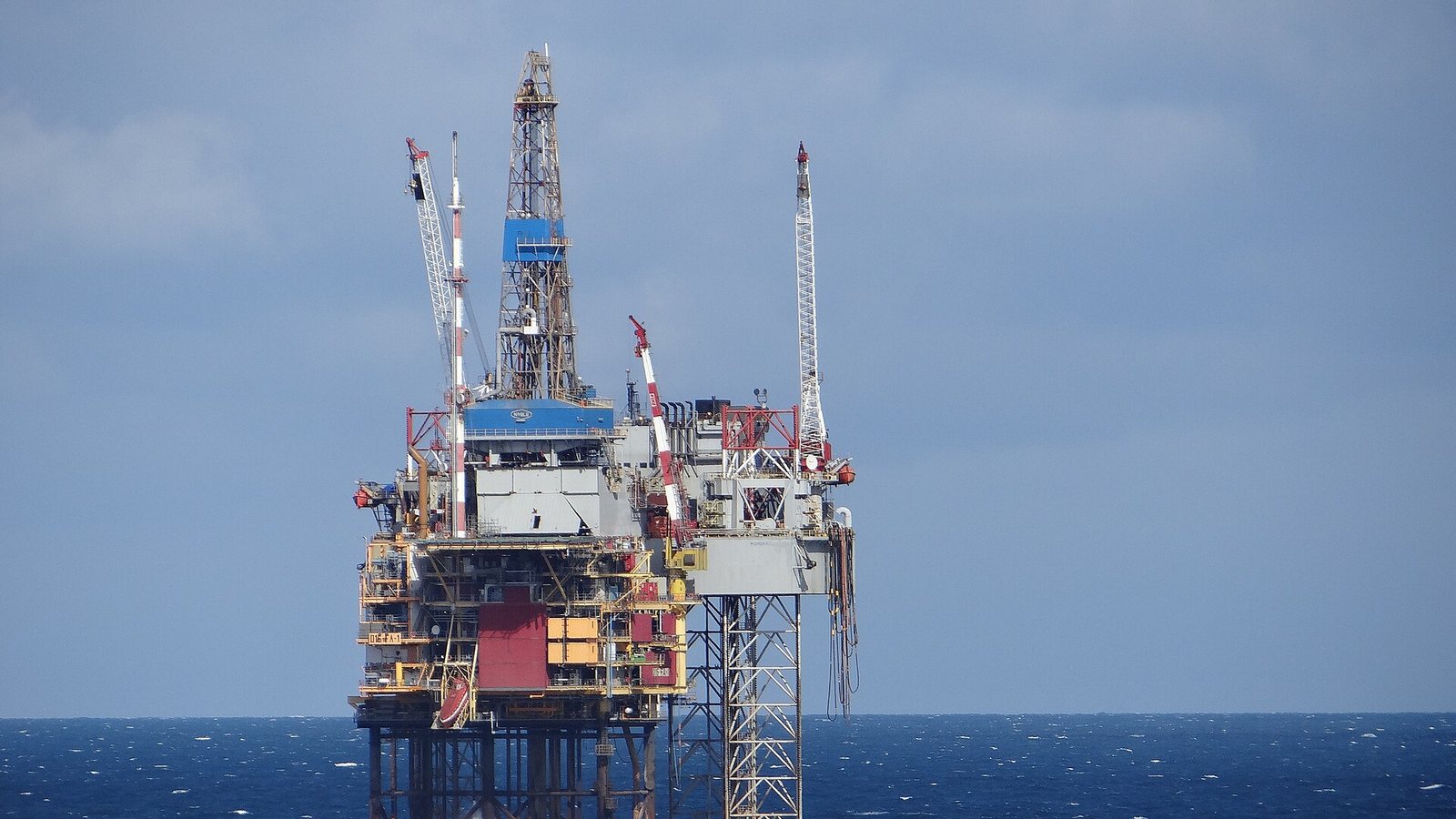
Illustrative image. Photo: Gary Bembridge from London, UK, CC BY 2.0, via Wikimedia Commons — source


.jpg)
[…] BP: Ownership, Leadership and Major Assets […]