Slovakia’s Mochovce 4 Reactor Begins Supplying Power to the Grid


Slovakia’s fourth reactor at the Mochovce nuclear power plant sent its first electricity to the national grid on the evening of October 15, after operator Slovenské elektrárne (SE) synchronized the unit’s turbogenerator to the network at 20:41 local time while the reactor ran at about 20% power. The connection came two days later than originally planned: SE postponed an earlier attempt on October 13 after what a company spokeswoman described as an unusual reading during a technical test, which had to be repeated before engineers could proceed.
A second delay, then a quiet synchronization
Mochovce 4 is a VVER-440 pressurized water reactor, the same Soviet-era design used at the plant’s two existing units and at the nearby Bohunice site. Technicians began the unit’s commissioning on August 6, when the reactor reached its first self-sustaining chain reaction, or criticality, that evening; it reached minimum controlled power about 21 minutes later. By September, the unit had moved from this “physical start-up” phase into power start-up, the stage in which the reactor is gradually brought up toward full output while its systems are tested under load.
The October 13 postponement pushed back what had been billed as a symbolic moment, with Slovak Prime Minister Robert Fico expected to attend the original connection ceremony. SE has not detailed the nature of the test that had to be repeated, beyond calling the reading “unusual,” and the plant’s safety regulator has not issued a public statement disputing the operator’s account.
What still has to happen before commercial operation
Synchronizing the turbogenerator to the grid is a milestone, not the finish line. Before Mochovce 4 can enter commercial operation, SE still has to validate the unit’s behavior at 35%, 55%, 75% and 90% of rated output, and then run a final 144-hour test at full power without interruption. The operator has said it expects to complete that sequence and bring the reactor into commercial service later this year, though nuclear start-up programs of this kind have a history of slipping, including at Mochovce itself.
Sources differ slightly on the unit’s exact rating, with most describing Mochovce 4 as a 471-megawatt (gross) reactor and at least one giving a 440-megawatt installed-capacity figure; SE has said the new unit should cover roughly 13% of Slovakia’s current electricity consumption once it is running at full, continuous output.
Slovakia’s deepening reliance on nuclear power
Mochovce 4 is the second new reactor Slovakia has brought online this decade: its sister unit, Mochovce 3, finished its own multi-year start-up and entered commercial operation in early 2023 after a construction history stretching back to the late Soviet period, interrupted for years by funding gaps after 1989 and resumed only in the 2010s. Together, the Mochovce and Bohunice plants already supply more than half of Slovakia’s electricity, among the highest nuclear shares in the European Union after France, and industry trackers have said the addition of unit 4 could push that share higher still. Slovenské elektrárne is majority-owned by the Slovak state alongside the Czech-based energy group EPH, and Slovakia has separately moved this month to consolidate domestic control over its nuclear sector: state nuclear waste manager JAVYS recently bought out Czech utility ČEZ’s stake in JESS, the company that owns the unfinished Bohunice V1 site, clearing a legal and ownership hurdle for a possible new reactor there.
The timing also lands amid a wider wave of new reactors reaching the grid worldwide this year. Within the past week alone, Bangladesh’s first-ever reactor, Rooppur 1, reached criticality, while China connected its Tianwan 7 unit to the grid, pushing that single site’s capacity toward 9 gigawatts. For Slovakia, a small, landlocked country with no oil or gas production of its own, each additional megawatt of domestic nuclear capacity cuts directly into its dependence on imported fuel for power generation, a consideration that has carried extra weight across Central Europe since Russia’s full-scale invasion of Ukraine disrupted the region’s traditional gas and oil supply routes.
Sources
- World Nuclear News, “Mochovce 4 connected to the grid,” October 16, 2026 — world-nuclear-news.org (grid connection details, capacity, commissioning timeline).
- oenergetice.cz, “Mochovce 4 nuclear unit will not connect to the grid yet. Slovenské elektrárne report technical delay,” October 13, 2026 — oenergetice.cz (delay announcement, test repeat).
- TASS/TASR, reporting on the October 13 postponement and reactor capacity figures — tass.com.
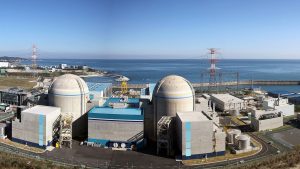
Illustrative image. Photo: Nuclear Regulatory Commission, Public domain, via Wikimedia Commons — source