India’s Energy Sector: Demand, Coal and Solar Growth

The India energy sector is one of the fastest-growing in the world, driven by the largest population on the planet, rising incomes and a rapid build-out of electricity infrastructure. India is already the world’s third-largest energy consumer after China and the United States, and the International Energy Agency (IEA) expects it to account for the biggest share of global energy-demand growth in the coming decades. Coal still anchors the power system, yet solar capacity is expanding at a pace few countries match. This article sets out the key figures, the energy mix, the main players, the policy direction and the risks.
India Energy Sector: Overview and Key Figures
India combines very large absolute demand with low consumption per person. Average electricity use per capita remains well below the world average, which is why analysts see so much room for growth as air conditioning, appliances, electric vehicles and industry expand. Peak electricity demand has climbed above 240 gigawatts (GW) in recent summers, and heatwaves regularly set new records.
Several features define the system:
- Coal dominates power generation. Roughly 70 percent or more of electricity still comes from coal in recent years (approximate, based on Ember and Indian government data), though the share is slowly falling.
- Oil is imported. India imports most of the crude oil it refines, commonly cited at more than 80 percent of needs.
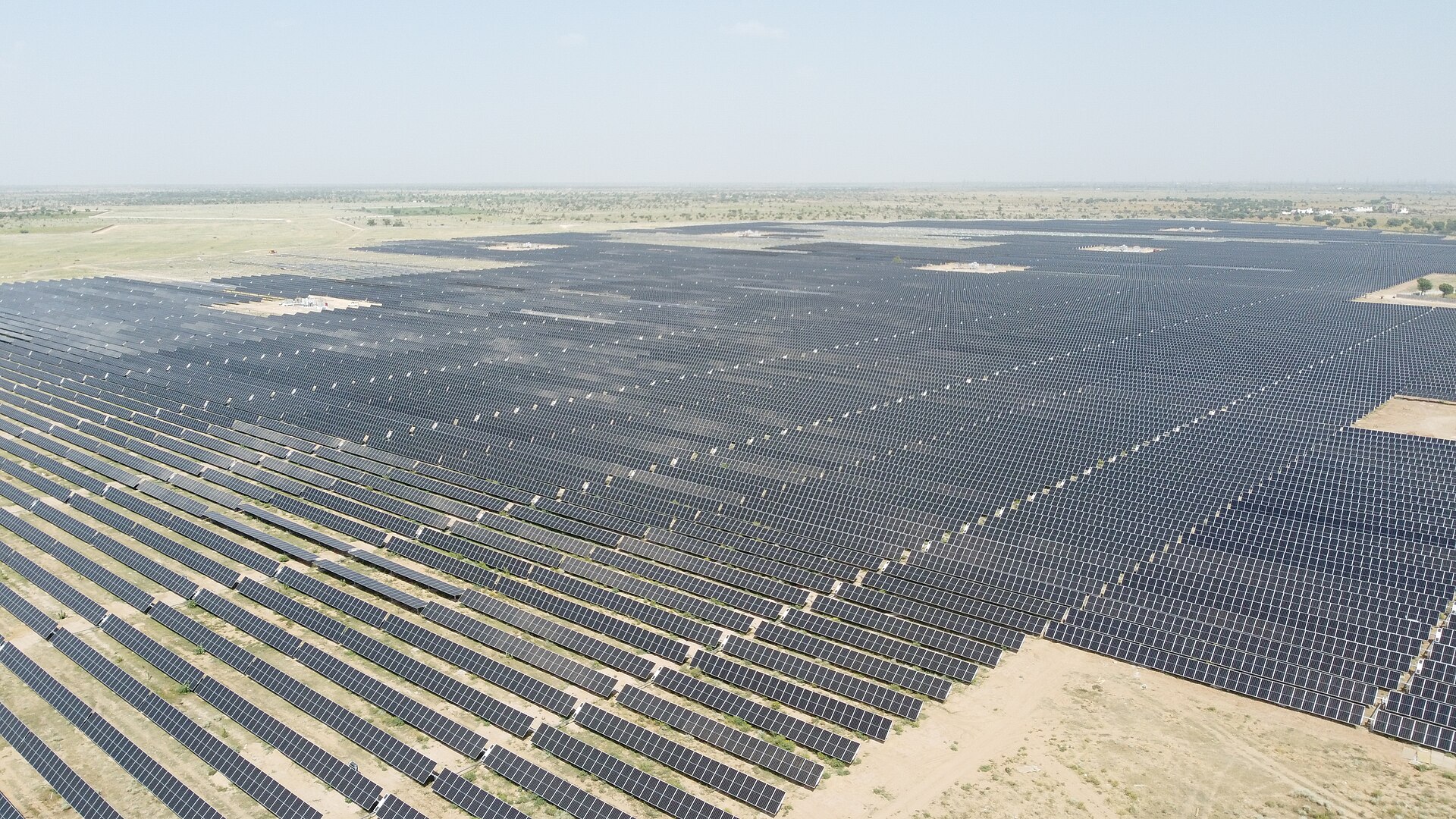
- Renewables are the fastest-growing supply. Installed solar capacity passed 100 GW in the mid-2020s, and wind, hydropower and bioenergy add to the total.
- Government targets are ambitious. India has set a goal of 500 GW of non-fossil electricity capacity by 2030 and net-zero emissions by 2070.
Energy Mix and Resources
Coal
India has large domestic coal reserves and produces around a billion tonnes a year, making it one of the top producers worldwide. State-owned Coal India Limited supplies the bulk of it. Coal is cheap and available locally, which explains its role in baseload power, steel and cement. Quality is a drawback: Indian coal tends to have high ash content, which lowers efficiency and raises pollution.
Oil and gas
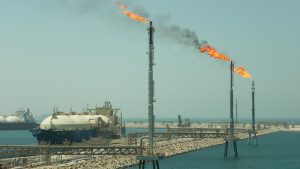
Domestic crude production is small compared with consumption, so imports from the Middle East, Russia, West Africa and the Americas fill the gap. India has a large refining industry, including one of the world’s biggest refining complexes at Jamnagar in Gujarat, and exports refined products. Natural gas supplies a small share of primary energy, with a large part imported as liquefied natural gas (LNG) through terminals such as Dahej.
Solar, wind and hydropower
Rajasthan, Gujarat, Karnataka and Tamil Nadu have excellent sunshine and wind. Large solar parks such as Bhadla in Rajasthan and Pavagada in Karnataka are among the biggest in the world, and Gujarat’s Khavda region is being developed as a giant renewable energy zone. Hydropower in the Himalayan states and nuclear stations such as Kudankulam in Tamil Nadu contribute firm low-carbon power.
Major Companies and Projects
| Organisation | Role in the India energy sector |
|---|---|
| Coal India Limited | World’s largest coal producer by company output, supplies most domestic coal |
| NTPC | Largest power generator, with growing renewable and nuclear ambitions |
| Power Grid Corporation of India | Operates the national high-voltage transmission network |
| ONGC and Oil India | Domestic oil and gas exploration and production |
| Indian Oil Corporation and other state refiners | Refining and fuel distribution |
| Reliance Industries | Private refining giant expanding into solar manufacturing and hydrogen |
| Adani Green, Tata Power, ReNew and others | Utility-scale solar and wind developers |
| Solar Energy Corporation of India (SECI) | Government agency that runs large renewable auctions |
Projects worth watching include the build-out of solar-plus-storage plants, new pumped hydro schemes, green corridors that carry renewable power to demand centres, and domestic manufacturing of solar modules and batteries supported by production-linked incentives.
Imports, Exports and Infrastructure
India’s import dependence is the weak point of its energy security. Crude oil and LNG are the main concerns, and coking coal and some thermal coal are also imported. To soften shocks, the country has built strategic petroleum reserves in underground caverns at Visakhapatnam, Mangalore and Padur, although their capacity covers only a limited number of days of consumption.
On the electricity side, India runs one of the world’s largest synchronous grids, linked region by region. Transmission capacity must grow to carry renewable power from resource-rich western and southern states to load centres. India also trades electricity with neighbours such as Bhutan, Nepal and Bangladesh. Refined products flow outward: India is a significant exporter of diesel, petrol and jet fuel to Europe, Africa and Asia.
Natural gas pipeline expansion and city gas distribution have grown quickly, with the government aiming to raise the share of gas in the energy mix. Progress depends heavily on LNG prices, which have been volatile.
Policy and Investment Outlook
India’s policy mix combines market reforms with state-led targets. Key elements include reverse auctions that deliver some of the world’s lowest solar tariffs, waivers on inter-state transmission charges for renewables, a National Green Hydrogen Mission, incentives for solar module and battery manufacturing, and requirements for renewable purchase obligations on distribution companies.
Investment needs are enormous. The IEA’s India analysis has pointed to the need for sustained spending on generation, grids, storage and efficiency over the coming decade. Domestic and foreign capital, from pension funds to development banks, is flowing into renewables, transmission and green hydrogen projects. Coal is not being abandoned: new coal-fired capacity is still planned to ensure that supply keeps pace with demand, particularly after sunset.
Risks and Challenges for the India Energy Sector
- Financial health of distribution companies. State-owned discoms often lose money, which delays payments to generators and discourages investment.
- Grid bottlenecks. Renewable plants can be delayed or curtailed when transmission lines and substations are not ready.
- Intermittency and evening peaks. Solar output drops just as evening demand rises, so storage, flexible hydropower and gas or coal backup are needed.
- Air quality and climate. Coal use contributes to urban pollution, and extreme heat raises both demand and stress on equipment.
- Import dependence and price shocks. Oil and LNG price spikes feed through to subsidies, inflation and the trade balance.
- Supply chains. India still imports many solar cells, polysilicon and battery components, mostly from China.
What It Means for Global Energy Markets
India matters to global markets because it is the main source of demand growth in oil, coal and electricity, while also becoming a large renewable market. Producers in the Gulf, Russia, Africa and the Americas compete for its crude oil and LNG contracts. Coal exporters such as Indonesia, Australia and South Africa watch Indian import needs, and solar equipment makers see it as a major market outside China. Because India refines and re-exports products, its refinery decisions also influence diesel and jet fuel prices in other regions.
Frequently Asked Questions About the India Energy Sector
Which fuel produces most of India’s electricity?
Coal supplies the largest share of generation, while solar and wind together supply a growing minority.
How much of India’s oil is imported?
India depends on imports for the large majority of its crude oil, commonly cited at over 80 percent.
What is India’s renewable energy target?
The government aims for 500 GW of non-fossil electricity capacity by 2030 and net-zero emissions by 2070.
Which are the biggest solar parks in India?
Bhadla in Rajasthan and Pavagada in Karnataka are well-known examples, and Khavda in Gujarat is a very large new zone.
Where can I find reliable data?
The IEA’s country profile, the Energy Institute’s Statistical Review of World Energy and Indian ministries such as the Ministry of Power and the Central Electricity Authority publish regular figures.
Conclusion
The India energy sector combines huge demand growth, a coal-heavy power system, heavy oil imports and one of the world’s fastest solar build-outs. Its direction will shape global fuel markets, equipment supply chains and emissions for decades. Success depends on strengthening grids, fixing distribution finances and building storage as quickly as it adds generation. For up-to-date figures, rely on the IEA, the Energy Institute and official Indian sources.
Sources and further reading
- International Energy Agency, India country profile and World Energy Outlook (iea.org)
- Energy Institute, Statistical Review of World Energy (energyinst.org)
- Ministry of Power, Government of India (powermin.gov.in)
- Central Electricity Authority of India (cea.nic.in)
- Ember, electricity data and analysis (ember-energy.org)
- Solar Energy Corporation of India (seci.co.in)