Japan Urges Asia to Build Bigger Oil Reserves as Middle East Risks Mount

Japan’s trade minister used a global energy forum on Sunday to press the rest of Asia to build bigger oil stockpiles, arguing that energy security has overtaken the push away from oil and gas as the region’s most urgent priority. Speaking at the virtual International Energy Forum, Ryosei Akazawa called for closer cooperation between producers and consumers and said Asian economies need to expand both their stockpiles and the infrastructure to manage them, positioning Japan as a “bridge” between Middle Eastern producers and Asian importers.
The appeal lands as attacks on tankers in the Strait of Hormuz keep oil markets on edge; two more vessels were struck near the chokepoint over the weekend, according to reporting published on this site. “Expectations for Japan are extremely high because of its extensive experience with stockpiling,” a state minister for economy, trade and industry said the week before Akazawa’s remarks.
Asia’s climate coalition pivots toward supply security
The clearest sign of that shift is the Asia Zero Emission Community (AZEC), the Japan-led regional grouping originally built around emissions-reduction cooperation. Earlier this month, AZEC members agreed to build a larger shared oil inventory across Asia and to coordinate releases when supply is disrupted — a mandate that looks far more like the International Energy Agency’s emergency-reserve system than a decarbonisation initiative. The shift reflects how far the region’s priorities have moved since the Middle East conflict began disrupting tanker traffic and pushing up freight and insurance costs across Gulf shipping routes.
Japan has already drawn on its own reserves this year: in spring, Tokyo released crude as part of an IEA-coordinated effort that put a combined 400 million barrels of crude and products onto the market. According to the most recent US Energy Information Administration figures, from April, Japan held about 263 million barrels in strategic government inventory — the third-largest such holding after China’s 1.397 billion barrels and the United States’ 413 million barrels. Separately, Japanese officials have cited a larger total of roughly 470 million barrels of crude and products when counting national, private-sector and joint stockpiles together, equivalent to more than 200 days of consumption under IEA guidelines; the gap between the two figures reflects what each one counts, not a change in Japan’s actual holdings.
Why Japan is positioning itself as a stockpiling model
Japan’s pitch rests on genuine exposure: more than 90% of its crude imports pass through the Strait of Hormuz, drawn overwhelmingly from Saudi Arabia, the UAE, Kuwait and Qatar. That dependence is why Akazawa visited Riyadh and Abu Dhabi in May, ahead of a G7 trade ministers’ meeting, securing commitments from both governments to keep crude flowing to Japan and pledging Japanese financial backing for transport routes that bypass the region’s most volatile chokepoints. The same exposure runs through Japan’s LNG supply chain, which this site has tracked by source and route, and it is the reason Tokyo has spent decades building the stockpiling expertise other Asian importers now say they want to copy.
That expertise is also why Japan’s push doubles as diplomacy. A region-wide reserve-sharing system would reduce the odds that any single Asian economy has to bid aggressively for spot cargoes during the next supply shock — the same dynamic that drove the G7’s own 100-million-barrel diesel and crude release earlier in the Hormuz crisis. For Tokyo, exporting its stockpiling model to AZEC partners is as much about stabilising the market it depends on as about goodwill.
What to watch next
AZEC has not yet detailed how a shared Asian reserve would be sized, financed or triggered, and no member government has committed hard figures beyond the initial agreement to “build a larger inventory.” The IEA’s own October Oil Market Report, due later this week, should show whether the recent run of Hormuz attacks has already moved commercial inventories enough to justify a coordinated release — the next real test of whether Asia’s new stockpiling ambitions move from forum speeches to actual barrels.
Sources:
- Oilprice.com, “Japan Urges Asia to Build Up Oil Reserves as Middle East Risks Mount,” 12 October 2026 — Akazawa’s IEF remarks, AZEC shift, EIA reserve figures.
- Argus Media, reporting on Minister Akazawa’s March 2026 and May 2026 statements — total reserve figures, Gulf visits, G7 context.
- US Energy Information Administration — strategic petroleum reserve estimates by country, April 2026.
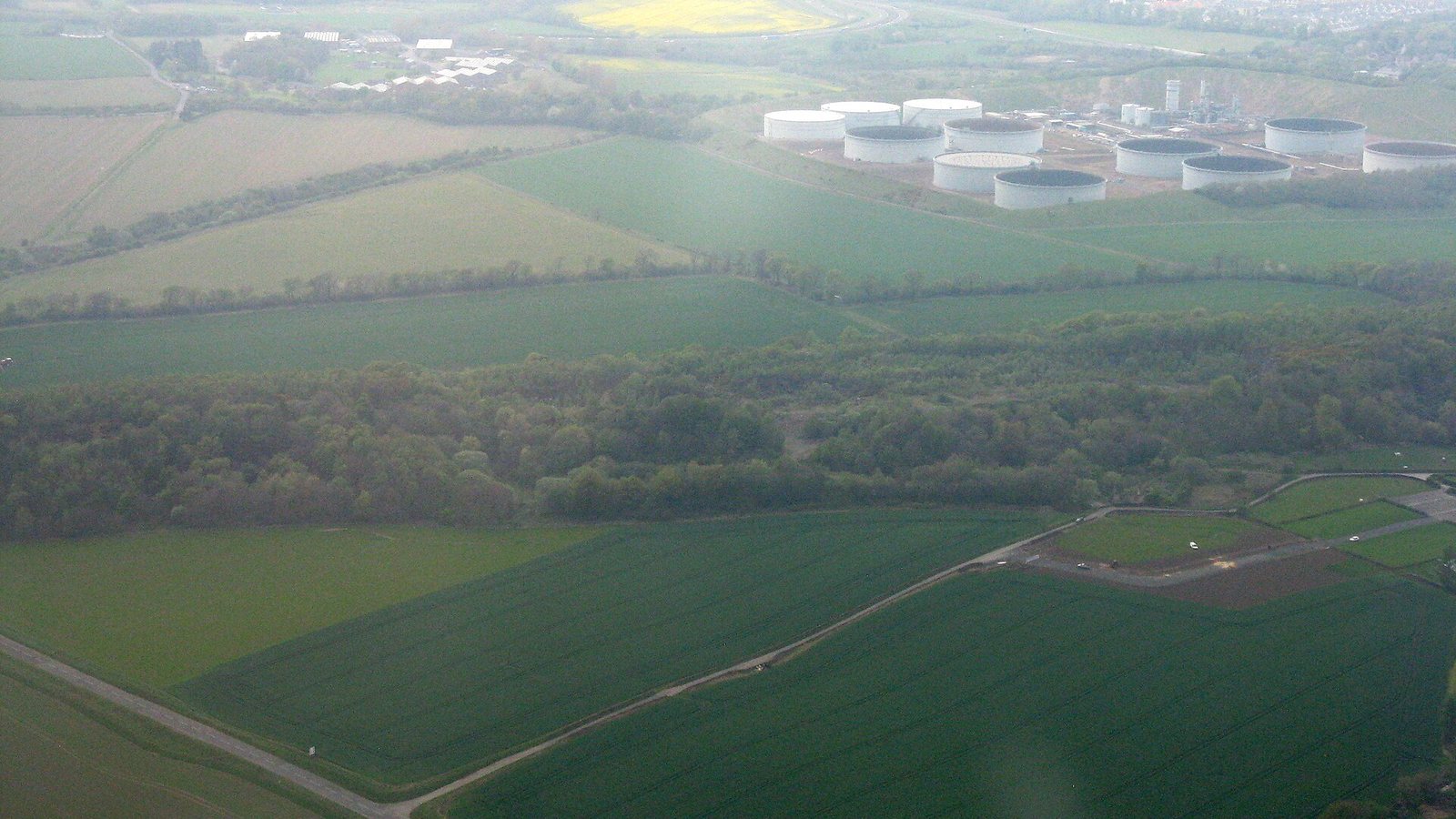
Illustrative image. Photo: M J Richardson, CC BY-SA 2.0, via Wikimedia Commons — source