Saudi Arabia’s Oil Output Hits Record Low Even as Exports Rebound

Saudi Arabia’s crude oil exports climbed to a five-month high in August even as the kingdom’s own production fell to the lowest level on record, according to monthly data submitted to the Joint Organisations Data Initiative (JODI) and reviewed by Reuters. The divergence, the most recent snapshot available from the official international database, underscores how exposed the world’s largest oil exporter remains to the Middle East conflict that has disrupted shipping and refining across the Gulf since the summer.
A five-month high in exports
JODI figures put Saudi crude exports at 4.451 million barrels per day (bpd) in August, up roughly 7.9% from July’s 4.125 million bpd and the strongest monthly reading since March, when exports stood at 4.974 million bpd. UBS commodity analyst Giovanni Staunovo attributed the rebound to Saudi Arabia’s ability to load crude from terminals on both its Red Sea and Persian Gulf coasts, a flexibility that has let Riyadh keep barrels moving even when one coastline faces disruption. Staunovo said he expected the recovery to have continued into September and October.
Tanker-tracking data from Kpler, an independent shipping analytics firm, supports that reading. Kpler’s provisional figures show Gulf oil exporters’ loadings surpassing pre-war levels on 14 separate days in September, and Saudi crude and condensate loadings averaging 9.1 million bpd in the week beginning September 21 — the highest weekly average the firm has recorded since before the COVID-19 pandemic.
Output falls to the lowest point in JODI’s record
The export recovery sits alongside a production figure moving in the opposite direction. Saudi Arabia pumped just 6.24 million bpd in August, JODI’s data show — a record low across a series that stretches back to 2002, and a steep drop from July’s 8.135 million bpd and May’s 6.56 million bpd. Refinery crude throughput also eased, falling 181,000 bpd to 2.297 million bpd, while the volume of crude burned directly for power generation — typically a summer phenomenon in Saudi Arabia, where air-conditioning demand peaks — rose by 43,000 bpd to about 604,100 bpd.
Neither JODI nor the reporting built on it offers an official explanation for the scale of the production drop, and The Daily Energy has not independently confirmed a specific cause. The decline nonetheless lands in the same window as a marked escalation in regional hostilities: Houthi attacks on Riyadh’s airport and on Saudi Aramco infrastructure disrupted flights and oil-loading operations, the Saudi-led coalition said it intercepted four drones over the Medina and Eastern provinces, government offices in the capital told staff to work from home, and organisers postponed the kingdom’s flagship Future Investment Initiative conference, originally set for October 26-29, to 2027.
Why the two numbers can move apart
Exports and production are not the same measure, and a producer can raise shipments even as wellhead output slips — at least for a while — by drawing down stored barrels, shifting crude that would otherwise go to domestic refineries onto export tankers, or simply reporting a timing mismatch between loadings and output. Saudi Arabia’s refineries processing less crude in August, and the country burning more crude for power rather than exporting or refining it, both point to a kingdom reallocating available barrels rather than one simply producing and shipping less of everything at once. Aramco has long cited roughly 12 million bpd as its maximum sustainable production capacity, a figure that leaves meaningful headroom above August’s 6.24 million bpd — though how much of that capacity is reliably available amid the current conflict is a separate question the JODI data does not answer. Background on the kingdom’s broader output, reserves and policy mix is covered in The Daily Energy’s Saudi Arabia energy profile.
Saudi Arabia’s output also remains bound by its OPEC+ commitments, which the group reaffirmed for November at 31 million bpd in combined output across members when it last met. Any assessment of how much spare capacity the kingdom can genuinely bring to market sits against that backdrop of a group-wide ceiling rather than a purely technical limit.
A market already reading the risk
The JODI release lands as traders price in broader supply risk across the Gulf; Brent crude has traded above $110 a barrel this week on reports of fresh attacks on Saudi targets. Aramco’s own chief executive warned earlier this year that global oil inventories were “scarily thin,” a backdrop against which even a temporary dip in Saudi output — record low or not — carries more weight than it might in a better-supplied market. For now, the exports side of the ledger suggests Riyadh has kept crude flowing to customers; whether production recovers alongside it will depend on how the conflict around the kingdom’s energy infrastructure develops in the coming weeks.
Sources
- Oilprice.com, “Saudi Crude Exports Hit Five-Month High as Production Falls to Record Low,” October 21, 2026 — JODI export and production figures, UBS analyst comment, Kpler tanker-tracking data, FII postponement. oilprice.com
- Joint Organisations Data Initiative (JODI) — primary source for monthly Saudi crude export, production, refinery throughput and direct-burn data. jodidata.org
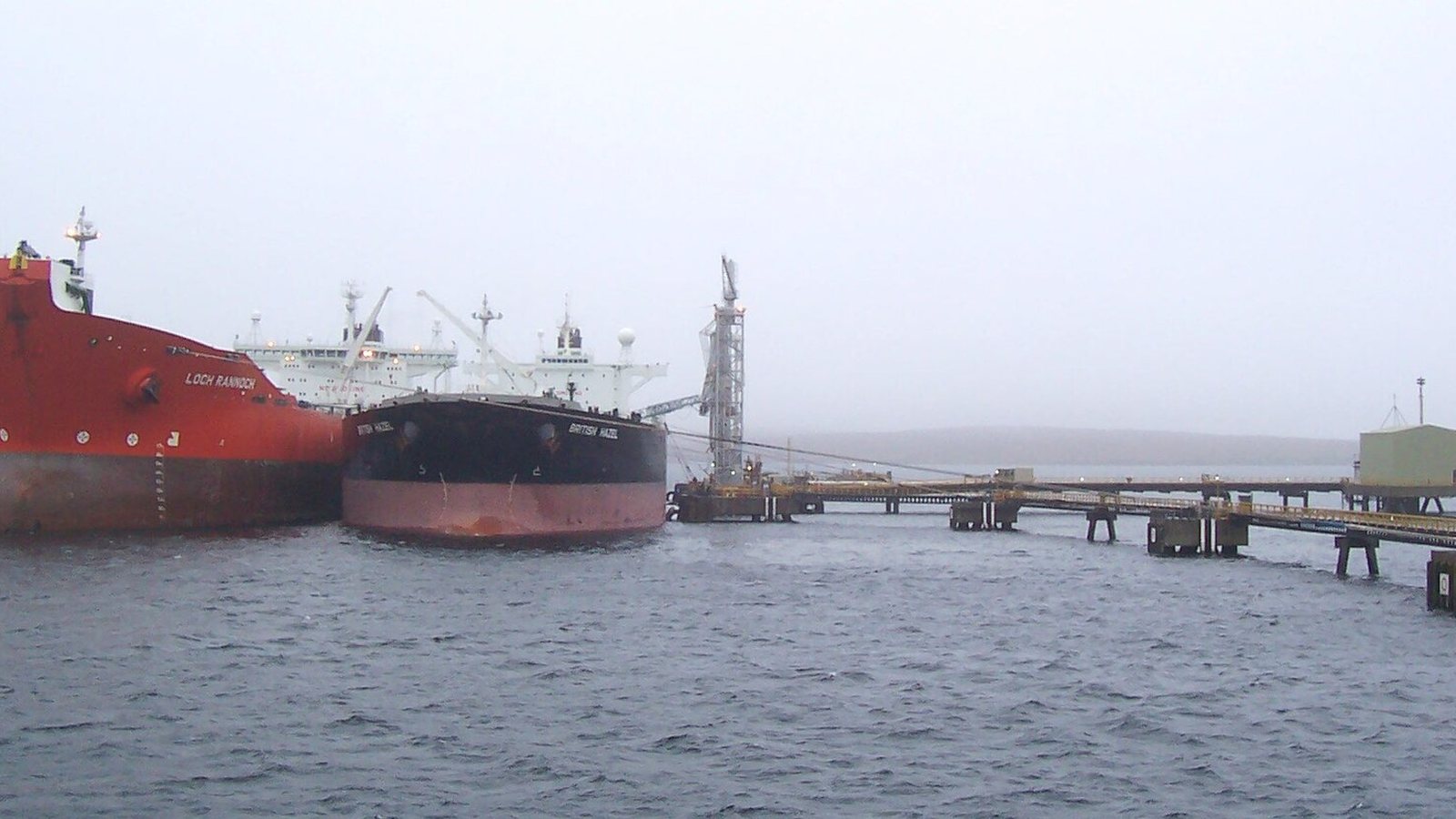
Illustrative image. Photo: john bateson, CC BY-SA 2.0, via Wikimedia Commons — source