Where Does Poland Get Its Natural Gas?

Last updated: November 17, 2026 · Last verified: November 17, 2026
Poland covers its natural gas needs from three channels: a pipeline from Norway (the Baltic Pipe), liquefied natural gas (LNG) shipped mainly from the United States and Qatar into the Świnoujście terminal, and a smaller volume of domestic production. Russian pipeline gas, once Poland’s dominant source, has been off the books since the 1993 Gazprom supply contract was terminated in 2022. The mix shifted again in November 2026, when state energy group Orlen cancelled one of its two long-term LNG supply contracts with QatarEnergy, citing a Qatari force-majeure declaration tied to war damage at the Ras Laffan export complex.
Poland’s gas supply, by channel (2025)
Poland’s Ministry of Energy reported that total natural gas imports rose 23% year-on-year to 213.5 TWh in 2025, while domestic production added a further 40.7 TWh. LNG accounted for 91.6 TWh of imports (+30% y/y), or 42.9% of the import total. The remainder arrived by pipeline, chiefly the Baltic Pipe from Norway, which operator Orlen says covered more than 40% of Poland’s gas demand in 2025.
| Channel | Volume | Share of imports | Year | Source |
|---|---|---|---|---|
| Total gas imports (all sources) | 213.5 TWh | 100% | 2025 | Polish Ministry of Energy |
| LNG (Świnoujście terminal) | 91.6 TWh | 42.9% | 2025 | Polish Ministry of Energy |
| — of which, United States | 65.6 TWh | 30.7% of imports; 25.8% of total supply (imports + domestic output) | 2025 | Polish Ministry of Energy, via Globenergia |
| Baltic Pipe (Norway, pipeline) | not disclosed in TWh by the ministry | “over 40%” of 2025 gas demand (Orlen’s own figure) | 2025 | Orlen |
| Domestic production | 40.7 TWh | n/a (additional to the 213.5 TWh import figure) | 2025 | Polish Ministry of Energy |
Two things are worth separating here. First, import volume is not the same as consumption: Poland’s gas transmission operator, GAZ-SYSTEM, says network throughput hit a record 20.3 bcm (about 234.4 TWh) in 2025, including a record 2 bcm of gas re-exported onward — some of it toward Ukraine and Slovakia as Poland positions itself as a regional hub. Second, published shares use different denominators: the Ministry of Energy measures the US share against total imports, while a separate money.pl tally puts Baltic Pipe at 41% and Świnoujście LNG at 39% of total gas deliveries — a different, narrower base than the ministry’s import figure. Treat the two sets of percentages as answering slightly different questions, not as a contradiction.
Who supplies Poland’s LNG: deliveries by origin (2025)
Świnoujście, Poland’s only LNG import terminal, received 82 cargoes in 2025 (Orlen’s own count is 81, a gap the operator and ministry attribute to slightly different reporting scopes), up from 61 in 2024. The terminal’s nameplate capacity is 8.3 bcm/year (roughly 90 TWh), so the 91.6 TWh of LNG the ministry logs for 2025 implies the facility ran at or above design capacity.
| Supplier country | Cargoes (2025) | Share of Świnoujście deliveries | Year | Source |
|---|---|---|---|---|
| United States | 62 | ~75.6% | 2025 | Orlen, via Globenergia |
| Qatar | 17 | ~20.7% | 2025 | Orlen, via Globenergia |
| Trinidad & Tobago, Senegal, Mauritania (combined) | ~2–3 | ~2–3% | 2025 | Orlen, via Globenergia |
| Total deliveries, Świnoujście terminal | 82 (ministry) / 81 (Orlen) | 100% | 2025 | Polish Ministry of Energy; Orlen |
Cargo counts are a proxy for volume, not an exact measure — US and Qatari LNG carriers are not always the same size — so the percentages above should be read as approximate. No outlet has yet published a tonnage-level breakdown by origin for full-year 2025; this table will be updated if one is released.
The Orlen–QatarEnergy contract break
On November 10–11, 2026, Orlen gave notice to terminate one of its two long-term LNG sale-and-purchase agreements with QatarEnergy — about 1 million tonnes/year under an oil-linked formula, which Orlen valued at roughly €570 million ($637 million) for 2026. Reuters reported it as the first known termination of a long-term QatarEnergy LNG contract by a buyer since missile strikes damaged production units at Qatar’s Ras Laffan complex earlier in 2026 and forced QatarEnergy to declare force majeure on deliveries. The contract stays formally in force for 60 days after the notice. Orlen’s second, separate QatarEnergy SPA — up to 1 Mtpa, priced against gas-market benchmarks rather than oil, running through 2034 — is unaffected and continues. The TDE news report and the related piece on Orlen leaning harder on US LNG as Qatari cargoes stayed disrupted both cover the run-up to the cancellation.
The supply chain behind the cancelled contract runs: QatarEnergy (producer) → Ras Laffan liquefaction plant → LNG carrier → Świnoujście regasification terminal → Orlen (importer/distributor) → the Polish gas grid. With one link in that chain now cut for the oil-linked volume, Orlen’s near-term replacement options are the remaining QatarEnergy SPA, more US spot and term cargoes (where long-term contracts reportedly price around $6–7/MMBtu, roughly half the oil-linked Qatari formula), or more Baltic Pipe gas from Norway. The same Qatari supply strain is visible elsewhere in the region — see TDE’s coverage of Pakistan’s LNG tender for winter cargoes as Qatari supply stays disrupted — which suggests Poland is not an isolated case.
The Baltic Pipe: Poland’s other main artery
The Baltic Pipe, which opened in October 2022, carries Norwegian gas across Denmark and the Baltic Sea into Poland with a design capacity of 10 bcm/year (roughly 109 TWh). Orlen credits it with covering “over 40%” of Poland’s 2025 gas demand, making it — alongside Świnoujście LNG — one of the two pillars that replaced direct Russian pipeline supply after the Yamal contract was terminated in 2022.
What to watch in the next 12 months
- Orlen’s remaining QatarEnergy contract (up to 1 Mtpa through 2034) continues unaffected by the November 2026 cancellation.
- A second LNG terminal. Transmission operator GAZ-SYSTEM has begun gauging market interest in a floating storage and regasification unit (FSRU) at Gdańsk, which would add import capacity alongside Świnoujście.
- Rising US dependence. With the smaller Qatari contract gone, Poland’s reliance on US cargoes — already 62 of 82 deliveries in 2025 — is likely to climb further unless Baltic Pipe volumes or the remaining Qatari SPA absorb the gap.
- Regional hub role. GAZ-SYSTEM’s record 2 bcm of 2025 re-exports, partly toward Ukraine and Slovakia, is a trend to track as Poland markets itself as a transit point for US and Norwegian gas further east.
FAQ
Where does Poland get its natural gas from?
Mainly from three channels: pipeline gas from Norway via the Baltic Pipe, LNG shipped into the Świnoujście terminal (chiefly from the United States and Qatar), and a smaller volume of domestic production. Poland’s Ministry of Energy reported 213.5 TWh of imports plus 40.7 TWh of domestic output in 2025.
Is Poland still buying Russian gas?
No direct pipeline imports. Poland’s government terminated its 1993 Gazprom supply contract in 2022 and has not resumed direct Russian pipeline purchases; Orlen states Poland has achieved independence from Russian gas imports, though TDE has not independently verified a zero-Russian-content claim across all trading flows.
What is the Baltic Pipe?
A pipeline, opened in October 2022, that carries Norwegian gas via Denmark and the Baltic Sea to Poland, with a design capacity of 10 bcm/year. Orlen says it covered more than 40% of Poland’s gas demand in 2025.
How much LNG does Poland import, and from where?
Poland’s only LNG terminal, Świnoujście, received 82 cargoes in 2025 (Orlen counts 81): 62 from the United States, 17 from Qatar, and the rest from Trinidad & Tobago, Senegal and Mauritania. LNG made up 42.9% of Poland’s total gas imports that year.
Why did Orlen cancel its QatarEnergy LNG contract?
Orlen terminated the smaller of its two long-term QatarEnergy agreements (about 1 Mtpa, oil-linked pricing) in November 2026, after QatarEnergy declared force majeure on deliveries following missile damage to production units at its Ras Laffan complex. Orlen’s second QatarEnergy contract, running to 2034, is unaffected.
Related The Daily Energy pages
- Where Does Germany Get Its LNG?
- Where Does Spain Get Its LNG?
- Who Buys Qatar’s LNG?
- QatarEnergy Explained: LNG Giant and Global Strategy
- Orlen Terminates One of Its Long-Term QatarEnergy LNG Contracts
- Orlen Leans Harder on US LNG as Qatari Cargoes Stay Snarled
- Pakistan Relaunches LNG Tender for Winter Cargoes as Qatari Supply Stays Disrupted
- What Is LNG and How Does It Work?
Sources: Polish Ministry of Energy (import/production data, via Globenergia); Orlen (delivery counts, Baltic Pipe share, contract details); GAZ-SYSTEM (transmission and re-export data, via PAP/bne IntelliNews); Reuters, Baird Maritime, The National, Offshore Technology and Oilprice.com (Orlen–QatarEnergy contract termination, November 2026).
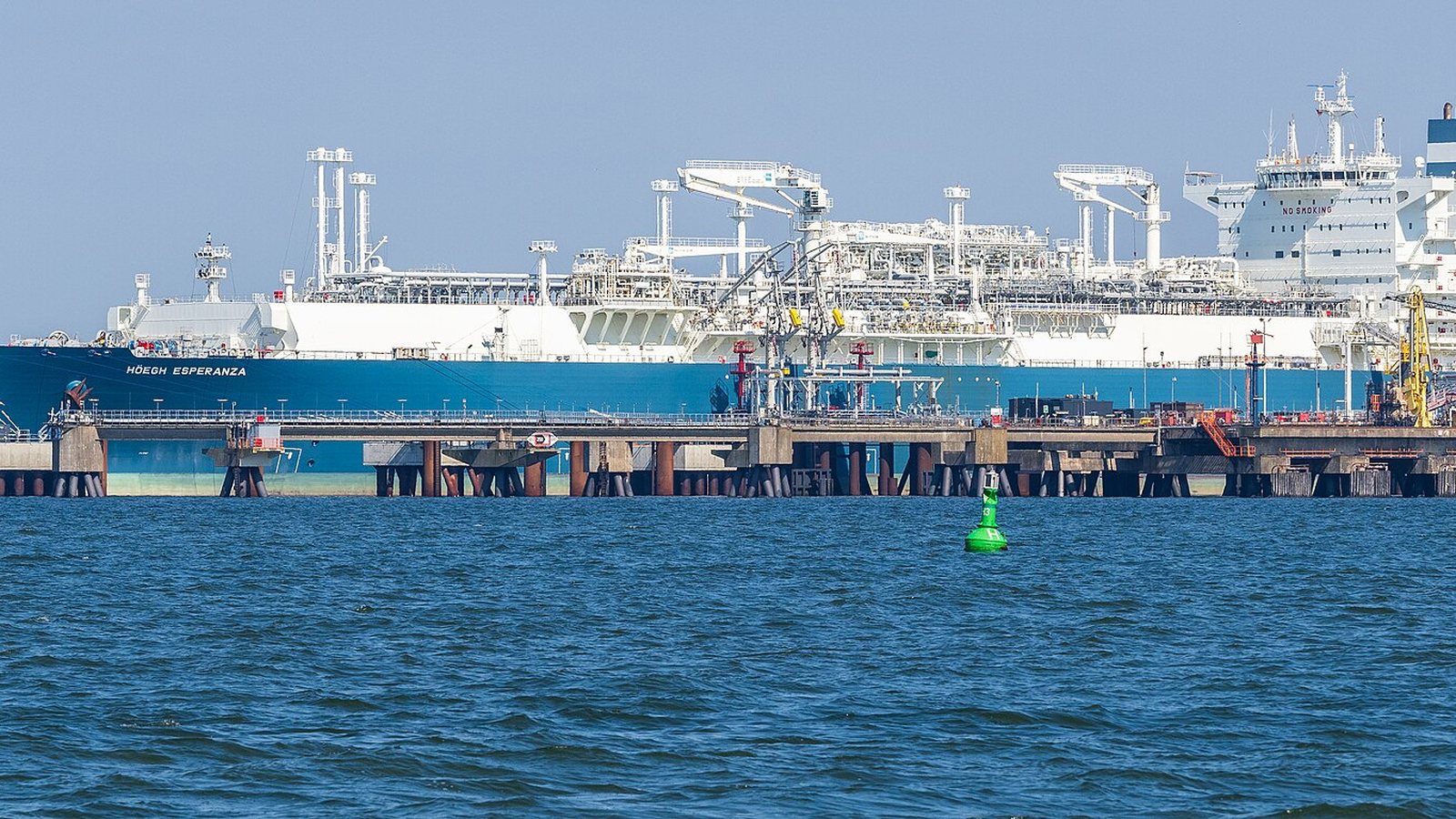
Illustrative image. Photo: JoachimKohler-HB, CC BY-SA 4.0, via Wikimedia Commons — source