Brazil’s Energy Sector: Pre-Salt Oil and Renewables

The Brazil energy sector is unusual because it combines one of the world’s fastest-growing offshore oil industries with one of the cleanest electricity systems among large economies. Deep-water pre-salt fields have made Brazil a major crude exporter, while hydropower, wind, solar and biomass supply most of its electricity and sugarcane ethanol fuels a large part of its cars. This article sets out the key features, companies, infrastructure and risks.
Brazil Energy Sector: Overview and Key Figures
Brazil is the largest energy market in Latin America, and its economy is large, industrialised and widely spread across a continental territory. Three features define the system:
- A high share of renewable energy in total supply compared with the global average, thanks to hydropower, bioenergy and, more recently, wind and solar.
- An oil industry centred on offshore basins in the south-east, with production now above three million barrels per day according to US Energy Information Administration (EIA) and Brazilian regulator data.
- A large domestic biofuels programme built around ethanol from sugarcane and biodiesel from soybean oil.
Planning and regulation are shared among several bodies. The Ministry of Mines and Energy sets policy, the Energy Research Company (EPE) prepares long-term plans, the National Agency for Petroleum, Natural Gas and Biofuels (ANP) regulates oil, gas and fuels, ANEEL regulates electricity, and the National System Operator (ONS) runs the interconnected grid.
Energy Mix and Resources
Oil and gas
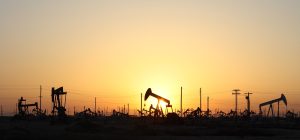
Brazil’s main oil provinces are the Santos and Campos basins. Oil production has risen strongly over two decades, and the country is among the leading oil producers in the world. Natural gas output is substantial too, but much of the gas produced offshore is associated gas that is reinjected, flared or used on platforms, so the domestic market has long depended on imports and on improving processing capacity.
Hydropower
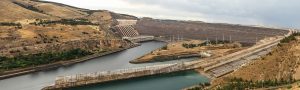
Hydropower has historically been the backbone of the electricity system. Major plants include Itaipu on the border with Paraguay, one of the largest hydroelectric plants in the world, Belo Monte on the Xingu River, and Tucuruí on the Tocantins. Their reservoirs give the system flexibility, but also tie it to rainfall.
Wind, solar and biomass
Wind power has grown quickly in the north-east, where winds are strong and steady. Solar has expanded in both utility-scale plants and rooftop systems installed by households and businesses, helped by net-metering rules. Biomass, mainly bagasse from sugarcane mills, adds power and heat.
Biofuels
Brazil is one of the two largest ethanol producers in the world together with the United States. Most light vehicles sold are flex-fuel and can run on any blend of gasoline and ethanol, which helps cushion oil price shocks.
Brazil Pre-Salt: The Offshore Engine
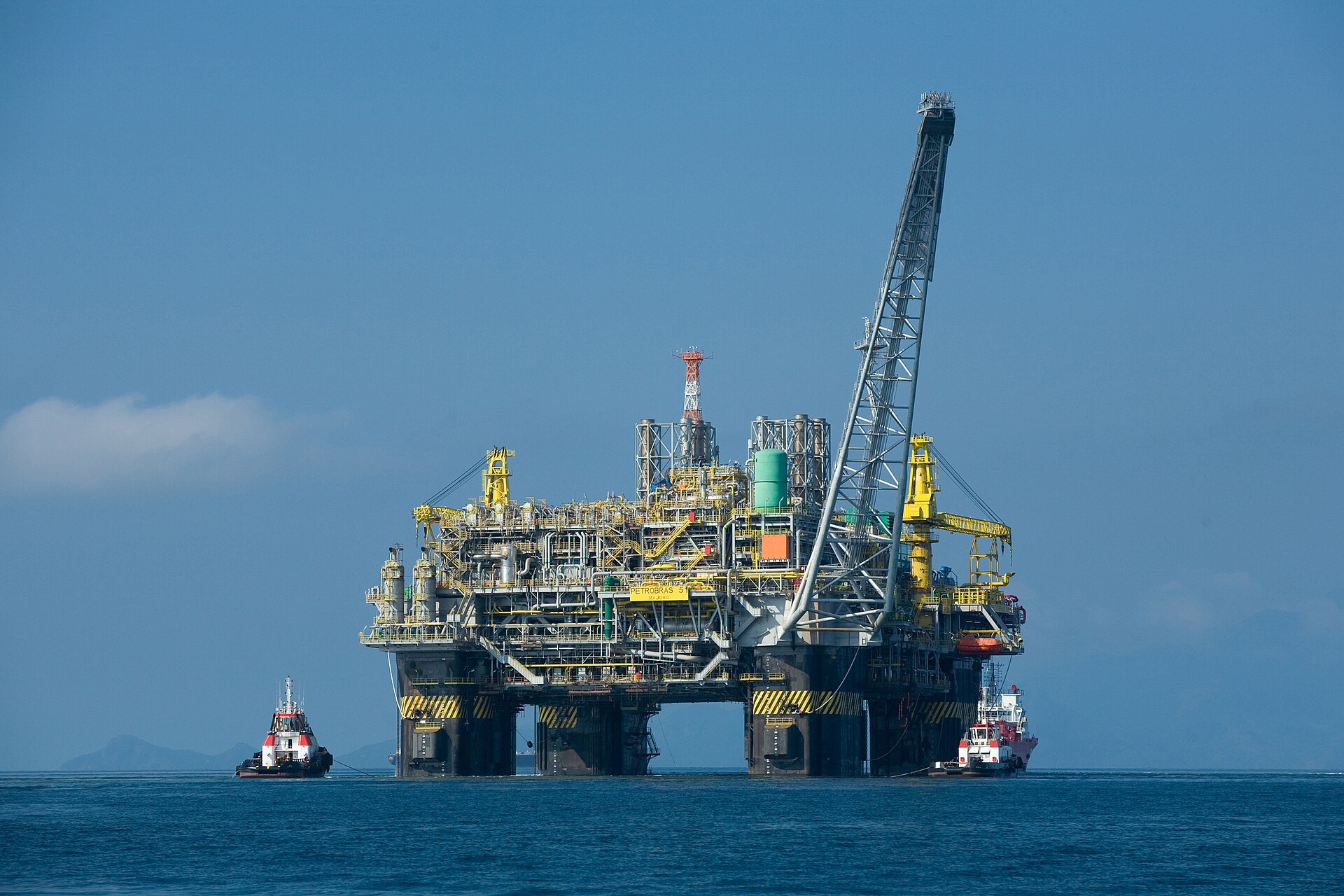
The pre-salt is a group of oil reservoirs lying beneath a thick layer of salt, in water depths of around two kilometres and with reservoirs several kilometres below the seabed. The first large discoveries were announced in 2006 and 2007, including the field now known as Tupi (later Lula). Developing them required new drilling, subsea and floating production technology.
Several features make the pre-salt important:
- Wells are highly productive compared with many deep-water fields.
- Oil is generally light to medium and valued by refiners.
- Production comes from floating production, storage and offloading (FPSO) vessels, many built to a standard design to cut costs and delays.
- Associated gas is rich in carbon dioxide, which has pushed operators to reinject it and develop carbon capture solutions.
The pre-salt now supplies the majority of Brazil’s oil production. Fields in the Santos Basin such as Búzios and Mero are among the most closely watched in the industry.
Major Companies and Projects
Petrobras, the state-controlled company, is the dominant player, operating most pre-salt fields and the largest refining system in the country. International companies are active as partners and operators, among them Shell, TotalEnergies, Equinor, ExxonMobil, Chevron and Chinese companies such as CNOOC and CNPC, which participated in auctions under the production-sharing regime that Brazil introduced for pre-salt areas.
In the power sector, state-controlled Eletrobras, now privatised in part, owns large hydropower and transmission assets, while private groups and international developers such as Enel, Engie, Iberdrola subsidiary Neoenergia and Brazilian groups invest in wind, solar, distribution and transmission. On the biofuels side, Raízen, a joint venture of Shell and Cosan, is a leading ethanol producer and fuel distributor.
| Segment | Examples | Role |
|---|---|---|
| Offshore oil | Búzios, Mero, Tupi (Lula) | Backbone of production growth |
| Hydropower | Itaipu, Belo Monte, Tucuruí | Baseload and flexibility |
| Wind and solar | North-east wind clusters, distributed solar | Fast-growing renewable additions |
| Biofuels | Sugarcane ethanol mills | Domestic transport fuel |
Imports, Exports and Infrastructure
Brazil exports crude oil, mainly from pre-salt fields, to Asia, Europe and the Americas, and China has become a leading buyer. At the same time, it imports some refined products, such as diesel, and natural gas from neighbouring countries and by LNG, because refining and gas processing capacity does not fully match domestic demand.
Infrastructure is both a strength and a bottleneck. Key points:
- Offshore gas pipelines bring gas ashore, with new routes added to reduce flaring and reinjection.
- LNG import terminals provide flexibility in dry years when hydropower is low.
- A national grid interconnects the major regions, but long transmission lines are needed to carry north-eastern wind and solar to southern consumers.
- Ports and pipeline networks in the south-east serve the oil industry.
Policy and Investment Outlook
Government policy has encouraged competition in power and gas markets, privatisation of selected assets and auctions for oil blocks and transmission lines. Biofuel policy, including a national programme known as RenovaBio, supports ethanol and biodiesel through decarbonisation credits.
Opportunities attracting investors include:
- Further pre-salt development and exploration in new areas.
- Offshore wind, where legal frameworks have been under discussion.
- Green hydrogen and ammonia, taking advantage of low-cost renewable power.
- Gas infrastructure and power market reform.
- Biomethane, sustainable aviation fuel and second-generation ethanol.
Risks and Challenges
Brazil faces several risks. A dry year can cut hydropower output, as happened during the severe drought and energy crisis of 2021, forcing a shift to more expensive thermal generation. Fuel pricing policy has been politically sensitive, particularly for Petrobras, which has sometimes been pressured on gasoline and diesel prices. Environmental licensing, especially for exploration in frontier areas such as the equatorial margin off the north coast, remains contested. Grid constraints can force wind and solar plants to cut output when transmission lines are full. Large changes in tax or regulation can also delay long-term projects.
What It Means for Global Energy Markets
Pre-salt growth makes Brazil a significant source of non-OPEC crude supply and an important contributor to the Atlantic Basin oil trade, alongside Guyana, the United States and Norway. Its ethanol industry is a reference case for biofuels, and its power system shows how a large country can run mostly on renewable electricity while still depending on fossil fuel exports for revenue. For investors and policymakers, Brazil illustrates both the promise and the tension of balancing oil growth with clean energy.
Frequently Asked Questions About the Brazil Energy Sector
What is the main source of electricity in Brazil?
Hydropower is the largest source, followed by wind, biomass, solar and natural gas. The share of wind and solar has been rising.
What is Brazil’s pre-salt?
It is a set of deep-water oil reservoirs beneath a thick salt layer in the Santos and Campos basins, discovered in the mid-2000s. It supplies most of Brazil’s oil output.
Who is the biggest energy company in Brazil?
Petrobras, which is state-controlled, is the largest energy company, and it dominates oil production and refining.
Does Brazil export oil?
Yes. Brazil is a net exporter of crude oil, with China, the United States and European countries among its main customers.
Is Brazil a leader in renewable energy?
Brazil has one of the highest renewable shares in electricity among large economies, and it is a leader in biofuels and a major hydropower producer.
Conclusion
The Brazil energy sector is built on two pillars: offshore pre-salt oil that drives exports and government revenue, and a renewable electricity and biofuel base that keeps the energy mix cleaner than most. The risks are weather, politics and infrastructure, but the scale of resources keeps Brazil central to the global outlook for both oil and renewables.
Sources and further reading
- US Energy Information Administration, Brazil country analysis (eia.gov)
- International Energy Agency, Brazil profile (iea.org)
- Empresa de Pesquisa Energética, EPE (epe.gov.br)
- Agência Nacional do Petróleo, Gás Natural e Biocombustíveis, ANP (gov.br/anp)
- Agência Nacional de Energia Elétrica, ANEEL (gov.br/aneel)
- Petrobras, company information (petrobras.com.br)
- Energy Institute, Statistical Review of World Energy (energyinst.org)