


Turkey’s Energy Sector: Mix, Imports and Investments
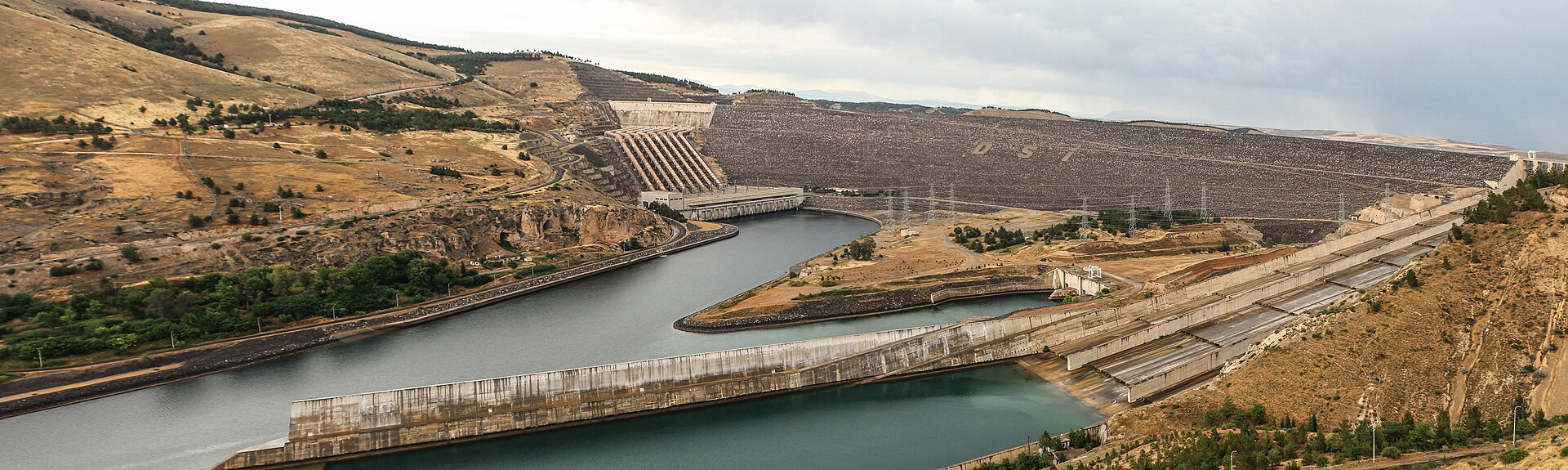

The Turkey energy sector combines a fast-growing electricity system, a rapidly expanding renewable base and a heavy dependence on imported oil and natural gas. Türkiye sits between major producers in Russia, the Caspian, Iran and Iraq and consumers in Europe, which has made it both a large importer and a transit hub. This overview covers the energy mix, imports, major projects, policy direction and risks that shape the country’s energy picture.
Turkey Energy Sector: Overview and Key Figures
Turkey’s energy demand has grown steadily with population, industry and urbanisation. The country has limited domestic oil and gas, large lignite reserves of modest quality, and a strong endowment of hydropower, wind, solar and geothermal resources. As a result, it imports most of the oil and natural gas it consumes, and a significant portion of its hard coal.
Policy is set mainly by the Ministry of Energy and Natural Resources. The Energy Market Regulatory Authority (EPDK) regulates electricity, gas, oil and LPG markets, and EPİAŞ operates the organised power markets. State-owned BOTAŞ dominates gas imports and wholesale supply, TPAO leads oil and gas exploration, TEİAŞ runs the national transmission grid and EÜAŞ is the state generator.
Exact figures for capacity, demand and import bills change every year. The ministry, EPDK, TEİAŞ and the International Energy Agency (IEA) publish updated statistics, and they are the right sources to check before quoting numbers.
Energy Mix and Resources
Electricity generation
The Turkey electricity mix is diverse. Natural gas, domestic lignite and imported coal, hydropower, wind, solar, geothermal and biomass all contribute. Total installed capacity is well above 100 gigawatts, and renewable sources, including hydropower, now account for around half of installed capacity or more in recent statistics. Because hydropower depends on rainfall, the share of renewables in actual generation moves from year to year, and gas and coal fill the gap in dry periods.
Renewables growth
Wind is concentrated in the Aegean and Marmara regions, while solar has expanded rapidly across the country, with many rooftop and small plants installed under unlicensed generation rules. Türkiye is also among the world’s leading countries by installed geothermal power capacity. The Renewable Energy Resource Areas (YEKA) auctions have been the main tool for large wind and solar projects.
Nuclear
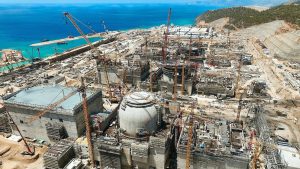
Türkiye is building its first nuclear plant at Akkuyu on the Mediterranean coast, a project by Russia’s Rosatom with four reactors planned. A second site at Sinop has been discussed for years. Check the ministry or the International Atomic Energy Agency for the current status of reactor commissioning.
| Source | Role in the system | Key point |
|---|---|---|
| Natural gas | Power, heating, industry | Mostly imported, supplied mainly through BOTAŞ |
| Coal and lignite | Baseload power | Domestic lignite plus imported hard coal |
| Hydropower | Flexible, large share of renewables | Output varies with rainfall |
| Wind | Large and growing | Strong in the Aegean and Marmara |
| Solar | Fastest-growing | Many small unlicensed plants plus utility projects |
| Geothermal | Steady power and heat | Among the largest in the world by capacity |
Major Companies and Projects
The Turkey energy sector includes state firms and large private groups. BOTAŞ, TPAO, EÜAŞ and TEİAŞ are public. Private generators and distributors include major industrial conglomerates, and international companies participate through joint ventures, equipment supply and financing.
Several projects stand out:
- Sakarya Gas Field: an offshore discovery in the Black Sea, announced in 2020 and later expanded, which began first gas production in 2023 to lower the country’s import reliance.
- TANAP: the Trans-Anatolian Natural Gas Pipeline carrying Azerbaijani gas across Türkiye to Europe.
- TurkStream: a subsea pipeline from Russia that supplies Türkiye and continues to southeastern Europe.
- Baku-Tbilisi-Ceyhan pipeline: carries Caspian crude to the Mediterranean terminal at Ceyhan.
- Akkuyu nuclear plant: the country’s first, under construction.
Floating storage and regasification units (FSRUs) at terminals such as Aliağa and Dörtyol have expanded LNG import capacity and given the country more supplier choice.
Imports, Exports and Infrastructure
Türkiye imports natural gas by pipeline from Russia, Azerbaijan and Iran, and as LNG from suppliers including Algeria, the United States and Nigeria, among others. Crude oil comes from several sources, with Iraq, Russia and others varying by period and price. Refined products, imported and domestic, supply transport and petrochemicals.
Infrastructure matters as much as supply. The country has substantial gas storage, though winter demand peaks stress the system, and it operates a large power grid interconnected with neighbouring countries. Oil tankers pass through the Bosphorus and Dardanelles, which makes straits traffic a recurring subject of regulation and risk management. The Kirkuk-Ceyhan pipeline from Iraq has been subject to legal and political disputes, so flows have not been consistent.
Türkiye also exports electricity in small volumes to neighbours and imports at times, depending on prices. Its larger role is as a corridor connecting suppliers in the east with markets in Europe.
Policy and Investment Outlook
Government priorities have been described around energy security, local resources and market liberalisation. Key policy tools include YEKA auctions, feed-in support through the YEKDEM scheme, domestic exploration by TPAO and long-term gas contracts. Türkiye has set a net-zero target for 2053, and its Climate Law, adopted in 2025, provides a legal basis for a domestic emissions trading system. Details of implementation are still evolving, so follow ministry announcements.
Investment opportunities include:
- Wind and solar projects, including hybrid and storage-linked plants
- Grid expansion and digitalisation
- Battery storage
- Geothermal, especially for heat and power
- Gas infrastructure, LNG and storage
- Energy efficiency in industry and buildings
Foreign investors consider regulatory predictability, currency risk and local-content rules alongside returns.
Risks and Challenges
The main weakness of the Turkey energy sector is import dependence, which exposes the economy to fuel prices and currency movements. A weaker lira makes dollar-priced gas and oil more expensive, and public finances absorb part of that cost through state-owned energy companies.
Other challenges include:
- Climate and water: drought reduces hydropower output and raises gas use.
- Grid integration: rapid solar and wind growth needs flexible capacity, storage and grid upgrades.
- Emissions: coal and gas still make up a large share of generation, so decarbonisation is a long process.
- Geopolitics: relations with major suppliers and regional conflicts can affect supply and pipeline flows.
- Seismic risk: earthquake exposure affects infrastructure planning.
What It Means for Global Energy Markets
Türkiye matters to energy markets in three ways. It is a large gas buyer whose purchasing choices affect LNG and pipeline suppliers. It is a transit and trading corridor, with pipelines from the Caspian and Russia and a gas hub concept that has been discussed for years. And it is a growing renewables market with a large manufacturing base.
For Europe, Turkish pipelines and terminals offer another route for Caspian gas. For the region, Türkiye’s choices on nuclear, renewables and LNG help set the pace of change. Observers follow its policy because of this dual role as buyer and bridge.
Frequently Asked Questions About the Turkey Energy Sector
Does Türkiye produce its own oil and gas?
Yes, but in small amounts compared with consumption. The Sakarya Gas Field in the Black Sea is the largest recent addition, yet imports still supply most of the country’s gas and oil.
What is Turkey’s main source of electricity?
No single source dominates. Gas, coal, hydropower, wind and solar all contribute, and the balance changes with rainfall, fuel prices and new capacity.
Which companies lead the market?
BOTAŞ in gas, TPAO in exploration, EÜAŞ in state generation and TEİAŞ in transmission are the main public players, alongside large private generators and distributors.
Is Türkiye building a nuclear power plant?
Yes. Akkuyu, built by Rosatom, is the first, and Sinop has been discussed as a later site.
Where can I find reliable data?
Use the Ministry of Energy and Natural Resources, EPDK, TEİAŞ, EPİAŞ and the IEA’s country pages.
Conclusion
The Turkey energy sector is defined by a contrast: abundant renewable resources and a fast-growing power system on one side, high dependence on imported fuels on the other. Domestic gas, LNG terminals, nuclear power and large-scale wind and solar are the main tools to reduce that gap, while pipelines keep Türkiye central to regional trade. Follow official statistics and IEA reviews for current figures, because the numbers change quickly.
Sources and further reading
- Republic of Türkiye Ministry of Energy and Natural Resources (enerji.gov.tr)
- Energy Market Regulatory Authority, EPDK (epdk.gov.tr)
- TEİAŞ, Turkish Electricity Transmission Corporation (teias.gov.tr)
- BOTAŞ, Petroleum Pipeline Corporation (botas.gov.tr)
- International Energy Agency, Türkiye country profile and energy policy review (iea.org)
- Energy Institute, Statistical Review of World Energy (energyinst.org)
[…] Turkey’s Energy Sector: Mix, Imports and Investments and Turkey Unveils $500 Billion Energy Plan to Cut Imports by 2040 cover how Akkuyu fits into the […]