Where Does Spain Get Its LNG?

Last updated: 3 November 2026 · Last verified: 3 November 2026
Spain operates more LNG regasification capacity than any other country in Europe, spread across six coastal terminals, and unlike Germany or Italy it has no single dominant pipeline-gas neighbour to fall back on — LNG carries most of its gas supply. That makes Spain’s supplier mix unusually diversified and unusually visible: the grid operator Enagás publishes a monthly country-by-country breakdown of every cargo that arrives. The data for 2026 shows a two-way contest between the United States and Algeria for the top spot, and a Russian share that has fallen sharply as new EU rules on Russian LNG start to bite.
Spain’s LNG Supply Mix in 2026
Enagás data, reported through Reuters and TASS at different points in the year, shows the US and Algeria alternating as Spain’s largest supplier month to month, with Russia a consistent but shrinking third or fourth-place source.
| Period | United States | Algeria | Russia | Source |
|---|---|---|---|---|
| January–April 2026 (cumulative) | 36.2% (largest supplier) | 30.6% | 17.5% (23,157 GWh; +32.8% y/y) | Enagás, via TASS (12 May 2026) |
| February 2026 (single month) | 33.8% / 10,612 GWh (largest supplier) | ~29% / 9,151 GWh | 14.6% (down ~52% y/y in volume) | Enagás, via Reuters (10 March 2026) |
| July 2026 (single month) | Not separately reported in this dataset | Largest supplier that month | 8.1% / 2,088 GWh (4th-largest supplier, –2.9% y/y) | Enagás, via TASS/The Caspian Post (10 August 2026) |
| January–July 2026 (cumulative) | Not separately reported in this dataset | Not separately reported in this dataset | 39,443 GWh total | Enagás, via The Caspian Post (10 August 2026) |
| Full year 2025 | ~30% of total Spanish gas imports (up from 16.6% in 2024) | Not separately reported in this dataset | Not separately reported in this dataset | Gas Processing & LNG, citing Enagás (January 2026) |
Smaller volumes have historically come from Nigeria, Qatar, Oman, Trinidad and Tobago, Egypt and Peru, though none of these have approached the scale of the three leading suppliers in 2026 reporting. The figures above come from separate monthly and cumulative releases rather than one consistent table, so percentages for the same supplier can look different depending on whether a given figure covers a single month or a multi-month average — readers comparing periods should check the “Period” column rather than the raw percentage alone.
Russia’s Falling Share — and Why
The clearest trend in the 2026 data is the decline in Russia’s share of Spanish LNG imports as the year progressed: from 17.5% cumulatively over January–April, to 14.6% in the February snapshot, down to 8.1% in July alone. That decline lines up with a new EU legal framework, separate from existing Russia sanctions, that specifically targets Russian LNG and pipeline gas. Under the REPowerEU trade regulation — given final approval by EU member states on 26 January 2026 and published in the Official Journal on 2 February 2026 — new short-term contracts for Russian LNG were banned from 25 April 2026, and a ban on long-term LNG contracts follows on 1 January 2027. (Pipeline gas runs on a separate, later timeline: short-term contracts ended 17 June 2026, with long-term contracts banned from 30 September 2027, extendable to 1 November 2027 if storage-filling needs require it.) The EU’s 19th sanctions package, adopted 23 October 2025, separately introduced its own phased LNG import ban. Spain, like other EU states, has had to replace the resulting gap with increased US and Algerian volumes rather than new long-term Russian supply deals, which are now barred.
Why the US and Algeria Lead
The United States has grown from a minority Spanish supplier to its largest single source across much of 2026, a shift that tracks the broader ramp-up of US Gulf Coast LNG export capacity and the commercial attractiveness of US spot and short-term cargoes to European buyers diversifying away from Russian contracts. Algeria, connected to Spain by both LNG shipments and the undersea Medgaz pipeline, remains the other anchor supplier, drawing on its Hassi R’Mel gas fields and established decades-long trading relationship with Spanish utilities. Between them, the US and Algeria accounted for roughly two-thirds of Spain’s LNG imports in the January–April 2026 cumulative data, leaving Russia, Nigeria, Qatar and smaller suppliers to split the remainder.
What to Watch Next
Spain’s Russian LNG share should keep falling through the rest of 2026 and into 2027 as the REPowerEU ban’s second phase — covering long-term contracts — takes effect on 1 January 2027, closing off the legal basis for new Russian supply deals entirely. Whether Spain’s overall import total keeps rising will depend partly on how much US Gulf Coast export capacity comes online and how aggressively Spanish buyers lock in new long-term contracts to replace the Russian volumes being phased out. The European Commission’s broader effort to end Russian gas dependency by the end of 2027 is also likely to keep pressure on the remaining Russian share across all EU importers, not just Spain.
Frequently Asked Questions
Where does Spain get most of its LNG?
The United States and Algeria have alternated as Spain’s largest LNG supplier through 2026, together accounting for roughly two-thirds of imports in the January–April 2026 period, according to Enagás data. Russia has remained a smaller, declining source.
Does Spain still import LNG from Russia?
Yes, but its share has fallen sharply during 2026 — from 17.5% of imports in January–April to just 8.1% in July alone, according to Enagás data reported by TASS and The Caspian Post. New EU rules ban short-term Russian LNG contracts from April 2026 and long-term contracts from January 2027.
Why is Spain’s Russian LNG share falling?
The EU’s REPowerEU trade regulation, finalized in January 2026, bans new short-term Russian LNG contracts from 25 April 2026 and long-term contracts from 1 January 2027, on top of a separate phased LNG ban introduced in the EU’s 19th sanctions package in October 2025. Spanish buyers have replaced the gap mainly with US and Algerian cargoes.
How much LNG does Spain import in total?
Spain’s monthly imports have varied; February 2026 alone totaled 31,422 GWh, up almost 20% year-on-year, according to Reuters reporting of Enagás data. Spain operates six LNG regasification terminals, the largest network of any European country.
Will Spain’s LNG imports from the US keep growing?
The trend through 2025 and 2026 points that way: US LNG rose from about 16.6% of Spain’s total gas imports in 2024 to roughly 30% in 2025, and was the largest single supplier in several months tracked in 2026, according to Enagás data cited by Gas Processing & LNG and Reuters.
Related The Daily Energy Pages
- Where Does Germany Get Its LNG? (Who Powers Who? series)
- Where Does Italy Get Its Natural Gas? (Who Powers Who? series)
- Who Buys Qatar’s LNG? (Who Powers Who? series)
- Who Supplies Türkiye With Natural Gas? (Who Powers Who? series)
- Where Does Japan Get Its LNG? (Who Powers Who? series)
- What Is LNG and How Does It Work?
- What Is Natural Gas and How Is It Used?
Sources
- Enagás monthly LNG import data, via TASS, “Spain Increased Imports of Russian LNG From January to April 2026” (12 May 2026)
- Enagás monthly LNG import data, via Reuters (João Manuel Maurício), “Spanish LNG Imports Could Hit Two-Year High”-type coverage (10 March 2026)
- Enagás monthly LNG import data, via TASS/The Caspian Post, “Russian LNG Flows to Spain Decline but Remain Significant” (10 August 2026)
- Gas Processing & LNG, “Spain’s LNG Imports From US Soar to Nearly a Third of Gas Supply in 2025” (January 2026)
- Council of the European Union / Official Journal of the European Union, REPowerEU trade regulation on phasing out Russian gas, adopted 26 January 2026, published 2 February 2026
- European Council, 19th EU sanctions package against Russia, adopted 23 October 2025 (phased LNG import ban)
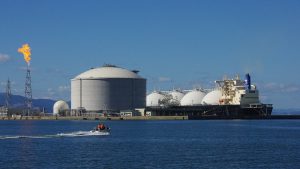
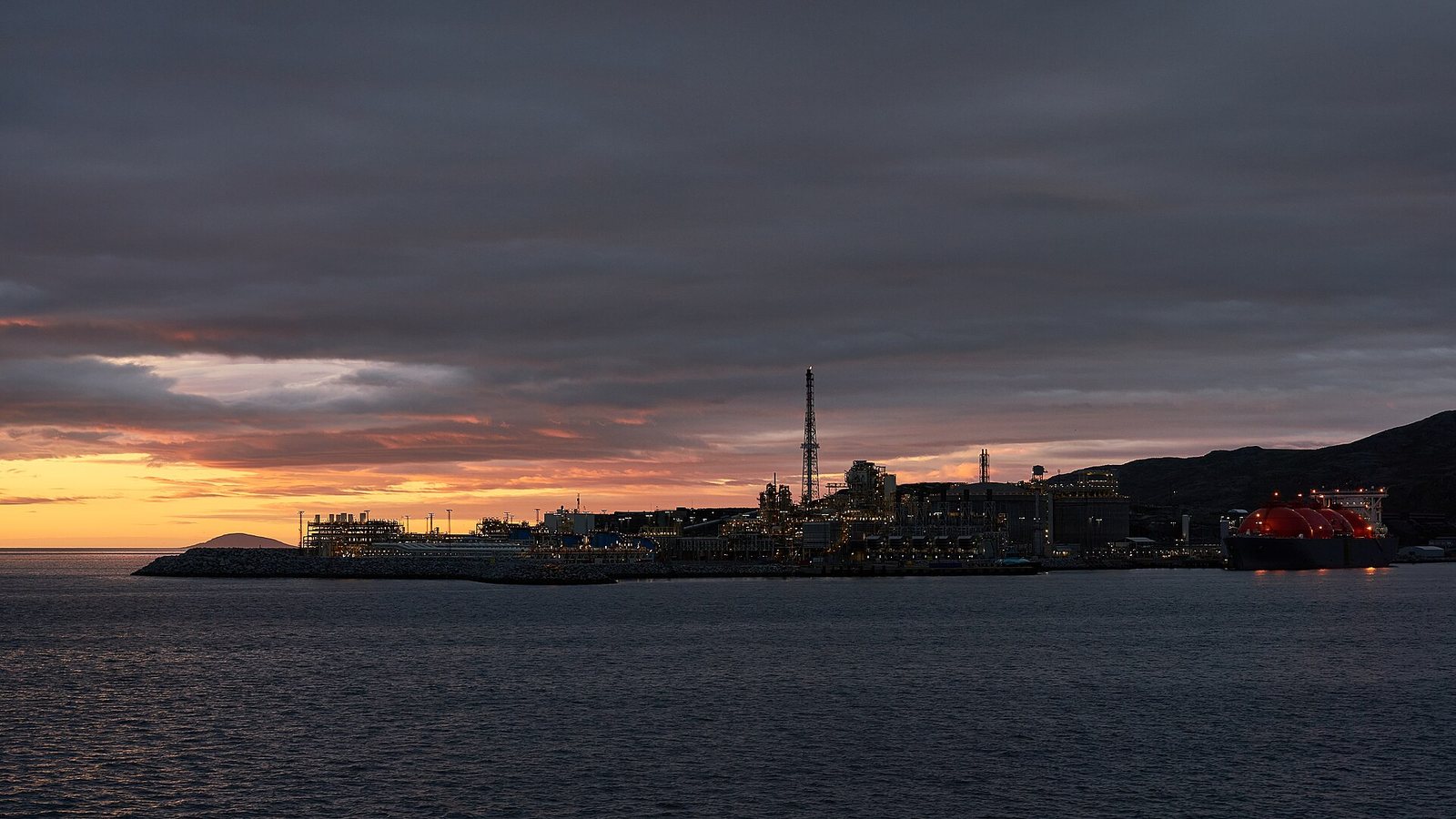
Illustrative image. Photo: Virtual-Pano, CC BY-SA 4.0, via Wikimedia Commons — source