


Why Are Oil Prices Rising?


Last updated: 2026-11-07
Brent crude was trading around $104 a barrel and U.S. WTI near $92 a barrel on September 25–26, 2026, both well above the mid-$80s levels seen earlier in the year. The move is not the result of one headline: it reflects tightening physical supply out of the Middle East, falling global inventories, and unresolved Strait of Hormuz tensions, layered on top of a separate, sharper spike in diesel prices.
What Happened
Brent crude averaged $91 a barrel in August 2026, about $7 higher than July, according to the U.S. Energy Information Administration’s (EIA) September 2026 Short-Term Energy Outlook (STEO). By late September, spot prices had pushed higher still — Brent traded in a $103–107 range on September 26, while WTI eased to around $92.44 a barrel on September 25 amid on-again, off-again reports of US–Iran talks over the Strait of Hormuz. Prices have been volatile within this elevated band for weeks, moving on individual headlines about negotiations, tanker incidents and pipeline outages rather than settling into a clear trend.
What’s Actually Moving the Market
Supply — Middle East exports remain constrained. The EIA reports that global crude prices rose through August as total exports out of the Middle East stayed constrained, forcing more production shut-ins in the region. It attributes this in part to the renewed U.S. blockade on Iranian oil exports and new sanctions from the Treasury’s Office of Foreign Assets Control (OFAC). The EIA’s STEO assumes these constraints persist through year-end, keeping regional crude production below pre-conflict averages until the second quarter of 2027, even as shippers find partial workarounds — overland bypass pipelines, more ship-to-ship transfers, and new UAE bypass pipeline capacity expected online in mid-2027.
Inventories — global stocks are drawing down. The EIA estimates global oil inventories have fallen by roughly 400 million barrels so far in 2026 and expects them to keep declining through year-end. Falling inventories, on their own, tend to support higher prices because they leave less cushion to absorb any further supply disruption.
Geopolitical developments — the Hormuz negotiation track. On September 26, 2026, President Trump rejected an Iranian proposal — presented by Foreign Minister Abbas Araghchi to U.S. envoy Steve Witkoff — under which Iran would reopen the Strait of Hormuz and resume nuclear talks seven days after Washington lifted its naval blockade of Iranian ports, waived oil-sanctions enforcement, and observed a Lebanon-inclusive ceasefire. Trump called Tehran’s terms unacceptable. Separately, Saudi Arabia’s air defenses intercepted six Houthi ballistic missiles aimed at Taif and the Red Sea oil city of Yanbu on September 24–25, 2026; no damage was confirmed. Neither event is a new physical supply disruption on its own, but both extend the uncertainty that has kept a geopolitical risk premium in the price since the Strait of Hormuz crisis began in March 2026 (see our full tracker, linked below). The pattern continued on October 1, 2026, when three tankers — two of them managed by ADNOC Logistics — were struck by unidentified projectiles while transiting Hormuz; no government claimed responsibility, but shipping-intelligence firms reported war-risk insurance premiums rising in response, which raises the delivered cost of Gulf crude independent of any change in production. The pace of attacks kept climbing into October: a U.S. Navy-led maritime information service counted roughly a dozen strikes on commercial shipping between September 28 and October 2, the busiest week of the conflict, and UKMTO reported a tanker struck by multiple projectiles north of Qatar on October 7, with casualties. Kpler data showed just seven vessel transits through Hormuz on October 6, the fewest since July 23 — a sign that shipowners are pausing sailings even when no vessel is hit. The Atlantic also reported on October 6, citing unnamed U.S. officials, that the Pentagon was identifying potential targets in Iran, though the scale of any action remained undecided and the report was not officially confirmed; President Trump had previously said strikes would resume only after the U.S. midterm elections. The escalation continued on October 14, when Iran’s IRGC Navy struck the tanker MV Sun Shine near the strait and warned it would no longer confine enforcement against “violating” vessels to the strait itself, saying ships on routes it deems unauthorized would be pursued “anywhere in the region” — pushing Brent above $106/barrel, its highest level in weeks (read more).
Policy reversal — the U.S. waives new Russia sanctions. Late on October 16, 2026, President Trump signed an executive order suspending a package of Russia-related sanctions and tariffs — including tariffs reportedly up to 100% on countries buying significant volumes of Russian crude or gas — just before they were due to take effect. Brent had closed that Friday at a five-month high; by Monday, October 19, it had fallen roughly 2% to the $107–108/barrel range, with WTI slipping a similar margin to about $97–99/barrel, as traders priced in the prospect of more Russian crude and refined fuel reaching the market. Secretary of State Marco Rubio said the administration would take up to 60 days to assess the sanctions’ economic impact before deciding how to proceed. The pullback was limited: Ukraine struck Russian refining and export infrastructure again over the weekend — a drone attack reportedly set fires at an oil terminal and depot in St. Petersburg, following an earlier strike on the Ryazan refinery — and the Hormuz-area tanker attacks described above continued, leaving Monday’s selloff well short of erasing the roughly 5% gain crude had posted over the prior week (read more).
Record month for Hormuz tanker attacks. Attacks on vessels transiting the Strait of Hormuz reached a record for any single month in October 2026: at least 28 vessels were struck, including at least 11 supertankers (VLCCs) damaged, according to UK Maritime Trade Operations (UKMTO) and International Maritime Organization data cited by Reuters on October 23. Brent eased slightly to $114.42/barrel and WTI to $100.97/barrel on October 26 even as the attack count climbed — a pattern OilPrice.com described as a market that keeps resetting higher even as it occasionally cools off, with the war-risk premium now a larger driver of the price level than underlying supply-demand fundamentals. Both benchmarks remained far above the sub-$60 levels seen at the end of 2025 (read more; see our Strait of Hormuz tracker for the full incident timeline).
Fourth straight monthly gain — Brent settles at a six-month high. The expiring December Brent contract settled on Friday, October 30, up 2.4% at $117.64 a barrel after briefly touching $118, while the more actively traded January contract gained 2.37% to $113.43 and WTI rose 2.08% to settle at $104.12, according to The National’s market report. Both benchmarks ended the week about 0.8% higher and booked a fourth consecutive monthly gain, with October’s advance running into double digits in percentage terms. The roughly $4-a-barrel gap between the expiring month and the next-month contract is a structure that typically signals scarce prompt supply. The move came after the UK Maritime Trade Operations centre (UKMTO) said a small boat attached two explosive devices to an outbound tanker’s hull near Oman’s Khasab late on October 29, triggering an engine-room fire the crew contained; Iran’s IRGC separately claimed, without independent verification, that tankers had struck naval mines on “unauthorised” routes. President Trump said the U.S. would not strike Iran before the November 3 midterm elections, while Qatari mediators returned to Tehran this week to pursue a negotiated reopening of the strait; after markets closed Friday, Trump said “peace talks are under way… we have time.” (read more).
Prices reverse after the midterms. That reversal partly materialized the week of November 2-6, 2026: Brent and WTI both fell roughly 12% on the week, among the sharpest weekly drops of the year, as Tuesday’s U.S. midterm election results fed trader hopes that Washington could move toward winding down the war between the United States, Israel and Iran. Brent traded near $99.42/b and WTI near $91.24/b early on November 6, erasing essentially all of October’s war-premium gains, according to data cited by Oilprice.com. The decline was not one-directional: each fresh report of a tanker incident near the Strait of Hormuz interrupted the slide, and both benchmarks rebounded off Thursday’s close once new reports emerged. Analysts told Reuters the move reflected a trimmed war-risk premium rather than a resolved crisis — physical Gulf oil and LNG flows had not meaningfully changed as of this update (read more).
Demand and the annual balance — estimates vary. These near-term, event-driven dynamics point one way; the International Energy Agency’s (IEA) longer-run annual balance points another. IEA modeling has put 2026 global supply growth at roughly 2.4 mb/d, taking output to around 108.6 mb/d against demand near 104.9 mb/d — a large annual surplus, assuming OPEC+ holds its current output plan and Hormuz-area tanker flows gradually normalize. The EIA’s own STEO forecasts Brent easing to average around $90/b in the second half of 2026 as some of today’s constraints work through the system. In other words: the physical market is tight right now because of a specific, dated set of Middle East disruptions, but the major agencies’ full-year models still expect supply to outrun demand once flows normalize — two different measures (a spot/near-term view and an annual balance model) that are not in real contradiction, but do rest on different assumptions about how quickly the Hormuz-area situation resolves.
Not the Same Story: Diesel and Refined Products
U.S. diesel prices are having their own, separate crisis. Retail diesel hit a record $6.53 a gallon on September 21, 2026, up from a January 2026 average of about $3.50 a gallon, as the Russia and Middle East conflicts take supply offline just as U.S. fall harvest demand peaks. Trump’s National Economic Council director Kevin Hassett, Treasury Secretary Scott Bessent and Trade Representative Jamieson Greer are studying a short-term ban on U.S. diesel exports; Trump said on September 22 that he had recommended the idea to his advisers but had not decided. Energy-industry analysts warn an export ban could cut prices briefly before reversing, as refiners cut output in response to a glut of unsellable diesel. This is a refined-product story driven by refining capacity and seasonal demand, not the same mechanism as the Brent/WTI crude-price moves above — the two are related through the same conflicts but should not be read as one number. The squeeze tightened further on October 1, 2026, when Chinese refiners, led by state major PetroChina and private refiner Zhejiang Petrochemical, suspended gasoline, diesel and jet-fuel exports outside Hong Kong and Macau for the month, after commercial gasoil and diesel inventories reportedly fell well below pre-war levels, per Bloomberg and China Global South reporting — removing one of the market’s largest swing suppliers of refined products just as the U.S. and Europe were already short of distillates.
A separate, non-Hormuz supply hit: Hurricane Isaias. On October 7-8, 2026, Isaias strengthened into the first hurricane of the 2026 Atlantic season and forced U.S. offshore producers to shut in about 25% of Gulf of Mexico oil output — roughly 511,000 barrels a day, per the Interior Department’s Marine Minerals Administration, cited by Reuters and the Associated Press — and 16% of Gulf gas output, as Shell, Chevron and other operators evacuated platform staff ahead of an expected weekend landfall on the northern Gulf Coast. The Gulf normally supplies almost 15% of U.S. crude production, so the shut-ins remove barrels from one of the few major producing regions unconnected to the Middle East conflict, at the same time as diesel inventories are already thin on both sides of the Atlantic. This is a weather-driven, temporary U.S. supply story, distinct from the Hormuz-area dynamics above; shut-in volumes typically reverse within days of a storm passing, unlike the multi-year Qatari LNG capacity loss described elsewhere on this page.
Policy response — G7 taps reserves again. On October 2, 2026, G7 governments agreed to release 100 million barrels of diesel and crude oil from strategic reserves over the next four months, coordinated through the International Energy Agency, after crude flows through Hormuz recovered close to pre-war levels but diesel and gasoline shipments through the strait stayed far below normal. About half the volume, roughly 50 million barrels, is diesel from European governments; the rest, mostly crude, comes from IEA member strategic stocks. The release will be “front-loaded,” with a substantial diesel tranche reaching the market within the first 20 days. It builds on a 400-million-barrel IEA-coordinated release agreed in March 2026, roughly two-thirds of which had already been drawn down; the U.S. Strategic Petroleum Reserve is now at its lowest level since 1982, limiting how much more Washington can contribute without rebuilding stocks first. G7 leaders also pledged not to restrict energy-product trade between member countries. See our full report on the G7 100-million-barrel release.
Brent and WTI: 2026 in Numbers
| Date / period | Brent | WTI | Source |
|---|---|---|---|
| July 2026 average | ~$84/b | — | EIA STEO, Sept 2026 issue |
| August 2026 average | ~$91/b | — | EIA STEO, Sept 2026 issue |
| September 25, 2026 | — | ~$92.44/b | ICE/CME futures data via Trading Economics |
| September 26, 2026 | ~$103–107/b intraday, ~$104.45/b | — | ICE futures data via Trading Economics |
| 2H 2026 forecast | ~$90/b average (EIA forecast, not a guarantee) | — | EIA STEO, Sept 2026 issue |
| Oct 1, 2026 (following Hormuz tanker strikes and China fuel-export halt) | Back above $100/b | — | Oilprice.com/Bloomberg via The Daily Energy reporting |
| Oct 8, 2026, 04:27 GMT (Hormuz attack frequency at wartime high) | $102.28/b (+2.28%) | $89.94/b (+$1.66) | Reuters via Investing.com |
| Oct 14, 2026 (IRGC strikes tanker, warns of wider enforcement zone) | Above $106/b, highest in weeks | — | Reuters/Iranian state media via The Daily Energy |
| Oct 19, 2026 (Trump suspends new Russia sanctions/tariffs) | ~$107–108/b (-2% from Friday’s 5-month high) | ~$97–99/b | Reuters/TradingKey/FXStreet via The Daily Energy |
| Oct 26, 2026 (record month for Hormuz tanker attacks) | $114.42/b | $100.97/b | OilPrice.com; UKMTO/IMO via Reuters |
| Oct 30, 2026 (six-month high, fourth straight monthly gain) | $117.64/b (Dec contract, settle; +2.4%); $113.43/b (Jan contract) | $104.12/b | The National market report via The Daily Energy |
| Nov 6, 2026 (oil drops ~12% on the week after midterm results raise hopes for a wind-down of the Iran war) | ~$99.42/b | ~$91.24/b | Oilprice.com via The Daily Energy |
What Data Comes Next
- EIA Weekly Petroleum Status Report — released most Wednesdays; the most recent showed U.S. commercial crude stocks (ex-SPR) at 426.4 million barrels for the week ended September 18, 2026, up 3.0 million barrels week-on-week and consistent with the EIA’s view that U.S. stocks remain close to their five-year average even as global stocks draw down.
- IEA Oil Market Report — published monthly, typically mid-month; the October 2026 edition will be the next update to the IEA’s supply/demand balance and surplus estimate referenced above.
- OPEC+ output reviews — the group has been adjusting output in small monthly increments through 2026 (for example, a 188,000 b/d increase from seven members effective August 2026); watch for the next monthly review of November allocations.
- U.S.–Iran negotiation track — any change in the blockade/sanctions standoff described above would be the single most consequential near-term input to Middle East supply and, by extension, price.
- G7/IEA reserve release timeline — watch for the first diesel cargoes from the 100-million-barrel release to clear within the announced 20-day front-loaded window, and whether the remaining volumes are drawn down on schedule through the four-month release period.
- China’s fuel-export directive — watch whether Beijing’s October export suspension on gasoline, diesel and jet fuel extends past the National Day holiday period or is lifted once domestic inventories recover.
- Hurricane Isaias shut-ins — watch the Marine Minerals Administration’s daily Gulf of Mexico shut-in reports for how much of the 25% oil / 16% gas curtailment reverses once the storm clears the northern Gulf Coast, expected this weekend.
- Attack-frequency trend — watch whether the record October pace of Hormuz tanker attacks (28 vessels, 11 supertankers) continues into November, which would keep the war-risk premium elevated regardless of the physical supply-demand balance.
- IEA Governing Board review — IEA members agreed October 7 to complete the original 400-million-barrel release (from March 2026) “as quickly as possible,” with roughly 100 million barrels still to come; a Governing Board meeting the following week is expected to review the pace.
- Iran’s widened enforcement threat — watch whether the October 14 warning to pursue “violating” tankers anywhere in the region, not only inside the strait, is followed by confirmed strikes outside Hormuz itself, which would mark a material escalation beyond the pattern seen since March 2026.
- Russia sanctions review — Secretary of State Rubio said the administration would use up to 60 days to assess the suspended Russia-related sanctions and tariffs before deciding whether to reinstate, extend or let them lapse; watch for that review and for whether continued Ukrainian strikes on Russian refining and export infrastructure offset the relief.
- Post-midterm Iran decision — President Trump has said a decision on resuming U.S. strikes on Iran could follow the November 3, 2026 midterm elections; watch whether the Qatari-mediated talks that resumed in Tehran this week produce a negotiated outcome before then.
- Durability of the de-escalation move — watch whether the Nov. 2-6 pullback holds into next week, which analysts say depends on whether Washington signals a concrete step toward US-Iran negotiations and whether the string of Gulf tanker incidents continues, accelerates, or is finally independently verified.
Frequently Asked Questions
Why are oil prices going up right now?
Mainly because Middle East crude exports remain constrained by a renewed U.S. blockade on Iranian oil and OFAC sanctions, while global inventories have fallen by an estimated 400 million barrels in 2026 (EIA). Tanker attacks in the Strait of Hormuz reached their highest frequency of the war in early October 2026, pushing Brent back above $102/b on October 8, and Hurricane Isaias separately cut about a quarter of U.S. Gulf of Mexico oil output the same week. A further IRGC tanker strike and a warning to widen enforcement beyond the strait itself pushed Brent above $106/b on October 14.
Does OPEC+ control oil prices directly?
Not directly. OPEC+ sets member-country output quotas, which influence global supply and therefore prices, but it does not set the price itself; prices are set by trading on exchanges such as ICE (Brent) and CME (WTI), reacting to OPEC+ decisions along with supply disruptions, inventories and demand.
How does the Strait of Hormuz affect oil prices?
Hormuz normally carries about a fifth of the world’s seaborne oil trade. Since Iran moved to restrict the strait in March 2026, transit has stayed far below pre-crisis levels, removing a large, price-sensitive share of global supply from the market; see our dedicated Strait of Hormuz tracker for verified flow data.
Why are diesel prices rising faster than gasoline?
U.S. diesel demand peaks in the autumn harvest season just as Russia- and Middle East-linked supply disruptions have tightened distillate markets; diesel hit a record $6.53/gallon on September 21, 2026, prompting the Trump administration to study — but not yet impose — a short-term export ban.
Will oil prices keep rising?
No one can say with certainty. The EIA’s own forecast expects Brent to average closer to $90/b in the second half of 2026 as some Middle East constraints ease, while the IEA’s annual model still points to a large 2026 supply surplus if flows normalize. Both are agency forecasts, not guarantees, and both are explicitly conditional on how the Hormuz-area standoff develops; analysts quoted by Reuters on October 8 said the near-term attack trend was “likely to intensify further,” which would work against the EIA’s easing forecast.
Why did oil prices fall on October 19, 2026?
President Trump signed an executive order late on October 16, 2026 suspending a package of Russia-related oil sanctions and waiving proposed tariffs on buyers of Russian crude, days before the measures were due to take effect. Brent fell roughly 2% from a five-month high to the $107–108/barrel range on the news, though the drop was limited by continuing Hormuz-area tanker attacks and renewed Ukrainian strikes on Russian refining infrastructure.
Why did Brent hit a six-month high on October 30, 2026?
An attack near Oman’s Khasab — two explosive devices attached to an outbound tanker’s hull — capped the worst month on record for Hormuz tanker attacks and pushed the expiring December Brent contract up 2.4% to settle at $117.64 a barrel, its highest close in six months and a fourth consecutive monthly gain, even as President Trump said he would hold off on new strikes on Iran until after the November 3 midterm elections.
Why did oil prices fall 12% in the week of November 2-6, 2026?
U.S. midterm election results on November 3 fed trader hopes that Washington could move toward winding down the war between the United States, Israel and Iran, trimming the war-risk premium built into prices since February. Brent and WTI both fell roughly 12% on the week to around $99.42/b and $91.24/b respectively, though the decline was repeatedly interrupted by fresh reports of tanker incidents near the Strait of Hormuz, and physical Gulf oil flows had not meaningfully changed.
Related The Daily Energy Pages
- What Happens When the Strait of Hormuz Closes?
- Why Are European Gas Prices Rising This Winter?
- How Much Oil Does Saudi Arabia Produce?
- Who Supplies Turkiye With Natural Gas?
- G7 to Release 100 Million Barrels of Diesel and Crude
- Saudi Aramco company profile
- OPEC: members, quotas and market role
- Oil Prices Dip but Hold Above $100 as Hormuz Tanker Attacks Hit a Monthly Record (news)
- Brent Settles at a Six-Month High as Hormuz Tanker Attack Caps Fourth Monthly Gain (news)
- Oil Drops 12% on the Week as Midterm Results Fuel Hopes for an End to the Iran War (news)
Sources
- U.S. Energy Information Administration, Short-Term Energy Outlook, September 2026
- U.S. Energy Information Administration, Weekly Petroleum Status Report, week ending September 18, 2026
- U.S. Energy Information Administration, “Today in Energy” (Middle East supply constraints, global inventory draw), September 2026
- International Energy Agency, Oil Market Report (2026 supply/demand balance)
- France 24 / Al Jazeera / CNN, reporting on Trump’s rejection of Iran’s Strait of Hormuz proposal, September 26, 2026
- Al Jazeera / The National, reporting on intercepted Houthi missiles targeting Taif and Yanbu, September 24–25, 2026
- Bloomberg / CNBC / Transport Topics, reporting on record U.S. diesel prices and the studied export ban, September 2026
- ICE Brent and CME WTI futures data, via Trading Economics, September 25–26, 2026
- Oilprice.com, MarineLink and IranWire reporting on the October 1, 2026 Strait of Hormuz tanker strikes, via The Daily Energy
- Bloomberg and China Global South reporting on China’s October 2026 fuel-export suspension, via The Daily Energy
- G7 statement and IEA coordination on the October 2026 100-million-barrel diesel/crude release, via The Daily Energy, October 2, 2026
- Reuters via Investing.com, “Oil rises as Middle East supply concerns persist amid shipping attacks,” October 8, 2026
- Reuters, “At least 28 vessels attacked in Strait of Hormuz in October, a monthly record,” October 23, 2026; OilPrice.com, “Oil Prices Dip But Hold Above $100 as Hormuz Tanker Attacks Hit a Monthly Record,” October 26, 2026
- The National, “Oil prices rise on potential US strikes on Iran before midterm elections,” October 8, 2026
- OilPrice.com, “Oil Jumps 2% as Iran Steps Up Attacks on Hormuz Tankers,” October 8, 2026
- Reuters and Associated Press, citing U.S. Interior Department Marine Minerals Administration data, on Hurricane Isaias Gulf of Mexico shut-ins, October 8, 2026
- Anadolu Agency and Reuters via Al-Monitor, on the IEA’s October 7, 2026 decision to accelerate its strategic-reserve release
- Reuters and Iranian state media, on the IRGC Navy’s October 14, 2026 strike on the tanker MV Sun Shine and its warning to widen tanker enforcement beyond the strait, via The Daily Energy
- Reuters via Yahoo Finance and The Globe and Mail, “Oil prices slide as Trump waives Russia sanctions,” October 19, 2026
- TradingKey, “Brent Crude Drops Nearly 2% as Trump Waives Some Russia Sanctions,” October 19, 2026
- FXStreet, “Crude Oil slips from a one-month high on Trump’s Russia waiver,” October 19, 2026
- UK Maritime Trade Operations (UKMTO) and The National, on the October 30, 2026 Khasab tanker incident and Brent’s six-month-high settlement, via The Daily Energy, October 31, 2026
- Oilprice.com, “Oil Prices Head for 12% Weekly Loss Despite Fresh Tanker Attacks,” November 6, 2026, via The Daily Energy
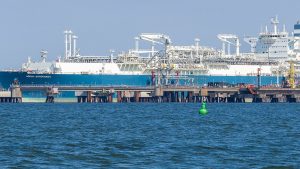
Illustrative image. Photo: U.S. Navy photo by Photographer's Mate 1st Class David C. Lloyd, Public domain, via Wikimedia Commons — source


[…] Why Are Oil Prices Rising? […]
[…] Why Are Oil Prices Rising? […]
[…] buyers compete for cargoes heading into the northern hemisphere winter. On the domestic side, the broader rally in US energy prices this month has been reinforced by a U.S. Energy Information Administration outlook that still points to a […]
[…] Related: Why Are Oil Prices Rising? Brent, WTI and the 2026 market drivers […]
[…] outage — produces a larger price swing than it would have a year or two earlier, a dynamic this site has tracked through 2026. It is also the backdrop against which OPEC+’s decision to hold November output steady at 31 […]
[…] WTI shows up in TDE’s own coverage of events that move it — for example reporting on why oil prices are rising, on Saudi Aramco’s CEO warning that global oil inventories are thin, and on tanker-tracked […]
[…] Why Are Oil Prices Rising? […]